
Contents [ Hide ]
Before agreeing to a crown, many patients want to know what are dental crowns made of and why the choice matters. The material shapes how the tooth looks, how well it resists chewing forces and what the treatment costs. This guide walks through each option, so that patients can speak with their dentist at Meko Dental Clinic with clear expectations.
1. What are dental crowns made of?
Dental crowns are made of metal alloys, ceramics, dental resin or a combination of these. The most common groups are gold and base metal alloys, porcelain fused to metal, all-ceramic materials, zirconia and resin. Knowing what are dental crowns made of helps patients understand why a dentist favours one material for a particular tooth.
The main materials are:
- Metal alloys: gold, palladium, or base metals such as nickel and chromium
- Porcelain fused to metal (PFM): a metal core with a tooth-coloured porcelain layer
- All-ceramic materials: porcelain, pressed ceramic and lithium disilicate
- Zirconia: a strong white ceramic suitable for front and back teeth
- Dental resin: a plastic material, usually chosen for short-term use
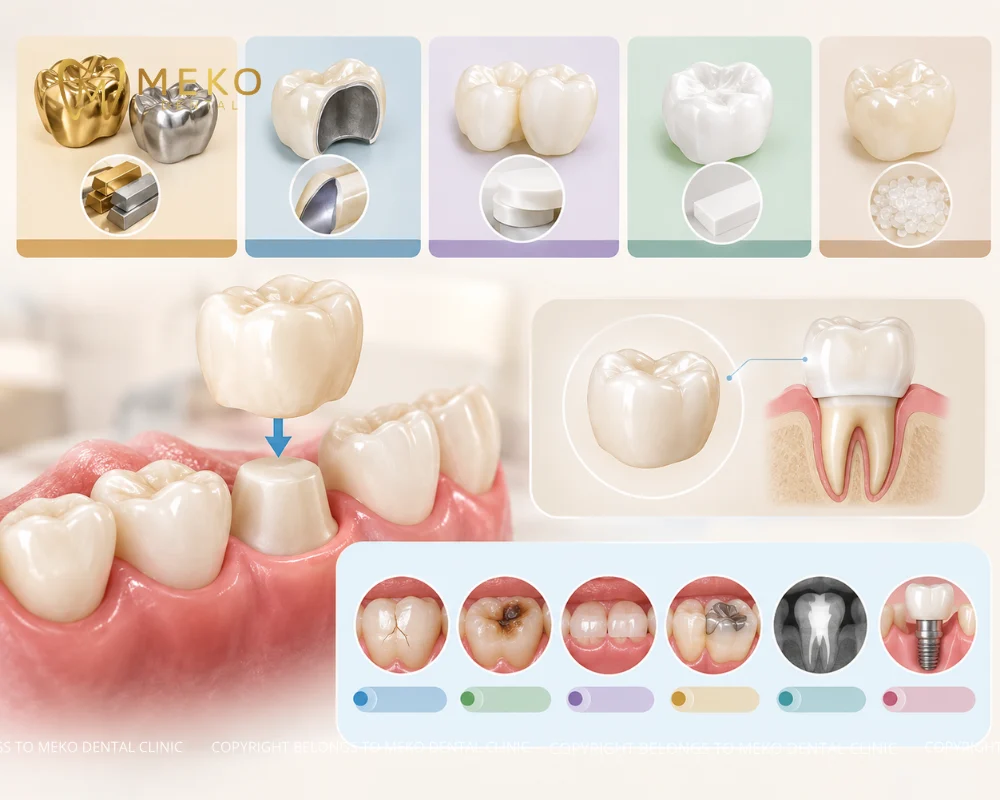
A crown itself is a custom-made cap that covers a damaged tooth completely. The crown rebuilds the tooth’s shape and lets it chew normally again. Dentists recommend crowns for teeth that are cracked, badly decayed, worn down or weakened by a large filling, and also after root canal treatment or over a dental implant.
2. Are metal crowns made of gold?
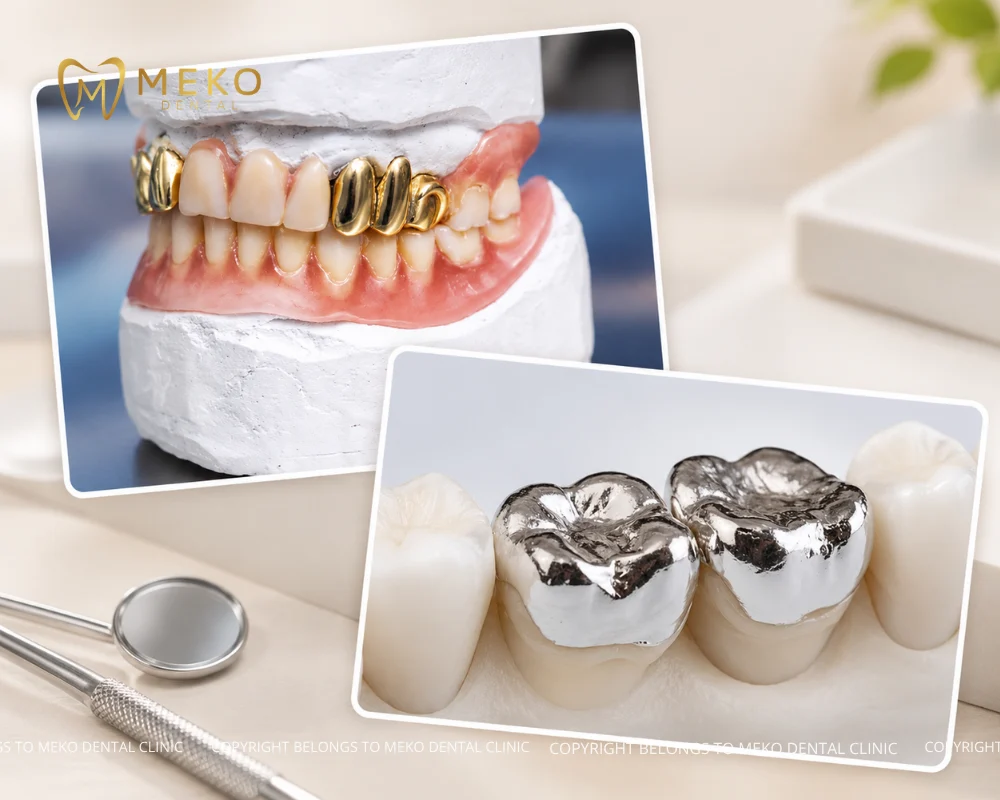
Gold alloys, palladium and base metals such as nickel and chromium are the metals used in dental crowns. These crowns have a long clinical history and rarely fracture. Because the colour is silver or gold, dentists generally reserve them for molars that sit out of sight.
For a back tooth under heavy chewing load, metal is often the first material discussed when a patient asks what are dental crowns made of. Metal compromises on looks, not on durability.
2.1 Gold alloy crowns
Gold alloy crowns are cast from gold mixed with other metals such as palladium. They seldom chip or break. Their smooth surface is also kind to the opposing teeth, which limits wear over the years.
2.2 Base metal alloy crowns
Base metal alloys contain metals such as nickel and chromium. They are hard and durable, and laboratories often use them as the inner core of PFM crowns. Anyone with a known nickel sensitivity should tell the dentist before this alloy is selected.
3. Porcelain-fused-to-metal crowns
A porcelain-fused-to-metal crown has a metal core with a layer of tooth-coloured porcelain baked over it. The core carries the chewing forces, while the porcelain hides the metal from view. This split explains why the type has stayed in use for decades, even as all-ceramic options have improved.
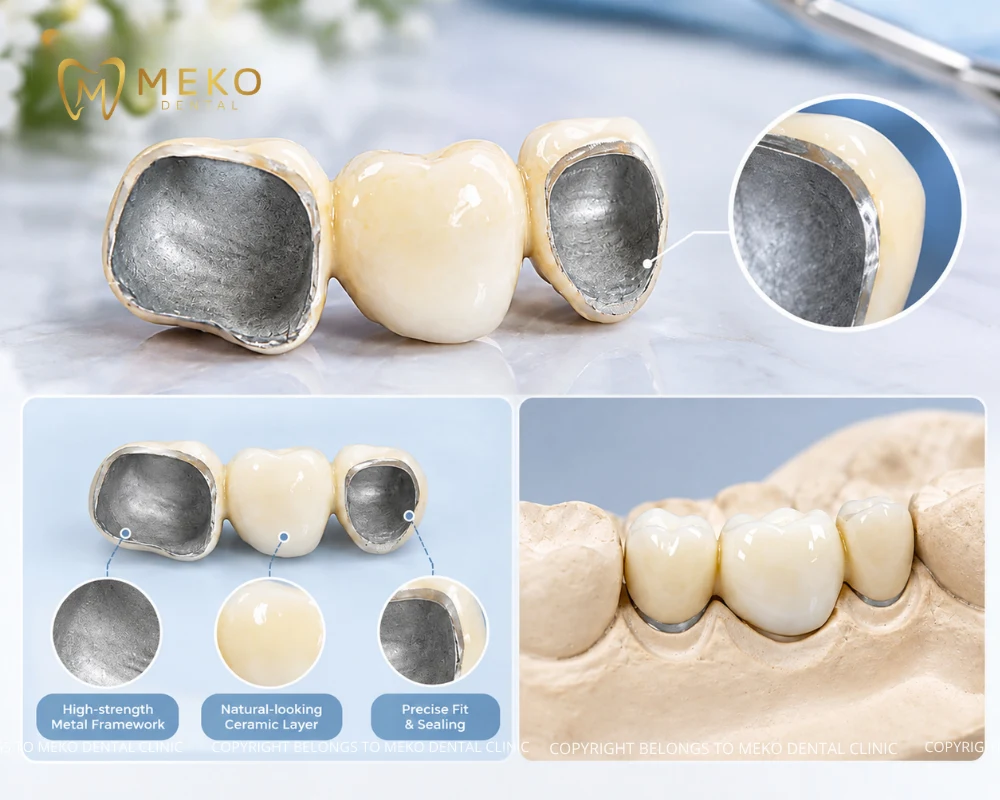
PFM often appears as the middle answer to what are dental crowns made of, sitting between full metal and full ceramic. Dentists can place it on any tooth, front or back.
4. All-ceramic and porcelain crowns
All-ceramic crowns are made entirely from porcelain or other ceramics, with no metal underneath. Light passes through them much as it does through natural enamel, which gives a lifelike result. For that reason, dentists often choose them for front teeth where appearance matters most.
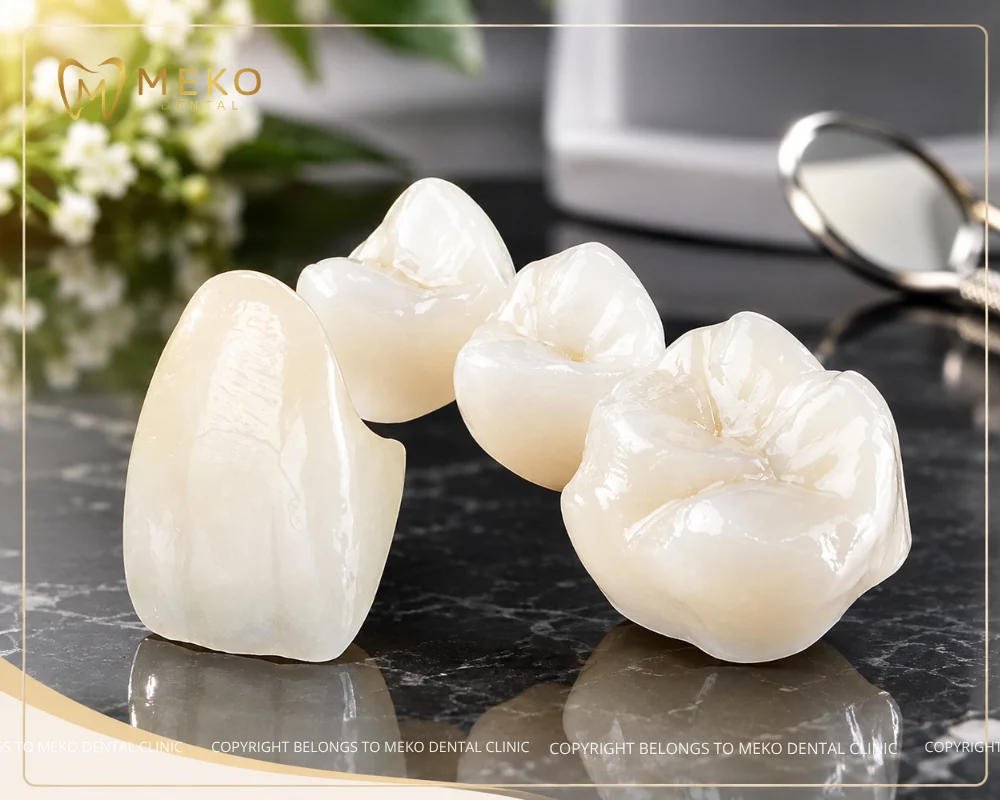
Patients who prioritise a natural smile tend to focus on this group when considering what are dental crowns made of. Pressed ceramic and lithium disilicate are two common materials here. Lithium disilicate is a glass ceramic that clinical reviews have examined as a full-coverage crown material, often comparing it with zirconia, full metal and PFM.
5. Zirconia crowns
Zirconia is a white ceramic made from zirconium dioxide. The Cleveland Clinic describes it as one of the most popular ceramic crown materials, and it tolerates heavy chewing forces better than many other ceramics. It is also biocompatible, so reactions in the body are uncommon.
Modern clinics frequently answer what are dental crowns made of with zirconia, because it serves both molars and front teeth. Zirconia crowns come in two main forms.
5.1 Solid zirconia crowns
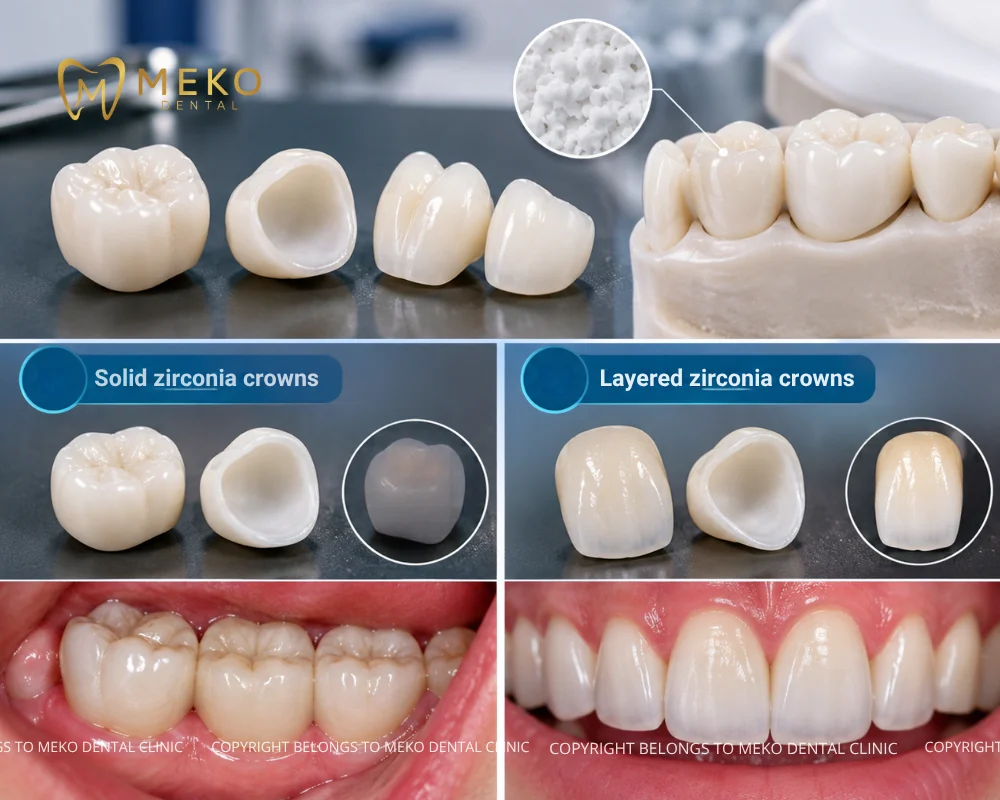
Solid zirconia crowns are milled from a single block of material. Their strength suits molars and patients who grind their teeth. The colour is usually a little less lifelike than in layered versions.
5.2 Layered zirconia crowns
Layered crowns pair a zirconia core with an outer porcelain layer. The porcelain adds colour and translucency, which helps in visible areas. Strength at the surface is slightly lower than in a solid crown.
Zirconia does carry one drawback worth noting. A very hard crown can wear the opposing natural tooth if the bite is not adjusted well. Dentists check the bite at placement and again at follow-up visits for this reason.
6. Resin and stainless steel crowns
Resin crowns are made from dental plastic, while stainless steel crowns are prefabricated metal caps. Resin costs less but wears faster and fractures more easily. Stainless steel is mainly used on baby teeth, where a quick and durable cover matters more than a perfect colour match.
Resin is sometimes selected when a patient needs a lower-cost solution for a limited period. Stainless steel crowns protect a decayed primary tooth until it falls out naturally. They usually need only one visit, which suits young children.
7. What material are dental crowns made of by tooth type?
The right material depends largely on where the tooth sits. Front teeth usually receive all-ceramic or porcelain crowns because they blend with natural enamel, while back teeth usually receive zirconia, PFM or metal because chewing forces are higher. The patient’s bite can shift this choice in either direction.
7.1 Front teeth
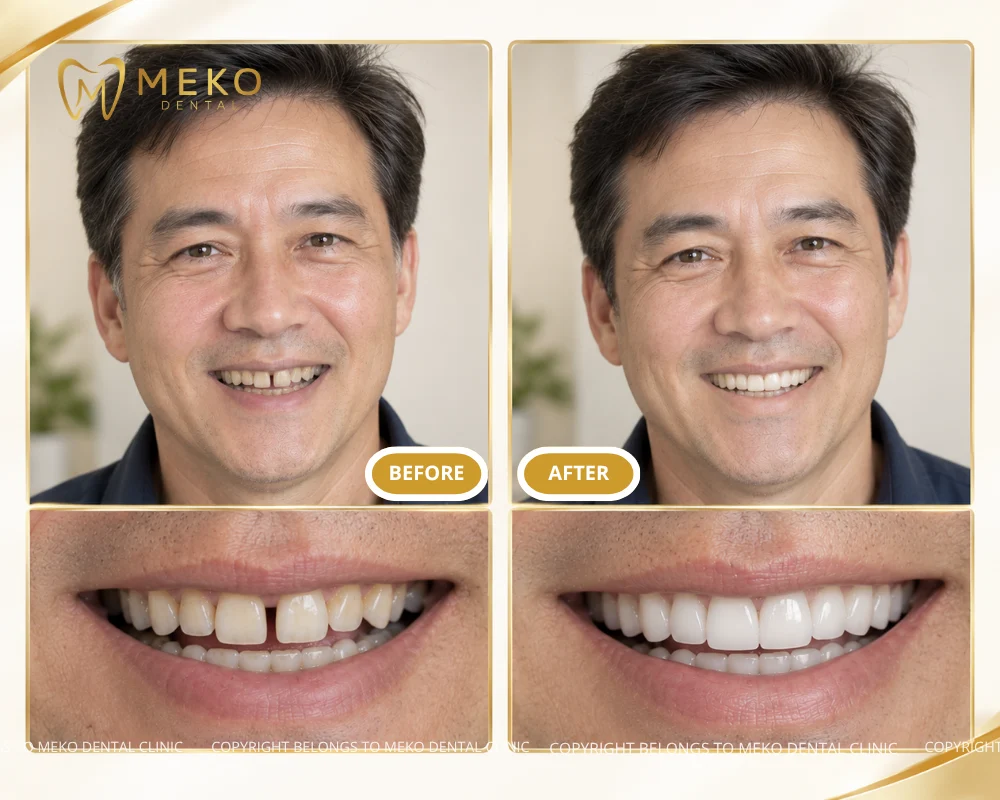
At the front of the mouth, colour, shape and translucency come first. Lithium disilicate and layered zirconia both allow a close match with neighbouring teeth. When patients ask what materials are dental crowns made of for a smile tooth, the answer leans toward ceramics.
7.2 Molars
At the back of the mouth, durability takes priority. Solid zirconia and gold alloys have a strong track record under heavy chewing. PFM remains a sound option when a tooth-coloured surface is also wanted.
8. Dental crown materials compared
The table below compares the main crown materials side by side. It reflects general trends rather than guarantees, since results depend on the tooth, the bite and the quality of the laboratory work. Readers can use it as a starting point for the conversation with their dentist.
| Material | Appearance | Strength | Best suited for | Main limitation |
| Gold or metal alloy | Metallic | Very high | Back molars | Not tooth-coloured |
| PFM | Good | High | Front or back teeth | Porcelain may chip |
| All-ceramic or porcelain | Excellent | Moderate | Front teeth | Can be brittle on molars |
| Zirconia | Good to excellent | Very high | Molars and many front teeth | May wear opposing teeth |
| Resin | Fair | Low | Short-term use | Wears and fractures easily |
| Stainless steel | Metallic | High | Baby teeth | Not for permanent adult teeth |
Strength and appearance tend to pull against each other. Newer ceramics have narrowed that gap, though they have not removed it. The table is most useful for seeing why what are dental crowns made of cannot be answered with one material for every tooth.
| Read more: Best dental crown material – 5 types, costs and key differences
9. Dental crown made of what material for allergies?
Patients with metal sensitivity are usually offered all-ceramic or zirconia crowns, because both contain no metal. These materials are generally well tolerated by gum tissue. A dentist will confirm the choice after reviewing the patient’s allergy history and the condition of the tooth.
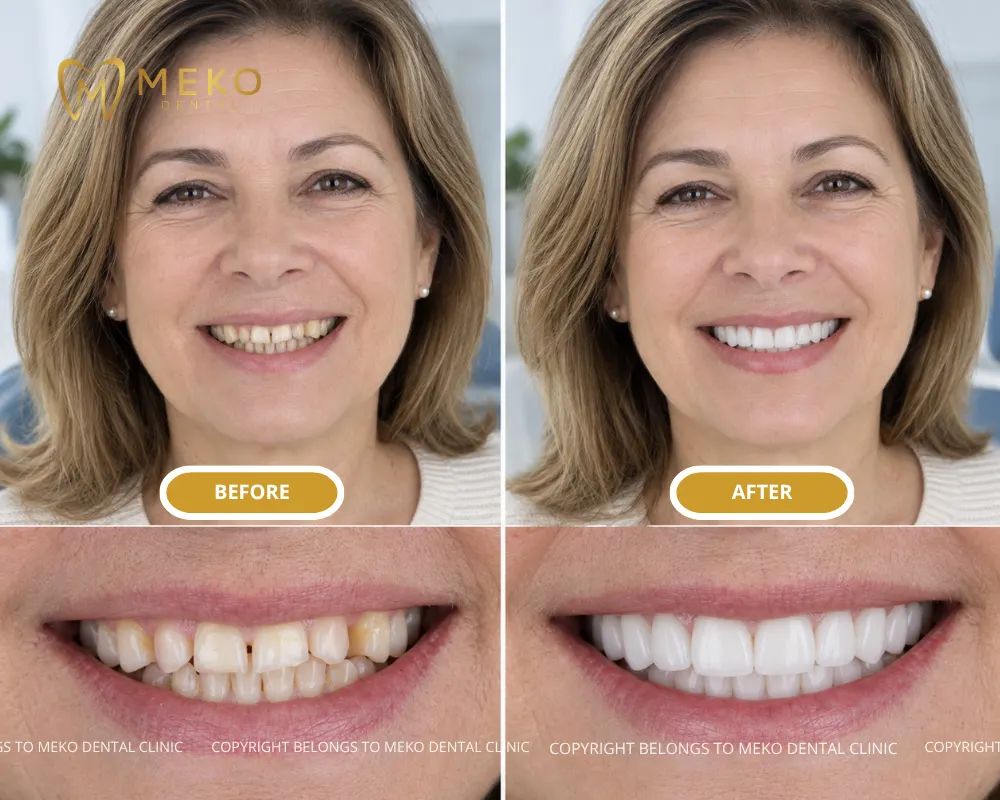
Nickel is the metal most often mentioned, since it is a known allergen for some people. A history of reactions to jewellery or earlier dental work is worth mentioning at the first appointment. With that information, the dentist can rule out problem alloys and plan the restoration around them.
10. Frequently asked questions
What are dental crowns made of most often today?
Porcelain fused to metal, zirconia and other ceramics are very common choices in current practice. Gold and metal alloys remain popular for molars where appearance is less important. The most suitable option still varies from one patient to another.
What materials are dental crowns made of for children?
Stainless steel is the most common material for baby teeth, since it is durable and quick to place. Some clinics also offer tooth-coloured crowns for front primary teeth. A paediatric dentist can advise on the best option for each child.
Is one crown material always better than the others?
Every tooth has different demands, so no one material fits all. Gold is strong but visible, and porcelain looks natural but is more delicate. Zirconia offers a useful balance in many cases, although the dentist must confirm this after examining the tooth.
Anyone considering a crown should book an examination before settling on a material. A dentist can explain what are dental crowns made of in each treatment option and recommend the most suitable one. To get advice based on your own tooth and bite, book a consultation at Meko Dental Clinic and discuss the options with the dentist in person.


 Messenger FB
 WhatsApp
 Book now