
Contents [ Hide ]
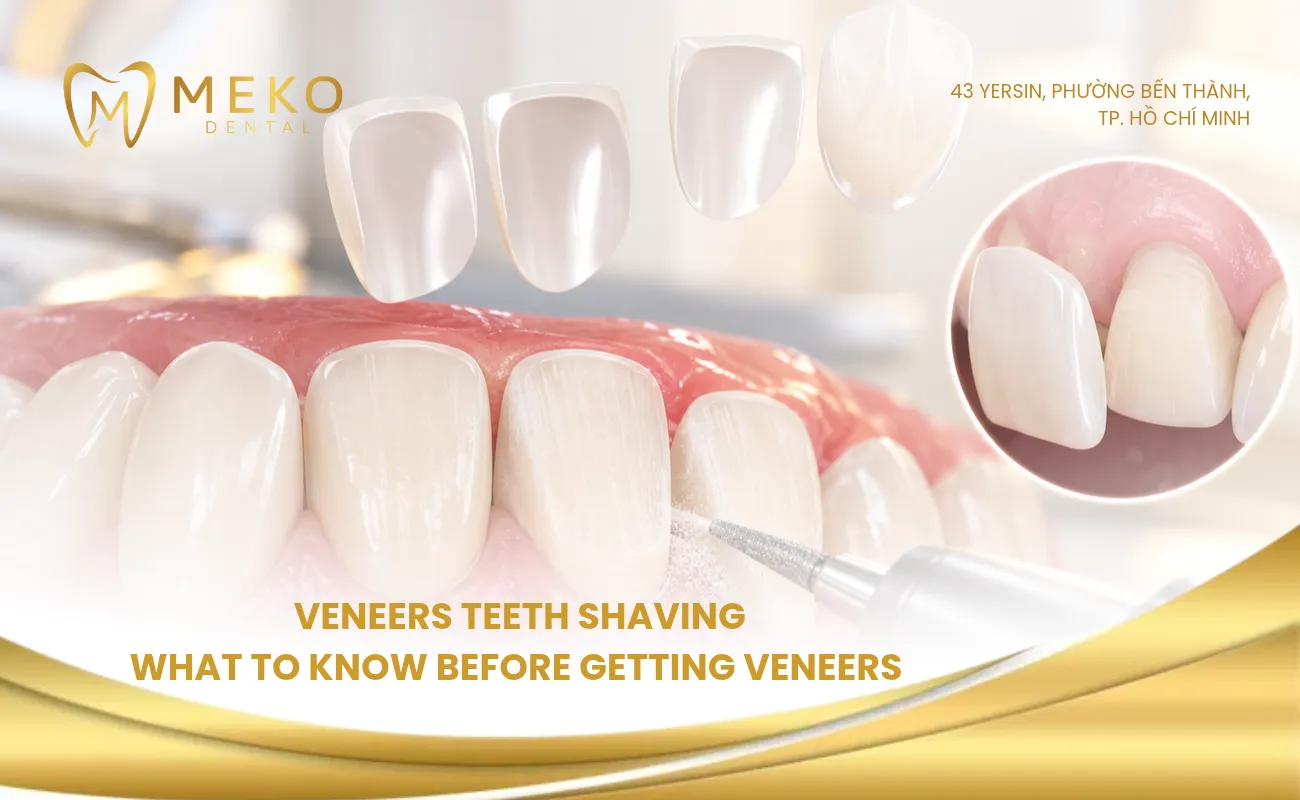
When planning veneers, the focus often falls on tooth color and smile shape. But the changes made before a veneer is placed deserve equal attention. Veneers teeth shaving is a decision that should be understood before treatment begins, not after. This article clarifies the practical questions surrounding that decision, from initial planning to long-term considerations.
1. Do teeth have to be shaved for veneers?
No, veneers teeth shaving is not required for every patient. Traditional porcelain veneers often need a small amount of enamel removed to create space, while minimal-prep veneers require less. No-prep veneers may avoid shaving when teeth are naturally small, recessed, or properly aligned before placement.
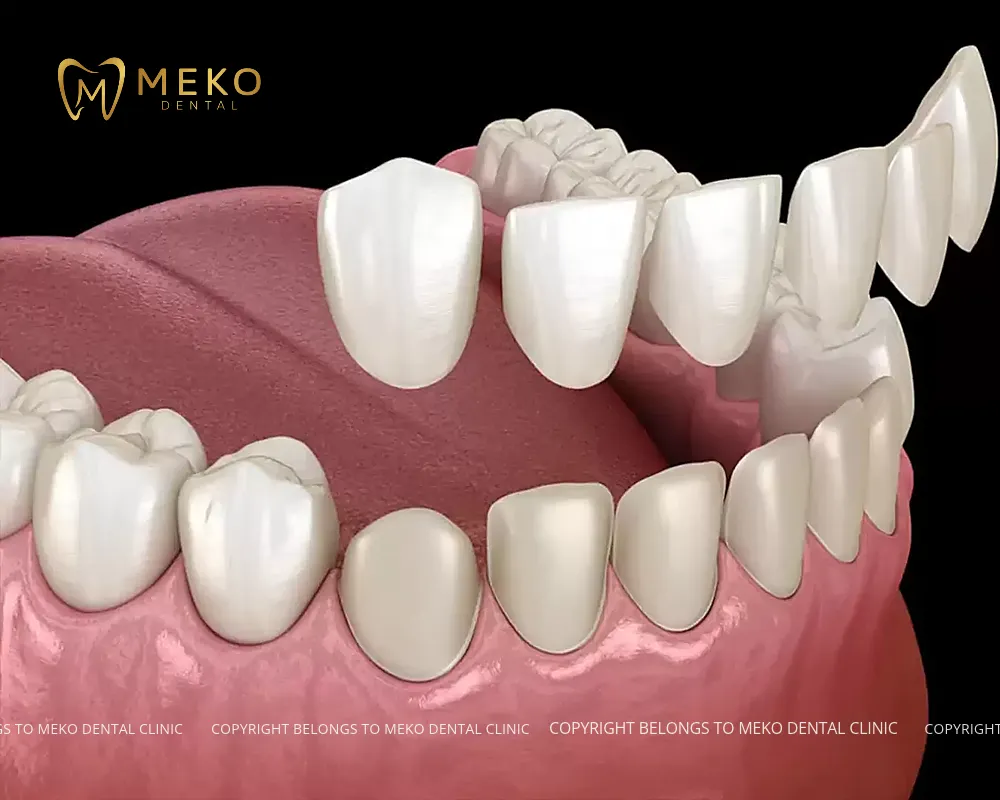
The dentist decides whether shaving is necessary by checking tooth position, available enamel, and the intended veneer thickness. During pre veneer teeth shaving assessment, teeth that already project forward often need more preparation, while smaller or recessed teeth may need little or no enamel removal.
2. Why do dentists shave teeth before veneers?
Dentists recommend veneers teeth shaving when adding ceramic to the tooth’s existing surface would create an unnatural shape or interfere with the bite. The main reasons for preparation are practical rather than routine:
- Make room for ceramic: A controlled reduction accommodates the veneer without pushing the front surface too far outward.
- Avoid bulky edges: Proper space helps prevent a thick appearance near the gums or between neighboring teeth.
- Improve tooth contours: Selective reshaping allows the finished veneer to follow a natural curve and match nearby teeth.
- Support accurate fit: A planned surface and clear margins help the veneer sit correctly and allow the dentist to check contact points.
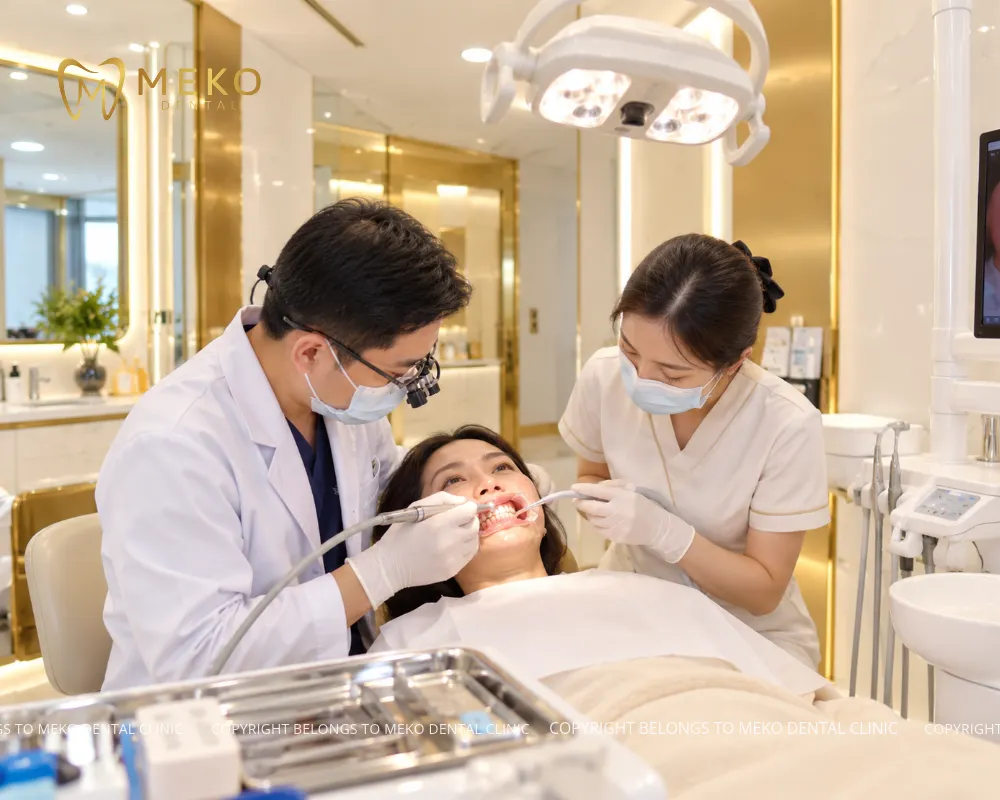
The phrase veneers shaving often suggests aggressive grinding, but appropriate preparation is usually selective and measured. Dentists should remove only the enamel needed for the planned result, preserving healthy structure whenever possible.
3. How much enamel is removed for veneers?
There is no single shaving depth suitable for every smile. The amount depends on tooth position, existing enamel, ceramic thickness, and how much the final shape must change. Traditional, minimal-prep, and no-prep approaches can involve substantially different amounts of preparation, as the comparison below shows, rather than following a fixed rule.
3.1 Traditional vs. minimal-prep vs. no-prep veneers
The amount of enamel removed depends on tooth position, available space, and the veneer material, including options such as emax veneers. The table compares typical preparation depths, suitable tooth conditions, and the main limitation of each approach for easier comparison before veneer placement.
| Veneer type | Enamel removal | Suitable cases | Main limitation |
| Traditional veneers | Approximately 0.3-0.7 mm | Teeth requiring noticeable shape or color changes | Permanent enamel loss |
| Minimal-prep veneers | Approximately 0.1-0.3 mm | Slightly uneven teeth or minor shape changes | Limited correction of major imperfections |
| No-prep veneers | Usually 0 mm | Small teeth, minor gaps, or recessed teeth | May appear bulky on prominent teeth |
A 2019 specialist consensus published in the International Journal of Oral Science describes preparation depths around 0.3-0.7 mm for ceramic veneers, with less reduction near the gums. These measurements are guidelines, not fixed requirements; veneers teeth shaving should preserve enamel while providing sufficient ceramic space.
3.2 Factors affecting the amount of tooth shaving
Tooth shaving depth depends on tooth alignment, enamel thickness, discoloration, tooth shape, and the space required for the planned veneer. These factors explain why preparation varies between patients and individual teeth within the same mouth.
- Alignment: Protruding or rotated teeth may need more enamel reduction to prevent bulky veneers, while recessed teeth often require less.
- Enamel thickness: Thin or worn enamel limits safe reduction because deeper shaving increases the chance of exposing sensitive dentin underneath.
- Discoloration: Deep stains may need thicker or more opaque ceramic for coverage, which can require additional space on the tooth.
- Tooth shape: Large or prominent teeth may need selective reshaping, while smaller teeth can sometimes accommodate veneers without enamel removal.
- Bite and veneer thickness: Tight biting contacts and thicker ceramic require extra clearance so veneers do not interfere with chewing.
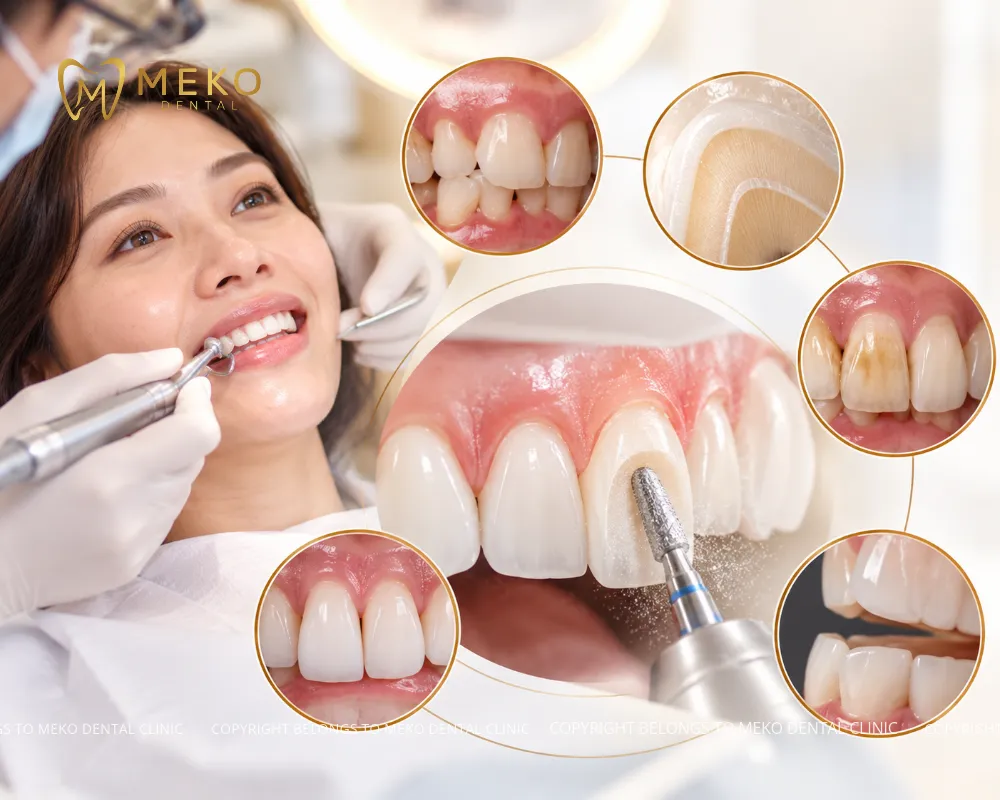
For veneers teeth shaving, dentists determine preparation depth by examining enamel thickness, bite contacts, and the planned ceramic outline, not by using a fixed measurement. Descriptions of veneers process shaving often overlook these specific clinical differences and healthy enamel preservation.
4. What do teeth look like after shaving for veneers?
After veneers teeth shaving, prepared teeth usually appear slightly flatter, thinner, and less glossy than before. The front surface may look matte, while edges can appear shorter or more even. These changes depend on which areas were reduced and how much natural enamel was removed.
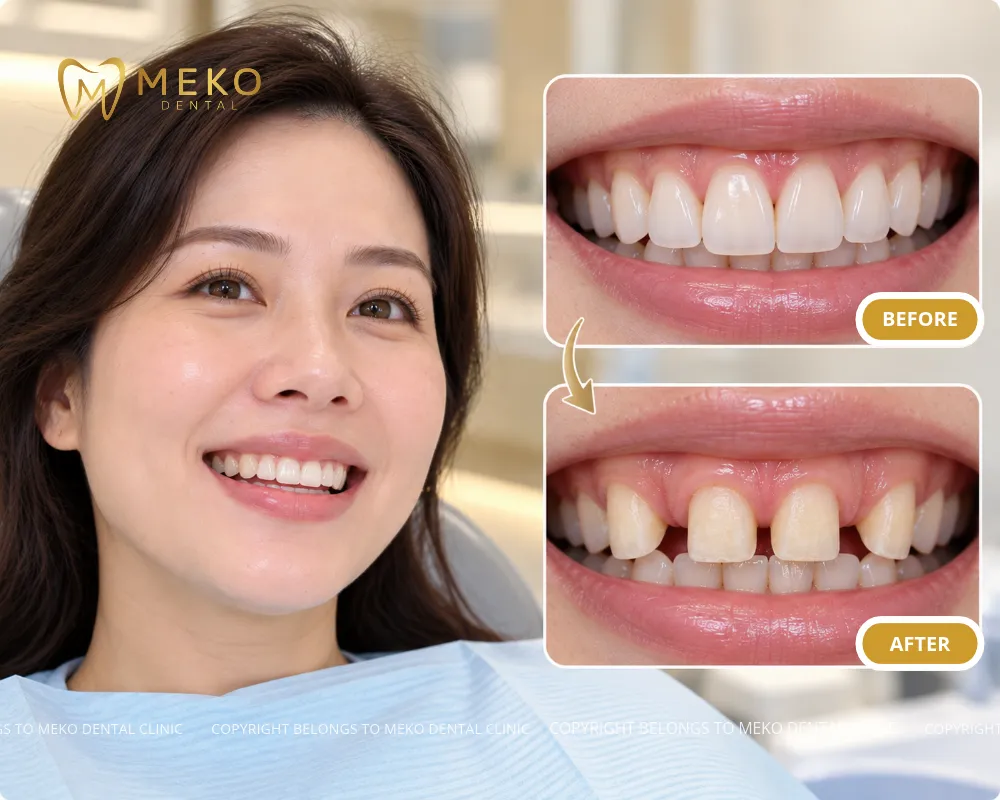
Prepared teeth should not look like tiny pointed pegs, which are more commonly associated with dental crown preparation. Photos labeled veneer shaving teeth sometimes confuse these procedures; actual veneer preparation generally removes less tooth structure and preserves much of the original shape in most cases.
5. Effects and risks of tooth shaving
Veneers teeth shaving can cause temporary sensitivity, and any enamel removed cannot grow back, even when the procedure is carefully planned. The following sections explain expected discomfort, permanent changes to tooth structure, and complications that can result from excessive reduction.
5.1 Pain and sensitivity during veneer preparation
Tooth shaving for veneers usually causes little discomfort when reduction stays within enamel. Patients may feel vibration or pressure during preparation, while local anesthesia can be used for sensitive teeth or deeper reshaping. Sharp pain during drilling should be reported immediately.
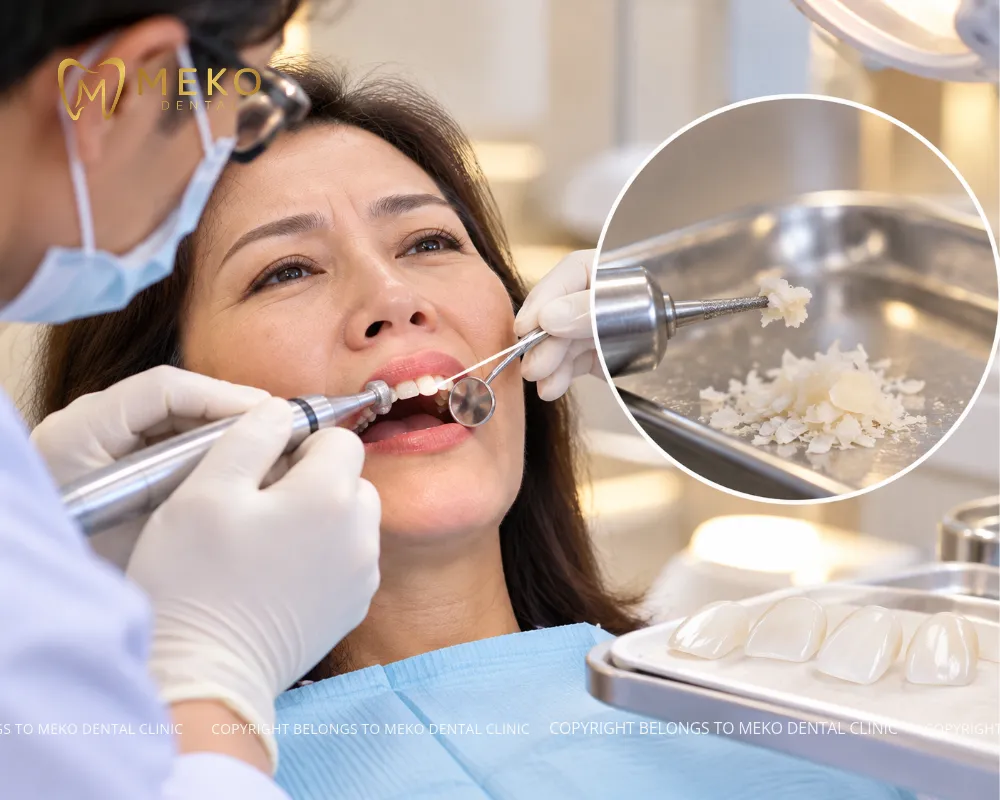
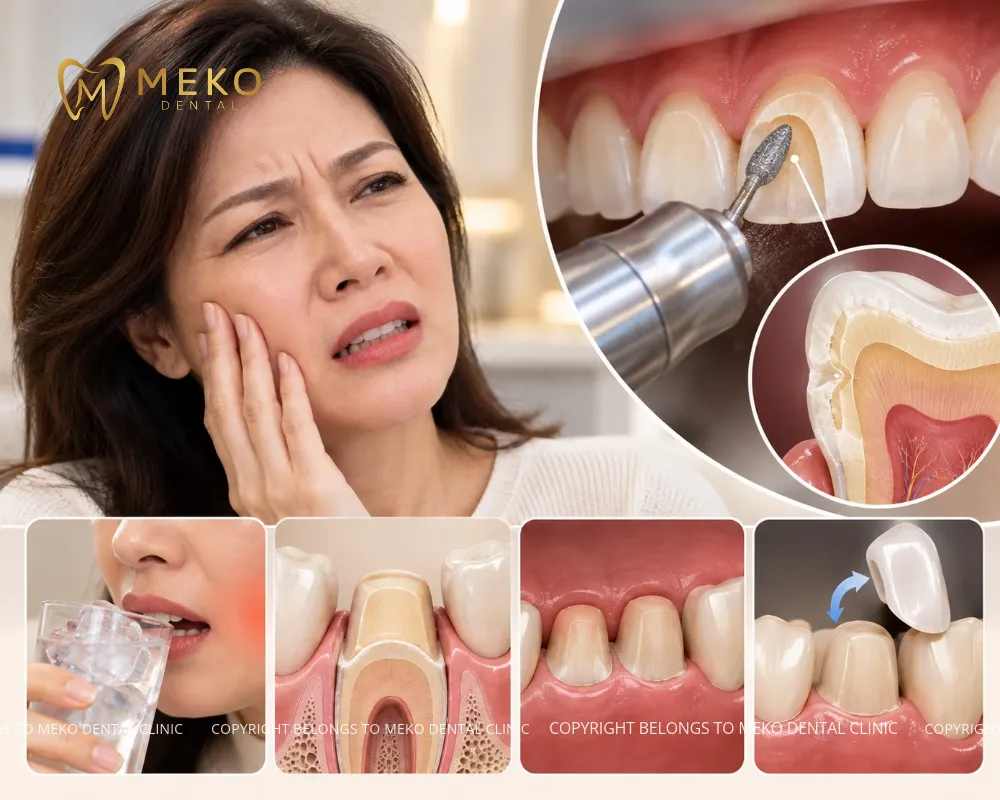
After veneers teeth shaving, temporary sensitivity to cold drinks, air, or sweet foods can occur, especially when more enamel is removed. Mild sensitivity often improves after bonding, but persistent, worsening, or severe pain should prompt a dental examination rather than home management.
5.2 Permanent changes after tooth shaving
According to Cleveland Clinic, enamel cannot grow back once it has been removed. After veneers teeth shaving, taking off a veneer does not restore the tooth’s original surface, so future veneers must fit the permanently altered enamel and tooth contours.
Because enamel loss is permanent, traditional veneers may require ongoing maintenance or eventual replacement if they chip, wear, or detach. No-prep veneers preserve more natural structure in suitable cases, although removing bonded ceramic can still affect the remaining enamel underneath.
5.3 Risks of excessive tooth shaving
Removing too much enamel during veneers teeth shaving can create problems that are harder to prevent once the tooth is altered. Possible consequences include:
- Greater sensitivity: Thinner remaining tooth structure may react more strongly to temperature changes.
- Dentin exposure: Cutting through enamel exposes the softer layer underneath, which can increase sensitivity and complicate bonding.
- Unnecessary structural loss: Excessive reduction sacrifices healthy tissue that cannot regenerate.
- Restorative difficulties: Reduced enamel available for bonding or poorly shaped margins may make long-term veneer maintenance more challenging, especially under heavy biting forces.
A 2025 systematic review of six clinical studies reported 99% survival for veneers bonded to enamel, compared with 91% when dentin was severely exposed. These pooled figures are not individual guarantees but highlight the value of preserving healthy enamel during preparation and bonding.
6. Can You Get Veneers Without Shaving Your Teeth?
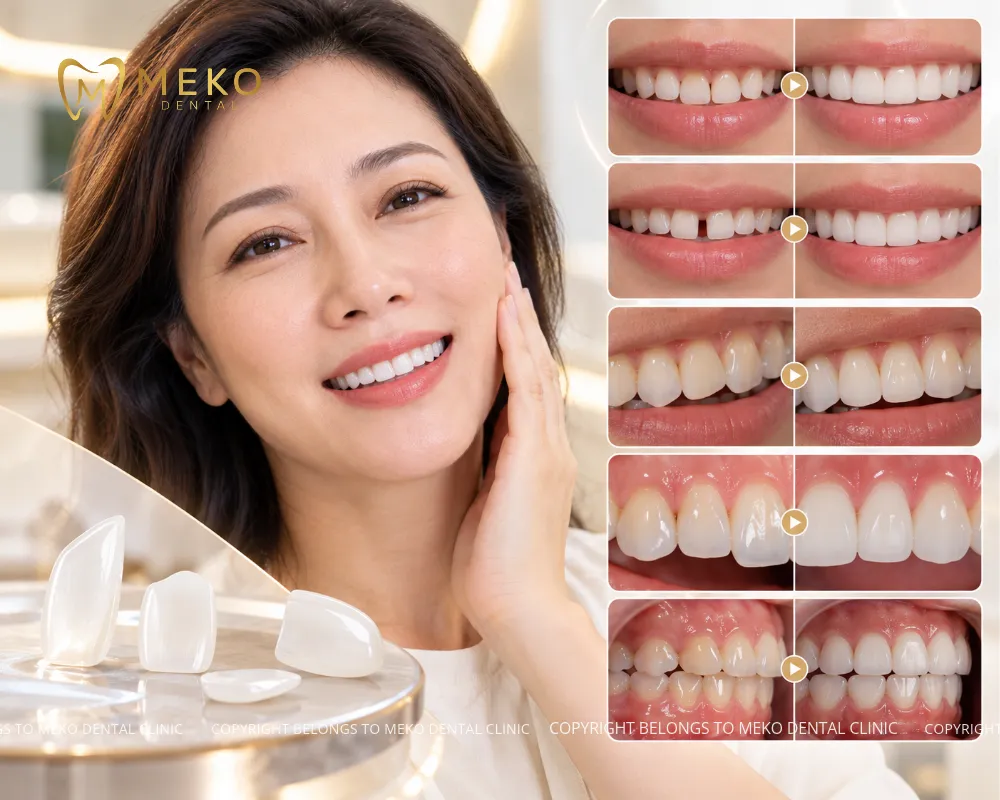
Yes, veneers that don’t require shaving teeth may be possible when a thin shell can be added without making teeth bulky or affecting the bite. However, no-prep veneers do not suit everyone, and alternatives such as whitening, composite veneers, or orthodontic alignment may also help reduce unnecessary enamel removal.
6.1 Suitable candidates for no-prep veneers
No-prep veneers work best when a small amount of added material will improve the smile without creating oversized teeth. This approach may be suitable when the following conditions are present:
- Naturally small or slightly recessed teeth: These leave space for a thin ceramic layer.
- Minor gaps: Added width can improve tooth proportions without excessive bulk.
- Relatively straight teeth: Minimal rotation or outward projection allows veneers to fit more naturally.
- Healthy enamel and gums: Sound tooth structure provides a suitable surface for bonding.
- A compatible bite: Adequate clearance reduces repeated force on veneer edges.
6.2 Limitations of no-prep veneers
Skipping enamel reduction protects tooth structure, but it limits the space available for ceramic. Important considerations include:
- Extra bulk: Adding a shell to an already prominent tooth can make it look too large or project forward.
- Thick margins: An overcontoured edge near the gumline may be harder to clean and can affect gum health.
- Limited color masking: Very thin ceramic may not fully conceal strongly discolored teeth without becoming less natural-looking.
- Restricted reshaping: Substantial crowding, rotation, or bite problems generally cannot be corrected simply by adding material.
7. Conclusion
Veneers teeth shaving may be necessary to create space for porcelain veneers, but minimal-prep or no-prep approaches can reduce enamel removal in suitable cases. Because removed enamel cannot regenerate, preparation depth should reflect tooth alignment, enamel thickness, bite conditions, and the intended final veneer shape.
To arrange a veneer consultation, contact Meko Dental Clinic at 077 227 7919. The dental team can schedule an examination, review current tooth conditions, explain suitable preparation options, and provide a clear, individualized estimate before any procedure, helping patients plan their visit with greater confidence.


 Messenger FB
 WhatsApp
 Book now