

Contents [ Hide ]
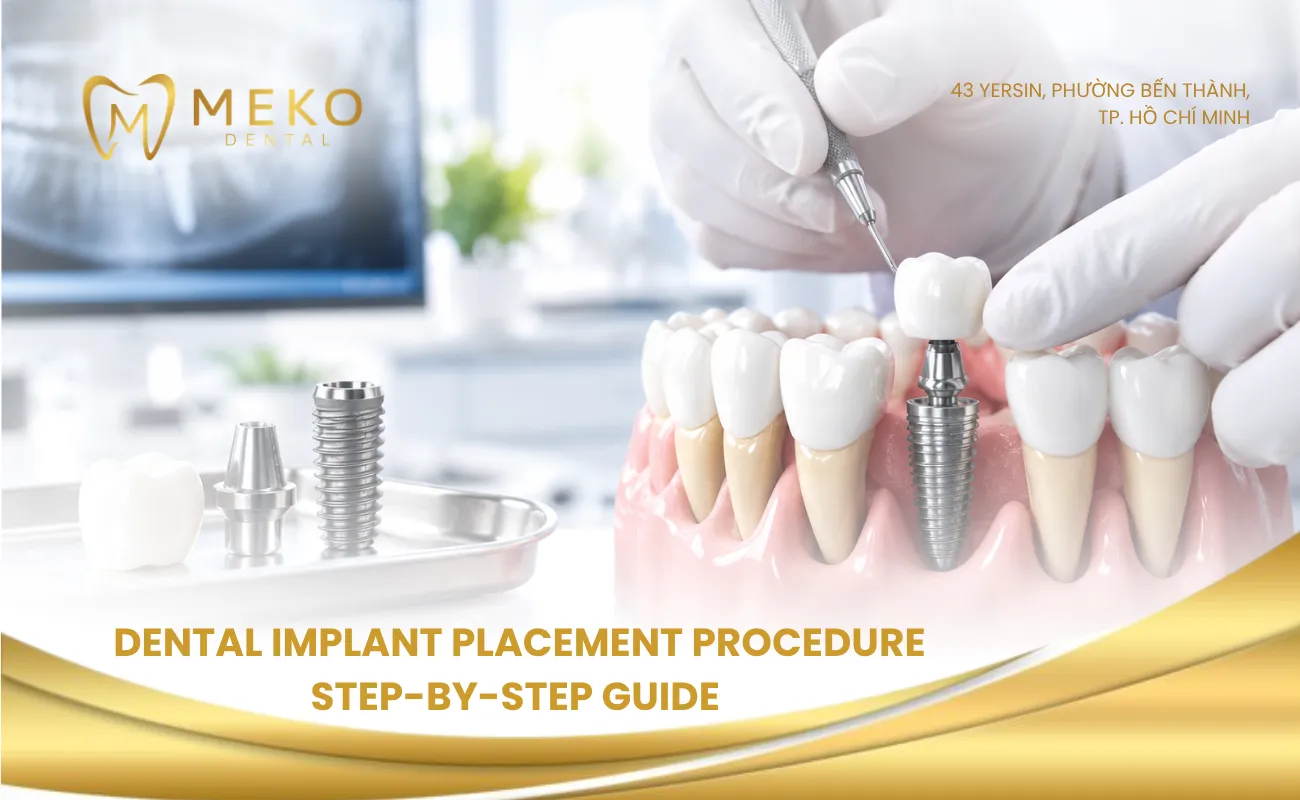
Losing a tooth affects chewing, speech, and the bone that once held the root. A dental implant placement procedure replaces the missing root with a titanium post, giving the new tooth a stable base.
The sections below follow treatment in order, beginning with the initial assessment and ending with the permanent tooth. It also covers recovery, possible risks, and how to judge a provider. Meko Dental Clinic prepared this overview to help patients understand the implant placement procedure before a consultation.
1. What is the dental implant placement procedure?
The dental implant placement procedure is a surgical treatment that anchors an artificial tooth root, usually titanium, in the jawbone. Once the bone heals around the post, a connector and a crown are attached. The finished restoration works much like a natural tooth.
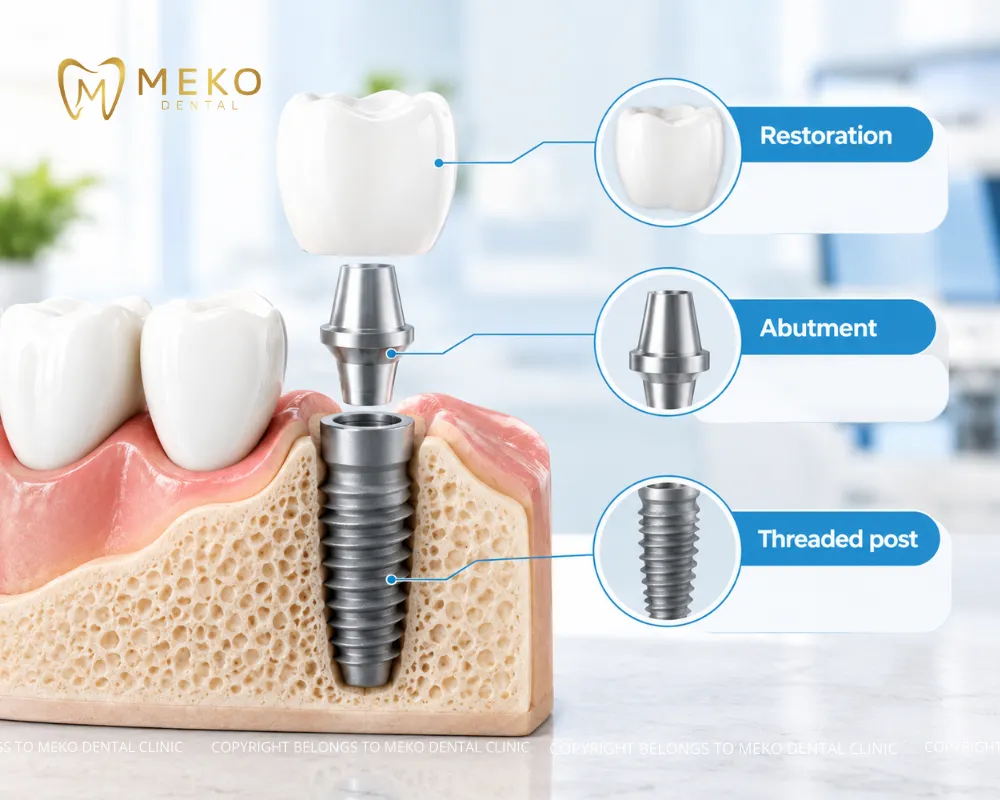
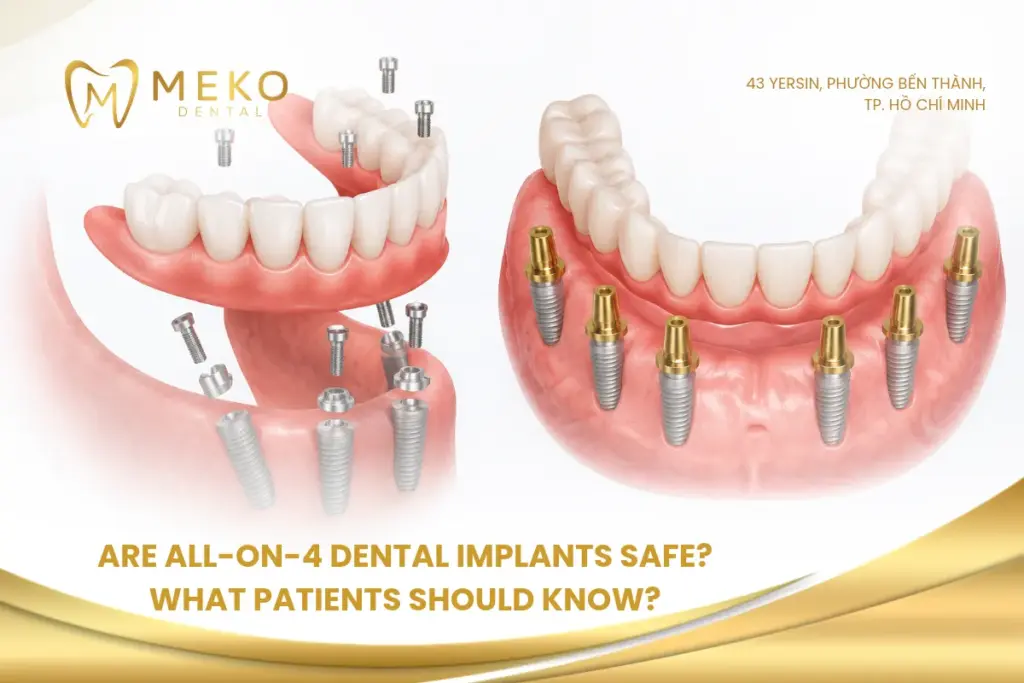
An implant is made of three parts, and each part has a separate role:
| Part | Role |
| Threaded post | Replaces the natural root inside the bone |
| Abutment | Holds the crown firmly onto the post beneath the gum |
| Restoration | The visible tooth: a crown, bridge, or implant-supported denture |
Titanium is the usual material for the post, while ceramic is available as an alternative. Both materials are considered biocompatible, meaning the surrounding tissue tolerates them well.
One post can support a single crown. Several posts can carry a bridge, and a full arch usually needs about four to six.
2. Who is a suitable candidate for dental implants?
A suitable candidate has healthy gums, enough jawbone to hold the post, and no condition that blocks healing. The jaw must also have finished growing. A dentist confirms suitability after an exam and imaging.
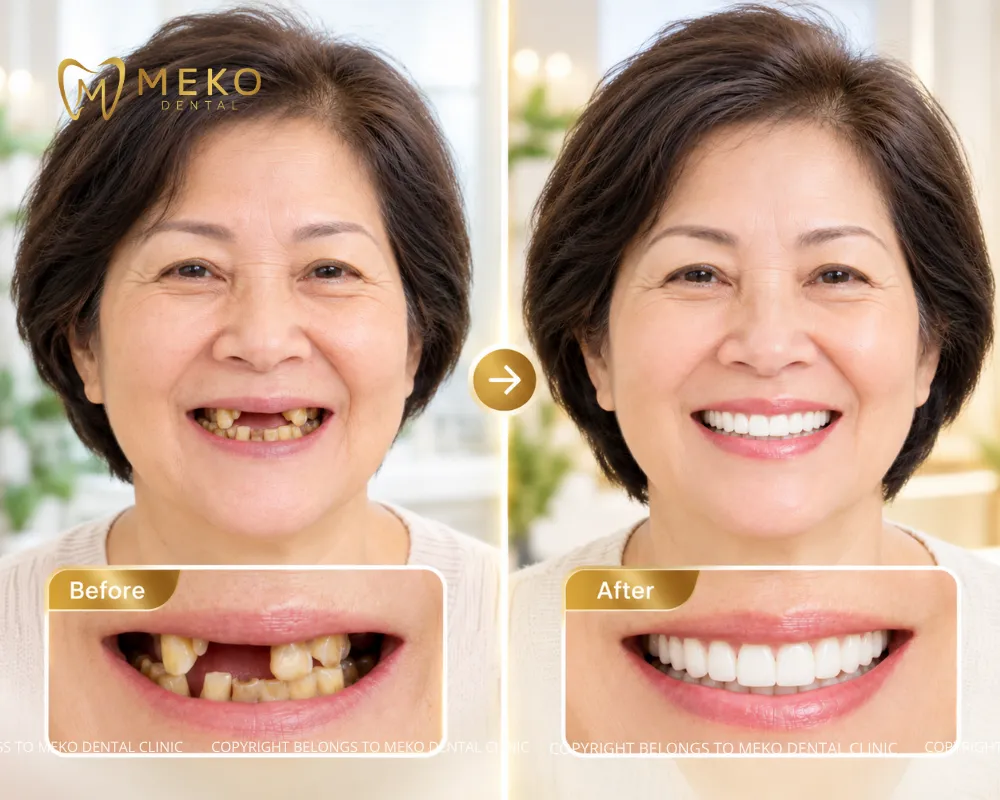
Not everyone can begin the dental implant placement procedure right away. Some conditions need treatment first, and a few may rule out implants. Common factors include:
- Ongoing gum problems left without care
- Severe bone loss in the jaw
- Unmanaged diabetes
- Certain conditions that affect the bone or the immune system
- Widespread cavities or inadequate daily cleaning
- Smoking or vaping, which can disrupt healing
The minimum age is typically 18, with no upper limit. The main requirement is enough healthy bone and a dentist makes the final call.
3. Dental implant placement procedure steps from consultation to final crown
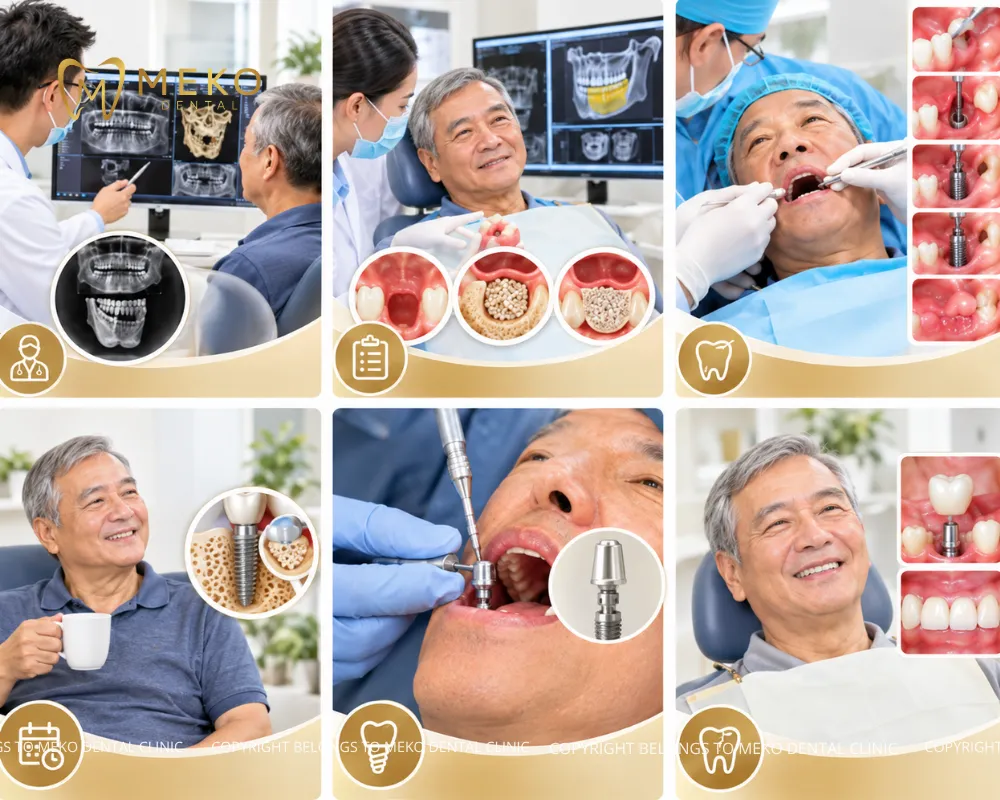
The dental implant placement procedure steps follow a fixed order: assessment, preparation, surgery, healing, abutment, and crown. No stage can begin until the previous one is complete. Much of the total time goes to waiting for new bone to grow.
The full dental implant placement process is staged, with healing periods between procedures. In suitable cases, the dentist may merge two stages into one visit.
3.1 Step 1: Examination and imaging
Every dental implant placement procedure starts with diagnosis, not surgery. The dentist reviews the medical history, including current medicines and performs a full dental exam.
X-rays and 3D images are usually taken, and models of the teeth and jaw may be made. These records show how much bone is available and where nearby structures sit.
3.2 Step 2: Planning and preparation
The treatment plan accounts for how many teeth need replacing and the condition of the jawbone and remaining teeth. Preparation may include tooth removal, gum treatment, or bone building.
Sinus augmentation and ridge modification are common ways to add bone in the upper back jaw or a narrow ridge. Grafted bone can take several months to produce enough new bone. Patients with certain heart conditions or joint implants may receive antibiotics before surgery.
3.3 Step 3: Implant surgery
The surgical visit forms the central part of the dental implant placement procedure. The usual sequence is:
- Anesthesia numbs the gums, and sedation may be added.
- An incision exposes the bone.
- A small hole is made in the jawbone and widened to fit the implant.
- The post is placed.
- The gum tissue is folded back into place and sutured.
Pain control ranges from a local numbing injection to sedation or full general anesthesia. If the implant sits near the front of the mouth, a temporary tooth may be provided during healing.
| Read more: Dental implant surgery – 5 steps and recovery timeline
3.4 Step 4: Healing and osseointegration
Osseointegration is the process in which the jawbone grows into and joins the implant surface. It supplies the stability that a natural root would. This phase commonly takes three to nine months, depending on how quickly the body heals.
3.5 Step 5: Abutment placement
Once the bone has healed, the connector piece is fixed onto the implant. This may require a minor second procedure with numbing, or the abutment may be attached during post placement. Gums then need at least two weeks to heal before the tooth is fitted.
3.6 Step 6: Impressions and final restoration
New impressions of the mouth are taken, and the restoration is made to fit. It can be fixed, meaning screwed or cemented in place, or removable, meaning it snaps onto the abutment. The crown is placed only when the jawbone can support normal chewing.
4. How long does the implant placement process take?
The implant placement process usually spans several months. Three to nine months are typically needed for the jawbone to fuse around the post, and preparation such as grafting adds time. The surgery itself is brief compared with the healing period.
| Stage | Typical timeframe |
| Exam and planning | One or more visits |
| Bone graft or sinus procedure, if needed | Several months of healing |
| Post placement surgery | One appointment |
| Early soft tissue healing | About one week |
| Osseointegration | 3 to 9 months |
| Gum healing after abutment | At least 2 weeks |
Because timing depends on bone quality and healing speed, the dental implant placement process should be planned for each patient. A temporary crown, bridge, or denture may be worn while the permanent restoration is made.
5. What to expect after the dental implant placement procedure
Swelling, bruising, minor bleeding, and soreness are common after the dental implant placement procedure. Early healing takes about one week, and most people feel like themselves within that time. Standard aftercare includes:
- Take pain medicine or antibiotics only as prescribed
- Stick to a soft diet until the area recovers
- Keep the implant, artificial tooth, and gums clean, using an interdental brush if advised
- Attend follow-up visits, where stitches are removed if they do not dissolve
- Avoid chewing ice or hard candy, and avoid tobacco

Contact the dentist if swelling or soreness worsens. A loose implant, bleeding gums, fever, pus, or swollen lymph nodes are also reasons to call.
6. Risks and success rate of the dental implant placement procedure
Studies report implant success rates above 95 percent, and the surgical risks are generally small and easy to treat. Even so, the dental implant placement procedure is surgery and carries some risk, which careful planning and aftercare help reduce.
A study of general dental practices found a 97 percent success rate for single-unit implants at four to six years. Results depend on bone quality, oral hygiene, and general health. Tobacco use may raise the chance of implant failure.
Complications that can occur during or after surgery include:
- Infection at the implant site
- Damage to adjacent teeth or blood vessels
- Nerve irritation, which may cause discomfort, numbness, or a tingling sensation
- Sinus problems when upper jaw implants reach into the sinus cavity
Later problems involve the tissue around the implant. Home care and regular visits help prevent peri-implant disease. A 2025 expert consensus report states that early peri-implant mucositis can be managed with nonsurgical cleaning and control of risk factors, while advanced cases may need surgery.
7. How to choose a clinic for the dental implant placement procedure
A reliable provider explains the plan clearly, uses proper imaging, and lays out each stage in writing. Implant planning may involve oral surgeons, periodontists, or prosthodontists. It is reasonable to ask which professional will handle each stage of care.
Searches for a Clinton dental implant placement procedure usually reflect a wish for nearby care. The same checks apply in any city or country:
- The provider’s qualifications and track record with implants
- 3D imaging before treatment
- A written plan with stages and a timeline
- Clear information on implant materials
- Clear arrangements for review visits after treatment
- An honest explanation of risks

Financing should be discussed only after treatment options have been reviewed with the dentist, and a clear quote that lists each stage helps patients compare providers fairly. At Meko Dental Clinic, an implant consultation starts with an exam and imaging, which allows the dentist to explain whether implants suit the case and what the treatment plan would involve.
8. Frequently asked questions
Is the dental implant placement procedure painful?
Patients should not feel pain during the procedure because the area is numbed. Slight discomfort and swelling afterward are normal, and over-the-counter pain relievers can help.
Will a patient go without a tooth during healing?
Not always. A temporary tooth, bridge, or denture may be provided while healing continues.
What happens if the bone does not fuse with the implant?
The dentist takes out the implant and cleans the surrounding bone. The dental implant placement procedure can often be tried again after about three months.
The dental implant placement procedure is a staged treatment that depends on careful planning, enough healthy bone, and steady aftercare. Most of the timeline is spent on healing rather than surgery. A dentist can confirm whether implants suit a specific case after an exam and imaging.



 Messenger FB
 WhatsApp
 Book now