
Contents [ Hide ]
Porcelain dental crowns are a common choice when a tooth is too damaged for a filling but still worth keeping. They rebuild the shape and strength of the tooth while blending in with the neighboring teeth. This guide covers the materials, the treatment steps, lifespan, aftercare and realistic prices for patients considering treatment in Vietnam.
1. What are porcelain dental crowns?
Porcelain dental crowns are tooth-colored caps made in a dental laboratory and bonded over a prepared tooth. They cover the entire visible part of the tooth, restoring its shape, strength and appearance. A porcelain tooth crown is often chosen because it looks natural next to healthy teeth.
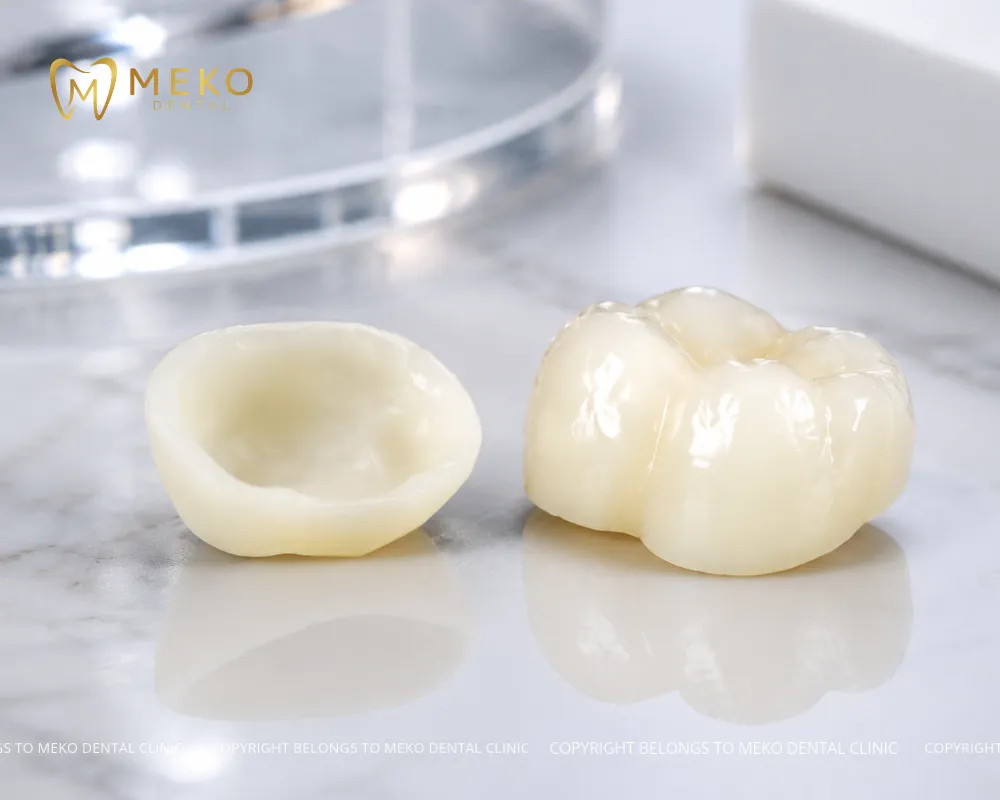
A filling repairs only a limited area, whereas a crown fits over the whole tooth like a snug hat. To make room for it, the dentist removes a small amount of enamel before the crown is bonded in place. The words “cap” and “crown” refer to exactly the same restoration.
In everyday conversation, “porcelain crown” is used for almost any tooth-colored crown. In dental terms, porcelain is the glass-like ceramic that covers a crown’s surface, and a crown is called “all-ceramic” when it contains no metal at all. Lithium disilicate and zirconia crowns are both all-ceramic, and the sections below explain how they differ.
2. When a porcelain crown is recommended
Porcelain dental crowns are usually recommended when a tooth is too weak, cracked or decayed to be rebuilt with a filling alone. The crown holds the remaining structure together and shields it from further damage, which often allows the natural tooth to be kept for many more years.
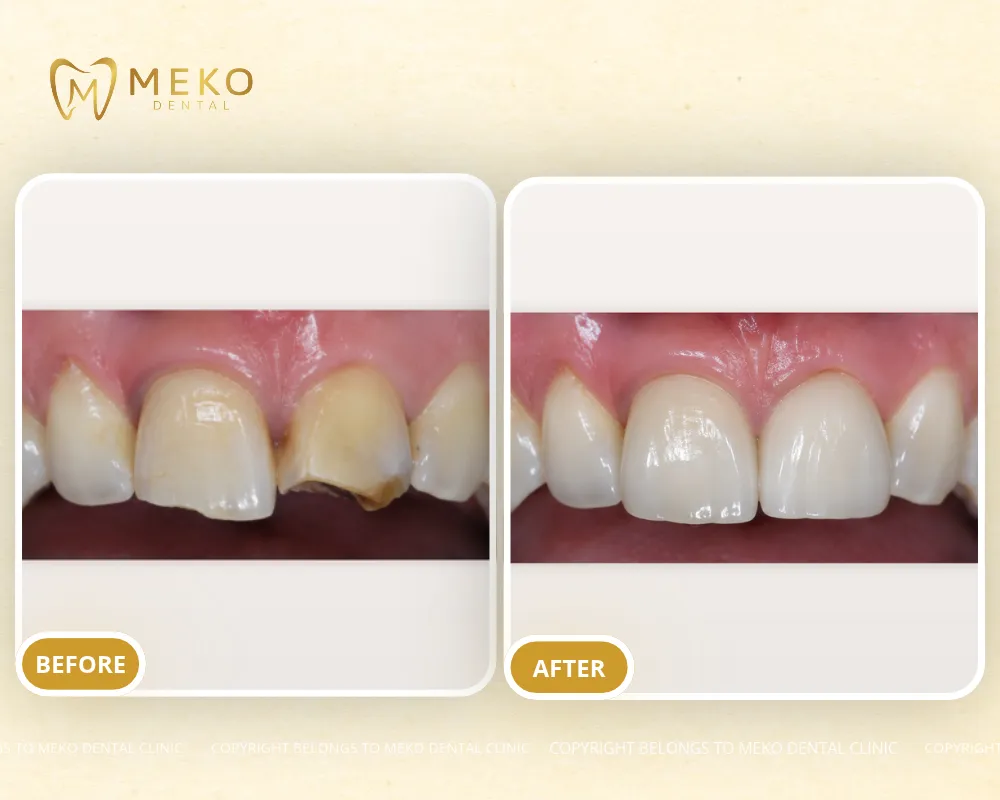
A dentist may suggest a crown in situations such as these:
- A weak or cracked tooth that needs support
- A worn-down or broken tooth that needs restoring
- A root-treated tooth that is now fragile
- An implant that needs a crown to replace the missing tooth
- Neighboring teeth chosen to carry a bridge
- A tooth with deep stains that whitening cannot remove
A full crown is not always necessary, because when more healthy structure remains, an inlay, onlay or veneer can be the more conservative choice. A veneer is a thin shell that mainly improves appearance, while a crown restores a tooth that has lost significant structure. An examination and X-ray help the dentist decide.
3. Types of porcelain dental crowns
Crowns fall into two families: those with a metal component and all-ceramic crowns. Full metal and porcelain-fused-to-metal (PFM) crowns belong to the first group, while lithium disilicate and zirconia crowns are all-ceramic and contain no metal. Porcelain layering can appear in several of these types, while monolithic crowns are made from one block of material.
| Crown type | Composition | Strengths | Limitations |
| Full metal (gold or other alloys) | Solid metal | Rarely chips, wears slowly, needs little enamel removal | Metallic color; mostly back teeth |
| Porcelain-fused-to-metal (PFM) | Metal core, porcelain surface | Strong, shade can be matched | Porcelain may chip and expose metal; can wear opposing teeth |
| Pressed ceramic (layered) | Ceramic core, porcelain layers | Close to natural enamel; mainly front teeth | Porcelain layers can chip |
| Monolithic lithium disilicate (e.g. e.max) | Glass-ceramic from one block | Looks lifelike and bonds well to the tooth | Lower strength (about 400 MPa); not ideal for molars |
| Monolithic zirconia | Zirconium dioxide from one block | Very durable (about 1,000 MPa), handles heavy chewing | Lets less light through than glass-ceramics |
The strength gap between zirconia and lithium disilicate is the main reason zirconia is commonly chosen for molars. HT zirconia looks more natural but is somewhat weaker than conventional high-strength zirconia, so the 1,000 MPa figure applies to the conventional type.
Zirconia is generally gentle on opposing teeth, but this holds mainly when the surface is well polished. Patients allergic to metals can choose a metal-free ceramic crown.
4. The porcelain dental crown procedure step by step
The porcelain crown procedure normally takes two visits, with a third sometimes needed for adjustments. At the first, the tooth is shaped and impressions are taken, and at the second the finished crown is checked and bonded. Clinics equipped with CAD/CAM milling machines can sometimes complete the whole process in one appointment.
4.1 First visit – Shaping the tooth and taking impressions
The dentist numbs the area, then removes some enamel so the crown has space to sit. If part of the tooth is missing, a filling material may be used to build it up into a solid foundation.
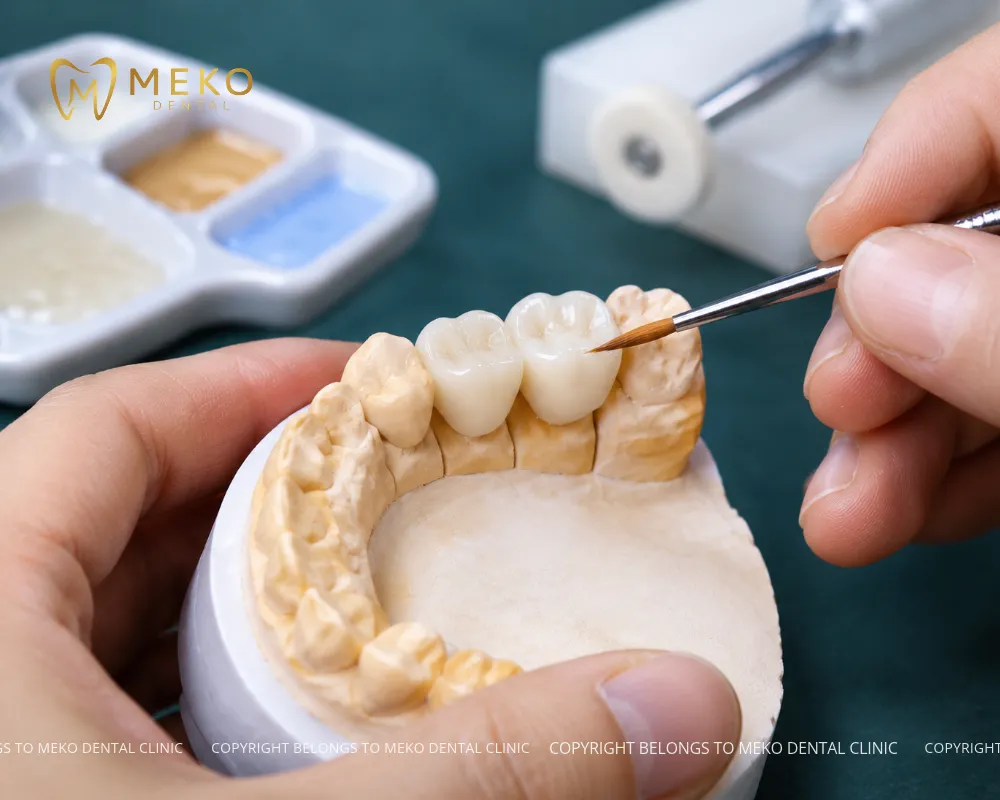
Impressions are then taken with putty or a digital scanner and sent to the laboratory. A temporary crown, usually made of resin or acrylic, protects the tooth while the permanent one is being made.
4.2 Second visit – Fitting and bonding the crown
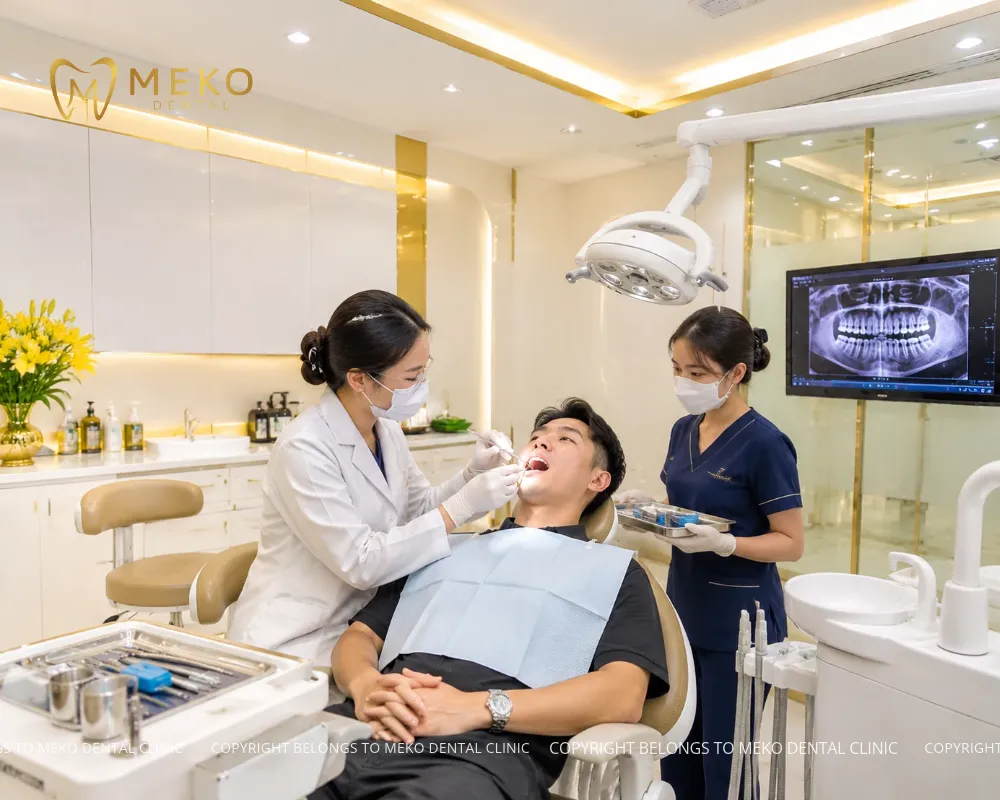
The temporary crown is removed, and the dentist checks the shape, color and fit of the new crown. Once everything is satisfactory, the crown is bonded to the tooth with strong dental cement. If the bite or fit needs refining, a short extra visit may follow.
4. Are porcelain crowns permanent?
Porcelain crowns are long-lasting but not permanent. The average lifespan is five to 15 years, and with good maintenance some crowns last considerably longer, even up to 30 years. Eventually, wear, cracks or decay around the edges mean the crown will need to be replaced.
How long porcelain dental crowns last depends on several factors. Daily cleaning around the crown margin matters a great deal, as do habits such as grinding, clenching or chewing ice. The crown material and the tooth’s position also play a role, since back teeth bear heavier forces than front teeth.
5. Advantages and disadvantages of porcelain dental crowns
Porcelain dental crowns offer a natural appearance together with solid protection for a weakened tooth. They also come with trade-offs, which are worth understanding before treatment begins.
The main advantages are:
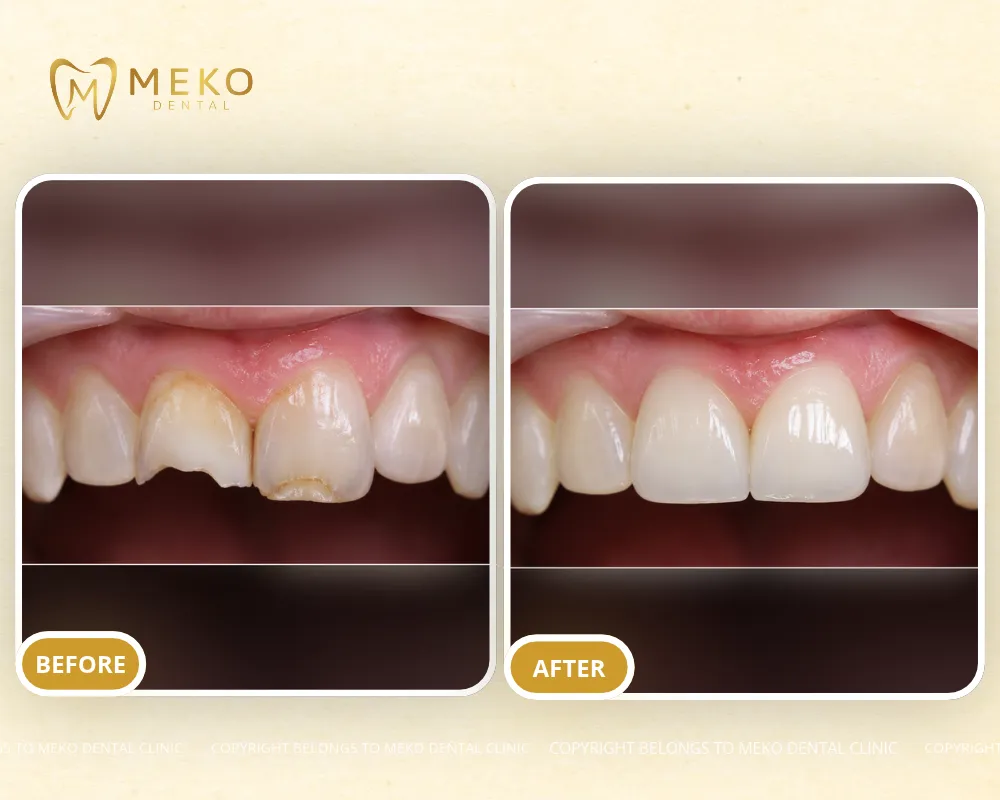
- They can extend the life of a decayed, worn or broken natural tooth.
- They protect the tooth from further wear and improve chewing function.
- They can improve the look of a stained or uneven tooth.
The main disadvantages are:
- Some natural enamel has to be removed during preparation.
- Sensitivity is common, especially during the first few weeks after placement.
- Crowns can break or fracture over time, and the cost can be significant.
- A rare allergic reaction to crown materials is possible.
6. Cost of porcelain dental crowns in Vietnam
The cost of porcelain dental crowns in Vietnam depends mainly on the material and brand, and it ranges widely. At Meko Dental Clinic, listed prices run from 3,000,000 VND to 15,000,000 VND per tooth depending on the crown line. Porcelain-fused-to-metal is at the lower end, while e.max and the higher-priced lines sit above it.
The table below shows the main options with approximate conversions for international patients. Prices were checked against Meko’s published price list in 2026.
| Meko crown option | Material type | Price per tooth (VND) |
| Porcelain fused to cobalt-chrome | PFM | 3,000,000 |
| Titanium porcelain | PFM | 4,000,000 |
| Zirconia HT Smile | Zirconia | 5,000,000 |
| Cercon HT | Zirconia | 6,000,000 |
| Lava Plus 3M | Zirconia | 7,000,000 |
| e.max | Lithium disilicate | 8,000,000 |
7. Treatment time for porcelain dental crowns in Vietnam
Treatment time depends mainly on whether the clinic makes crowns in its own laboratory. The two to three weeks cited for the standard procedure is a typical figure for conventional laboratories. In Vietnam, an outside laboratory working closely with the clinic often needs only 5 to 7 days, and an in-house CAD/CAM lab can shorten the wait further.
Meko Dental Clinic compares the two approaches in this way:
| Outside lab | In-house lab | |
| Wait time | 5 to 7 days | A few hours to 1 day |
| Number of appointments | 2 to 3 visits | 1 visit |
| Adjustments | Sent back, depends on shipping | Made immediately on site |
This matters most for visitors with limited time in the country, since each extra appointment can mean extra days of travel. Single-visit crowns still depend on the tooth, so the dentist decides after the examination whether the technique suits the case. Cases that need extra work first, such as a root canal, take longer.
8. Porcelain dental crowns at Meko Dental Clinic
Meko Dental Clinic is located at 43 Yersin, Ben Thanh Ward, Ho Chi Minh City, and is open every day from 8:00 to 18:00. Patients who want porcelain dental crowns can review the clinic’s setup, doctors and prices on its website before booking.
Several points distinguish the clinic:
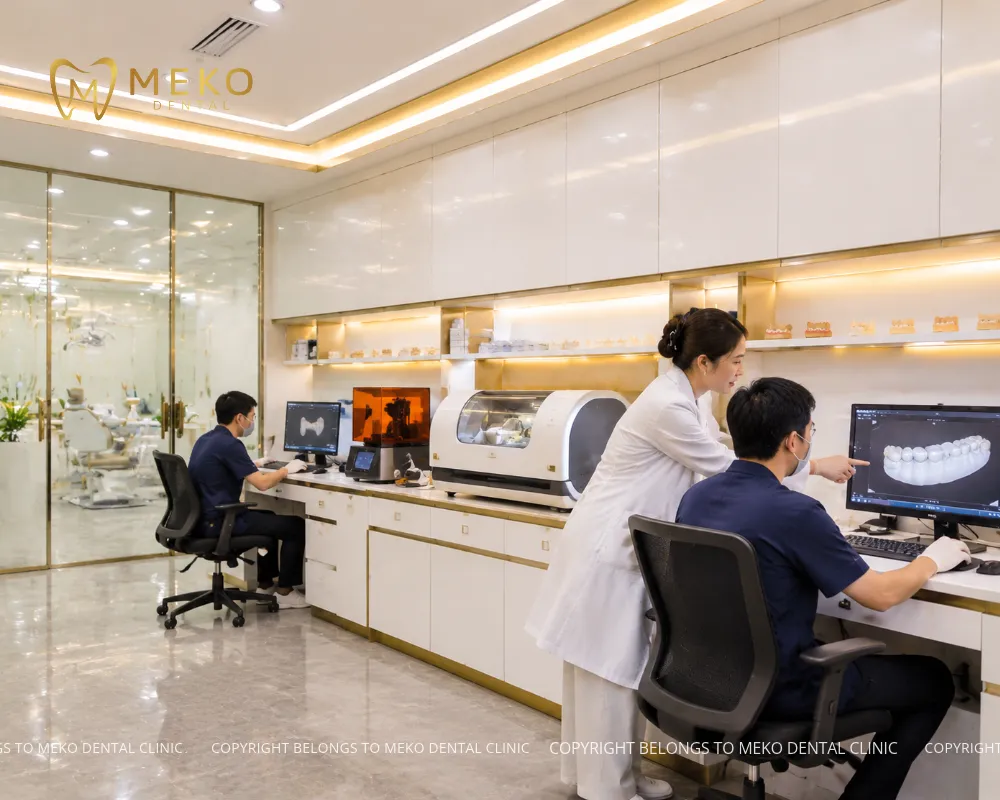
- In-house CAD/CAM lab: crowns are designed and milled on site, so technicians and doctors work in the same space and adjustments are made during the appointment.
- Digital workflow: Cone Beam CT imaging and digital scanning support diagnosis and planning, replacing traditional putty impressions.
- Published doctor credentials: Dr. Nguyen Tang Lan Huong (about 10 years of clinical experience) hold practicing licenses and a Postgraduate Specialty Degree (CKI) in Odonto-Stomatology.
- Transparent pricing: crown prices by material and brand are published online, with VAT included.
- Support for visitors: the clinic offers dental holiday packages that combine treatment with airport pick-up, hotel booking and sightseeing. Its price list also describes a complimentary package for treatment plans of 16 or more crowns with a total value of 150,000,000 VND.
9. Conclusion
Porcelain dental crowns restore damaged teeth with a natural appearance and dependable function. Their lifespan depends on the material, the quality of the fit and how well the crowned tooth is looked after. A professional examination is the best first step toward choosing the right crown for each tooth.


 Messenger FB
 WhatsApp
 Book now