

Contents [ Hide ]
Composite veneers are one of the easiest ways to fix a chipped, gapped or stained front tooth, and in most cases the result is ready the same day. This guide from Meko Dental breaks down what the material actually does, how the procedure works, the honest trade offs against porcelain, and what it costs in Vietnam.
1. What are composite veneers?
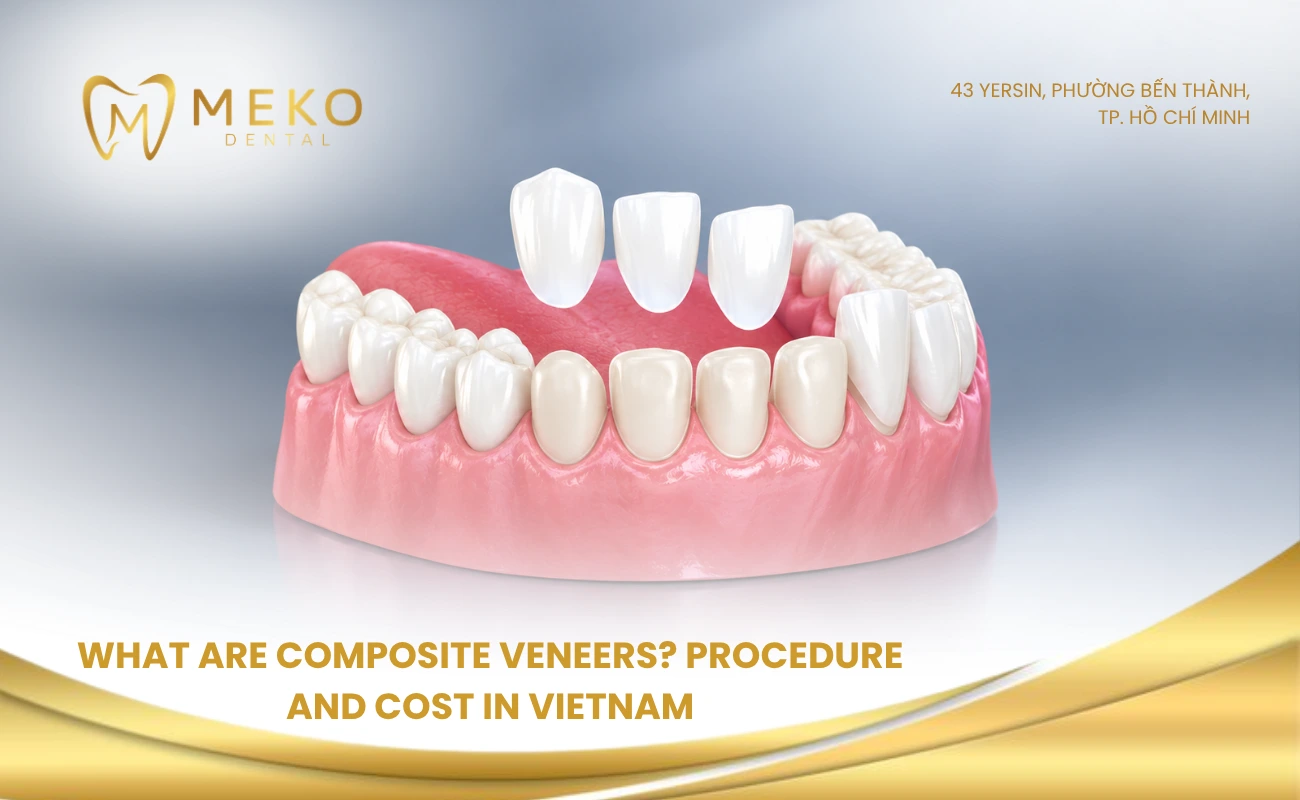
Composite veneers are thin layers of tooth colored resin that a dentist sculpts directly onto the front of a tooth to reshape it or change its color. The material is the same resin used in tooth bonding, applied freehand and hardened layer by layer with a curing light. Most cases are finished in a single visit, which is one of the main reasons people search for this treatment over porcelain.
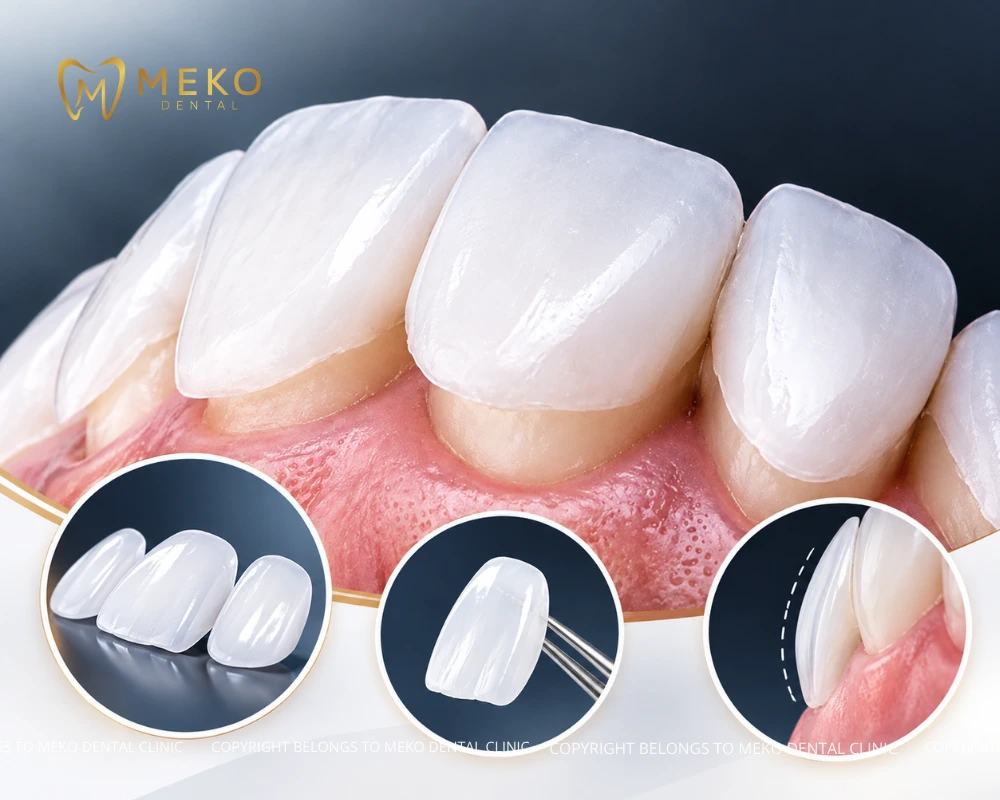
So what is a composite veneer, exactly? It is a conservative alternative to a full porcelain shell, built up freehand on the tooth rather than fabricated in a lab. Because so little of the natural tooth is altered, patients often ask what a composite veneer treatment is really changing.
The answer is mostly the visible surface, not the structure underneath. This is why dentists usually recommend this option for smaller aesthetic corrections rather than major rebuilds.
2. Who is a good candidate for composite veneers?
This treatment works best for patients with reasonably healthy teeth who want to fix minor cosmetic issues rather than major structural damage. A dentist checks enamel condition, bite alignment and gum health before confirming eligibility.
2.1 Good candidates for composite veneers
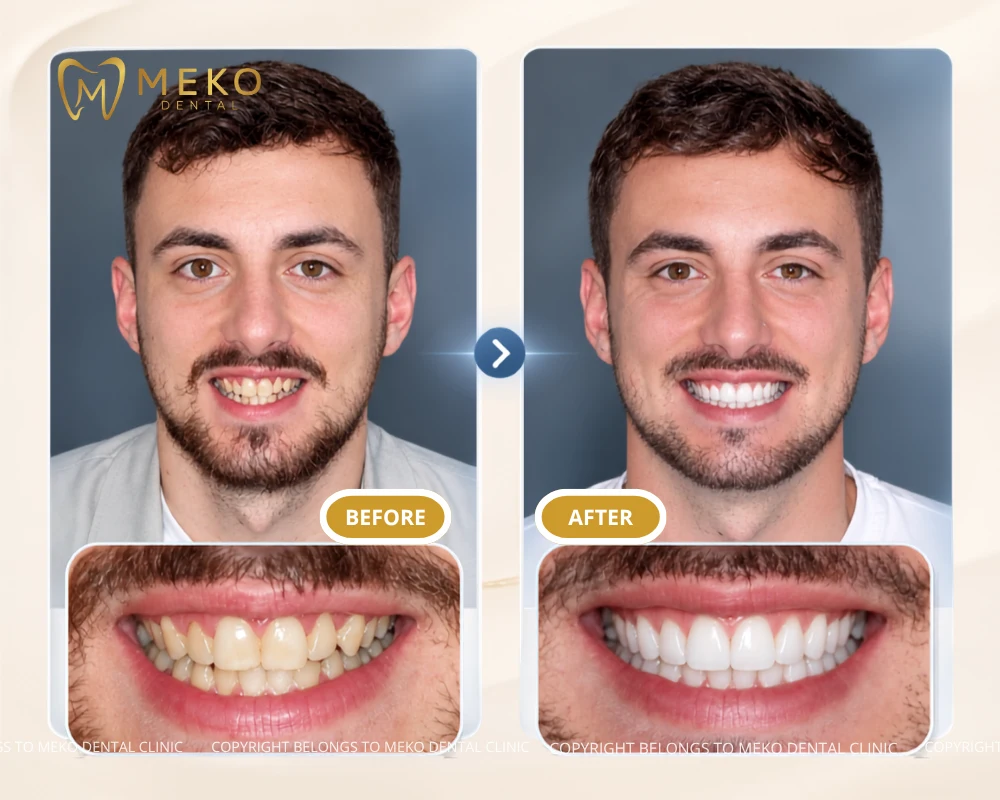
This option suits patients whose teeth are structurally healthy but have small cosmetic flaws that stand out in everyday photos or conversation. A dentist usually looks for cases like these before recommending it:
- Front teeth that are chipped, worn down, or slightly misaligned
- Small gaps between teeth that do not need orthodontic treatment
- Tooth discoloration that hasn’t improved much with whitening treatments
- Enough sound enamel to support direct bonding
2.2 When to avoid this treatment
It is generally not the right tool for teeth with active decay, large existing fillings, significant misalignment or advanced gum disease. In those cases the underlying issue is usually treated first, or a crown or orthodontic option is discussed instead.
3. What sets direct and indirect composite veneers apart?
The direct version is sculpted onto the tooth chairside in one appointment. The indirect version, by contrast, is fabricated outside the mouth and bonded on at a second visit. Both use the same resin family, so the real difference is in how the material is shaped and cured.
Prefabricated veneer composite systems are polymerized under higher heat, light and pressure than is possible in the mouth, which gives them a harder, more uniform surface. The trade off is that they can be harder to adapt precisely at the gumline and between teeth. Once the piece is made, the dentist has less freedom to hand sculpt fine detail on it.
4. Comparing composite veneers and porcelain veneers
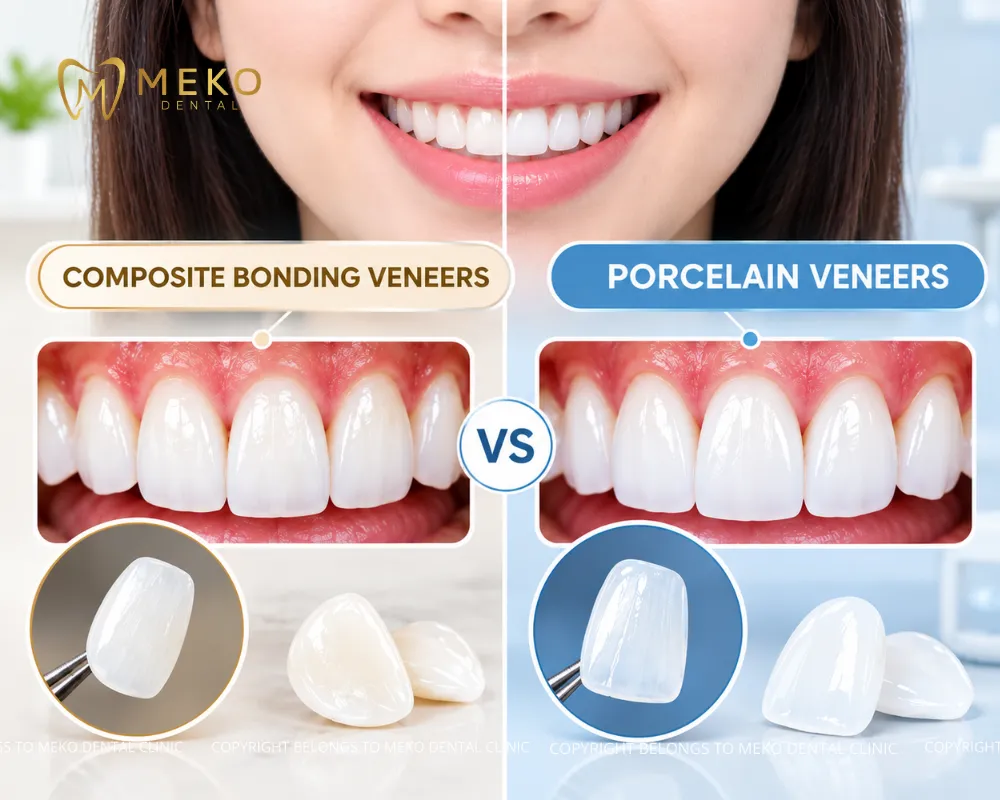
This option costs less and can usually be completed in one visit, while porcelain veneers last longer and resist staining better. The right choice depends on budget, timeline and how much correction the teeth actually need.
| Factor | Composite veneers | Porcelain veneers |
| Typical lifespan | 5 to 7 years | 10 to 15 years |
| Number of visits | Usually one | Two or more |
| Tooth reduction | Little to none in most cases | Around 0.3 to 0.5mm |
| Repair process | Can be repaired chairside | Usually needs full replacement |
| Stain resistance | Similar to natural enamel | Higher, due to glazed surface |
| Relative cost | Lower | Higher |
4.1 When composite is the better choice
Composite fits patients who want a same day result, a lower starting cost, or a reversible trial correction before committing to something more permanent. It also suits anyone who prefers a material they can touch up gradually rather than replace all at once.
4.2 When porcelain is the better choice
Porcelain fits patients who drink a lot of coffee, tea or red wine, or who want a longer term result with less maintenance. It also holds up better for larger smile makeovers where several teeth need a consistent, long lasting shade.
5. How composite bonding veneers are applied
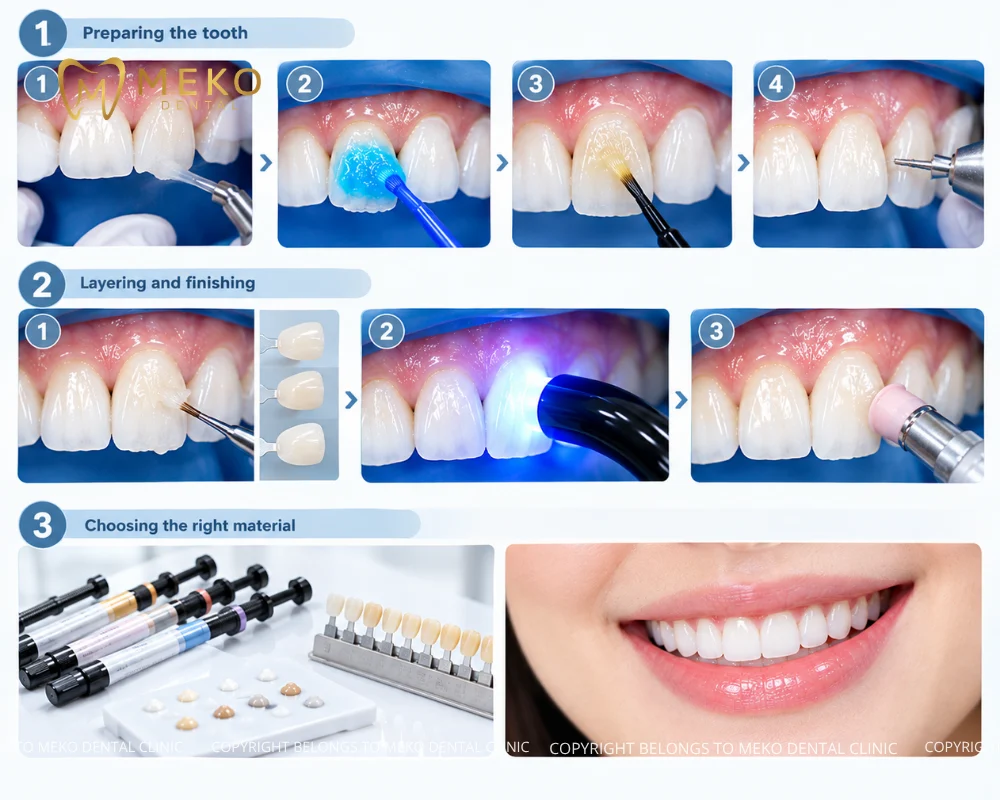
Composite bonding veneers involve two main stages: preparing the tooth surface, then building up the resin itself. Most direct cases skip drilling entirely, so many patients specifically look for composite bonding veneers as the lower intervention option compared with porcelain.
5.1 Preparing the tooth
Before any resin touches the tooth, the dentist works through a short prep sequence to make sure the bond will hold:
- The dentist cleans the teeth and isolates the working area to keep it dry
- A mild acid etches the enamel surface so the resin can bond securely
- A bonding agent is applied on top of the etched surface
- Small reshaping with a fine bur is only used where an edge is sharp or slightly rotated, so most teeth keep their original structure intact
5.2 Layering and finishing
Once the tooth is prepped, the actual veneer takes shape in a few careful passes:
- The dentist builds up thin layers of composite resin, alternating dentin and enamel shades to mimic natural tooth anatomy
- A curing light hardens each layer before the next one is added
- Once the shape and shade look right, the surface is polished so it blends smoothly with the surrounding teeth
This bonding process is what makes the treatment reversible in most cases, since so little natural tooth is removed. Most people do not need anesthesia for this type of composite veneers procedure, since so little enamel is changed. A single tooth is often finished in under an hour, though a full set across several front teeth naturally takes longer.
5.3 Choosing the right material
The best composite for veneers is usually a microhybrid or nanohybrid resin, chosen for its balance of strength, polishability and natural light reflection. Not every composite for veneers behaves the same way, so a dentist experienced in cosmetic layering will often mix two or three shades rather than relying on one straight from a single syringe.
6. Composite veneers cons and disadvantages
The main composite veneers disadvantage is durability. Composite is softer than porcelain, so it chips more easily and needs maintenance sooner. It also tends to pick up surface stains faster than porcelain, especially with coffee, tea, red wine or tobacco.
Other issues that come up in clinical reviews include:
- Fracture or chipping at the edges under heavy biting force
- Gradual color change and loss of surface gloss over several years
- Results that depend heavily on the treating dentist’s skill, since shaping is done freehand rather than milled
None of this makes composite a bad option. It just means patients should think of it as a mid term fix rather than something permanent, with a polish here and there and a replacement down the line.
7. How long do composite teeth veneers last?
Composite teeth veneers typically last 5 to 7 years with proper care, depending on bite force, diet and hygiene habits. Long term studies on direct composite build ups have reported survival rates of roughly 85 percent at the five year mark, which is solid but still shorter than the 10 to 15 years documented for porcelain.
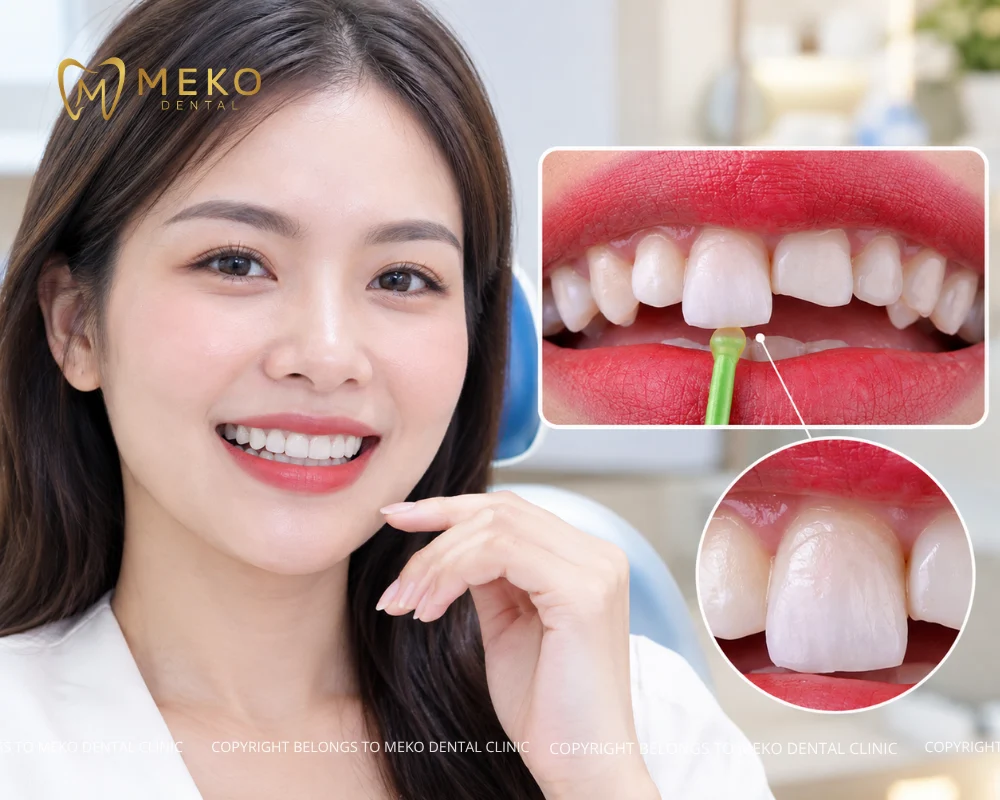
A few habits make a real difference to lifespan. Brushing with a nonabrasive toothpaste avoids scratching the surface, and avoiding hard objects like ice or pen caps protects the edges from chipping. Limiting staining drinks such as coffee and red wine slows discoloration.
8. How much do composite veneers cost in Vietnam
A single tooth correction, such as closing a small chip or gap, generally runs from a few hundred thousand up to around one to two million VND. The exact figure depends on how many layers of shading and sculpting the case needs. Composite veneers are usually offered as a cosmetic bonding service in Vietnam rather than marketed as a separate luxury treatment.
Porcelain veneers cost more, typically from about 6 to 18 million VND per tooth depending on the material and clinic. Composite is almost always the cheaper starting point, so many patients treat it as a trial before upgrading to porcelain later. Pricing still varies by clinic and case, so a written quote after an exam is the only reliable number.
Anyone considering composite veneers should start with an in person evaluation rather than relying only on online research. A short consultation can confirm whether composite is the right fit, or whether porcelain veneers or orthodontics would serve the smile better in the long run. At Meko Dental Clinic, this type of assessment is available for patients in Ho Chi Minh City who are exploring their options for cosmetic dentistry.
References
- Cleveland Clinic (medically reviewed). “Veneers What Are Dental Veneers Cost Procedure and Advantages.” https://my.clevelandclinic.org/health/treatments/23522-dental-veneers
- El-Mowafy O, El-Aawar N, El-Mowafy N. “Porcelain veneers an update.” Dental and Medical Problems. 2018 Apr-Jun;55(2):207-211. https://pubmed.ncbi.nlm.nih.gov/30152626/
- “Composite Resin Veneers Current Techniques and Long-Term Clinical Success.” ResearchGate. https://www.researchgate.net/publication/404010133_Composite_Resin_Veneers_Current_Techniques_and_Long-Term_Clinical_Success
- Larson, J. (medically reviewed by Jennifer Archibald, DDS). “Composite Veneers Pros and Cons, Procedure, Cost, and Alternatives.” Healthline. https://www.healthline.com/health/composite-veneers





 Messenger FB
 WhatsApp
 Book now