
Contents [ Hide ]
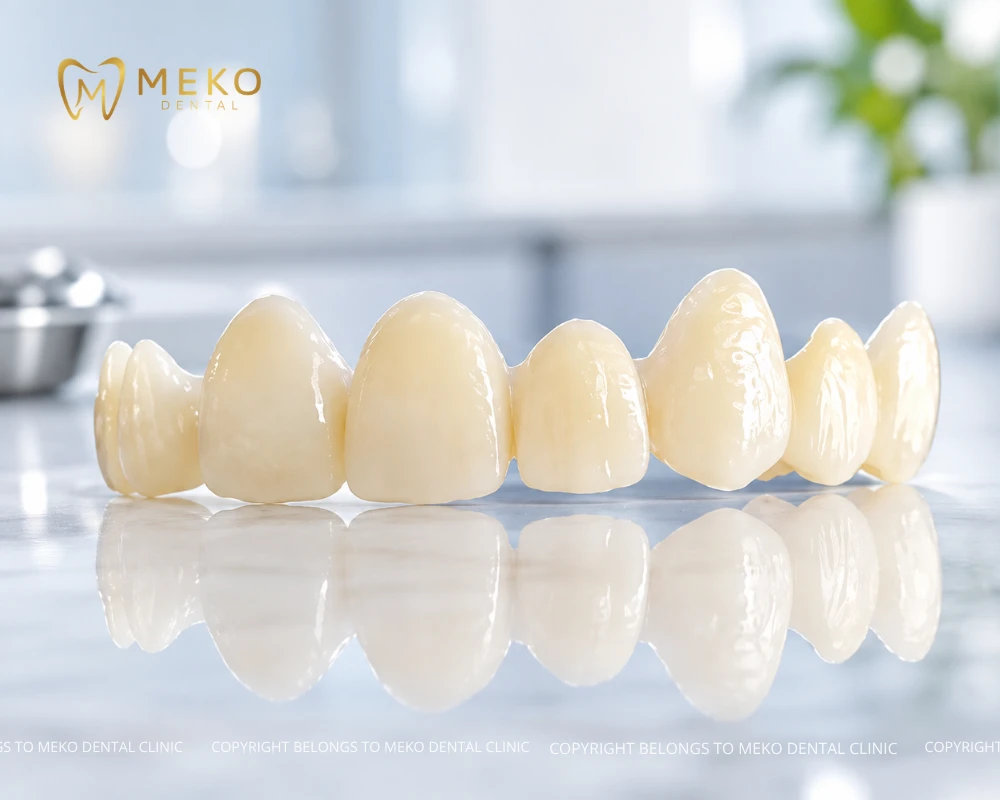
Emax veneers have become one of the most requested cosmetic dental solutions among patients who want a brighter, more even smile without an artificial look. Made from lithium disilicate glass-ceramic, this material is valued for combining strength with a light-transmitting quality close to real enamel.
1. What are emax veneers?
Among the many types of dental veneers, emax is one of the most requested for a natural, non-metallic look. Emax veneers are thin ceramic shells bonded to the front surface of a tooth to change its color, shape, or minor alignment. The material is IPS e.max, a lithium disilicate glass-ceramic originally developed by Ivoclar Vivadent.
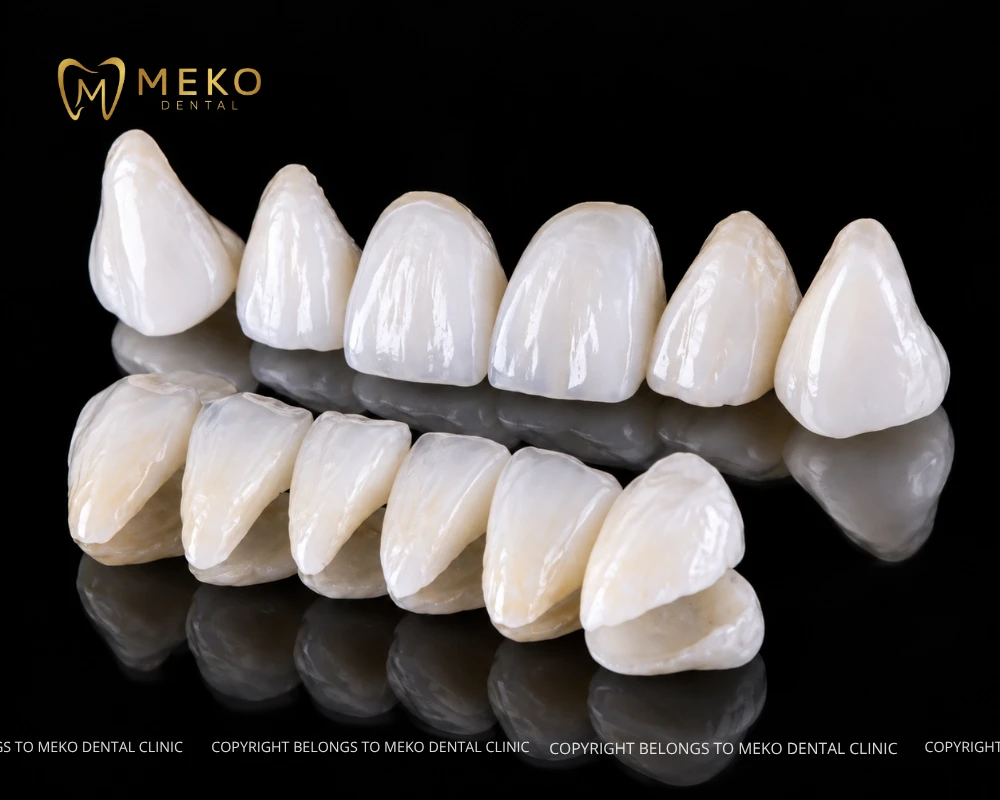
Unlike older veneer materials, emax porcelain veneers only need 0.3 to 0.5 millimeters of enamel removed before bonding. Some healthy, well-aligned cases can even go non-prep with little to no reduction. This is why dentists often recommend emax laminate veneers for discoloration, chipped edges, or small spacing issues rather than more invasive restorations.
2. The material behind these veneers
A common question before treatment is what are emax veneers made of, and the answer starts with lithium disilicate. This reinforced glass-ceramic starts as a partially crystallized block, is either pressed or milled into shape, then fired at high temperature to lock in its final strength and translucency.
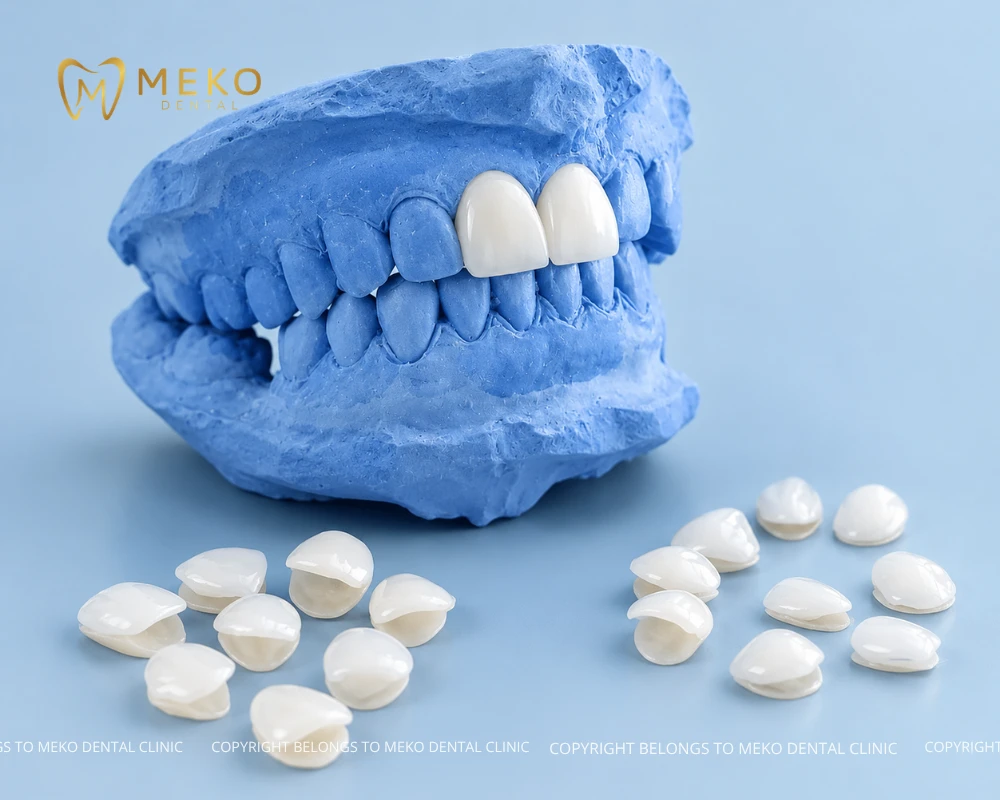
Dental labs typically choose between two ways to shape the ceramic. The press technique heats an ingot into a mold, favored for color depth, while CAD/CAM milling carves the restoration from a digital scan for speed and consistency. Ips emax veneers made either way share the same base chemistry, so the choice usually comes down to lab workflow.
3. What makes emax different from other porcelain veneers?
This ceramic falls within the broader family that dentistry calls porcelain, though it is not the same as older feldspathic porcelain. Both are tooth-colored and translucent, but the lithium disilicate base gives noticeably higher flexural strength.
Patients searching for porcelain emax veneers are usually comparing it against traditional layered porcelain, which relies on a skilled ceramist hand-building thin layers by hand. Emax already has strong optical properties on its own, without needing that extra hand-layering step.
4. Veneer or crown: Which emax restoration fits your tooth?
An emax veneer covers only the front surface of a tooth, while an emax crown wraps around the entire tooth and requires more reduction. The right choice depends on how much healthy tooth structure remains.
- Veneer is enough when: the tooth is structurally sound and the goal is purely cosmetic, such as correcting color, shape, or small gaps.
- Crown becomes necessary when: the tooth has significant decay, a large filling, a root canal, or a fracture, since a thin shell cannot compensate for lost structural support underneath.
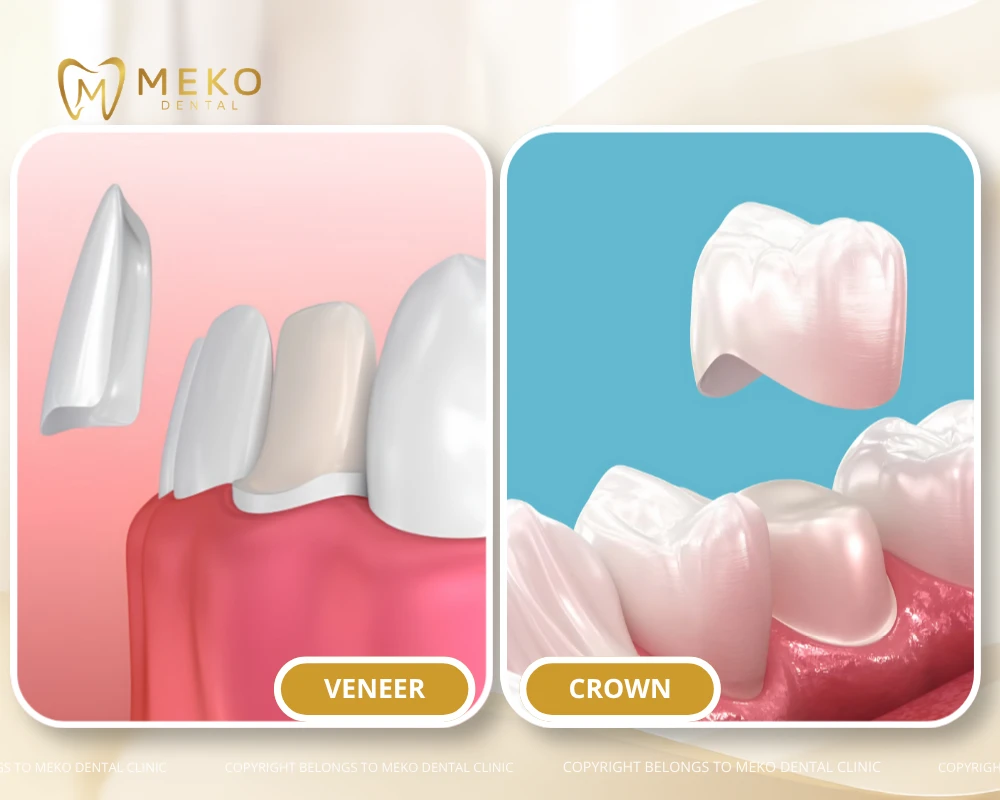
A dentist typically confirms this distinction with an X-ray before finalizing the treatment plan. This step also rules out issues like hidden decay or a cracked root that a visual exam alone might miss.
5. Emax veneers pros and cons
Every restorative material involves trade-offs. Weighing them honestly helps set realistic expectations before treatment begins.
5.1 Advantages
The main benefits come from the material’s strength and how closely it mimics natural teeth.
- Natural, light-reflective appearance that closely resembles real enamel.
- Conservative tooth preparation compared with crowns or older veneer materials.
- Strong resistance to staining once the ceramic surface is glazed.
- Consistent thickness thanks to digital, CAD/CAM-guided fabrication.
5.2 Disadvantages
The trade-offs mostly relate to cost, technique sensitivity, and the fact that the process cannot be undone. A frequent concern patients raise is whether do emax veneers ruin your teeth. The honest answer depends entirely on how conservative the preparation is and how well the bite is managed afterward.
- Higher upfront cost than composite veneers.
- Requires a skilled ceramist to match shade and translucency precisely.
- Not ideal for heavy grinders without a protective night guard.
- Enamel removal, even a small amount, is irreversible, so the tooth will always need a veneer or crown going forward.
6. Who is a good candidate for this treatment?
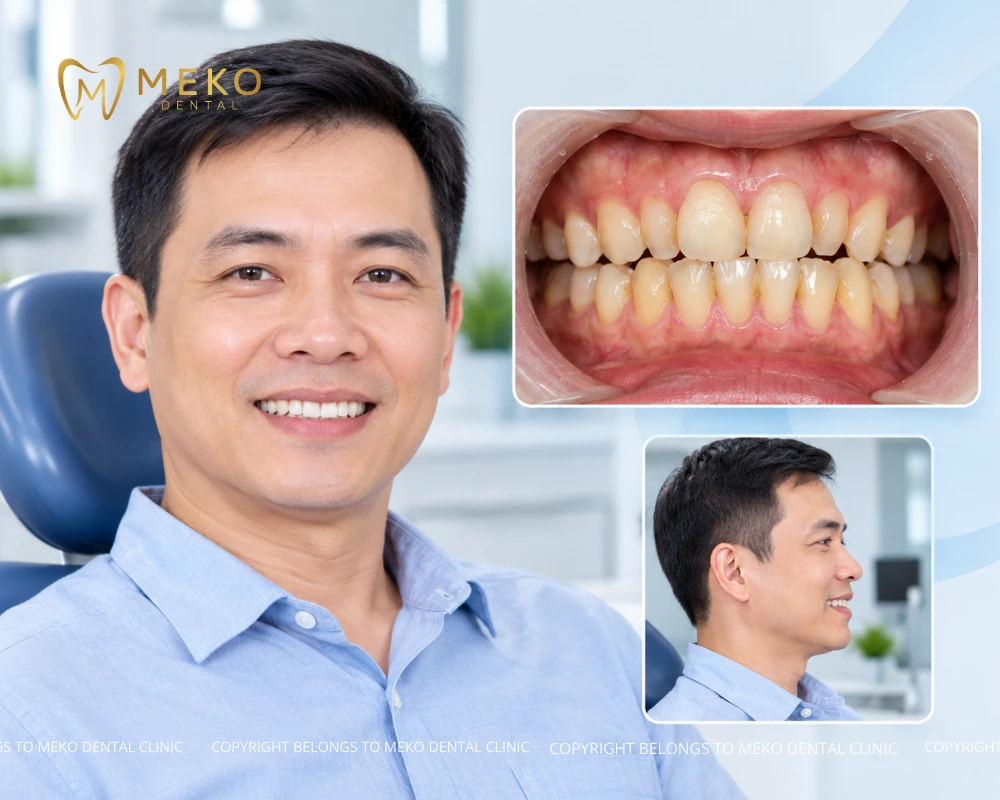
Patients with healthy teeth, stable bite patterns, and enough intact enamel to bond to are generally strong candidates. A dentist typically checks gum health, existing restorations, and grinding habits during the consultation before confirming this.
- Good candidates: healthy enamel, a stable bite, and teeth free of active decay or gum disease.
- May need other treatment first: active gum disease, untreated decay, or significant misalignment.
- Needs extra planning: very dark underlying teeth, since emax’s translucency can sometimes let deep discoloration show through unless managed with a more opaque layering technique or a different material.
7. How much do emax veneers cost?
Emax porcelain veneers cost varies by country, case complexity, and how many teeth are treated, so there is no single fixed number that applies everywhere. Patients asking about pricing should expect per-tooth ranges in several Western markets to sit well into four figures in US dollars. Private clinics in Vietnam commonly publish rates that are a fraction of that.
The main factors affecting the price of emax veneers include:
- The number of veneers needed to complete the smile design.
- Whether the case only needs laminate veneers or more extensive preparation.
- The lab’s fabrication method, since hand-layered pressed ceramic can involve more labor than a milled block.
- The clinic’s location and the experience level of the treating dentist and ceramist.
Patients comparing veneers emax price across clinics should ask exactly what is included. Some quotes cover only the ceramic work, while others bundle in consultation, temporary veneers, a digital smile preview, and follow-up adjustments.
8. The emax veneers treatment process, step by step
This treatment typically spans two to three visits over one to two weeks, moving from consultation to final bonding. Each stage protects the tooth while working toward an accurate, comfortable fit.
8.1 Consultation and design
The dentist examines the teeth and bite, takes photographs or a digital scan, and often builds a digital or physical mock-up. This lets the patient preview the planned shape and shade before any tooth is touched.
8.2 Emax veneers preparation
A thin layer of enamel is removed and a digital impression is taken to guide the lab. Temporary veneers are placed the same day while the final restorations are fabricated.
8.3 Bonding emax veneers
Once the finished restorations arrive, the dentist checks fit, contact points, and shade under natural light before cementing them. The process for how to cement emax veneers relies on a resin-based adhesive protocol, since this bonding method is what gives the ceramic its full strength once fixed in place. The margins are then polished to a natural finish.
9. What shade should you choose for emax veneers?
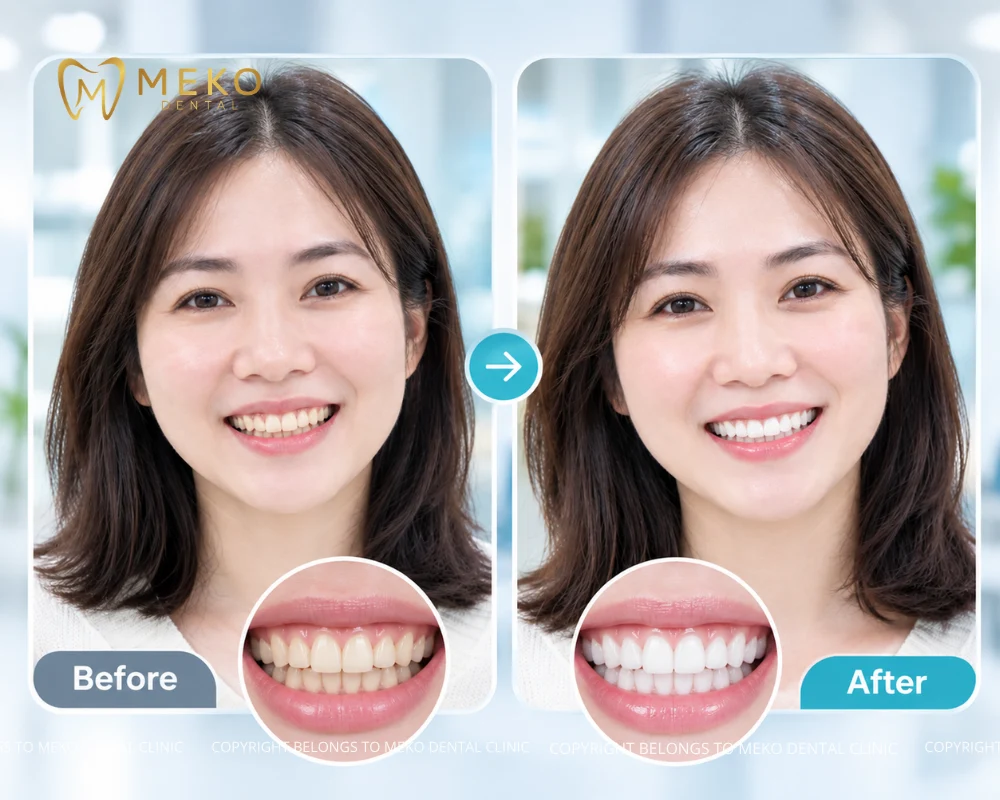
Shade selection has a major effect on how natural or dramatic the final result looks, and it is one of the most personal decisions in the entire process.
| Shade | Effect | Typical preference |
| Bl1 emax veneers | Maximum brightness | Patients wanting a bold, high-contrast smile |
| Bl2 or bl3 | Bright but softer | The most commonly chosen balance of white and warmth |
| B1 emax veneers | Whitest natural-looking tone | Patients wanting a subtle upgrade that still reads as real teeth |
| A1 or a2 | Warm ivory tones | Cases matching existing, unbleached teeth |
Skin tone, lip line, and the color of any untreated adjacent teeth are usually part of this conversation. A shade that photographs beautifully on one patient can look artificial on another.
10. How long do emax veneers last?
They commonly last 10 to 15 years with proper care, and some patients see them hold up longer. Long-term studies on pressed lithium disilicate veneers report survival rates in the low to mid nineties percent range at ten years, with lower but still substantial survival at fifteen to twenty years.
Because the ceramic surface is non-porous once glazed, staining is uncommon over the restoration’s lifespan. Most early failures trace back to bonding technique or unmanaged teeth grinding rather than a flaw in the material itself. This is one reason experience on the clinical side matters as much as the ceramic brand.
11. Meko Dental Clinic’s approach to emax veneers in Ho Chi Minh City
Meko Dental Clinic is based in Ho Chi Minh City and offers emax veneers as part of its dedicated Veneer treatment line. Every consultation starts with a smile assessment, so patients can review shade and shape options before any enamel preparation begins.
For patients weighing emax veneers against other ceramic choices, Meko Dental’s clinical team walks through material selection, shade planning, and expected longevity at the initial visit. Reading an emax veneers review from a similar case can help set expectations beforehand, though a clinical assessment remains the only way to confirm candidacy.
This treatment remains one of the most well-documented options in cosmetic dentistry. It offers a strong balance of natural appearance, conservative preparation, and long-term durability. However, the right decision still depends on individual factors like bite pattern and tooth condition. Patients in Ho Chi Minh City can start with a consultation at Meko Dental Clinic, where the team reviews tooth condition and shade goals before recommending a plan.
References
- Ivoclar Vivadent, IPS e.max technical product documentation: ivoclar.com
- Layton D, Walton T. “An up to 16-year prospective study of 304 porcelain veneers.” International Journal of Prosthodontics, 2012.
- Pieger S, Salman A, Bidra AS. “Clinical outcomes of lithium disilicate single crowns and partial coverage restorations: a systematic review.” Journal of Prosthetic Dentistry, 2014.
- National Center for Biotechnology Information (NCBI/PMC), clinical case reports and reviews on lithium disilicate glass-ceramic laminate veneers: ncbi.nlm.nih.gov/pmc



 Messenger FB
 WhatsApp
 Book now