
Contents [ Hide ]
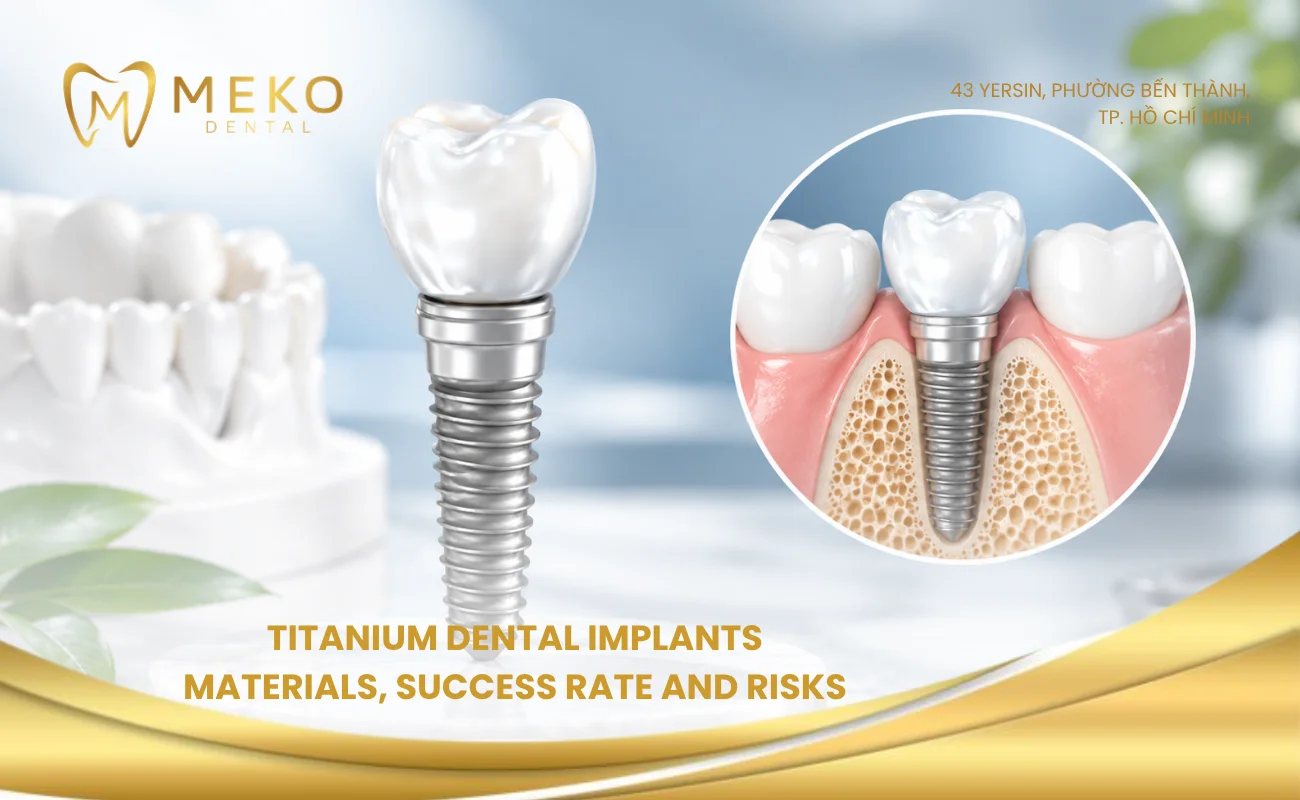
Titanium dental implants are the most widely used option for replacing missing teeth. They act as artificial roots that fuse with the jawbone and carry a crown, bridge or denture. This guide covers how titanium dental implants work, which grades are used, what long-term research shows and what patients should weigh before treatment.
1. What are titanium dental implants?
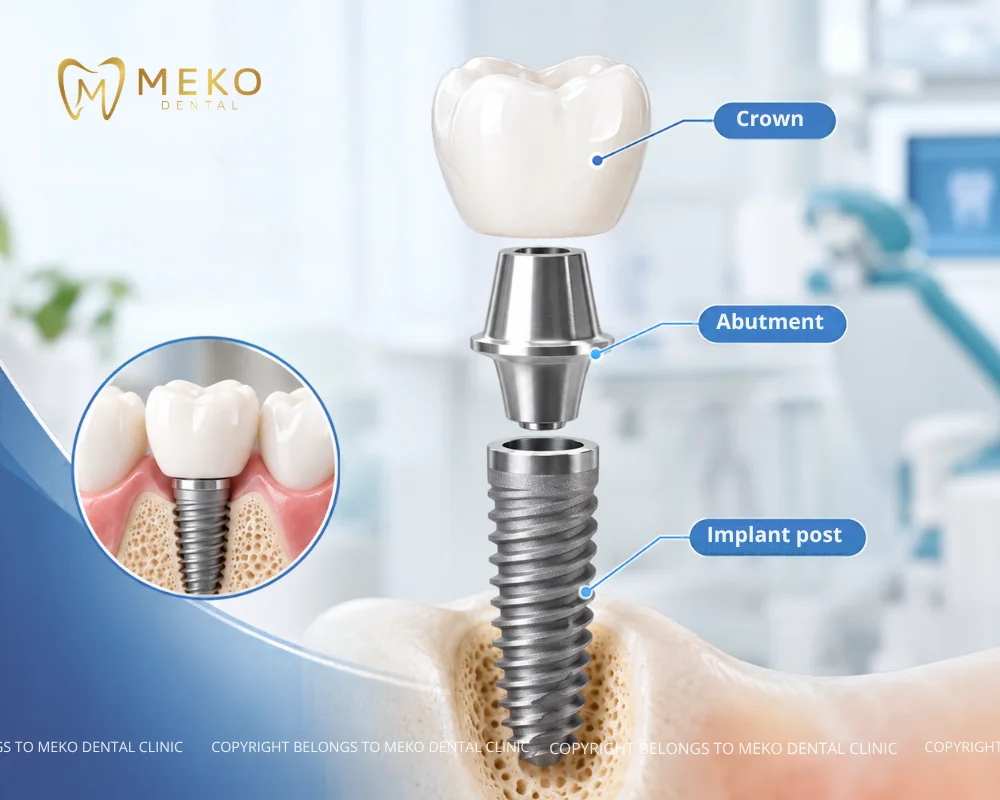
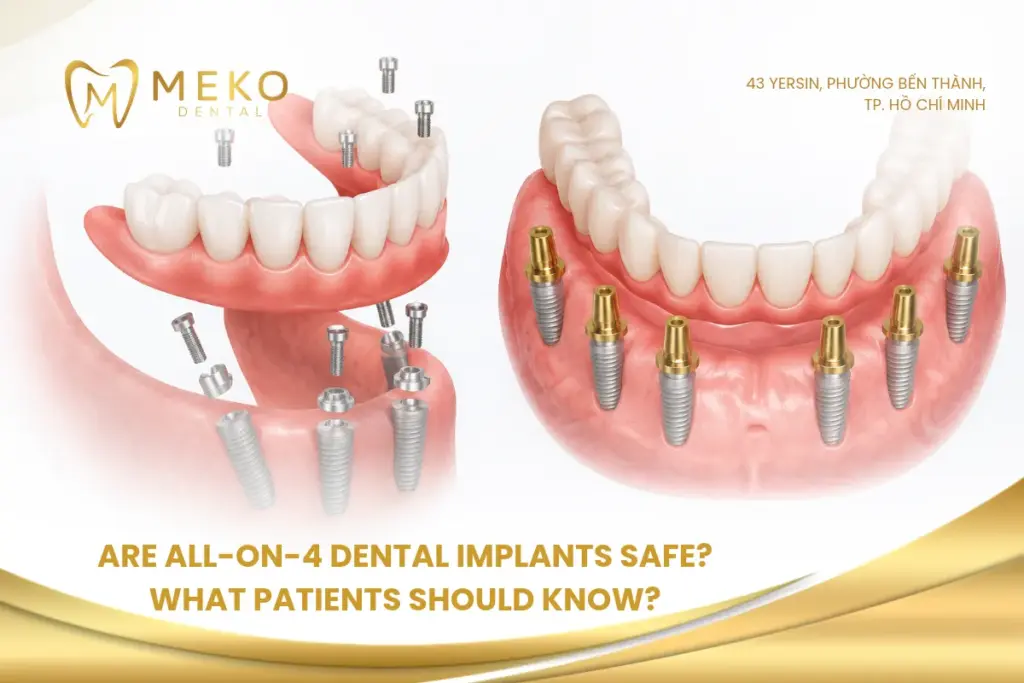
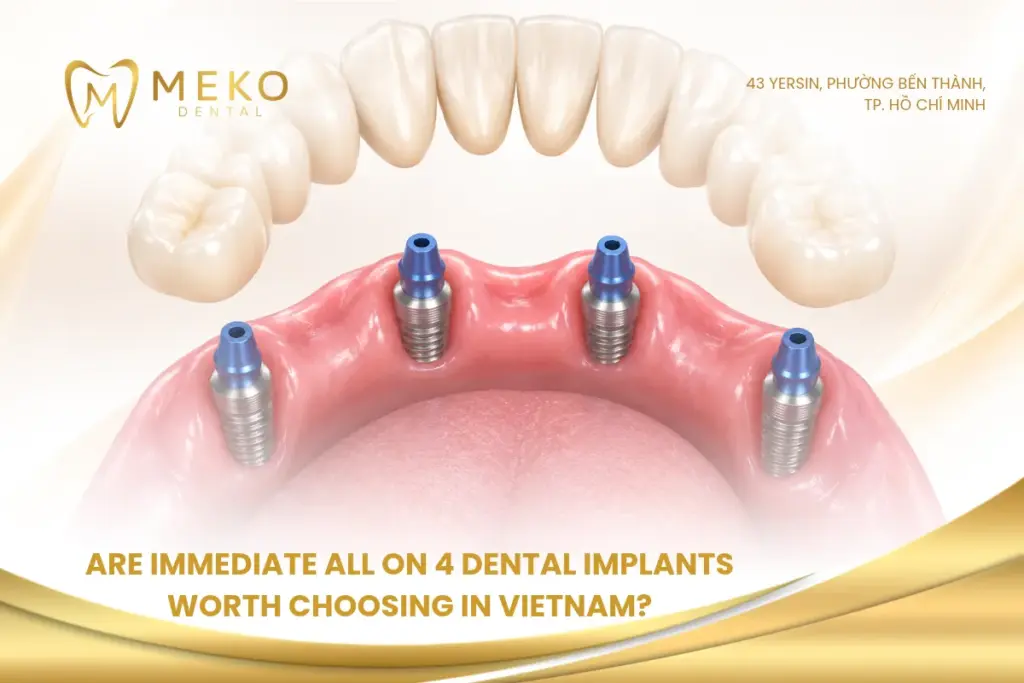
Titanium dental implants are small screw-shaped posts placed in the jawbone to serve as an artificial root for a missing tooth. An abutment links the post to a crown, which restores the visible part of the tooth.
Dental implants for missing teeth are used when a tooth is lost to decay, infection, injury or periodontal disease. They also give patients a fixed alternative to removable dentures.
1.1 Main components of a titanium tooth implant
Every implant restoration relies on three parts that work together:
- Implant post: the titanium fixture anchored in the bone.
- Abutment: the connector that passes through the gum.
- Crown: the tooth-shaped restoration, usually ceramic, that shows in the mouth.
1.2 Endosteal and subperiosteal implants
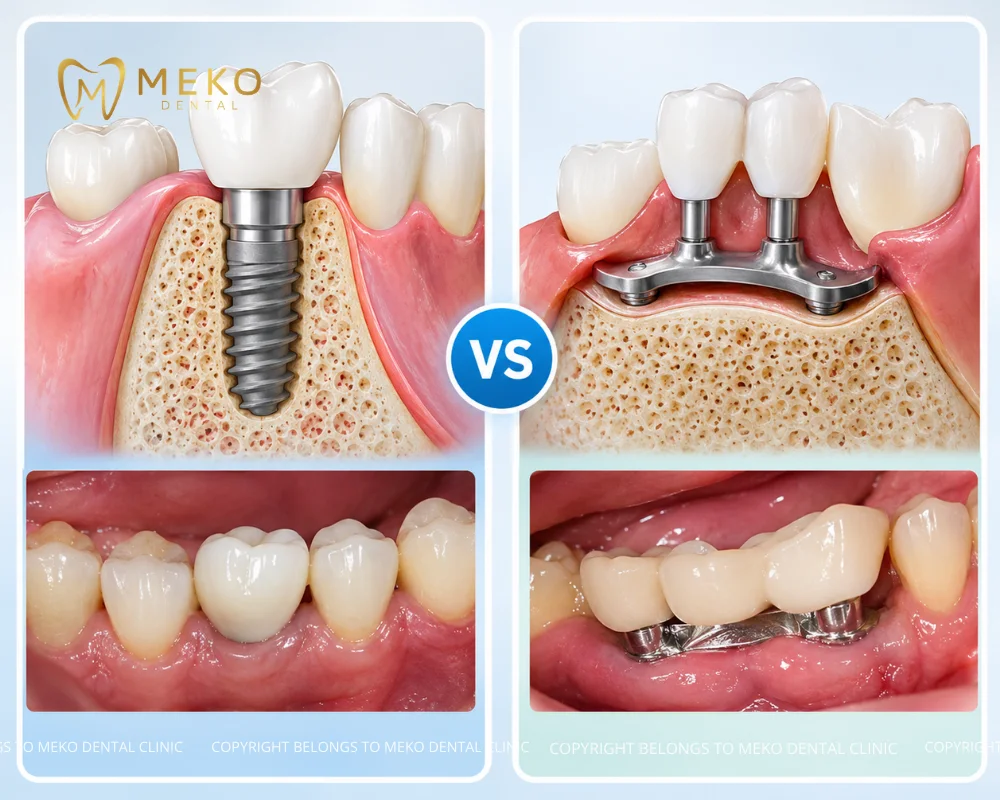
Endosteal implants sit directly inside the jawbone and are the most common type. Subperiosteal implants rest on top of the bone, beneath the gum, and are used far less often. They are usually considered only when bone height or density is too low for a standard post.
1.3 How osseointegration works
Osseointegration is the direct, stable contact that forms between living bone and the implant surface. This bond is what keeps the post firmly in place under chewing forces.
Per-Ingvar Branemark described the phenomenon in 1952 after experiments on rabbit bone. Titanium implants have been in clinical use since the 1960s.
2. Why titanium in dental implants is the standard material
Titanium is used because it is biocompatible, strong and corrosion resistant, and bone can grow onto its surface. Titanium dental implants also has decades of clinical data behind it and a lower cost than many alternative materials.
- Corrosion resistance: Titanium reacts quickly with oxygen and forms a thin oxide layer (TiO2). This layer shields the metal and supports tolerance by body tissue.
- Strength at low weight: Pure titanium is light yet strong enough for chewing forces.
- Imaging compatibility: Titanium biomaterials work with CT and MRI scanning.
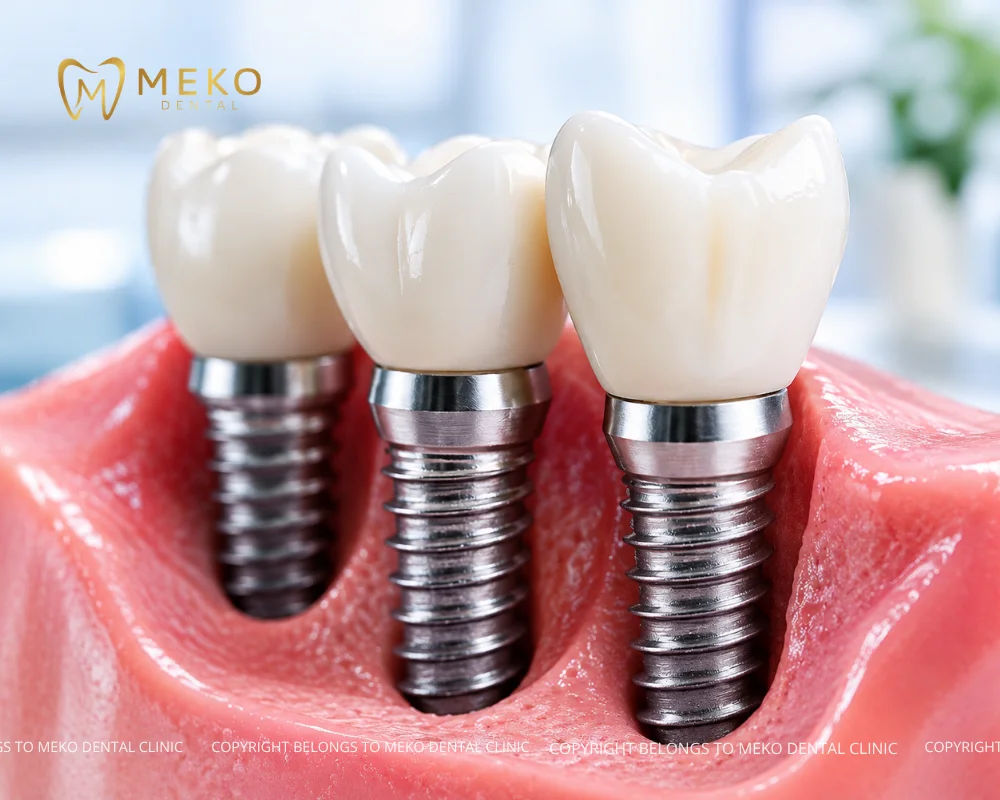
Researchers call titanium bioinert, meaning it provokes little reaction in surrounding tissue. The flip side is that an untreated surface can bond poorly with bone. Manufacturers therefore blast, etch or coat the surface of titanium dental implants to encourage faster healing.
3. Types of titanium used for implants
Dental implants are made from commercially pure titanium (grades I to IV) or from alloys, mainly Ti-6Al-4V. Grade IV pure titanium is the usual choice for titanium implants because it is the strongest of the pure grades.
| Type | Composition | Key points |
| Commercially pure titanium, grades I to IV | 98 to 99.6% titanium | Grade IV holds the most oxygen (about 0.4%) and is the strongest pure grade |
| Ti-6Al-4V alloy | About 6% aluminum and 4% vanadium | High strength and corrosion resistance; trace release of aluminum and vanadium has been reported |
| Titanium-zirconium alloy | 83 to 87% titanium, 13 to 17% zirconium | Reported to have better tensile and fatigue strength than pure titanium |
Because the alloy can release small amounts of aluminum and vanadium, a titanium dental implant body is more often made from the pure grades. Vanadium-free alloys are being developed as well. Surface design is where dental titanium implants differ most between brands.
4. Titanium dental implants vs zirconia implants
Titanium has the longer research record, a lower cost and a lower fracture risk. Zirconia is white, which may suit patients with thin or receding gums, especially for a front tooth implant where appearance matters most. Titanium dental implants remain the more common clinical choice.
| Factor | Titanium | Zirconia (ceramic) |
| Colour | Grey metal, covered by the crown | White, similar to a tooth |
| Strength | Fractures are considered rare | More brittle material |
| Cost | Generally lower | Generally higher |
| Metal allergy | Rare reactions reported | Metal-free |
| Long-term evidence | Data beyond 20 years | Limited; trials mostly cover 1 to 5 years |
When weighing dental implants titanium against zirconia, the main trade-off is evidence versus appearance. A 2023 systematic review found similar survival at 12 months in two randomised trials. A 2025 review concluded that data beyond five years were too scarce to judge zirconia fairly.
5. Titanium implants compared with bridges and dentures
An implant replaces the tooth root, a bridge borrows the neighbouring teeth for support, and a removable denture rests on the gums. Systematic review data show similar ten-year survival for implant crowns and conventional bridges, so the better choice depends on adjacent teeth, bone and budget.
| Option | Anchored by | Practical points |
| Implant crown | Jawbone | Needs surgery and healing time; neighbouring teeth stay untouched |
| Fixed bridge | Teeth beside the gap | No surgery; supporting teeth are usually shaped to hold crowns |
| Removable denture | Gums and remaining teeth | Usually the lowest cost; can be taken out for cleaning |
In the Pjetursson review, estimated ten-year survival was 89.4% for implant-supported single crowns and 89.2% for conventional tooth-supported bridges. The same review found technical complications were more frequent with implant-supported restorations.
| Read more: Benefits of dental implants -8 key advantages, costs and care
6. Success rate of titanium dental implants
Systematic reviews report implant survival of about 94.6% after ten or more years, and 93.0% after twenty years for titanium endosseous implants. Single-centre studies often report higher figures of 96% to 99%. Results depend on bone quality, hygiene and general health.
- Ten-year systematic review: 23 studies covering 7,711 implants, with a mean follow-up of 13.4 years, gave a cumulative survival of 94.6% and mean marginal bone loss of 1.3 mm.
- Twenty-year meta-analysis (2026, online ahead of print): prospective studies of titanium implants reported 93.0% survival (95% confidence interval 91.6 to 94.1%).
- Another twenty-year meta-analysis (2024): survival was 92% in prospective studies and 88% in retrospective ones, which shows that figures shift with study design.
- Single-centre data: a Swiss series of 511 implants in 303 patients reported 98.8% survival and 97.0% success at ten years, with no fractures. A German series of 468 implants reported 99.2% survival and 96.4% success.
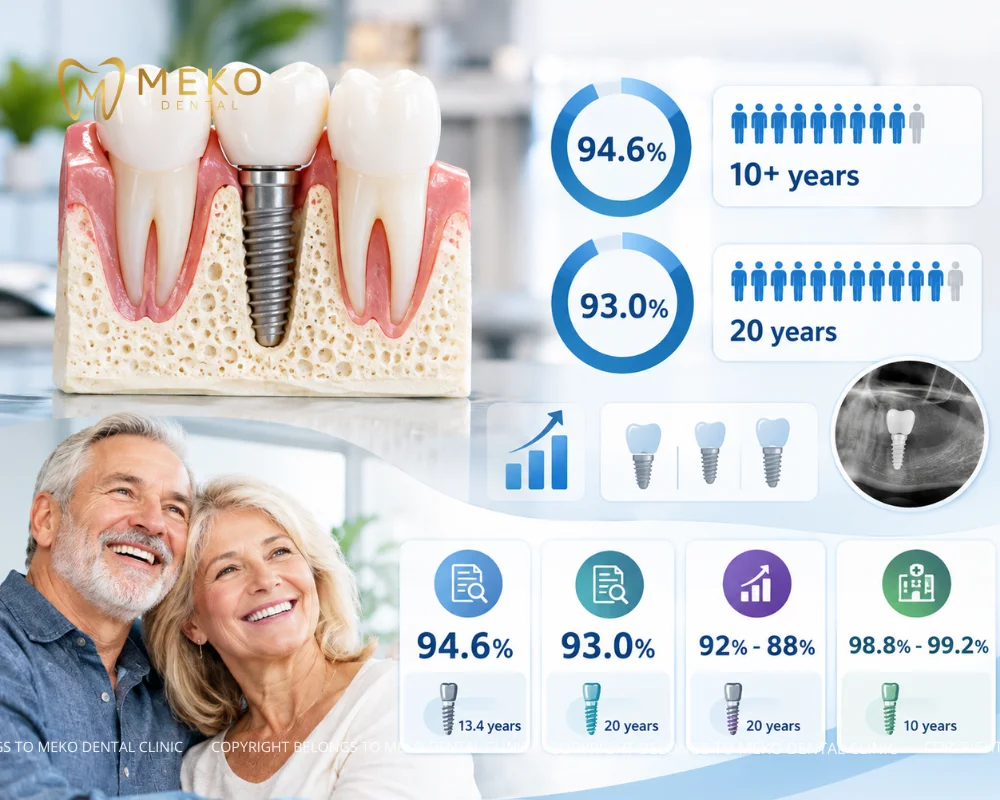
Survival means the implant is still in the mouth, while success applies stricter criteria such as healthy surrounding tissue. Single-centre results tend to exceed pooled estimates, so they are best read as best-case benchmarks.
7. Risks and limitations of titanium teeth implants
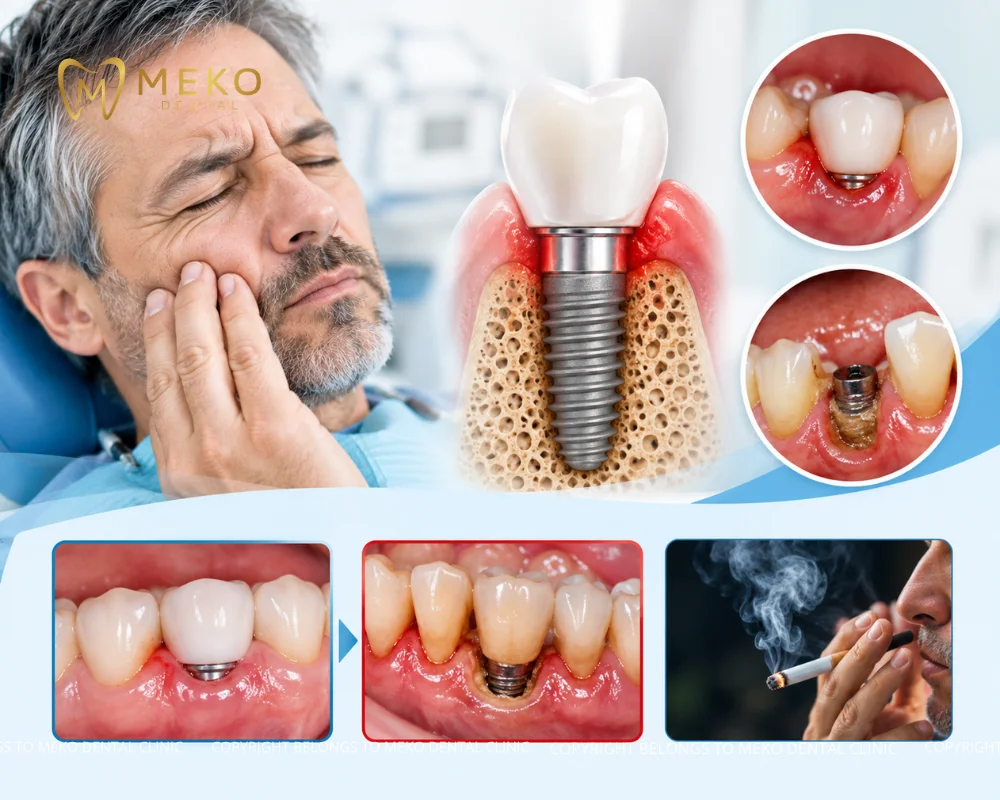
The main risks are infection around the implant, failed bone integration and, rarely, a reaction to titanium. Smoking, uncontrolled diabetes and poor hygiene raise the odds of trouble with titanium teeth implants.
7.1 Infection and peri-implant disease
Some reviews estimate that inflammation around the implant affects about 30% of patients, with higher rates in smokers. Peri-implant mucositis is reversible, but peri-implantitis can destroy supporting bone.
7.2 Health factors that affect healing
Diabetes, osteoporosis, cancer treatment and alcoholism can slow healing. Teeth grinding (bruxism) adds mechanical load that may overload the implant.
7.3 Surgical risks
Swelling and bruising are common after placement and usually fade within days. A badly positioned post can irritate a nerve and cause numbness or tingling in the lip, chin or gum, which is why 3D imaging matters before surgery.
Titanium dental implants rest on decades of clinical evidence, and pooled data report survival of about 88% to 95% at ten to twenty years, depending on study design. Individual outcomes still hinge on planning, gum health, smoking status and upkeep. Anyone considering treatment can book an examination at Meko Dental Clinic to discuss suitability, timing and an itemised plan.
References
- Cherney K. Titanium dental implants. Healthline. Medically reviewed by Frank C, DDS. Updated January 28, 2026. https://www.healthline.com/health/dental-and-oral-health/titanium-implants
- Silva RCS, Agrelli A, Andrade AN, et al. Titanium dental implants: an overview of applied nanobiotechnology to improve biocompatibility and prevent infections. Materials (Basel). 2022;15(9):3150. doi:10.3390/ma15093150. https://pmc.ncbi.nlm.nih.gov/articles/PMC9104688/
- Moraschini V, Poubel LA, Ferreira VF, Barboza ED. Evaluation of survival and success rates of dental implants reported in longitudinal studies with a follow-up period of at least 10 years: a systematic review. Int J Oral Maxillofac Surg. 2015;44(3):377-388. doi:10.1016/j.ijom.2014.10.023. https://pubmed.ncbi.nlm.nih.gov/25467739
- Dental implant survival and marginal bone loss after a minimum of 20 years: systematic review and meta-analysis of prospective studies. Int J Oral Maxillofac Surg. 2026 (online ahead of print). doi:10.1016/j.ijom.2026.05.011. https://pubmed.ncbi.nlm.nih.gov/42173763/
- How far can we go? A 20-year meta-analysis of dental implant survival rates. Clin Oral Investig. 2024;28(10):541. doi:10.1007/s00784-024-05929-3. https://pubmed.ncbi.nlm.nih.gov/39305362/


 Messenger FB
 WhatsApp
 Book now