


Contents [ Hide ]
Composite resin veneers are a popular way to fix chipped, stained, or uneven teeth without removing much natural enamel. A dentist shapes tooth-colored resin directly on your tooth, often in a single visit. This guide explains what composite resin veneers are, who they suit, how long they last, and how they compare with porcelain on cost and durability.
1. What are composite resin veneers?
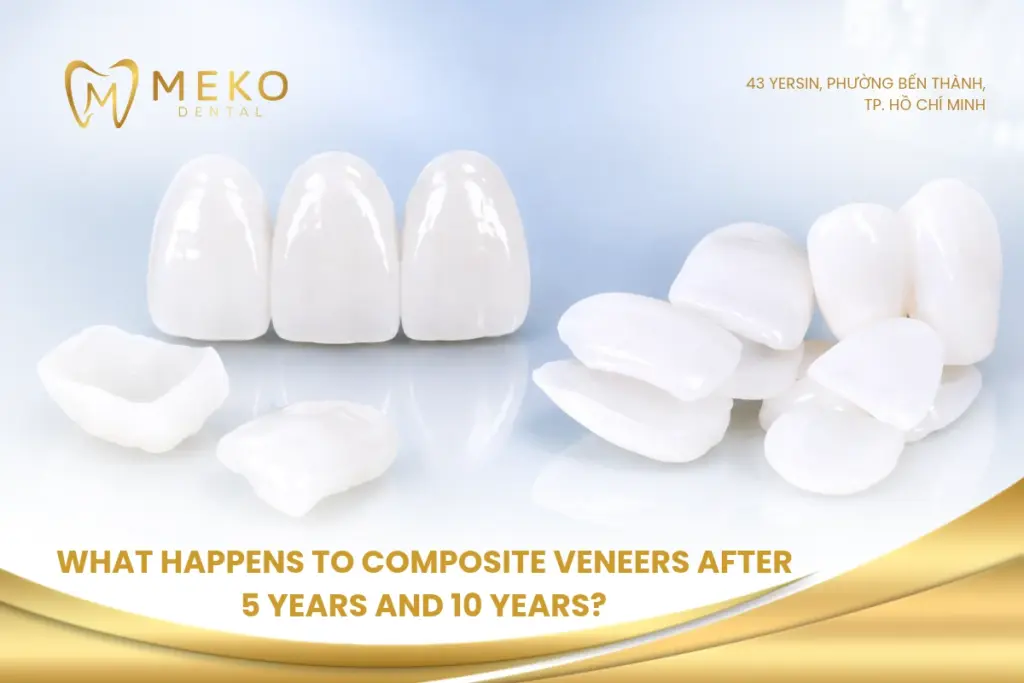
Composite resin veneers are thin, tooth-colored resin layers bonded to the front of a tooth to change its shape, shade, or size. They work by being sculpted and hardened directly on the tooth at the chair, while porcelain veneers are made in a dental lab.
1.1 Material and structure
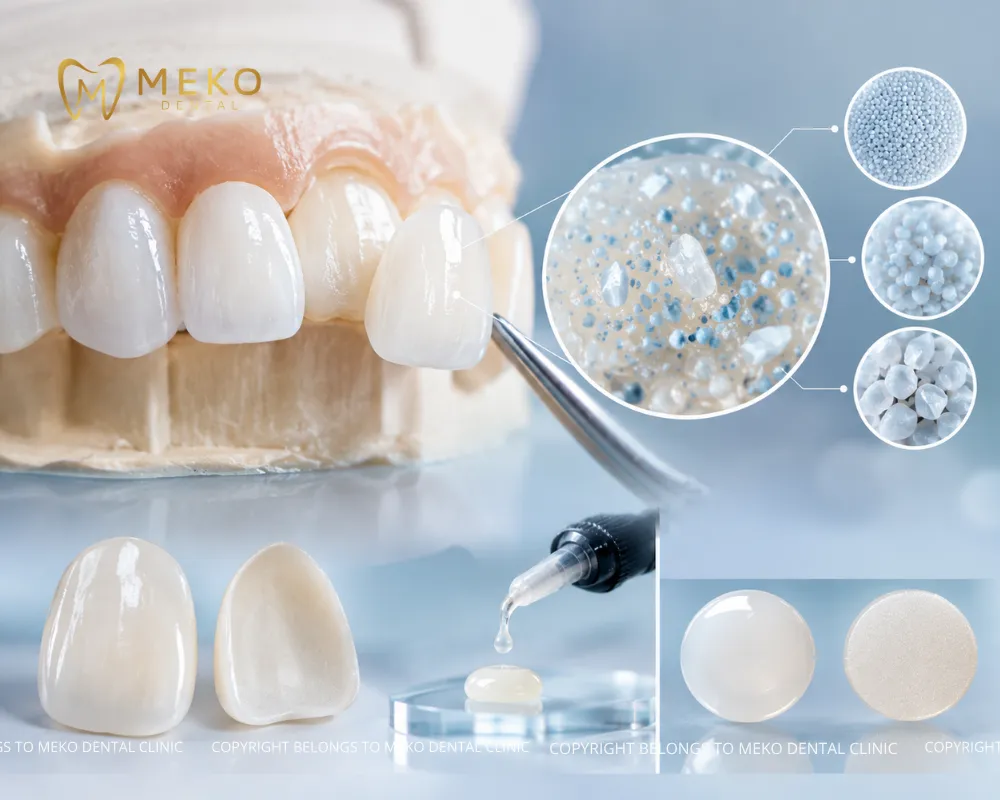
Veneers made of composite resins combine a plastic resin base with tiny glass or ceramic filler particles. Resin-based composite veneers usually use nano hybrid or microhybrid fillers. Smaller particles take a higher shine, while larger ones add strength. Filler type affects gloss and long-term wear.
1.2 Direct and indirect types
Direct composite resin veneers are built straight on the tooth. Indirect and semi-direct types are made outside the mouth. Prefabricated shells come ready-made. All three count as resin composite veneers.
| Type | Made where | Visits |
| Direct | In the mouth | 1 |
| Indirect/semi-direct | Outside the mouth | 2 |
| Prefabricated | Factory made | 1 to 2 |
Direct is the most common choice because it is finished in one visit and usually costs less. Indirect and prefabricated options are used less often, mainly for larger changes or when shape needs extra control.
2. Who are composite resin veneers right for?
Good candidates for composite resin dental veneers have healthy teeth and gums, a stable bite, and enough natural enamel for strong, lasting bonding. Your dentist confirms eligibility only after a full in-person exam, so use this as a general guide.
2.1 Cases that suit resin veneers
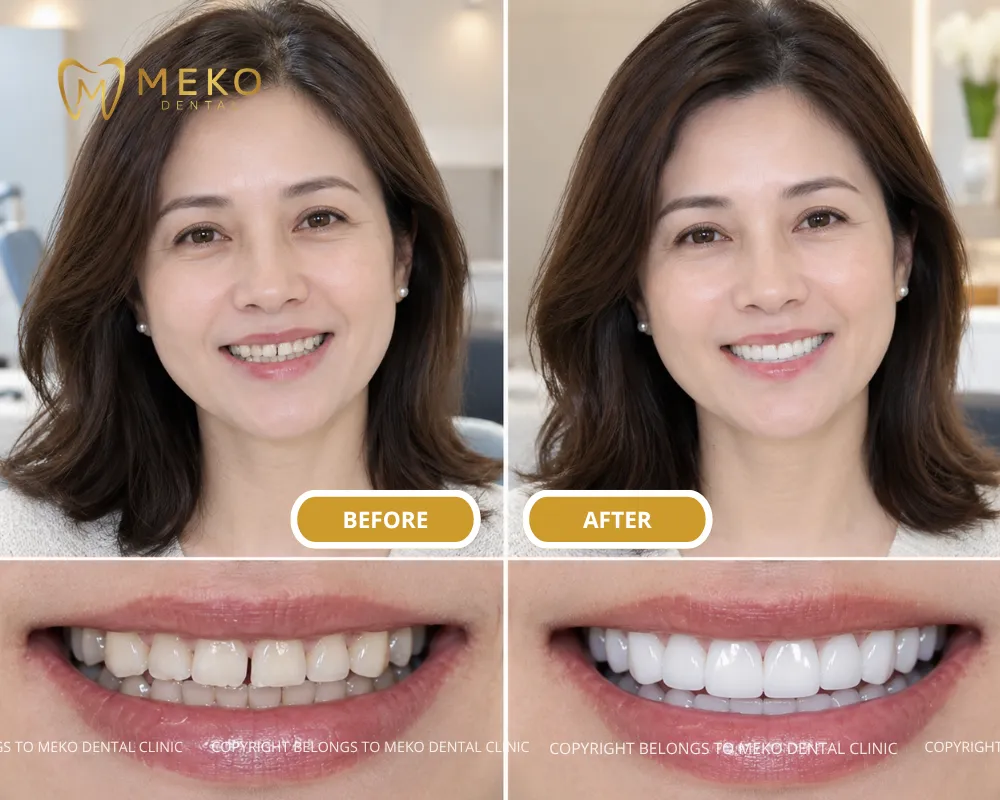
These composite veneers work best on cosmetic concerns that stay on the tooth surface. If your teeth and gums are healthy and the main problem is only how your smile looks, resin often fits well and gives natural-looking results, especially in the following common cases:
- Small chips, worn edges
- Mild gaps between teeth
- Uneven or short-looking teeth
- Stains that resist whitening
- Slightly small front teeth
2.2 Cases that need another option
Bonded resin veneers are not the right choice for every mouth or every smile. Some bite and tooth conditions put too much daily force on composite, which can chip or wear down faster, so your dentist may suggest a stronger option in the following cases:
- Heavy grinding or clenching
- Abnormal or misaligned bite
- Large missing tooth areas
- A wish for maximum durability
3. Composite resin veneers procedure
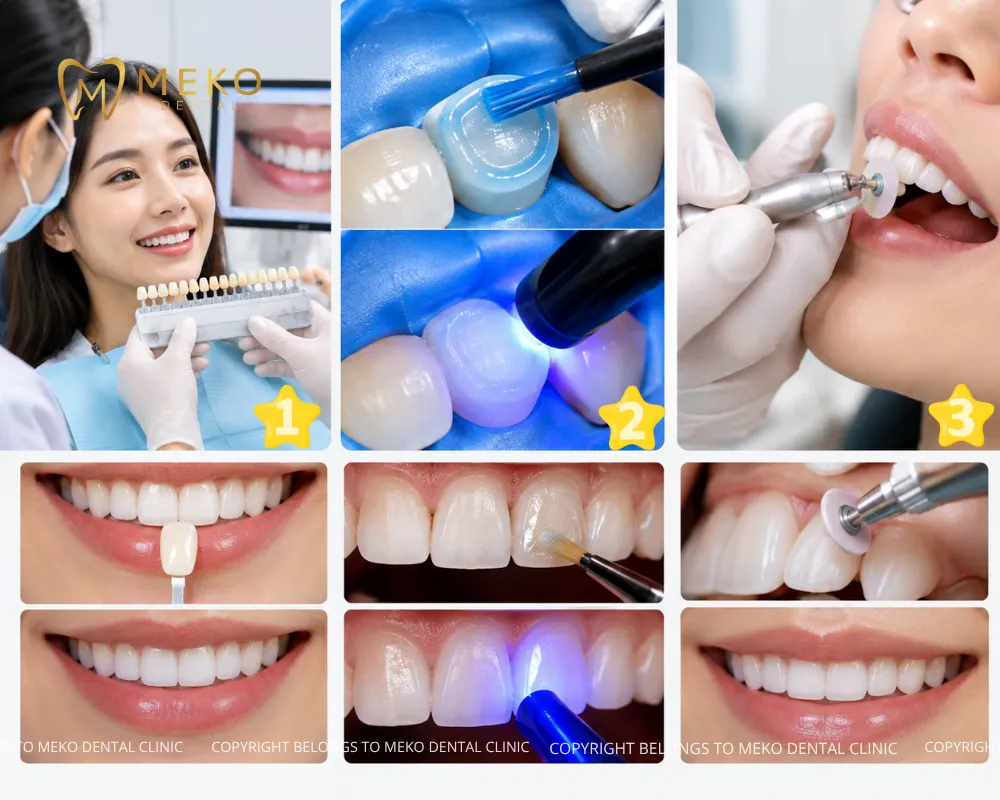
Direct composite veneers are usually finished in a single appointment, with no impressions to take and no waiting for a lab. Your dentist works in three clear steps: consultation and shade selection, layering and light curing, then shaping and polishing.
3.1 Consultation and shade selection
Your dentist checks your teeth and bite, then takes photos of your smile. Next, the shade is matched while your teeth are still wet, because dry teeth look lighter and cause a wrong match. You then agree on the new shape and length. Little or no enamel is usually removed.
3.2 Layering and light curing
The tooth is cleaned, then coated with a mild acid gel. This etching roughens the enamel, like sanding wood before gluing, so the bond holds. After rinsing, a bonding agent goes on, and the dentist builds your composite resin veneers in thin layers, curing each one with a blue light.
3.3 Shaping and polishing
Next, the dentist trims extra material and shapes each veneer to match the length and curve of your neighboring teeth. You bite on thin marking paper so any high spots can be smoothed before you leave. Polishing comes last, using discs: a smoother surface collects less coffee and tea stain.
4. Benefits of non-invasive composite resin veneers
The main benefit is keeping more of your natural tooth. Resin is added to the tooth rather than carved out of it. Every option has real trade-offs, and the limits of resin are covered below.
4.1 Minimal enamel removal
Enamel cannot grow back once it is removed, so every bit matters. Compared with porcelain veneers, composite often needs little or no shaping of the tooth. That said, the amount depends on your tooth position, color, and shape, so your dentist decides case by case.
4.2 One visit and easy repair
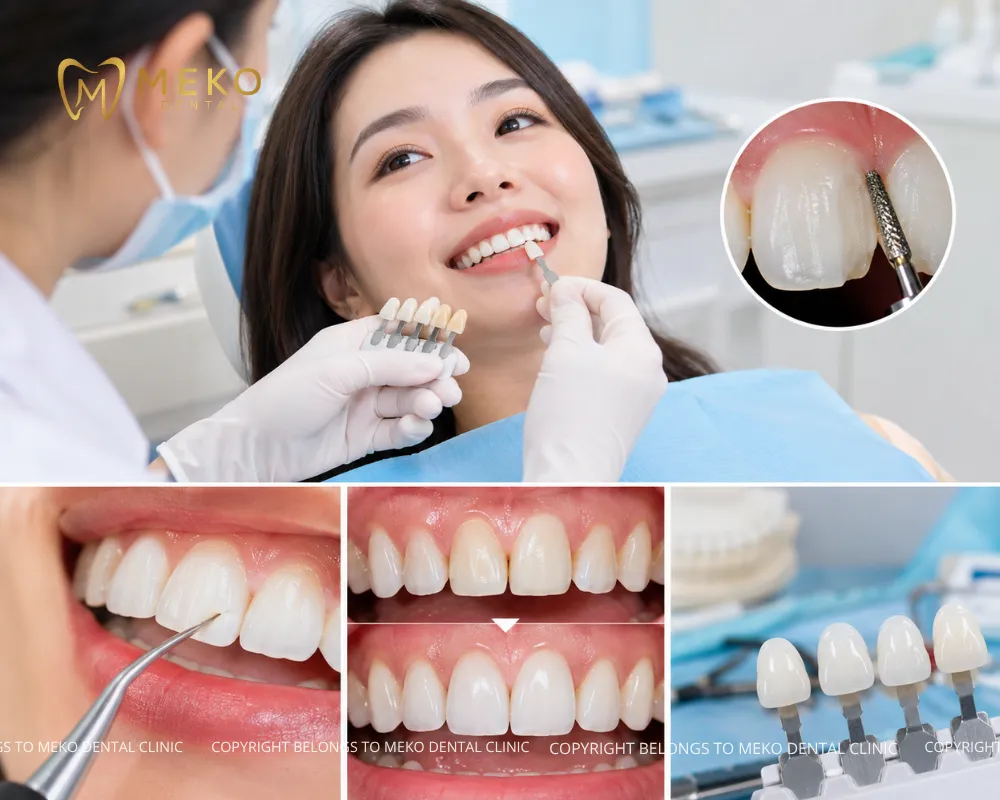
Beyond protecting natural enamel, resin offers practical perks that many patients value in daily life:
- Finished in one visit, with no temporary veneers
- Lower cost than porcelain
- Easy repairs, often polished or patched in the same visit
5. Composite vs porcelain veneers: which is better?
Choosing between composite and porcelain veneers mostly comes down to budget, lifespan, and how much natural enamel you want to keep. The table below compares composite and porcelain veneers on cost, lifespan, and number of visits.
| Feature | Composite | Porcelain |
| Lifespan | 5-7 years | 10-15 years |
| Price per tooth | About $100 (2.500.000 VND) | $310-$390 (8.000.000-10.000.000 VND) |
| Appointments | 1 visit | 2-3 visits |
| Stain resistance | Stains easily | Rarely stains |
| Chip repair | Same-visit patch | Usually replaced |
Prices shown are Meko Dental Clinic’s current special-offer rates, VAT included and may change with the number of teeth, the amount of shaping needed, and the case’s complexity. Your dentist confirms the exact cost after an exam.
5.1 Lifespan and durability
Lifespan is one of the biggest differences: composite typically lasts about 5 to 7 years, while porcelain often lasts about 10 to 15 years. Your results depend on your bite, any teeth grinding, and daily habits such as chewing ice or biting your nails.
5.2 Appearance and staining
Porcelain holds its color noticeably better over time because its glazed surface repels stains. Composite can pick up color from coffee, tea, red wine, and cigarettes, especially with daily use. Regular professional polishing reduces surface staining and restores shine, but it cannot erase the difference between the two materials completely.
6. How to make composite resin veneers last longer
How long your veneers last depends on what you do every day. Good home habits slow staining and wear, and small problems are easier to fix when caught early. Here is how to protect your results and when to act.
6.1 Daily care habits
Daily habits decide how long composite resin veneers keep their shine and shape. A few simple changes at home reduce staining, prevent chips, and protect the bond, and they cost far less than repairing or replacing a worn veneer later.
- Brush gently, using non-abrasive toothpaste
- Limit coffee, tea, and red wine
- Avoid biting ice, pens, or nails
- Wear a night guard if you grind

6.2 When to repair or replace
Contact your dentist if your composite resin veneer feels rough, shows a chip, or leaves a visible gap at the edge. Small problems are usually polished or repaired in one visit. Replacement is advised when staining stays after polishing or a veneer has worn thin.
7. Composite resin veneers at Meko Dental Clinic
Meko Dental Clinic is an international dental clinic that applies 100% autoclave sterilization to every instrument. An experienced team designs your tooth-colored resin veneers to look natural with your whole smile and offers personalized care from the first consultation to the final check.
Modern technology, including 3D scanning and CAD/CAM design, helps your dentist plan precise results. Before any work begins, you receive a transparent plan with clear pricing, plus a warranty for peace of mind. The team also explains each step in simple terms, so you never feel rushed during any appointment.

Book a consultation with Meko Dental Clinic for a personalized smile assessment, a clear price quote, and honest, practical advice on whether composite resin veneers suit your teeth. Contact the Meko Dental Clinic team today and take the first step toward the confident, natural-looking smile you want.
8. Frequently asked questions
8.1 Can I get a veneer on just one tooth?
Yes, your dentist can build a veneer on just one chipped, worn, or discolored tooth. The shade is matched to your neighboring teeth while they are still wet, so the new veneer blends in smoothly with the rest of your smile and looks completely natural.
8.2 Can I whiten my teeth after getting veneers?
Whitening gels lighten natural teeth but do not change the color of resin, so the veneer stays the same shade. For a brighter smile, whiten your teeth first, wait for the color to settle, then let the dentist match the veneer to your new shade.
8.3 Can cavities form under veneers?
Yes, decay can still start at the edges of a veneer or on the natural tooth around it, since plaque builds up there like anywhere else. Brushing along the gumline and keeping regular check-ups let your dentist catch problems early, before they reach the bond.
Composite resin veneers are a practical, lower-cost way to fix small chips, stains, or gaps in a single visit, with little or no enamel removal. The trade-off is a shorter lifespan of about 5 to 7 years, so they suit healthy teeth and mild cosmetic concerns best. If you are not sure whether composite or porcelain fits your smile and budget, book a consultation with Meko Dental Clinic for an exam and a clear price quote.



 Messenger FB
 WhatsApp
 Book now