

Contents [ Hide ]
Dental implants replace a missing tooth with a crown that looks natural, chews steadily and helps protect the jawbone. Those are the main benefits of dental implants, and this guide from Meko Dental Clinic explains each one, the research behind it and the care that keeps results stable.
1. What are the benefits of dental implants?
The main dental implants benefits are a natural-looking tooth, steady chewing, clearer speech and support for the jawbone. An implant also leaves neighboring teeth untouched and can last many years with good hygiene. Results still depend on gum health, bone volume and daily care.
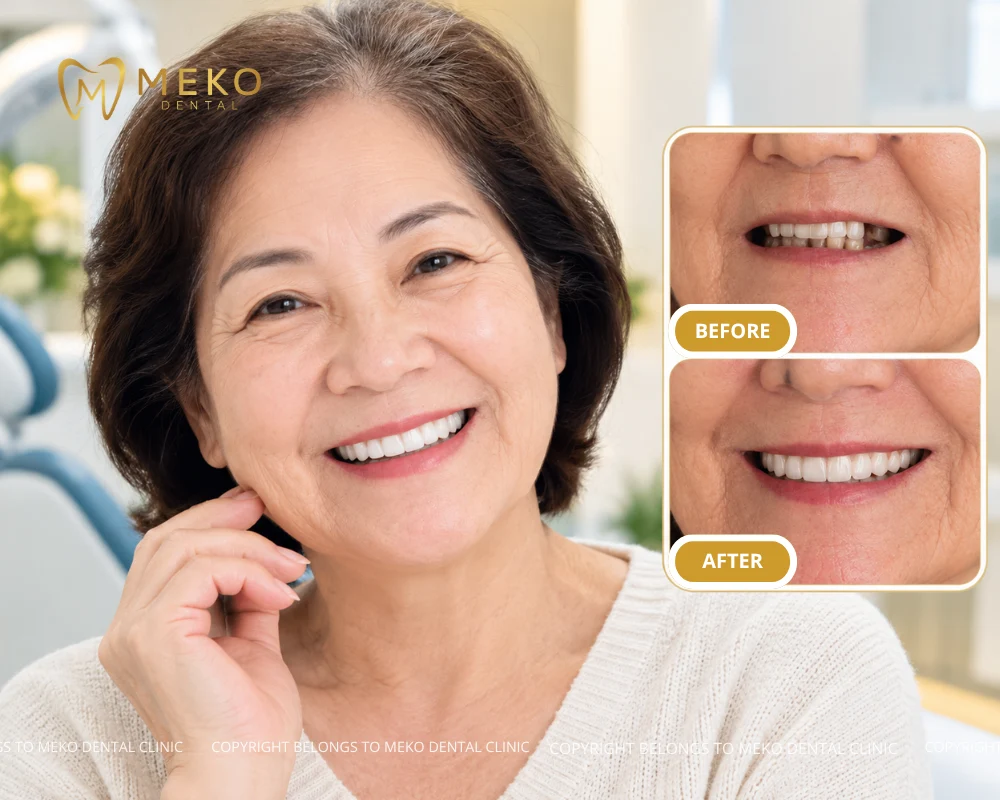
The benefits of dental implants break down as follows:
- Appearance: the crown is matched to nearby teeth.
- Chewing: the post passes bite force into the jaw.
- Speech: a filled gap supports clearer pronunciation.
- Bone: the implant site keeps receiving chewing stimulation.
- Neighboring teeth: no filing is needed, unlike a conventional bridge.
- Cleaning: no adhesive, and no cavities in the crown.
- Durability: long-term studies report high survival rates.
Some dentists group these points as implant dentistry benefits, since they span looks, function and oral health. The sections below explain each of the benefits of dental implants and the research behind it.
2. Cosmetic benefits of dental implants for appearance
A custom crown can copy the shade, shape and size of the teeth beside it. Because the post is fixed in bone, the replacement tooth stays steady and looks natural when the patient smiles or speaks. The dentist picks the color and contour once the gum has healed, which explains why the benefits of getting dental implants show most clearly in the smile.
Facial support is among the cosmetic benefits of dental implants that people often overlook. Bone around a missing tooth shrinks over time, and cheeks can look hollow when many teeth are gone.
3. Functional benefits of dental implants for chewing and speech
The post is anchored in the jaw, so the replacement tooth stays put during meals and conversation. That stability supports firmer biting, more comfortable chewing and steadier pronunciation.
3.1 Chewing
Bite force can be stronger with implants than with a conventional denture, since the post is anchored in bone. That extra force is one of the functional benefits of dental implants, especially with firm foods.

A loose denture or a missing back tooth often changes what ends up on the plate, since apples, raw carrots and steak become hard to manage. A stable implant restoration can ease that hesitation, so meals return closer to normal.
3.2 Speech
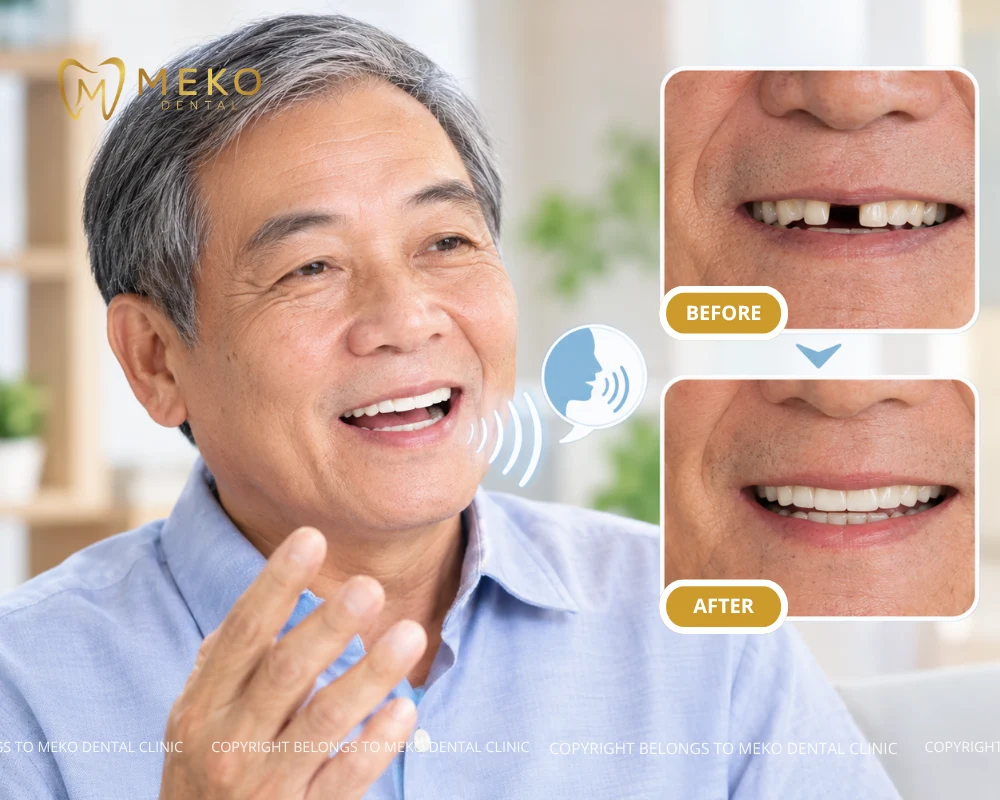
A gap changes how air moves through the mouth, which can distort sounds such as “s”. A fixed replacement tooth restores that contact, and some people notice clearer speech once they adjust.
3.3 Daily comfort
Fixed dental implants need no adhesive, and daily care looks much like caring for natural teeth. Removable implant overdentures still come out for cleaning. These dental implant benefits help explain why implants may feel more comfortable than loose dentures.
An implant crown cannot develop cavities because it contains no natural tooth structure. The gum and bone around it can still become inflamed, so cleaning around the implant remains necessary.
4. How do dental implants protect the jawbone and nearby teeth?
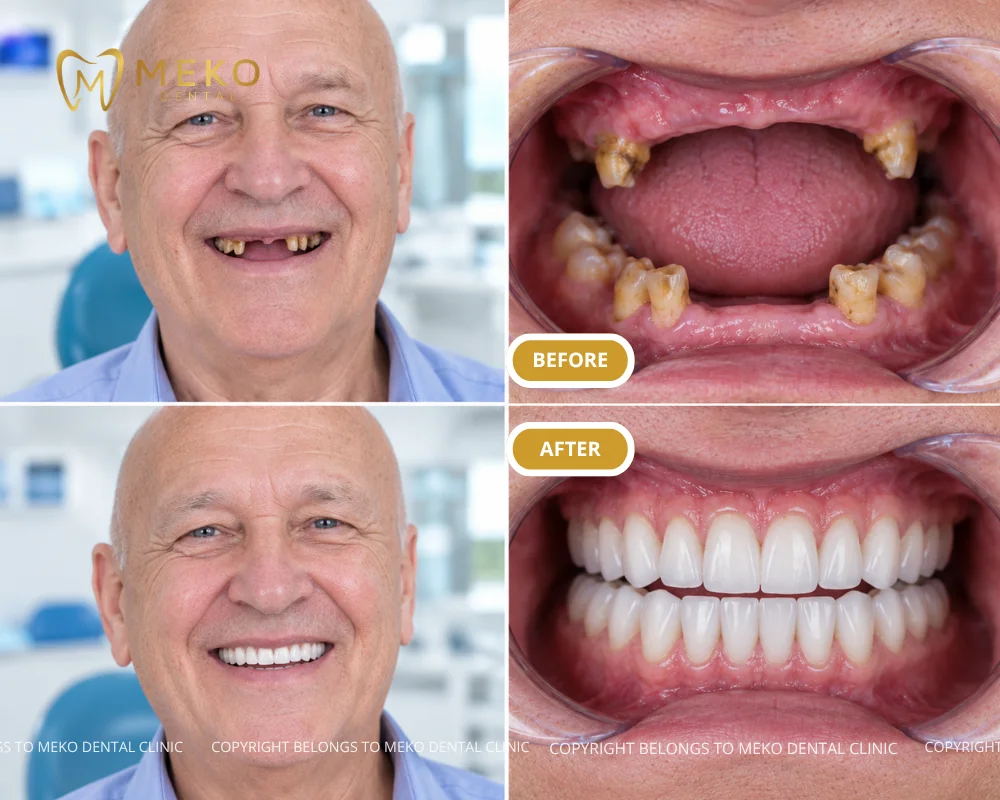
A natural root passes chewing pressure into the jawbone, and an implant post takes over that job, which can slow bone shrinkage at the site. One of the benefits of the implant is that it also fills the gap, so nearby teeth are less likely to drift toward it. It cannot restore bone that is already lost.
Bone loss is fastest in the months after extraction, so the sooner a missing tooth is replaced, the more bone there is to work with. Waiting longer may mean a bone graft is needed before dental implants for missing teeth can be placed.
A bridge usually requires reshaping the teeth on both sides of the gap, while an implant stands alone. The benefits of dental implants for adjacent teeth are greatest when those teeth have no fillings or crowns. For those patients, this counts among the benefits of choosing dental implants.
5. Long-term benefits of dental implants and survival rates
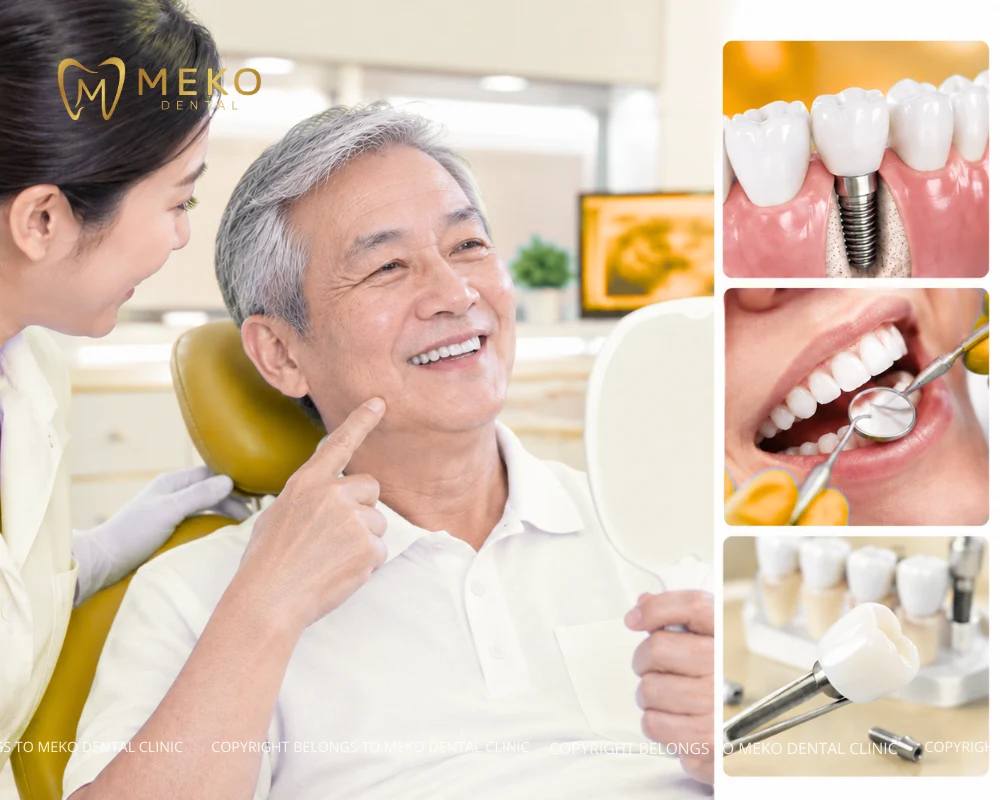
Systematic reviews and large cohorts report that about 96% of implants remain in place after 10 years. The long-term benefits of dental implants depend on gum health, hygiene and regular checkups as much as on the post itself. Parts above the gumline, such as the crown or the small titanium screw that holds it, can still need repair.
| Evidence | Follow-up | Reported survival |
| Systematic review of 10-year studies (Howe et al., 2019) | 10 years | 96.4% at implant level |
| Cohort of 10,871 implants (French et al., 2021) | 10 years | 96.8% |
| Same cohort | 15 years | 94.0% |
Most data on the long term benefits dental implants offer come from survival figures, which differ from complication-free success. Gum problems along the way may not show up in those numbers.
Inflammation around the implant, called peri-implantitis, is a common reason cleaning and checkups matter. The benefit of dental implants over time depends on keeping the gum and bone around the post healthy.
For comparison, bridges usually need replacement every 5 to 15 years. The long term benefits of dental implants include fewer replacement cycles for many patients.
6. Conclusion
The benefits of dental implants come down to a natural-looking tooth, steady chewing and support for the bone and neighboring teeth. How long the benefits of implants last depends on healthy gums, enough bone and thorough cleaning.
A useful question for the dentist is which of the benefits of dental implants apply to a specific mouth. Healing time, total price and any bone graft belong in the same conversation.
Patients who want an individual assessment can book a consultation at Meko Dental Clinic. The dentist examines the missing teeth, talks through the replacement choices and gives an estimate based on the findings. Earlier dental records or x-rays can make that discussion more specific.
This article is for general information and does not replace professional dental advice.
References
- Howe MS, Keys W, Richards D. Long-term (10-year) dental implant survival: a systematic review and sensitivity meta-analysis. Journal of Dentistry, 2019. https://livrepository.liverpool.ac.uk/3041376/
- French D, et al. Long term clinical performance of 10,871 dental implants with up to 22 years of follow-up. Clinical Oral Implants Research, 2021. https://www.ncbi.nlm.nih.gov/pmc/articles/PMC8359846/
- Healthline. What are the benefits and drawbacks of dental implants? Medically reviewed by Jennifer Archibald, DDS, 2022. https://www.healthline.com/health/dental-and-oral-health/benefits-of-dental-implants
- CareCredit Well U. Top 8 benefits of dental implants explained. 2026. https://www.carecredit.com/well-u/health-wellness/dental-implant-benefits/


 Messenger FB
 WhatsApp
 Book now