
Contents [ Hide ]
Want to improve chipped, uneven, or spaced teeth without unnecessary enamel shaving? Non invasive composite veneers add tooth-colored resin to front surfaces, changing their shape or size while preserving enamel when the bite allows. They can mask certain stains, but not every tooth is suitable for a no-prep approach. Below, learn how placement works, who qualifies, and what upkeep involves.
1. What are non invasive composite veneers?
Noninvasive composite veneers are thin layers of tooth-colored resin bonded over the visible front of a tooth. They can change its outline or color without deliberately shaving enamel in suitable cases.
1.1 Direct and indirect composite resin veneers
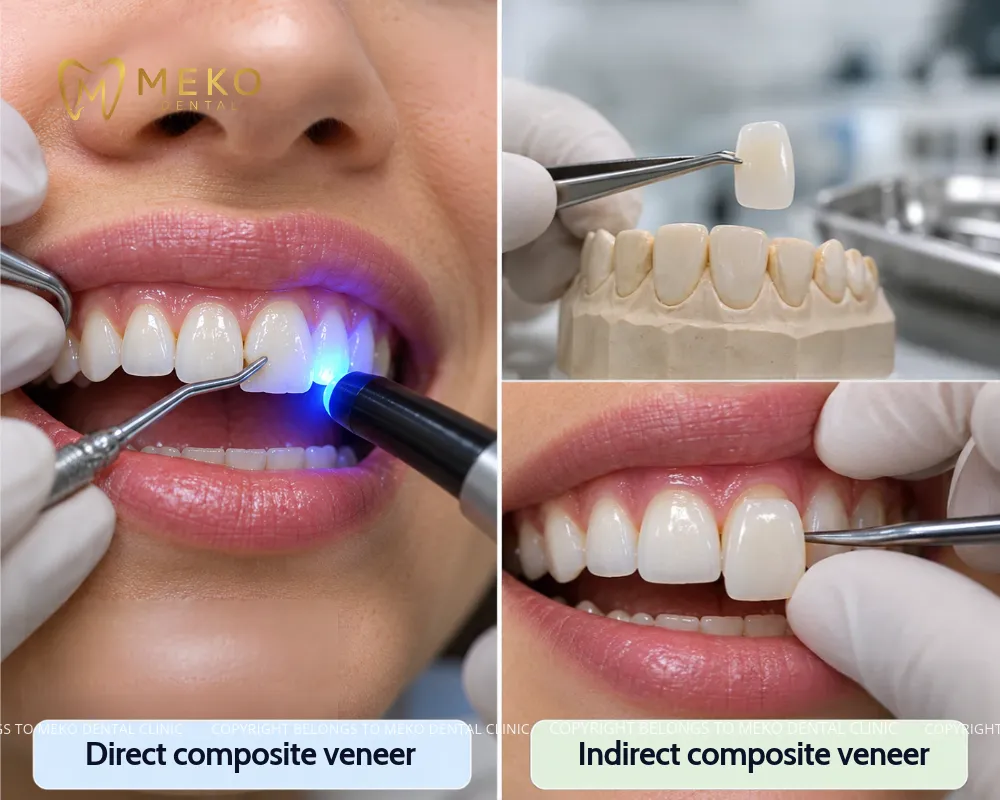
With direct non invasive composite resin veneers, a dentist places soft resin on the tooth, sculpts the desired contour, and hardens it with a curing light. Indirect composite veneers are shaped outside the mouth and later bonded to the teeth. Direct application typically needs one visit, whereas indirect work may need additional visits.
1.2 No-prep bonding versus minimal tooth preparation
No-prep veneers are placed without deliberately shaving enamel, while minimal-prep veneers require slight enamel reduction to create space for resin. The choice depends on tooth position and the thickness needed for natural contours.
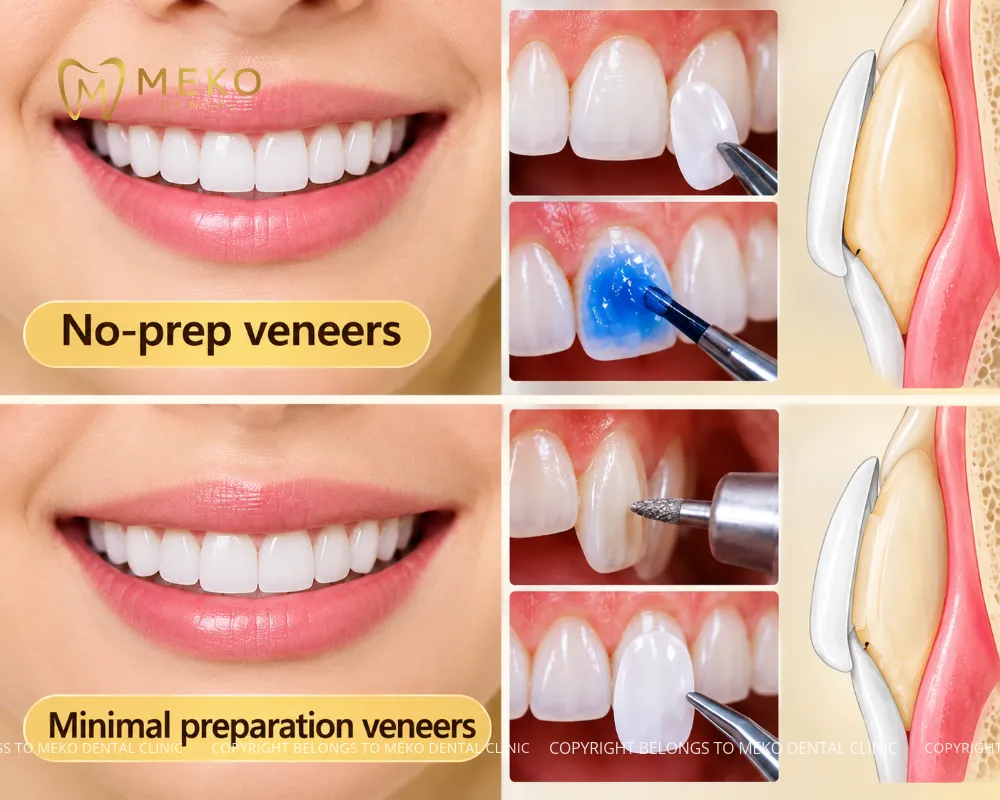
Before bonding, the dentist may etch the enamel to help the adhesive hold. This surface conditioning differs from tooth shaving, but removing non invasive composite veneers later may still affect enamel, so complete reversibility is not guaranteed.
2. Who is a good candidate for non invasive composite veneers?
This approach fits teeth needing added width, length, or surface coverage rather than tooth reduction. Healthy enamel, stable gum tissue, and a bite that leaves room for the resin make this approach more practical. A dental examination establishes whether those conditions are present.
2.1 Small gaps, chipped edges and undersized teeth
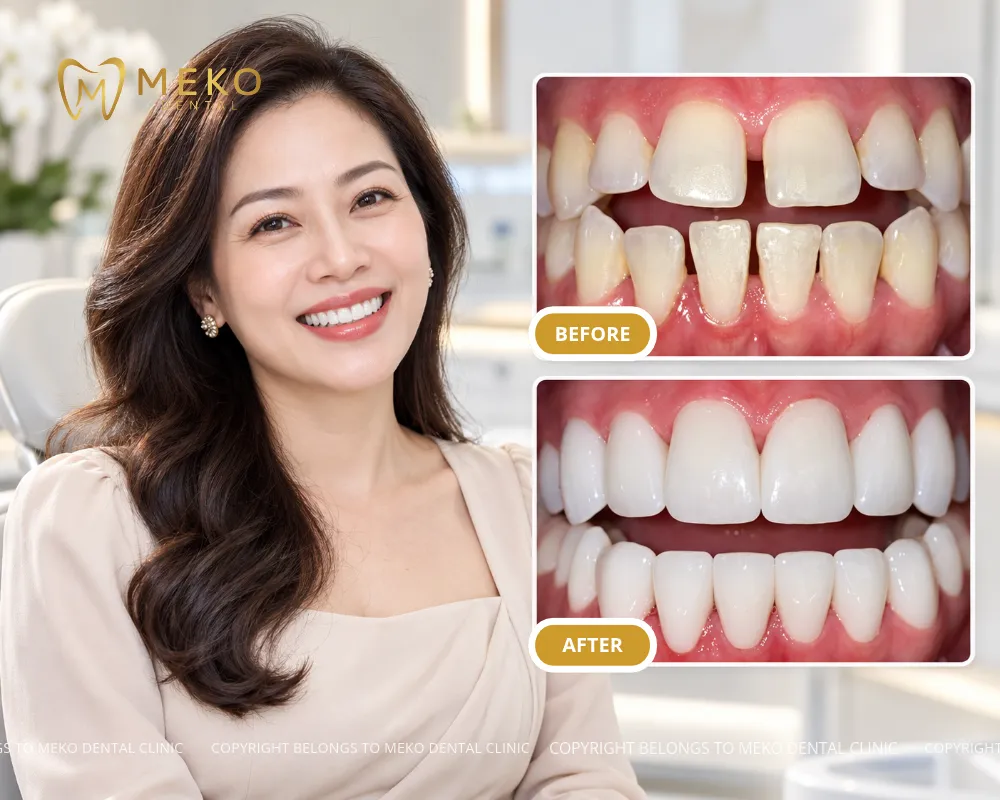
Small gaps, chipped edges, and naturally narrow teeth may benefit from carefully placed resin when tooth alignment and enamel are suitable. The following examples show how added material can improve tooth appearance without unnecessary bulk.
- Minor gaps: Resin can widen two teeth to reduce a narrow space.
- Small chips: A missing corner can be rebuilt to follow the original edge.
- Short teeth: A small extension can make one tooth match adjacent teeth.
- Uneven outlines: Resin can smooth asymmetrical edges or narrow lateral incisors.
- Selected stains: An opaque shade can cover some localized discoloration.
2.2 Protrusion, crowding and heavy bite forces
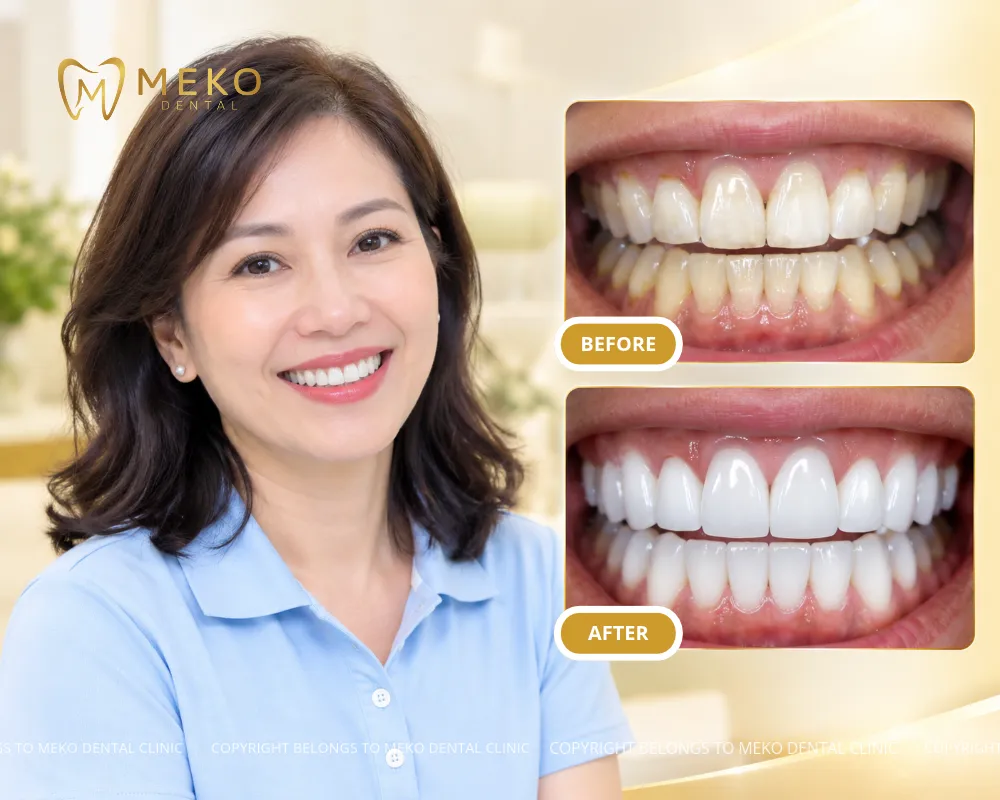
No-prep veneers may not suit teeth that already protrude, overlap, or experience heavy biting forces, because extra resin could compromise appearance, comfort, or durability. The following concerns require careful dental assessment before resin is bonded.
- Protruding teeth: Added material can make the front surface look more prominent.
- Crowded teeth: Overlapping surfaces may produce uneven or hard-to-clean margins.
- Severe discoloration: Masking dark color may require resin that looks too opaque or thick.
- Grinding or deep bite contacts: Repeated pressure can chip or loosen veneer edges.
3. Benefits and limitations of no-prep composite veneers
For non invasive composite veneers, the main advantage is adding material where shape is missing rather than reducing healthy enamel. That benefit comes with trade-offs in stain resistance, wear, and future maintenance.
3.1 Enamel preservation, fewer visits and easier repairs
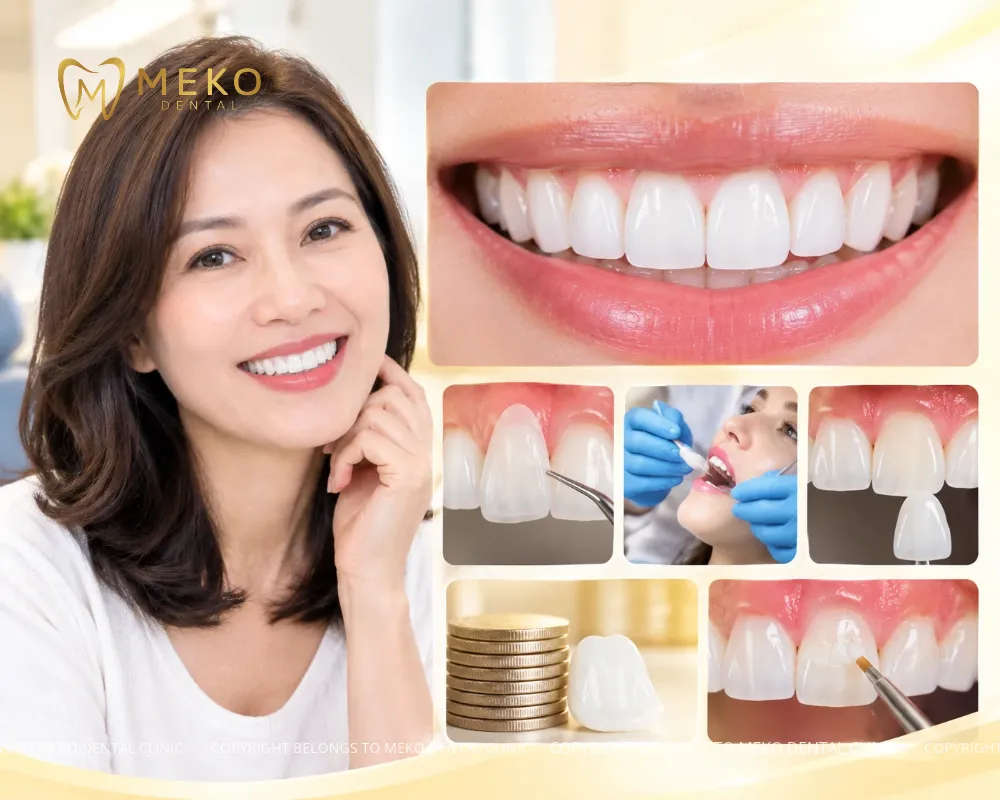
The advantages are most noticeable with direct veneers on teeth that already have enough clearance for extra resin. Five practical benefits are:
- Little or no shaving: The dentist may preserve the existing enamel outline.
- One-visit placement: Direct resin is usually shaped and polished chairside.
- Precise additions: A narrow incisor can be widened without enlarging its neighbor.
- Lower initial expense: Direct composite generally costs less than porcelain veneers.
- Repairable chips: Small damaged sections can sometimes be rebuilt with fresh resin.
3.2 Stains, surface wear and excess thickness
Composite veneers may develop visible surface changes over time. According to Elkaffas et al. (2024), a clinical trial published in Materials recorded staining in 11 veneers and surface roughness in 14 among 60 direct composite veneers during a two-year follow-up.
- Staining: Coffee, tea, and tobacco can gradually darken the resin surface.
- Loss of gloss: Daily wear may leave the polished surface dull or uneven.
- Chipping or debonding: Grinding and biting hard objects can damage resin edges or weaken adhesion.
- Excess thickness: Bulky resin near the gumline may trap plaque or interfere with comfortable biting.
These findings reflect the specific veneers examined in the study. Even when non invasive composite veneers require no enamel shaving, removing bonded resin later may affect the original enamel surface.
4. How are non invasive composite veneers applied?
Direct composite veneers follow four main stages, starting with a dental examination to confirm available space and bite contacts. The sections below describe surface preparation, resin layering and curing, followed by polishing and bite adjustments.
4.1 Step 1: Dental examination and smile planning
The dentist checks for decay, gum inflammation, existing fillings, and worn edges. The front teeth are assessed with the jaws closed to see where added resin might contact opposing teeth. Shade and outline guide resin placement.
4.2 Step 2: Surface preparation and composite bonding
The chosen tooth is cleaned and kept dry using cotton rolls or other isolation methods. The dentist may condition the enamel with an etching gel, rinse it, and apply an adhesive. This microscopic bonding preparation is different from drilling away enamel to make space.
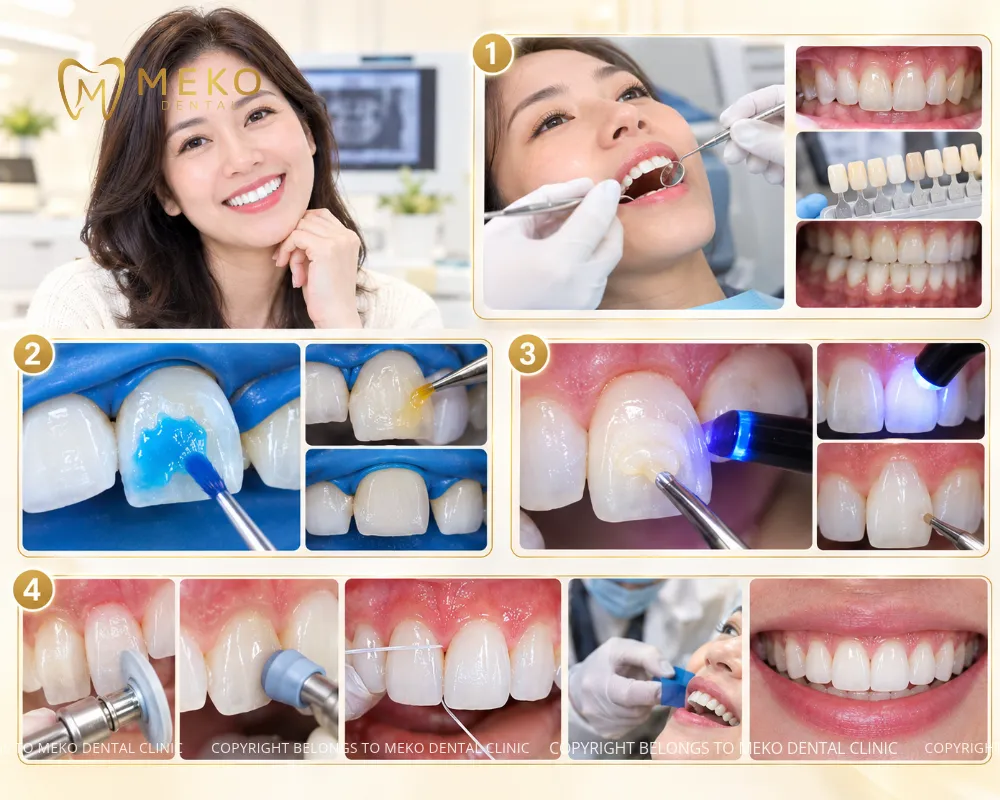
4.3 Step 3: Layering, shaping and light curing
The dentist layers resin to build missing width or edges. Each layer is hardened with a curing light before more material is added. With non invasive composite veneers, thin, well-placed layers help avoid an abrupt ridge where the resin meets natural enamel.
4.4 Step 4: Polishing and bite adjustment
After final shaping, the dentist smooths the surface and polishes it to reduce roughness that can collect stains. Floss should pass between the teeth without catching on bulky margins. The dentist checks the bite and adjusts high spots.
5. Non invasive composite veneers vs porcelain veneers and composite bonding
Direct composite veneers, porcelain veneers, and composite bonding differ in the area they cover, how teeth are prepared, and how easily damage can be repaired. The table focuses on those practical differences, including publicly available 2026 reference prices per tooth.
| Comparison factor | No-prep direct composite veneers | Porcelain veneers | Composite bonding |
| Coverage | Broad front surface | Front surface | Localized areas |
| Enamel preparation | Often no shaving | Usually some reduction | Usually no shaving |
| Appointments | Often 1 visit | Usually 2 or more | Often 1 visit |
| Stain resistance | More prone to staining | Generally higher | More prone to staining |
| Repairability | Often possible | More difficult | Often possible |
| Reference cost (USD/tooth) | Individual quote | $310 – $390 | $96 |
Composite bonding repairs small chips or gaps, while veneers reshape a broader visible surface. According to Mazzetti et al. (2022), a study published in Dental Materials found better long-term survival for ceramic than direct composite veneers. These findings do not specifically predict individual patient outcomes for non invasive composite veneers.
6. Lifespan and durability of non-invasive composite veneers
Direct composite veneers may last approximately 5-7 years, although this is only a general estimate. According to Lim et al. (2023), a systematic review published in the Journal of Evidence-Based Dental Practice examined seven studies and reported an 88% pooled survival rate from randomized trials, with mean follow-up periods ranging from 24 to 97 months.
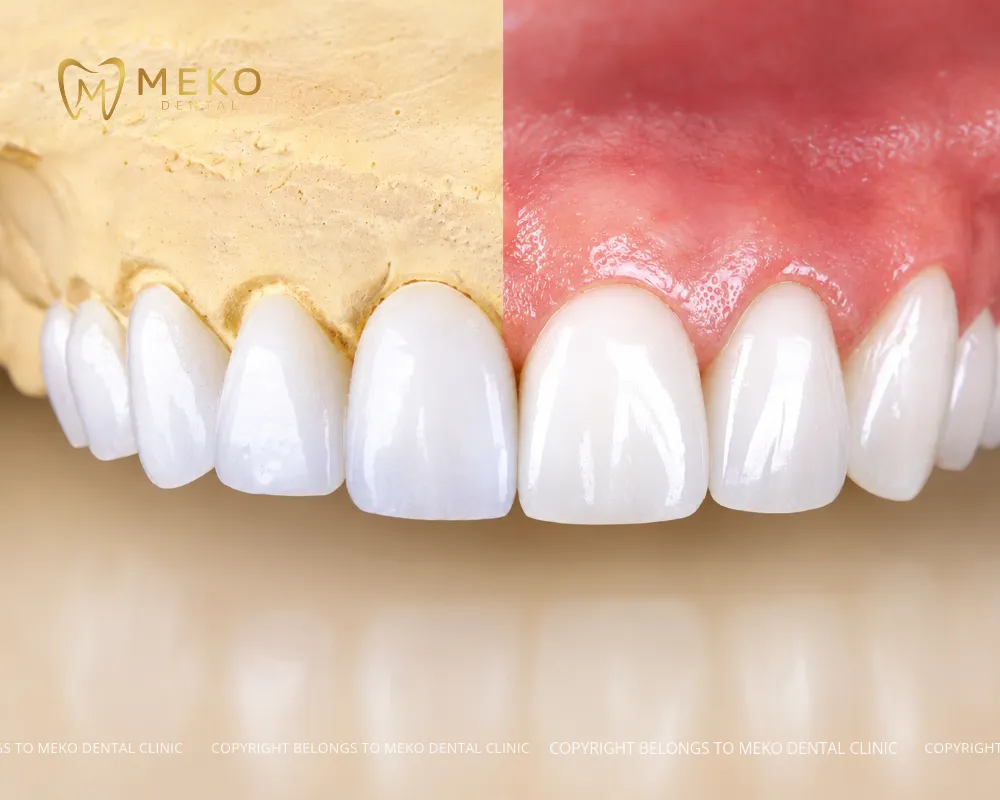
However, these findings include different composite veneer approaches and do not specifically predict the lifespan of no-prep veneers. Grinding, biting hard objects, and oral hygiene habits can affect durability. Small chips may be repaired with additional resin, while extensive damage or repeated detachment may require veneer replacement.
7. Potential risks of non invasive composite veneers
Non invasive composite veneers may cause problems if the resin is too thick, bonding edges are uneven, or bite pressure is excessive. Potential risks include:
- Gum irritation: Bulky edges can trap plaque and inflame the gums.
- Bite discomfort: Excess resin may interfere with normal biting.
- Veneer detachment: Grinding or strong biting forces can loosen the resin.
- Enamel damage: Removing bonded resin may damage the enamel surface.
8. Non invasive composite veneers at Meko Dental Clinic
Before choosing a no-prep veneer, the dentist should check whether extra resin can improve tooth shape without creating bulky edges or uneven bite contacts. The discussion should also cover the intended tooth shade, how much surface needs reshaping, and whether existing fillings affect bonding. These details help set realistic expectations for the final appearance, normal speech, and everyday biting comfort.
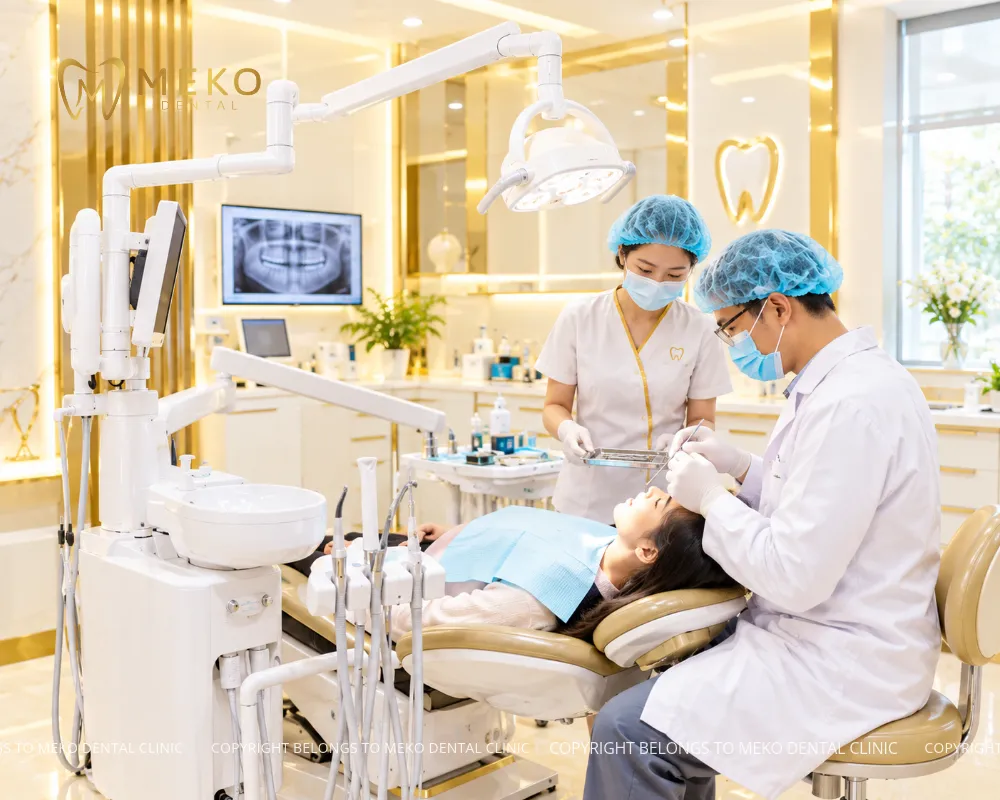
Visit Meko Dental at 43 Yersin, Ben Thanh Ward, Ho Chi Minh City to discuss whether composite veneers suit your teeth. Call 077 227 7919 or book a consultation online to review enamel preparation, desired tooth contours, and expected results with the dental team today.
9. Frequently asked questions
9.1 Can composite veneers be whitened after placement?
Whitening products can lighten natural enamel, but they do not reliably change the color of composite veneers. If you want whiter teeth, discuss whitening before veneer placement so the dentist can select a resin shade that matches your tooth color.
9.2 Do no-prep composite veneers require injections?
Usually not, because adding resin without drilling enamel often causes little discomfort and does not require local anesthesia. If decay, sensitive areas, or additional tooth preparation are involved, your dentist may recommend numbing before beginning the procedure on that tooth.
9.3 Can you eat immediately after composite veneers?
Direct composite hardens under a curing light, so most people can eat after the appointment once any numbness disappears. Start with softer foods that are easy to bite, and avoid crunching extremely hard objects with your newly shaped front teeth.


 Messenger FB
 WhatsApp
 Book now