

Contents [ Hide ]
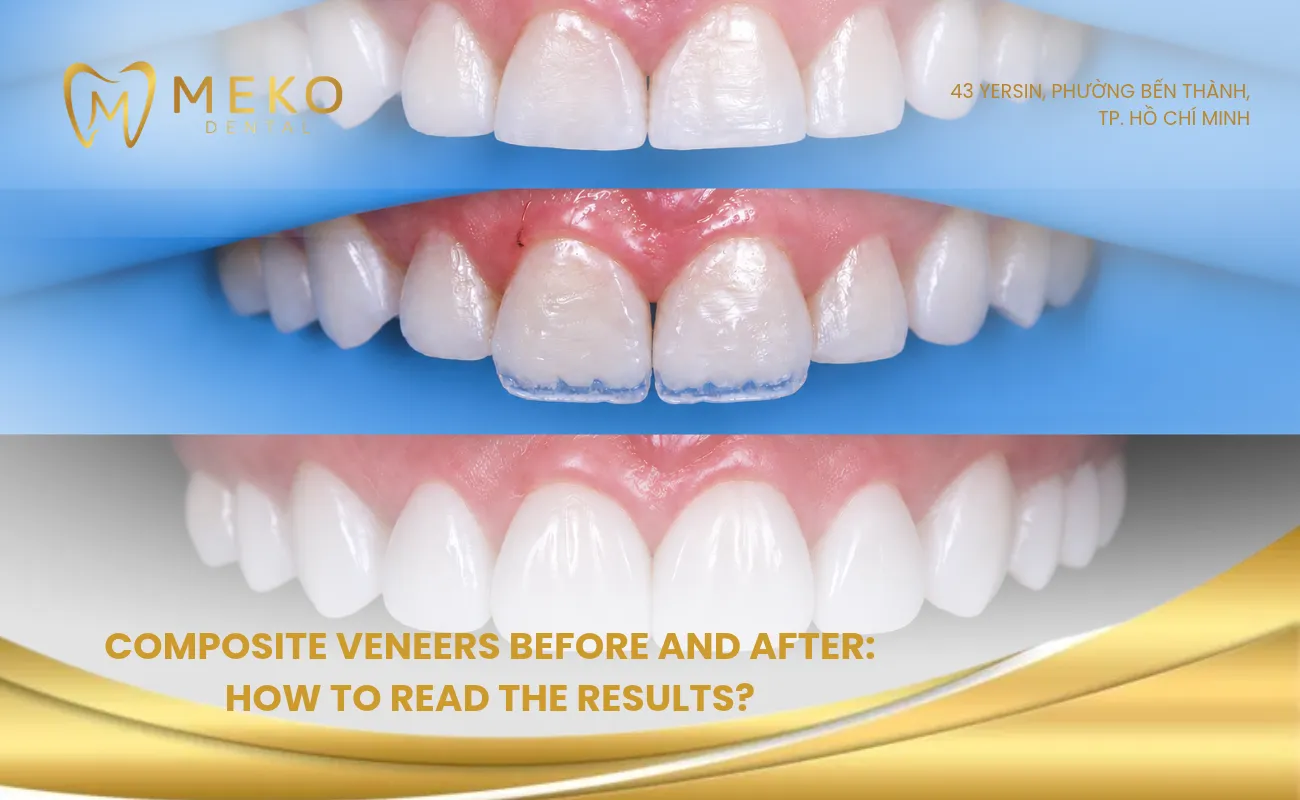
Composite veneers before and after photos show how a dentist reshapes chips, gaps and uneven teeth with tooth-colored resin, usually in a single visit. A good comparison, however, depends on more than a brighter smile. Angle, lighting, the treated teeth and the time since placement all affect what the photos really say.
1. What do composite veneers before and after photos actually show?
Composite veneers before and after photos show changes in tooth shape, edge length, width and color on the treated teeth. Most of the visible difference comes from reshaping, while brightness plays a smaller role because the resin is matched to the surrounding enamel.
Photos reveal the most when both images use the same angle, distance and lighting. Without that, a change in camera settings can look like a change in the teeth.
1.1 Edge and length changes
Chipped or worn edges usually show the clearest change, because resin rebuilds the missing corner and restores the edge length. The biting edge looks smoother and matches the neighboring tooth, and a short tooth looks longer once resin is added.
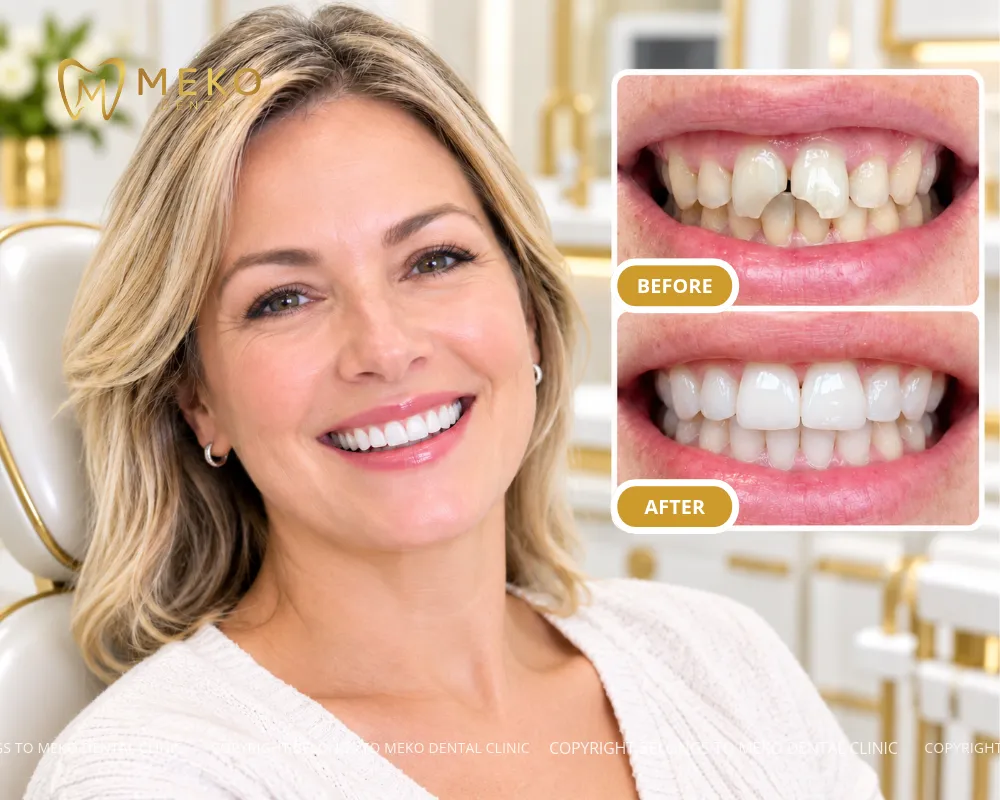
The dentist judges edge length against the lip line and the bite, since resin left too long can chip during normal chewing. A restored edge therefore looks balanced in the smile and also sits comfortably when the teeth close.
1.2 Gap and width changes
Small gaps close when the dentist adds resin to the sides of the neighboring teeth, which is the main change in gap cases. Each tooth gains a thin strip of width, and the space narrows or disappears.
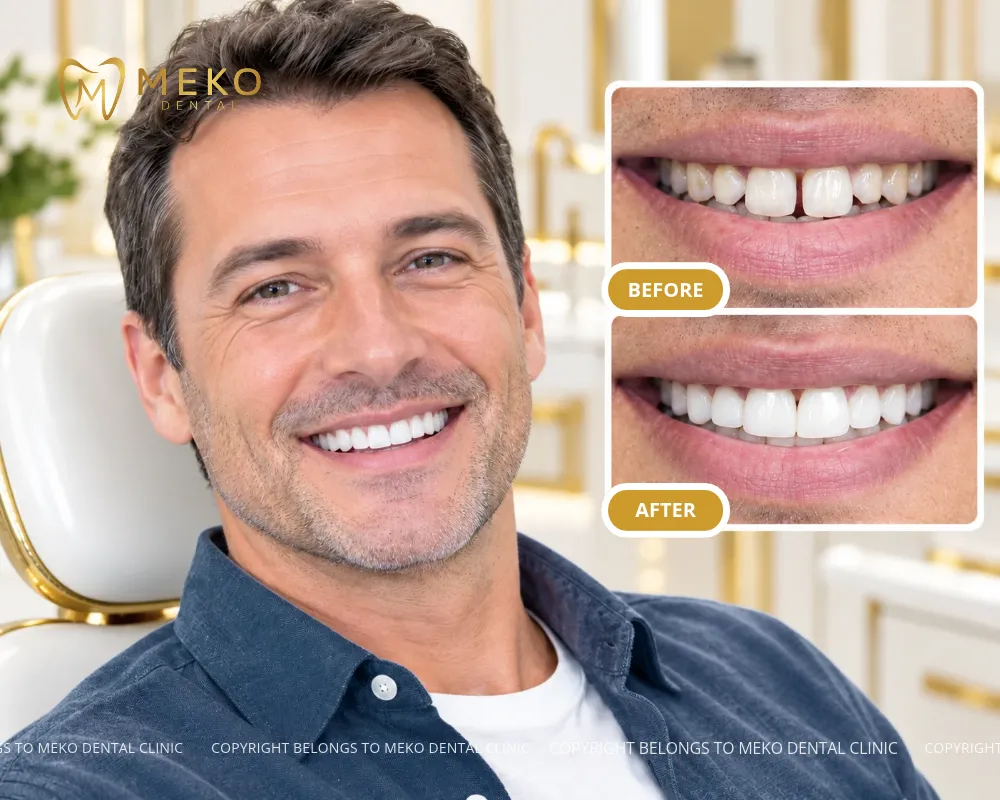
When several gaps are closed at once, the added width can make the front teeth look broad and boxy, so the amount of resin has to be balanced carefully. Good work spreads that width across several teeth instead of widening one or two.
1.3 Shape and shade changes
Uneven shape and mild color mismatch are corrected by building up the tooth and choosing a resin shade that blends with the neighbors. In composite resin veneers before and after photos, a small or peg-shaped tooth is built up until it matches its partner.
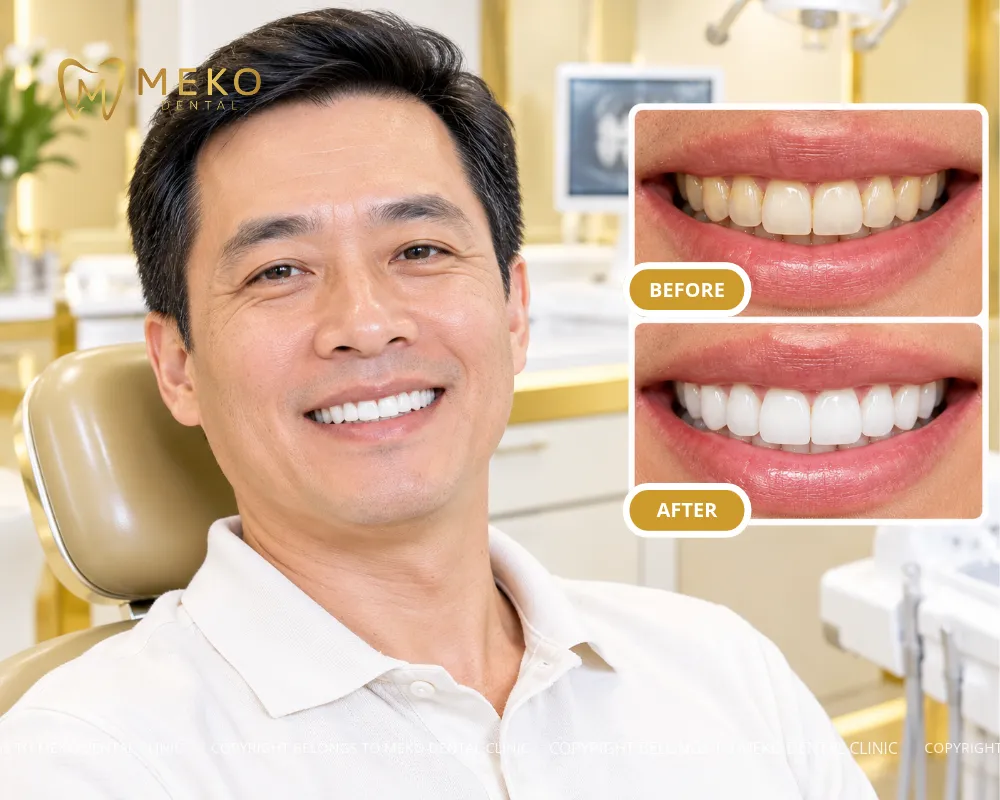
Deep stains are harder to cover with a thin layer of resin, which is why the dentist assesses the underlying tooth color before promising any particular shade. This is also why a mild stain and a deep stain can lead to very different results.
2. What changes by concern: chips, gaps, shape and color
Each concern produces a different visible change, and each needs a different check when reviewing a photo. The table below summarizes what to look for in dental composite veneers before and after images, from chipped edges to mild discoloration.
| Concern | What changes in the photo | What to check |
| Chipped edge | Corner rebuilt, edge looks even | Length matches the neighbors, edge is not thick |
| Small gap | Space narrows or closes | Teeth still look proportional in width |
| Small or uneven tooth | Tooth reaches the height and width of its partner | Shape follows the smile line |
| Mild discoloration | Surface looks more uniform | Shade blends at the edge and near the gum |
| Worn teeth | Edges regain length | Bite is mentioned, not only the front view |
A photo that matches one row closely says more than a gallery of unrelated smiles. Comparing the starting point first makes before and after composite veneers images easier to judge.
3. How to tell a natural result from an overdone one
In composite veneers before and after photos, a natural result keeps the same length, width, shade and surface texture as the neighboring teeth. An overdone result looks thicker, flatter or brighter than the enamel around it. The edge and the gum line usually give it away first.
Signs of natural work:
- Edges follow the natural smile line
- The shade shifts softly toward the tip instead of one flat color
- A fine surface texture catches light unevenly, like enamel
- Teeth stay in proportion after a gap is closed
Warning signs:
- Teeth look bulky or unusually wide
- A uniform, chalky white across all teeth
- A glossy, flat surface with no texture
- A visible ridge or step near the gum line
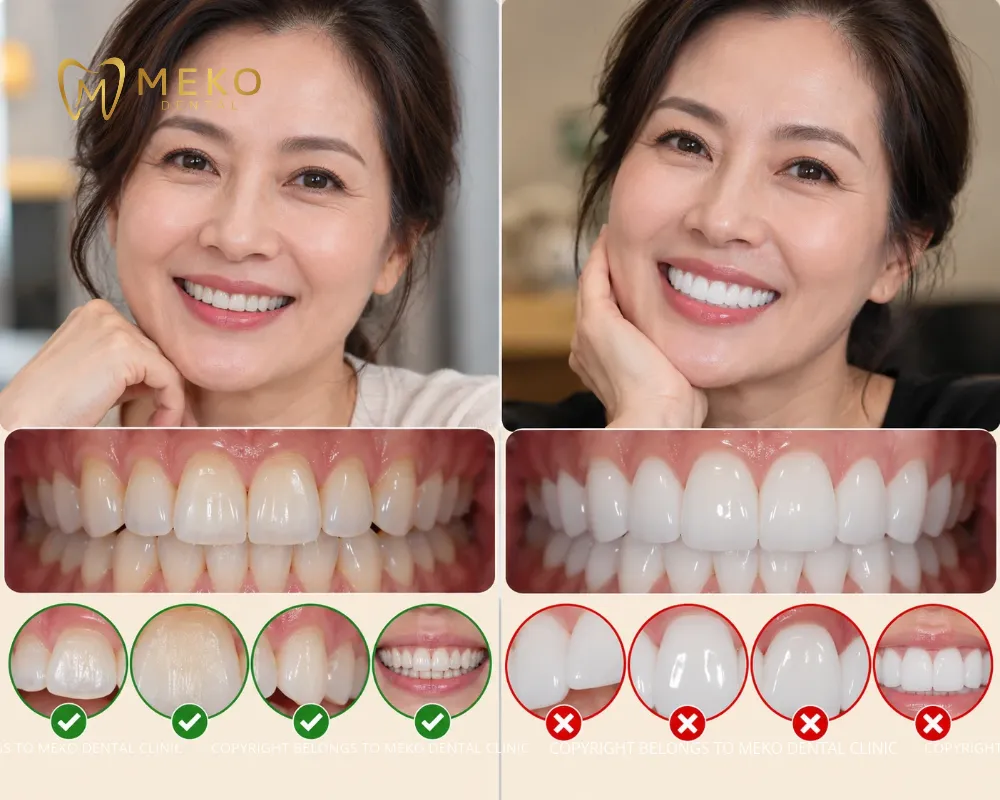
Because lighting, filters and camera settings can change how resin looks, be cautious with edited images in any before after composite veneers gallery. Asking to see the finished result in person gives a more reliable shade check.
4. Details to look for in direct composite veneers before and after cases
A trustworthy clinic labels each case with the treated teeth, the number of visits and the time since placement. These details turn an attractive photo into usable evidence. Without them, the images are hard to compare with a real situation.
Useful details to ask for:
- How many teeth were treated, and in how many appointments
- Whether the photos were taken right after treatment or at a later review
- Whether whitening, orthodontics or other work came first
- Whether the images were edited or filtered
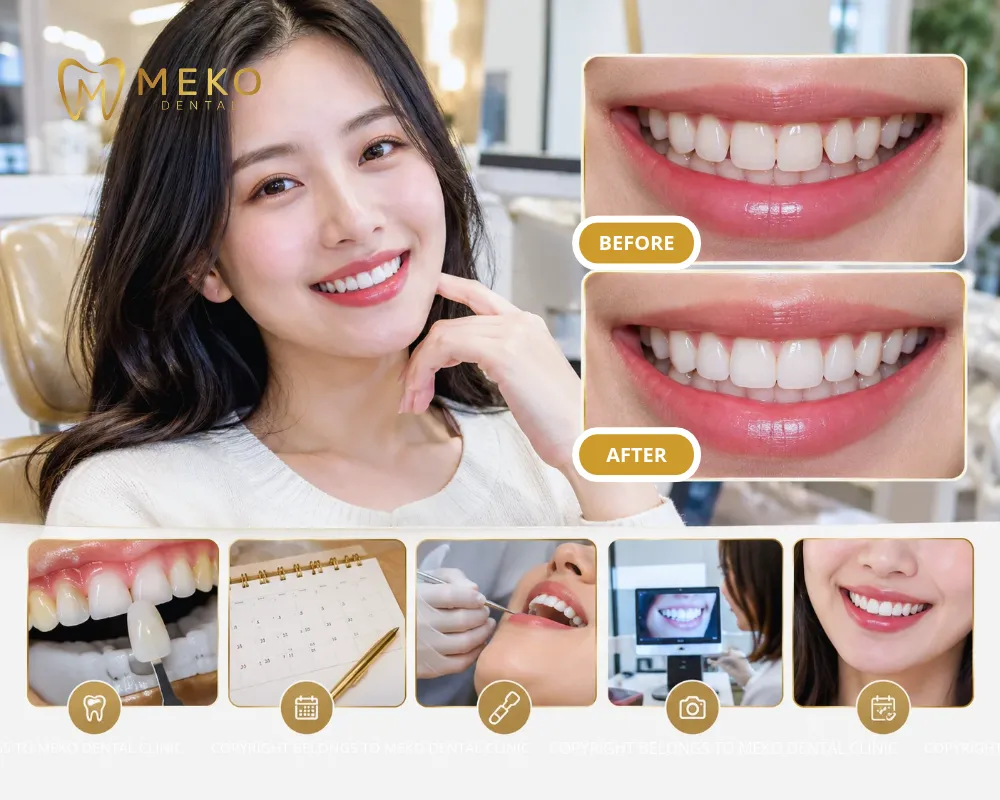
Follow-up photos matter most in any composite veneers before and after gallery. A result photographed on day one says little about how the resin looks after a year.
5. Treatment steps between the before and after photos
Between the two photos, the dentist examines the teeth, selects a shade, bonds the resin in thin layers, then shapes and polishes it. The American Dental Association describes the same core steps: prepare the tooth, bond and sculpt the composite, then harden it with a special light.
Most direct composite veneers are completed in one visit, and clinics commonly quote one to three hours depending on how many teeth are treated. Healthdirect Australia adds that the dentist matches the color to the surrounding teeth so the veneer looks natural.
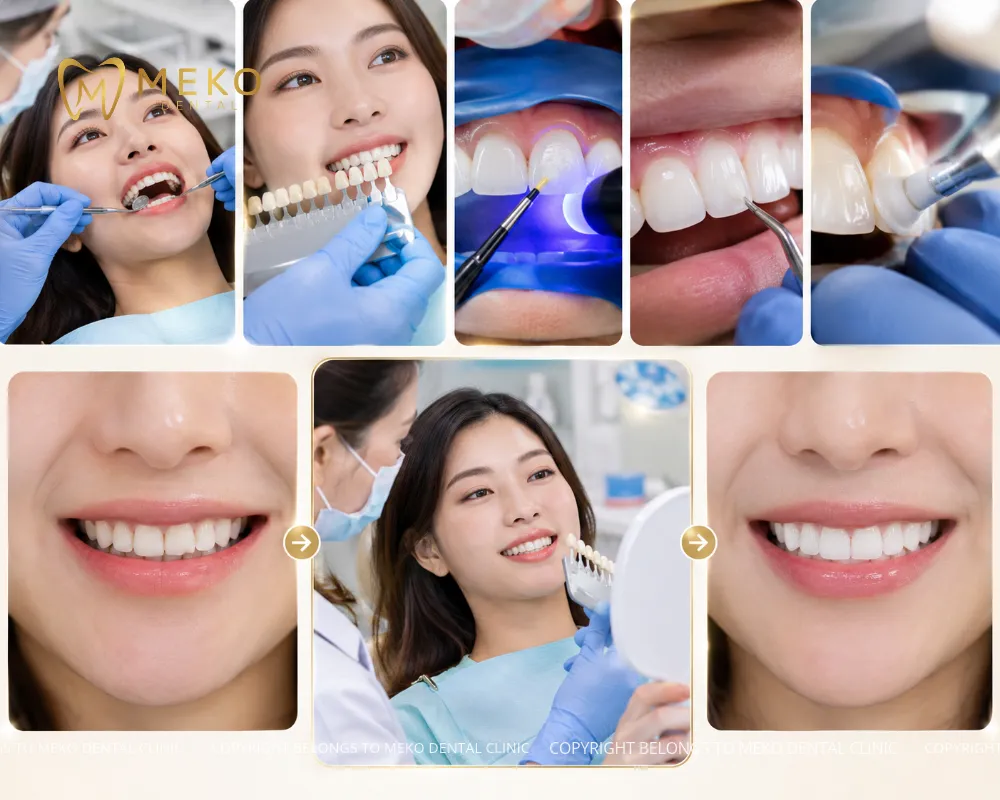
Some clinics also preview the planned shape before bonding, which lets the patient approve the look before the resin is hardened. Asking about this step helps keep expectations close to the final photo.
6. How do composite veneers before and after results change over time?
Composite veneers before and after results change gradually, mostly through surface gloss, staining and edge wear. Fresh work looks sharpest on day one. Over the following years, the resin usually dulls and may pick up color, so follow-up photos in composite veneers before after galleries give a more honest picture.
| Timeframe | What may be noticed | Usual response |
| First days | Mild sensitivity to hot or cold | Usually settles within a few days |
| First year | Slight loss of shine, early staining at the edges | Professional polish |
| Around 5 to 7 years | Edge wear, small chips, color change | Repair or replacement |
A two-year randomized trial on gap closure found similar survival for direct composite (93.4%) and ceramic veneers (95%), although staining and surface roughness appeared more often in the composite group. A Cochrane review found no reliable evidence that either approach lasts longer, and dental research lists color change over time as a known limitation of the direct technique.
Because composite resin does not respond to bleaching agents, any whitening should be done before placement so the resin is matched to the final tooth shade. Natural teeth can lighten afterwards while the resin stays the same, which creates a visible mismatch.
7. When can results look different from the photos?
Results differ from published composite veneers before and after photos when the starting teeth, bite or stain depth differ from the example. A photo shows one person’s tooth structure, not a promise. The ADA also advises treating decay and gum disease before veneers, so oral health comes first.
Common reasons for a different outcome:
- Deep stains that are hard to cover with a thin layer
- Heavy grinding, which strains resin edges
- Larger gaps or crowding that call for an orthodontic opinion
- Older fillings whose color does not match
- Different tooth size and proportions
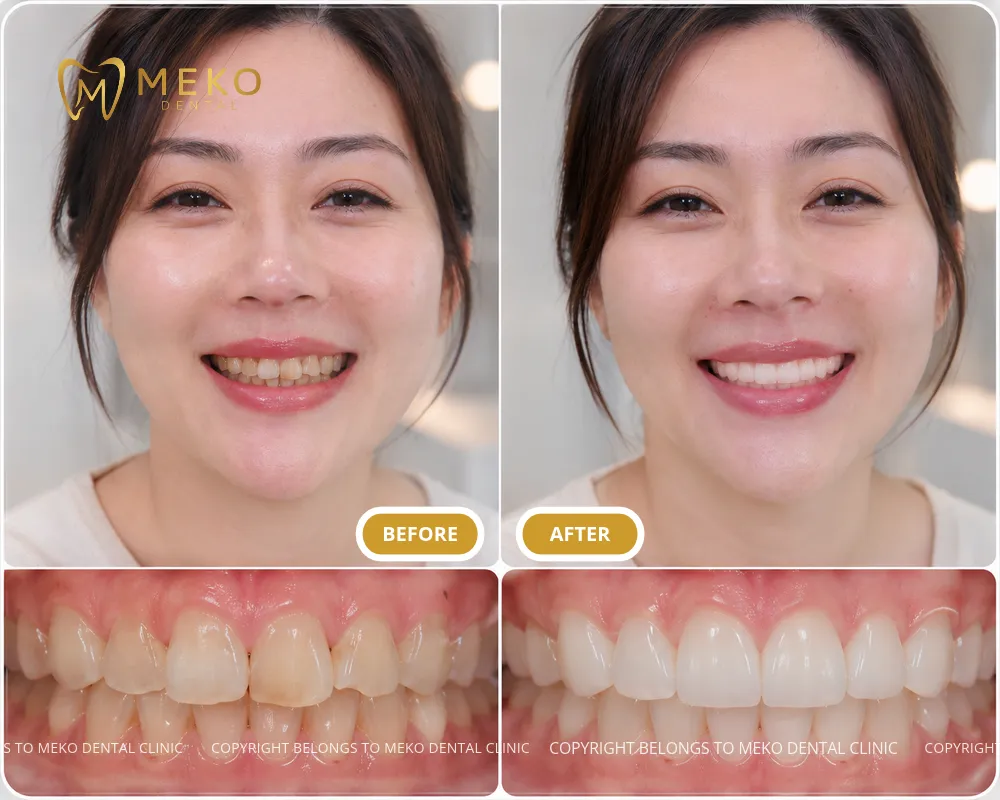
Some cases fall outside what composite resin handles well, particularly crowded teeth and heavily damaged teeth. In those situations, the dentist may suggest orthodontic treatment or a stronger restoration instead. Explaining this before treatment keeps the final photo close to what was planned.
8. Frequently asked questions
Are composite veneers before after photos edited or filtered?
Yes, some are. Lighting, camera settings and filters can make resin look brighter or smoother than it really is. Check that both photos use the same angle and lighting, and ask the clinic whether the images were edited.
How long do dental composite veneers before and after results last?
Composite veneers typically last about 5 to 7 years, depending on your bite, habits and care. Gloss may fade and staining or edge wear can appear over time, while polishing and small repairs help extend their life. Long-term studies are limited, and a two-year trial found 93.4% of direct composite veneers still in place.
What should I ask to see in before after composite veneers cases?
Ask for cases similar to yours, with the number of teeth treated, visits needed, and time since placement. Also ask whether whitening or orthodontics came first, whether photos were filtered, and whether follow-up photos after a year or more are available.
The best way to see which dental composite veneers before and after results fit your case is an in-person exam at Meko Dental Clinic. The dentist checks your teeth, listens to the look you prefer, and explains the planned changes before any composite work begins.
Pricing is quoted after the exam, once the number of teeth and the amount of reshaping are clear. To book your visit, call 077 227 7919, and bring three or four photos of smiles you like so the dentist can help you set realistic goals.
References
- American Dental Association. Veneers. MouthHealthy. https://www.mouthhealthy.org/en/az-topics/v/veneers
- Healthdirect Australia. Veneers. https://www.healthdirect.gov.au/veneers
- Randomized clinical trial on direct composite and indirect ceramic laminate veneers in multiple diastema closure cases: two-year follow-up. Materials (MDPI), 2024. https://www.mdpi.com/1996-1944/17/14/3514
- Direct versus indirect veneer restorations for intrinsic dental stains (Cochrane review summary). Evidence-Based Dentistry. https://www.nature.com/articles/6400248
- Long-term survival and reasons for failure in direct anterior composite restorations: a systematic review. PMID 35399771. https://pmc.ncbi.nlm.nih.gov/articles/PMC8989165
- Patel A, Patel H. Prescription preferences for direct and indirect veneers. Dentistry.co.uk, 2020. https://www.dentistry.co.uk/2020/06/18/prescription-preferences-direct-indirect-veneers/


 Messenger FB
 WhatsApp
 Book now