
Contents [ Hide ]
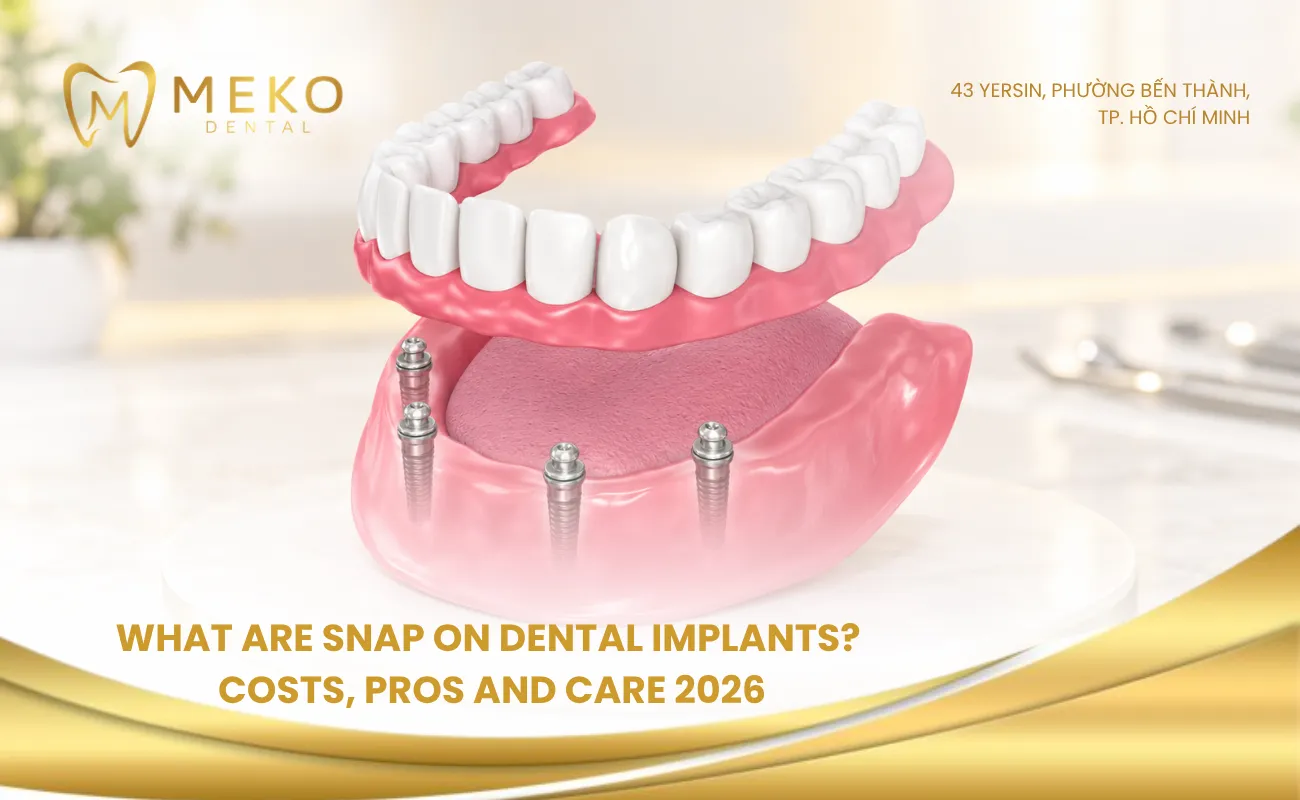
Traditional dentures can become loose, making eating and speaking uncomfortable. Snap on dental implants offer an alternative by securing removable dentures to implants placed in the jawbone. Are they suitable for everyone, and what should patients expect in terms of cost and maintenance? This article explains how snap on dental implants work, their benefits, limitations, pricing, and essential care tips.
1. What are snap on dental implants?
Snap on dental implants are removable dentures that attach to implants anchored in the jawbone. Clinically called implant-retained overdentures, they use connectors to hold the denture more securely than conventional dentures. The implants stay in the jaw, while patients remove the denture for cleaning. Unlike snap-on veneers that cover natural teeth, implant-retained dentures replace missing teeth.
2. How do snap in dental implants work?
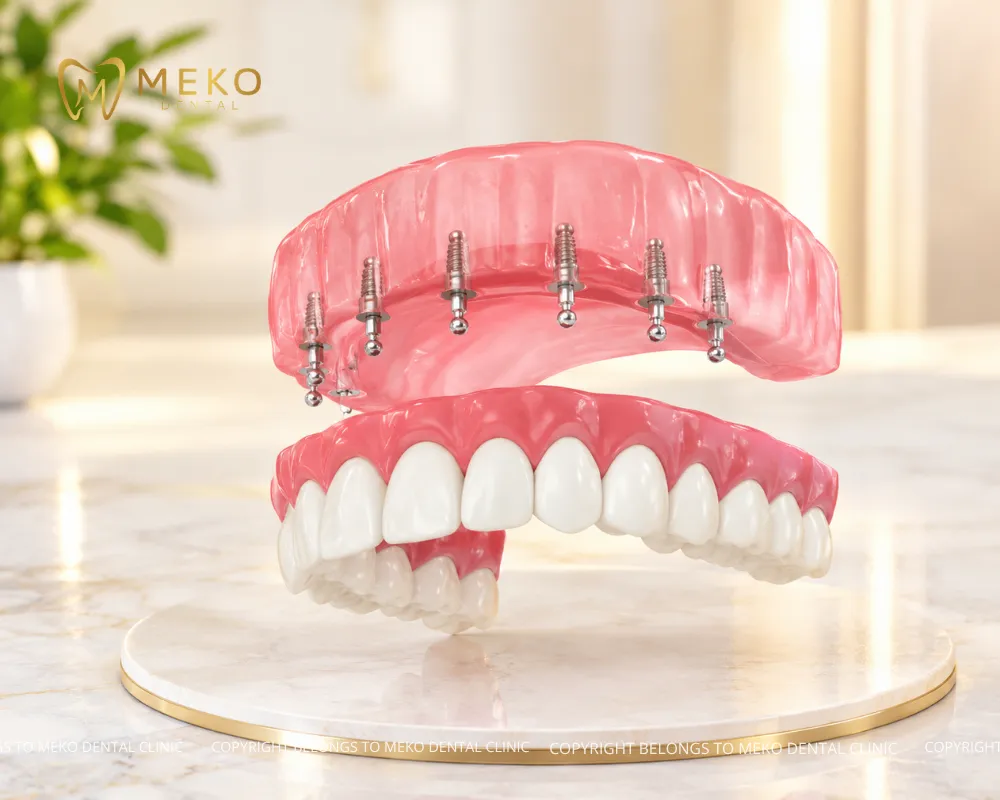
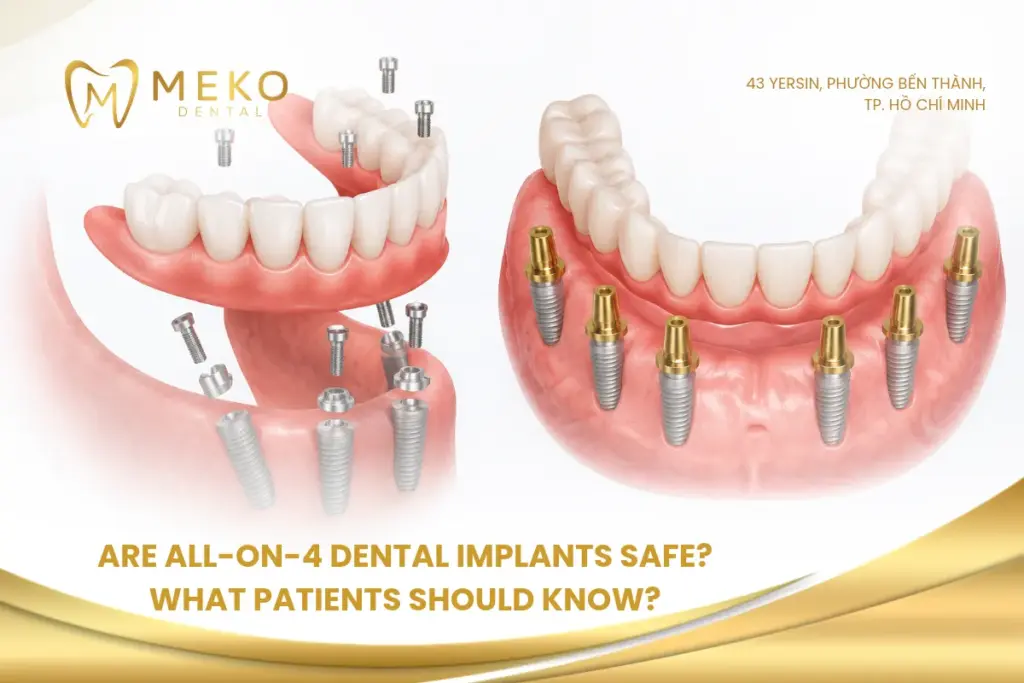
This system works through a mechanical connection between implants anchored in the jawbone and a removable denture. This design helps the denture remain more secure during everyday activities while still allowing patients to remove it for cleaning.
The system has three main components:
- Dental implants: Titanium or other biocompatible posts are surgically placed in the jawbone, where they provide stable anchoring points after successful healing.
- Attachment connectors: LOCATOR, ball, or bar attachments connect the implant posts to corresponding retention components inside the removable denture.
- Removable denture: A custom-made denture contains matching components that engage with the attachments, helping reduce unwanted movement during normal use.
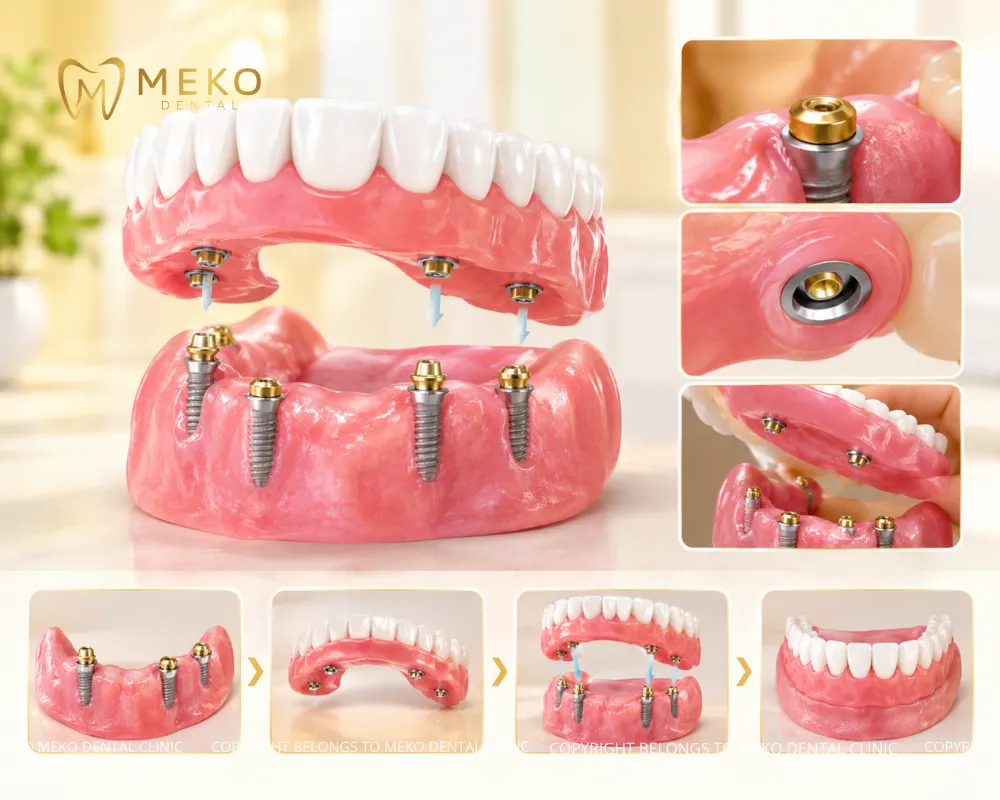
With these dentures, patients gently seat the denture until its retention components engage. Removal follows the dentist’s instructions to avoid damaging the connectors. Attachment designs and retention strength vary according to the patient’s oral condition and selected system.
3. Benefits and limitations of snap-on dental implants
Snap on dental implants may improve denture stability for patients who struggle with conventional removable dentures. Results depend on bone condition, attachment design, and ongoing care, so both functional benefits and possible complications require consideration.
3.1 Benefits for eating, speaking and comfort
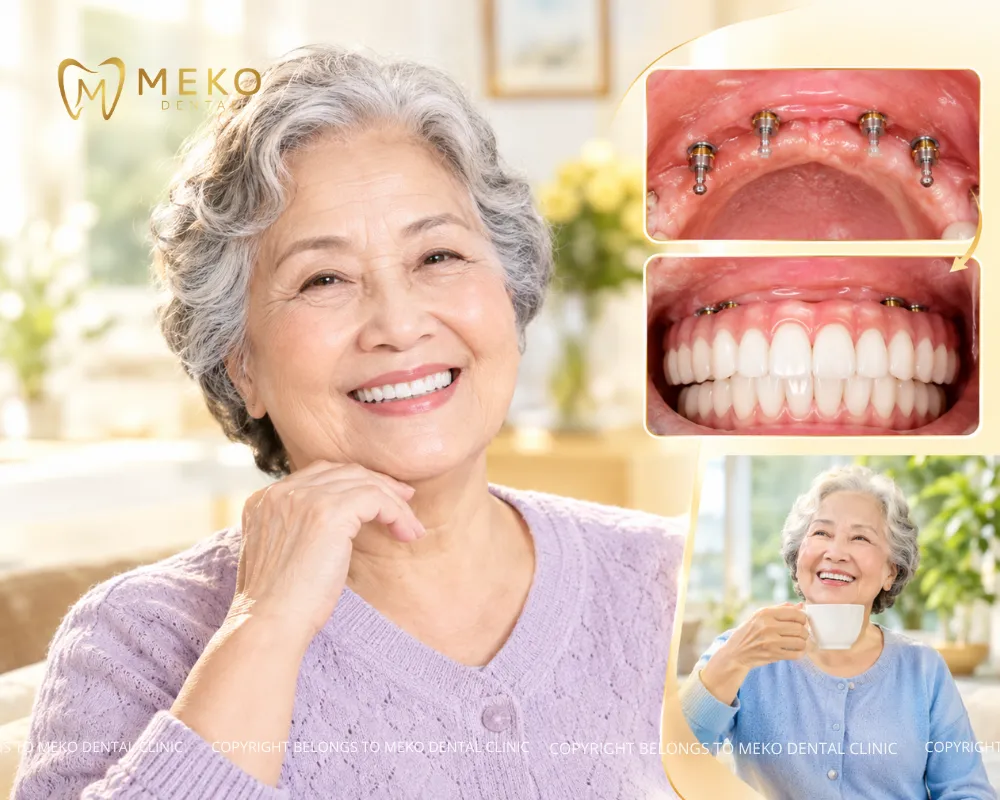
According to a 2021 systematic review published in Clinical and Experimental Dental Research, involving 812 patients, lower-jaw (mandibular) implant overdentures showed significantly higher satisfaction, comfort, speech, and stability scores than conventional dentures. These findings support the functional benefits associated with this option, including:
- Improved stability: Reduced denture movement during chewing and speaking.
- Greater comfort: Better retention may improve everyday confidence.
- Less adhesive dependence: Some patients may require fewer denture adhesives.
- Bone support: Implants may help reduce bone loss around the implants, though they cannot prevent it elsewhere in the jaw.
3.2 Limitations and complications
A 2018 study published in Clinical and Experimental Dental Research reported a 94.9% implant survival rate among 47 patients using LOCATOR attachments over an average follow-up of 54.8 months. The sample was small, so this is an indication rather than a guarantee. Several limitations and complications should still be considered:
- Surgical risks: Infection, bleeding, or delayed healing.
- Implant complications: Integration failure or inflammation around implants.
- Bone limitations: Insufficient bone may require additional procedures.
- Attachment wear: Connectors and retention inserts can loosen over time.
- Ongoing maintenance: Regular examinations and component replacement may be necessary.
4. Who is a suitable candidate for snap-in implants?
Snap on dental implants are generally considered for people missing all or most teeth in one dental arch, particularly when conventional dentures lack adequate retention. Eligibility depends on jawbone condition, general health, oral hygiene, and the ability to maintain the denture.
Potential candidates include:
- People with extensive tooth loss: Those missing all or nearly all teeth in an arch.
- Existing denture wearers: Patients experiencing slipping, looseness, or discomfort.
- Patients preferring removable dentures: Individuals seeking better retention without a permanently fixed bridge.
- Patients with suitable bone support: Those whose bone condition permits implant placement.
- Patients with stable health conditions: Those whose overall health allows implant placement and regular dental checkups.
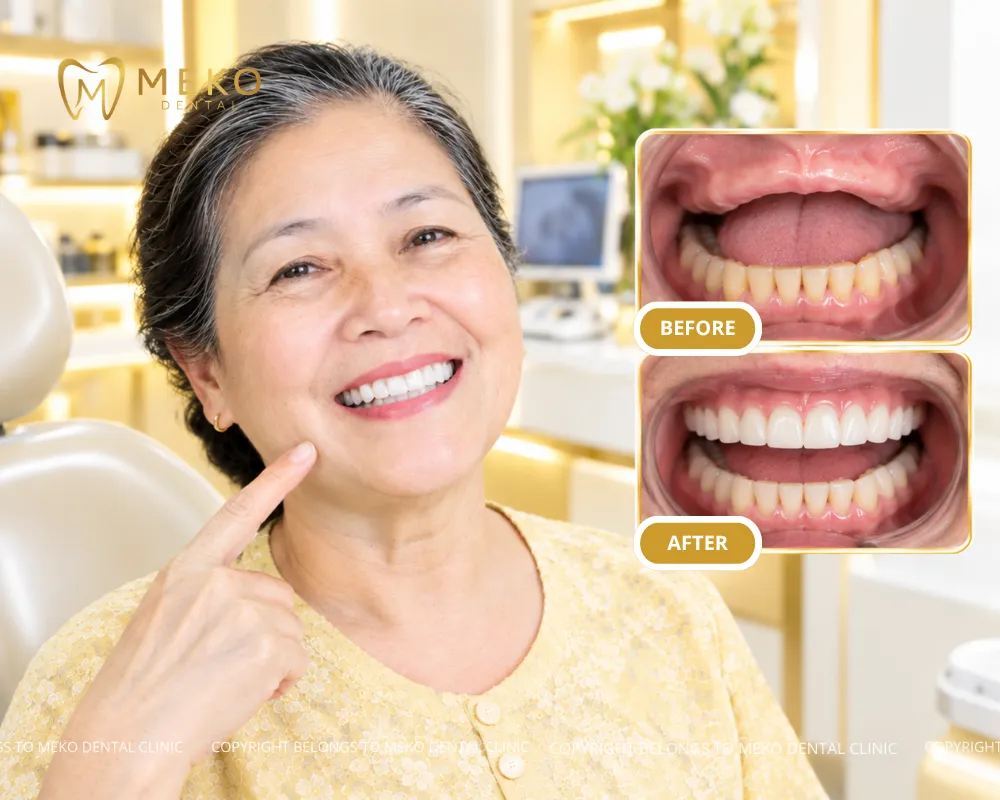
A dentist will assess bone volume, gum health, medical history, and cleaning ability before recommending this treatment. Clinical examination and imaging help determine whether this option can provide appropriate retention and remain manageable during everyday use.
5. Snap on dental implants vs. traditional dentures vs. fixed implants
Traditional dentures cost less upfront but can shift during use. Snap-on dentures add retention through attachments, while fixed bridges stay attached to the implants and are removed only by the dentist. Full-arch options such as All-on-4 are one example of a fixed solution.
| Criteria | Traditional Dentures | Snap-On Dentures | Fixed Implant Bridges |
| Support | Gums | Usually 2-4 implants | Usually 4-6 implants |
| Removal | Daily | Daily | Dentist only |
| Stability | May slip | Attachments limit slipping | Secured to implants |
| Cleaning | Brush outside mouth | Clean denture and attachments | Brush and clean beneath bridge |
| Surgery | Not required | Required | Required |
| Estimated cost (USD/arch) | $120-$630 | $1,600-$6,000 | $4,000-$12,000 |
6. How much do snap on dental implants cost?
In Vietnam, published prices for snap-on dentures generally fall between about USD 1,600 and USD 6,000 per arch. A two-implant overdenture sits at the lower end, roughly USD 1,600 to USD 2,500, while a four-implant setup typically costs about USD 3,000 to USD 6,000.
These ranges cover the implants, attachments, and denture, and they are market estimates rather than a Meko Dental Clinic price list. Premium implant systems, bone grafting, or extractions can push the total above these ranges. Meko Dental Clinic provides a written, itemized estimate after an examination and imaging.
6.1 Factors affecting the cost
The final price of snap on dental implants reflects several clinical and material-related factors. A quotation should account for the complete treatment rather than implant posts alone, since additional procedures and ongoing maintenance may affect the overall expense.
Key pricing factors include:
- Number of implants: The required implants per arch influence surgical complexity, materials and total cost.
- Attachment system and materials: LOCATOR, ball, or bar connections and denture materials carry different fabrication and maintenance costs.
- Preparatory procedures: Bone grafting, extractions, or other procedures may increase expenses when necessary.
- Diagnostic requirements: Imaging, examinations, and complex surgical planning contribute to overall fees.
- Clinic location and follow-up: Local operating costs and maintenance arrangements influence pricing.
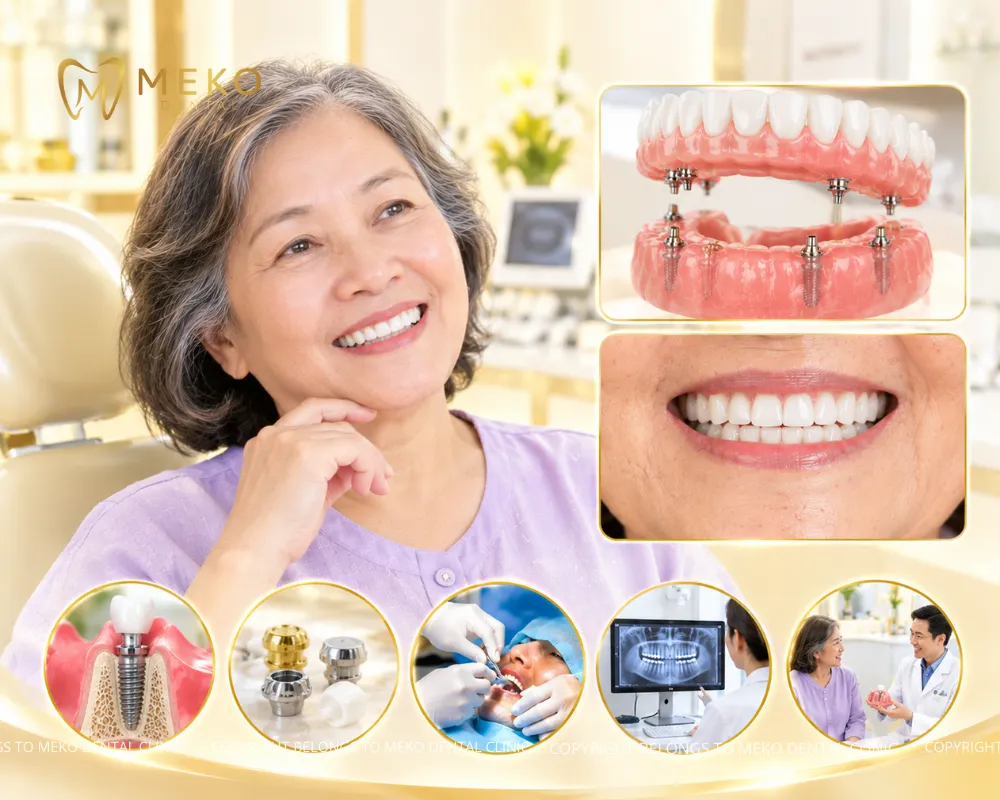
These variables can significantly change the final quotation. An individualized written estimate helps clarify required procedures, expected costs and potential additional expenses before proceeding.
6.2 What should a dental quote include?
Before choosing snap on dental implants, patients should request an itemized quotation rather than comparing advertised starting prices alone. Confirm that the estimate includes:
- Implant placement surgery and implant posts.
- Attachment connectors and retention components.
- Custom removable denture fabrication.
- Necessary imaging and clinical examinations.
- Scheduled follow-up appointments.
- Possible future attachment replacement costs.
- Warranty conditions, coverage, and exclusions.
7. How to care for snap-in teeth implants
Proper daily cleaning helps maintain these implant-retained dentures, protect surrounding tissues and reduce avoidable wear of the attachment components. Follow this practical care checklist:
- Remove the denture correctly: Follow the dentist’s instructions when disengaging attachments. Avoid twisting or pulling forcefully.
- Clean the removable denture: Use a soft denture brush and compatible cleaning products. Avoid abrasive toothpaste or harsh chemicals unless recommended.
- Clean around the implants: Gently brush the gums, attachment surfaces, and accessible areas surrounding each implant.
- Store the denture appropriately: Follow professional guidance regarding overnight removal and storage in water or a compatible cleaning liquid.
- Check attachment retention: Report unusual looseness, discomfort, or difficulty engaging the denture. Never attempt home repairs.
- Attend regular examinations: Schedule professional checks to assess implant health, denture fit and connector condition.
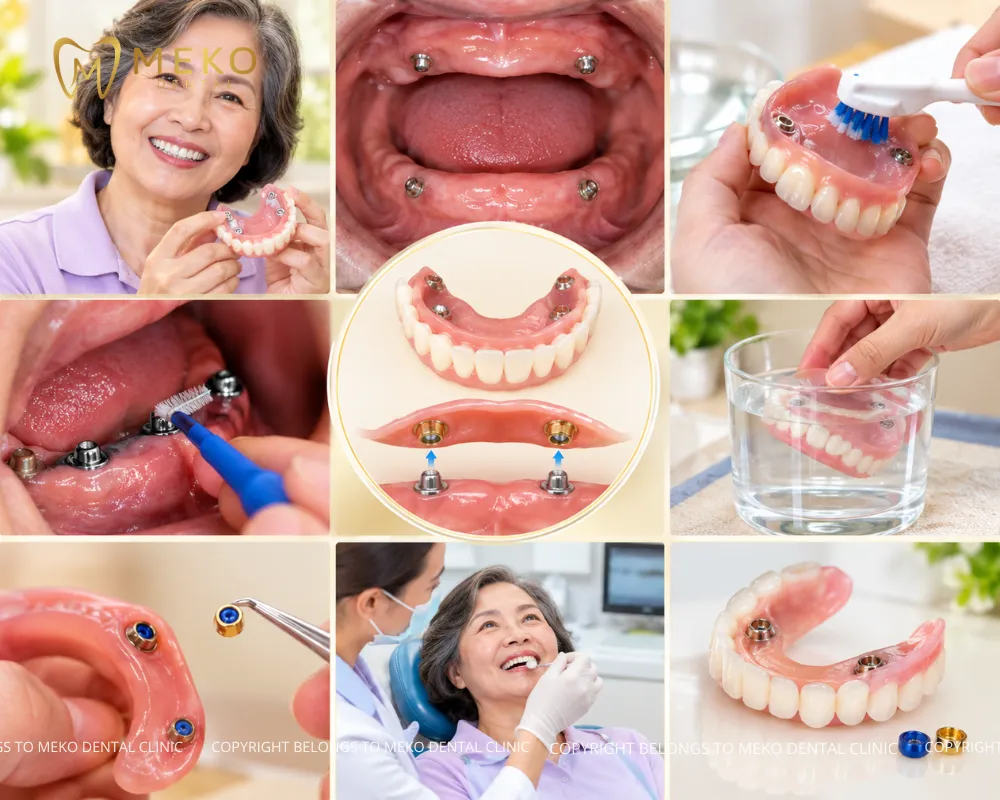
With snap in teeth implants, retention inserts may eventually require replacement even when the underlying implants remain stable. Consistent hygiene and timely maintenance help preserve everyday function.
8. Frequently asked questions
8.1 How long does it take to get snap on dental implants?
The process usually takes three to six months, allowing time for implant placement, healing and denture fabrication. Patients requiring bone grafting or additional procedures may need longer, while temporary dentures can sometimes be worn during the healing period.
8.2 Can you sleep with snap-in dentures?
Usually not. Dentists generally recommend removing snap-on dentures overnight to reduce pressure on oral tissues and allow proper cleaning. However, specific instructions may vary depending on the denture design, implant condition and individual needs, so patients should follow their dentist’s guidance.
8.3 Do snap on dental implants feel painful when snapping into place?
Properly fitted snap-on dentures should engage with their attachments without significant pain, although slight resistance is normal. Persistent discomfort, pressure, or difficulty seating the denture may indicate worn components or an improper fit that requires professional adjustment.
9. Conclusion
Snap-on dental implants provide a removable denture option supported by implants in the jawbone, offering improved retention for suitable patients. Their long-term performance depends on oral condition, upkeep, and budget.
Patients considering this option can arrange a professional assessment at Meko Dental Clinic. The dental team can review their jawbone, gums, and bite, discuss available treatment options, and provide a personalized cost estimate.


 Messenger FB
 WhatsApp
 Book now