

Contents [ Hide ]
An implant-supported restoration relies on more than the visible crown. Beneath the gumline, the dental implant fixture provides the anchorage needed to support a replacement tooth. Its design affects how the implant engages with the jawbone and handles everyday chewing forces.
Understanding how the fixture works helps clarify its role within an implant. This article explains what a dental implant fixture is, how it works, the main fixture types, how it is placed, possible complications, maintenance and cost.
1. What is a dental implant fixture?
A dental implant fixture is the component inserted into the jawbone to anchor an implant-supported restoration. Often called the implant body, it is commonly made from titanium, titanium alloy, or zirconia. Unlike the visible crown, the fixture remains inside the bone, where its surface supports bone attachment during healing and provides a firm foundation for the connecting abutment above it. In everyday use, “dental implant” often refers to the whole system, while “fixture” specifically means the part placed in the bone.
2. What are the main components of a dental implant?
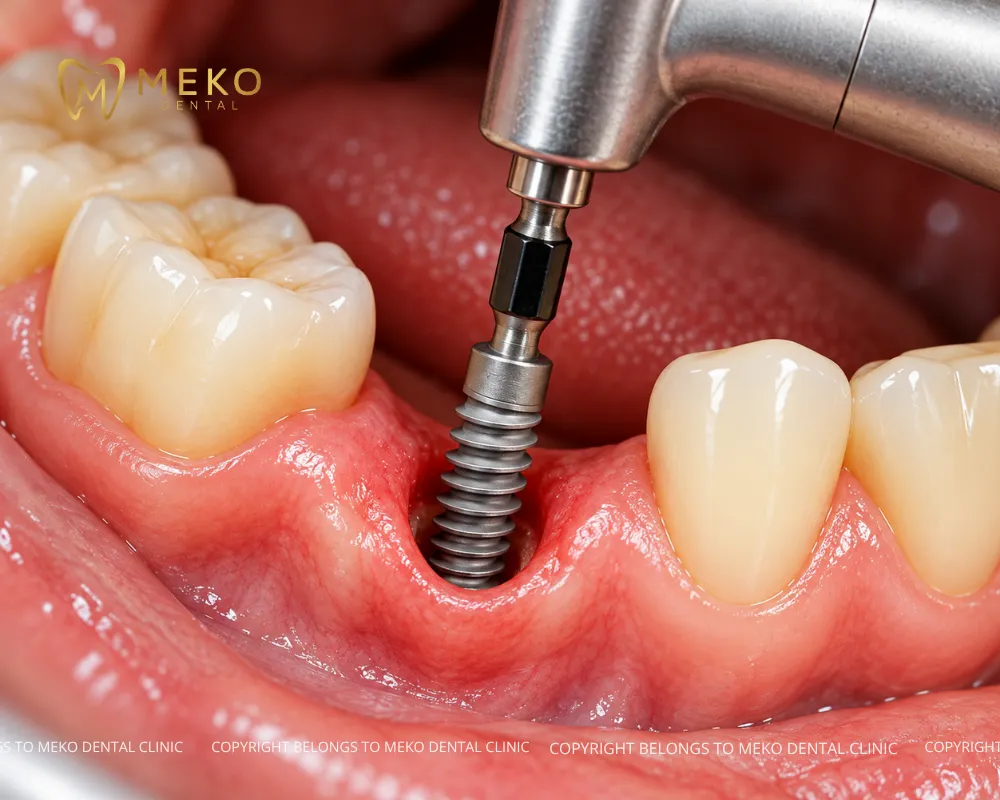
A conventional implant-supported single crown generally involves three principal components. Each occupies a different position within the implant and performs a specific structural function.
| Component | Location | Function |
| Implant fixture | Inside the jawbone | Anchors the replacement tooth |
| Abutment | Between the fixture and crown | Connects the fixture to the crown |
| Crown | Above the gumline | Replaces the visible tooth structure and chewing surface |
The fixture provides the underlying support, while the abutment and crown complete the implant. Depending on the implant system, additional fixation screws may be required. Some designs also combine the fixture and abutment into a single component.
3. How does a dental implant fixture work?
A fixture first gains stability by gripping the prepared bone, then develops biological support as healing progresses. Once restored, it transfers regular chewing pressure from the artificial tooth to the surrounding jawbone during daily function.
3.1 Osseointegration with the jawbone
Immediately after placement, the fixture is held by its mechanical grip within the prepared jawbone. As healing progresses, new bone forms against the implant surface, strengthening the connection needed to keep the fixture stable beneath the crown during normal function.
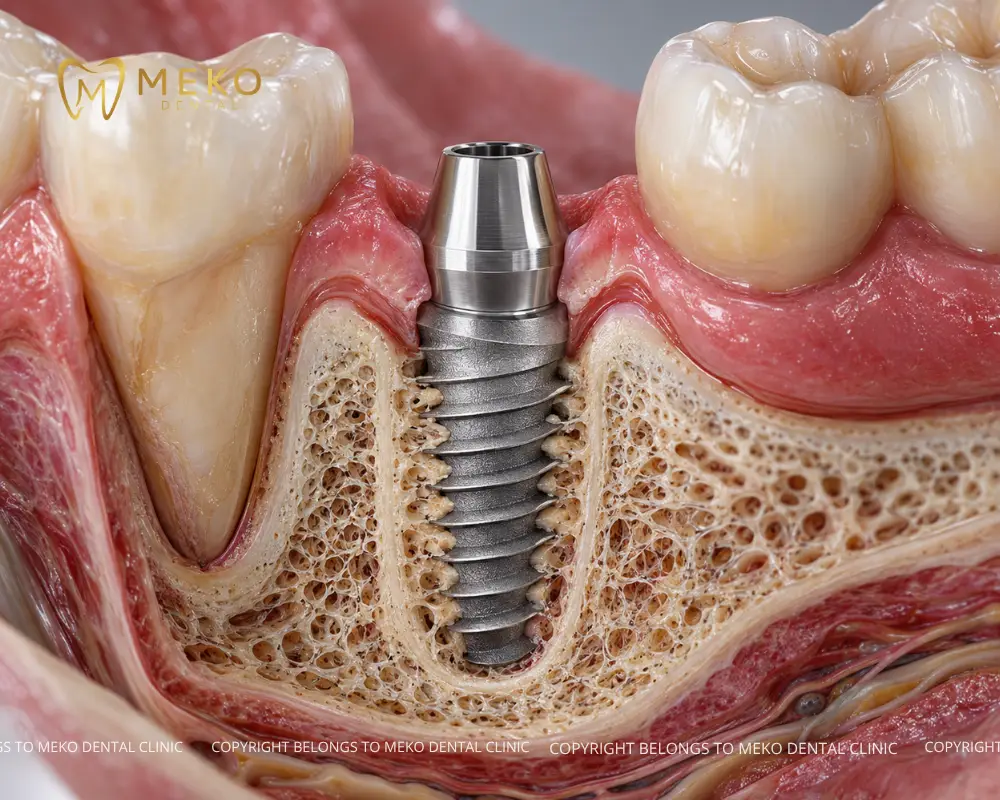
Healing often takes several months, although bone quality, implant stability and general health can change the timeline. Before attaching the final crown, the dentist checks whether the fixture has gained enough stability to support the planned crown without excessive movement.
3.2 Chewing force distribution
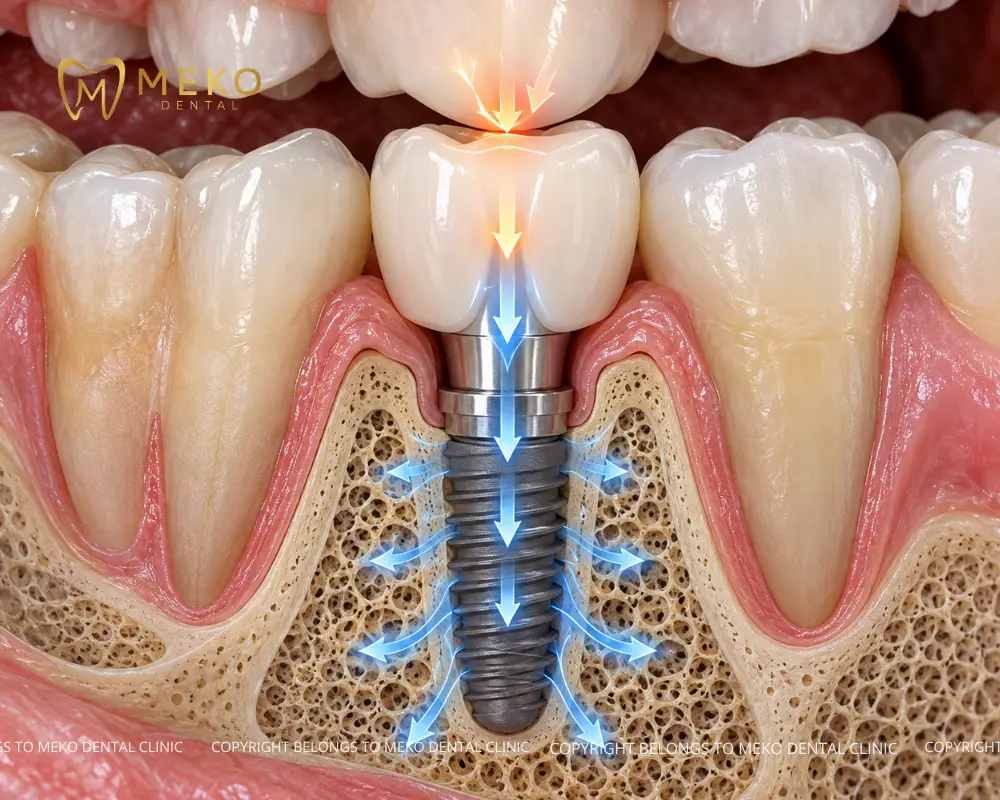
When chewing, pressure passes from the crown through the abutment and fixture into the surrounding jawbone. Fixture position and crown shape influence where that pressure concentrates, making accurate placement important for reducing unnecessary stress on the supporting bone during biting. Because implants have no periodontal ligament to cushion biting forces, the dentist checks the bite after the crown is placed.
4. What types of dental implant fixtures are available?
Dental implant fixtures vary mainly in material and body shape. These differences influence their mechanical properties, initial stability and suitability for specific anatomical conditions.
4.1 Titanium vs. zirconia fixtures
Titanium and zirconia are common materials for dental implant fixtures, with different appearances and mechanical characteristics.
| Feature | Titanium | Zirconia |
| Material | Titanium metal or alloy | Metal-free ceramic |
| Appearance | Metallic gray | White |
| Strength | Strong, more ductile | Hard, more brittle |
| Clinical evidence | Extensive long-term studies | Fewer long-term studies |
Titanium has broader long-term clinical evidence, while zirconia provides a metal-free option with potential aesthetic advantages in selected cases. The dentist chooses based on bone conditions and the planned restoration.
4.2 Tapered vs. parallel-walled fixtures
Tapered fixtures become narrower toward the tip, while parallel-walled fixtures maintain a more consistent diameter. Tapered designs may improve initial mechanical grip in selected bone conditions, depending on thread geometry and surgical preparation. Neither shape guarantees greater stability in every case, since local bone quality and insertion technique also matter.
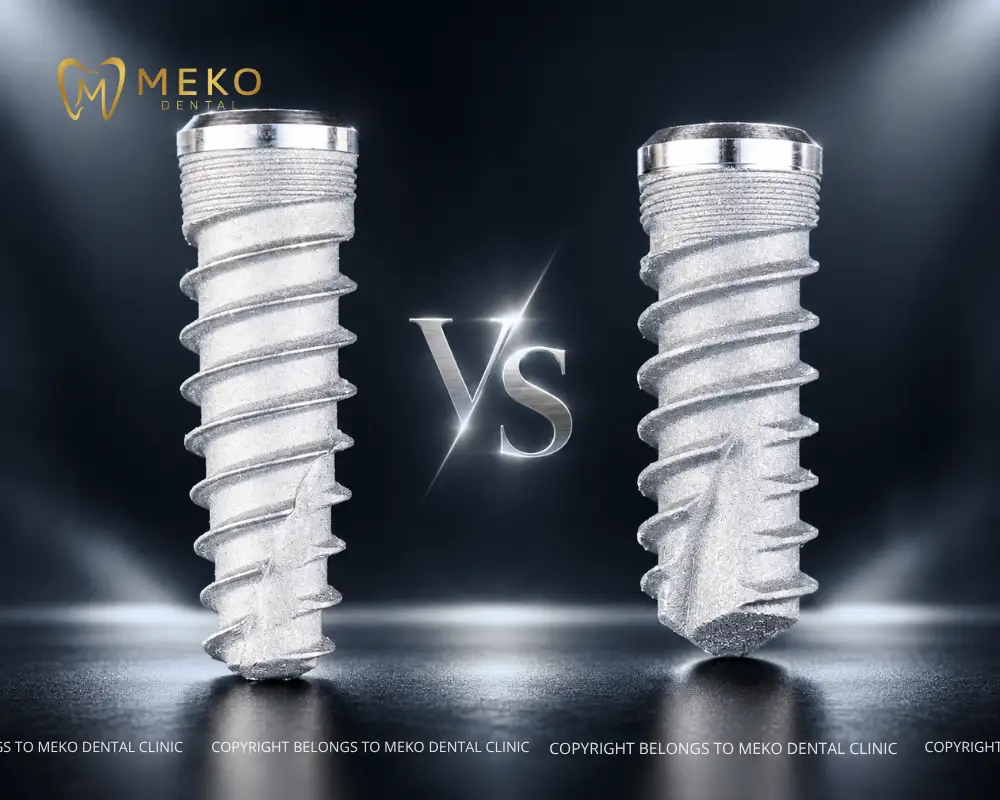
Both configurations are manufactured in different diameters, lengths and surface textures to accommodate varying bone and restoration requirements. The dentist considers planned crown position, nearby anatomical structures and expected biting forces when selecting a fixture.
5. How is a dental implant fixture placed?
The dental implant placement procedure moves through three phases: examination, surgery, and healing. From placement to final crown, the process takes about 3 to 6 months, and the steps below follow that order.
- Examination and planning: The dentist reviews your history, checks gums and bone with X-rays or CBCT and plans fixture position, width and length, adding bone work if needed.
- Surgical placement: Under local anesthesia, the dentist prepares the bone site, inserts the fixture as planned, covers it with a cover screw implant or healing abutment, then gives aftercare instructions.
- Healing and crown placement: Once bone healing is complete and stability is confirmed, the abutment and crown are attached, and some cases receive a temporary crown right away.
6. What are the risks and how to care for an implant fixture?
Implant complications are usually easier to handle when caught early and daily care helps protect the fixture for years. The first part covers warning signs and risks and the second covers the cleaning routine and check-ups that help prevent them.
6.1 Risks and warning signs
Any implant can run into problems, either during the first weeks of healing or years after the crown is placed. The main risks are listed below, followed by warning signs that should prompt a call.
- Failed osseointegration: The fixture does not fuse with the bone and stays loose, usually found within the first few months.
- Infection after surgery: Swelling, pus or fever in the first weeks can mean a wound infection that needs prompt care.
- Peri-implant mucositis and peri-implantitis: Plaque first inflames the gum around the implant (mucositis), which is reversible. If it spreads to the bone (peri-implantitis), it becomes a leading cause of later loss of stability.
- Nearby structures: Rarely, drilling close to the lower jaw nerve or the upper sinus causes numbness or sinus irritation.
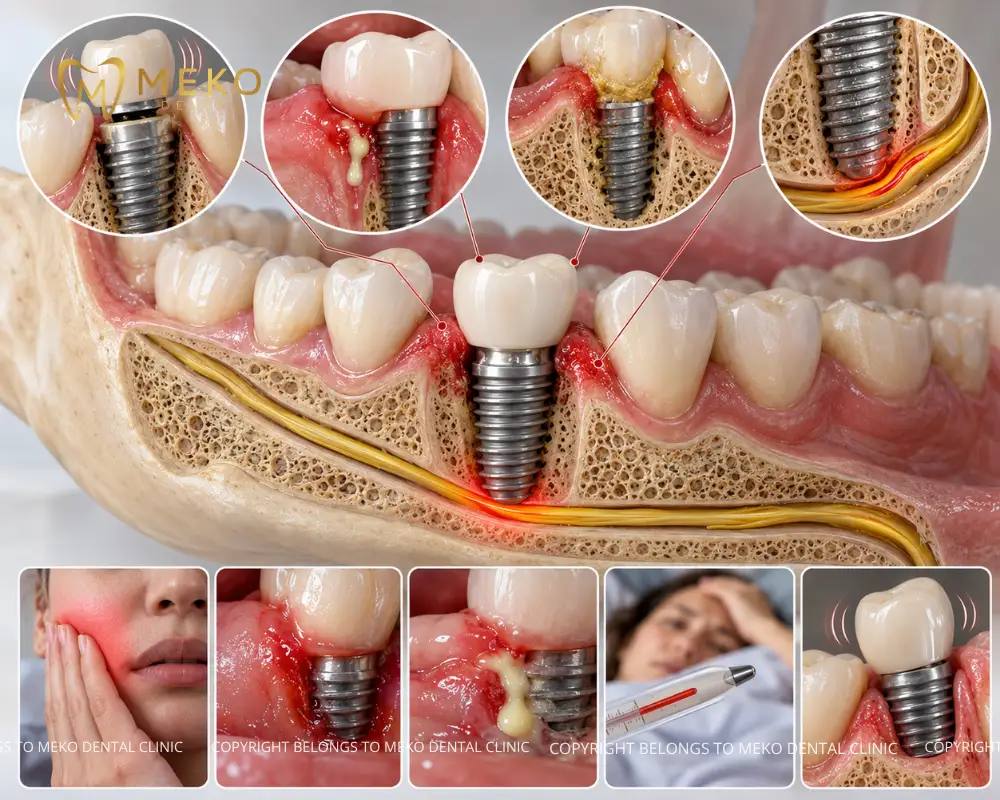
Call your dentist right away if pain keeps increasing, swelling lasts beyond the first week or keeps getting worse, pus or discharge appears, you develop a fever, or the implant feels loose. Early assessment makes problems far easier to correct.
6.2 Daily care and maintenance
Plaque left around the crown can inflame the gum and spread to the bone, so the implant needs the same daily cleaning as natural teeth. The steps below cover both home care and dental visits.
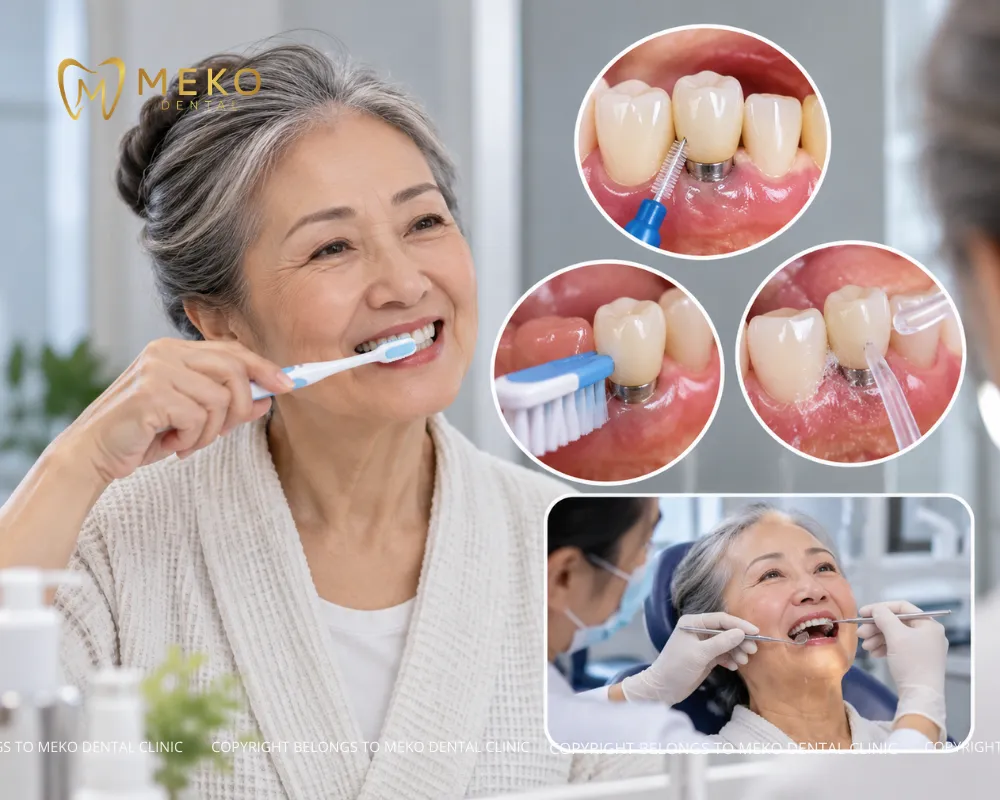
- Brush twice a day: Use a soft toothbrush for about two minutes, angling the bristles toward the gumline around the crown.
- Clean between teeth daily: Interdental brushes, implant floss or a water flosser reach the area a toothbrush misses, as your dentist recommends.
- Book regular check-ups: Visit about every 6 months for an exam and cleaning, even when the implant feels comfortable, because early gum inflammation and bone loss are often painless.
- Quit smoking and treat gum disease early: Both raise the risk of inflammation around the implant.
7. Frequently asked questions
7.1 Does every missing tooth need an dental implant fixture?
No. For three adjacent missing teeth, two fixtures may support an implant bridge instead of placing a fixture beneath each missing tooth. This decision depends on bone volume, implant spacing and bite pressure, which dentists assess before planning treatment.
7.2. Can an implant fixture be placed right after extraction?
Immediate placement means inserting the fixture into the socket during the same appointment as tooth extraction. It requires enough intact bone to securely stabilize the implant. If the socket is severely damaged, healing or bone grafting may be needed first.
7.3. Can a crown be replaced without removing the fixture?
A chipped or worn implant crown can often be replaced without removing the fixture embedded in bone. The dentist carefully checks the abutment, screw and implant connection first. If these remain stable and compatible, only the visible crown needs replacement.
8. How much does a dental implant fixture cost?
At Meko Dental Clinic, single implant packages range from USD 696 to USD 1,446 per tooth, depending on the implant system. These figures cover the implant fixture and abutment, not the complete restoration, so they should not be interpreted as fixture-only prices.
An implant-supported crown is listed separately at approximately USD 228 to USD 350. Combined, a single-tooth treatment ranges from roughly USD 924 to USD 1,796. The final quote also depends on the implant system, the crown type and whether bone grafting is needed, with each charge itemized and confirmed before the procedure.
At Meko Dental Clinic, a consultation assesses your jawbone condition, oral health and tooth replacement needs to identify suitable dental implant fixture options. Book an appointment to compare available implant systems, review pricing and receive an itemized treatment plan based on your clinical findings and goals.


 Messenger FB
 WhatsApp
 Book now