

Contents [ Hide ]
A cover screw implant is a small component that sits on top of a dental implant while the jawbone heals. It closes the internal connection so that bone and gum tissue cannot grow into it.
Months later, it allows the dentist to reopen the implant easily when the crown is being planned. This guide covers what a cover screw implant does, how it differs from a healing abutment, and what to expect from placement to removal.
1. What is a cover screw implant and what does it do?
A cover screw is a small titanium screw that seals the opening of a dental implant while the bone heals. In a two-stage procedure, it sits under the gum and is removed when the implant is uncovered.
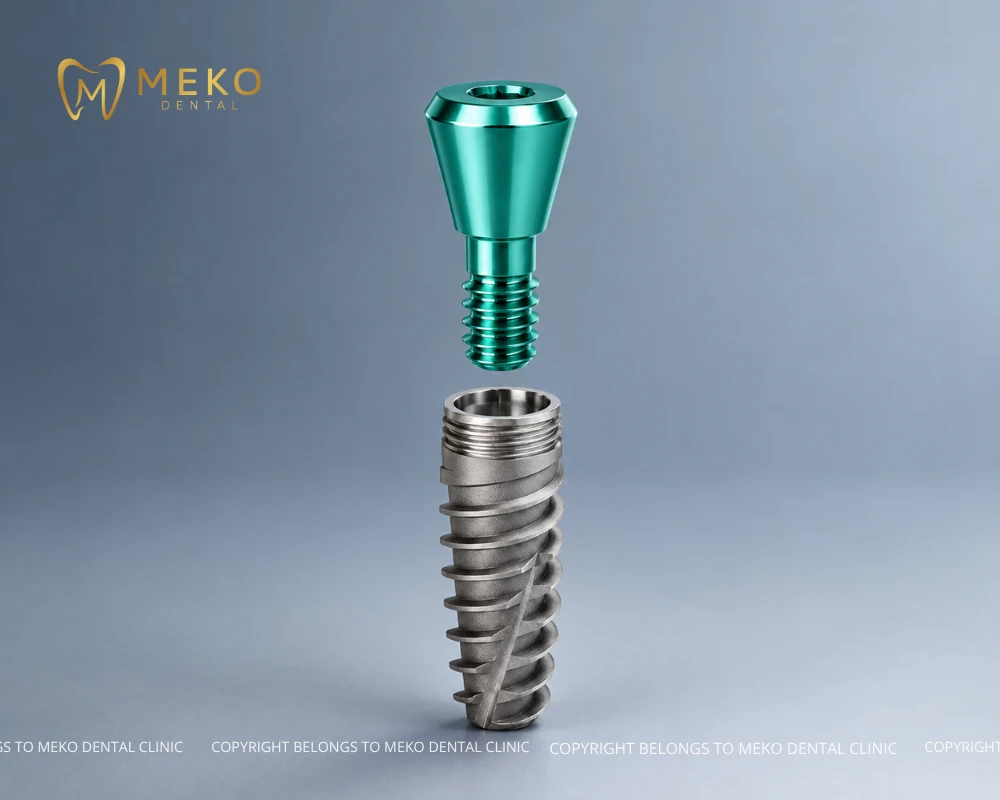
The screw plugs the opening so that bone and gum cannot creep into the threads. Without it, the dentist would have to clean them out before a crown could be attached.
A cover screw implant is not a universal part: each one is made for a specific implant system and connection type, so it is not interchangeable between brands. Osseointegration, in which bone bonds to the implant surface, happens either way, so the screw does not make the implant heal faster.
2. When is a cover screw implant used?
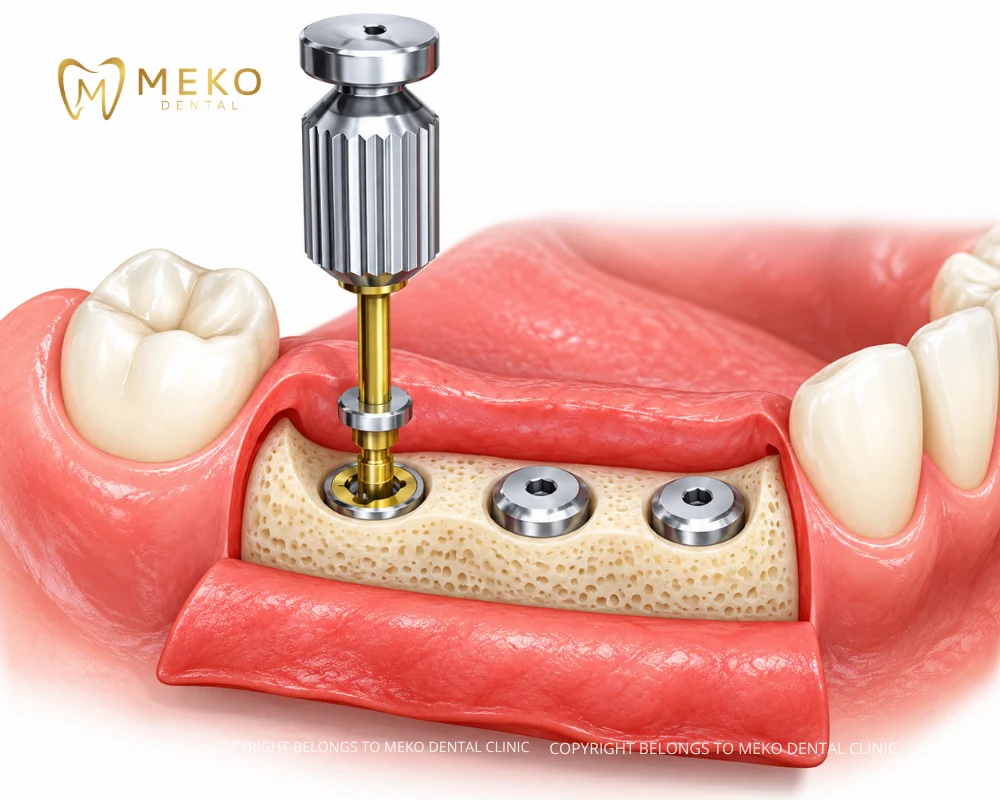
A cover screw implant is mainly used in the two-stage approach, where the implant is placed in one surgery and uncovered in a second, shorter procedure. The dentist chooses this approach based on the patient’s bone, gum condition, and how stable the implant is at placement. Four situations are the most common.
2.1 Standard two-stage placement
The implant is placed and covered by the gum first, then uncovered a few months later so a healing abutment can be attached. This keeps the implant undisturbed while the bone bonds to it.
2.2 Bone grafting at the same time
When a graft is done during implant surgery, the dentist often prefers submerged healing. Closing the gum over the implant and graft helps protect the area while new bone forms.
2.3 Cases that need extra healing time
If bone density is low or the implant’s initial stability is limited, the dentist may choose to let the implant heal under the gum without any load. This protects it from chewing forces during the early weeks.
2.4 Protecting the implant from pressure
Sometimes a temporary denture rests on the gum above the surgical site and could press on the implant. Keeping the implant under the gum protects it while the bone bonds.
That said, not every patient needs a cover screw. In the one-stage (non-submerged) approach, a healing abutment is attached at placement and stays visible through the gum. This avoids a second procedure but requires good primary stability. Even with bone grafting, a cover screw is not mandatory, so patients should ask the dentist which option their plan uses.
3. What is the difference between a cover screw implant and a healing abutment?
A cover screw implant stays hidden under the gum and guards the implant opening, while a healing abutment passes through the gum and shapes the tissue around it.
| Feature | Cover screw | Healing abutment |
| Primary function | Seals the implant connection | Guides gum healing and contour |
| Shape and height | Flat, low-profile cap | Taller post with a collar |
| Position relative to gum | Typically covered by the gum | Passes through the gum |
| Typical stage | First surgery, submerged healing | Second stage, sometimes sooner |
| Soft-tissue effect | Minimal, gum closes over it | Shapes the gum contour |
“Healing cap” is usually another name for a healing abutment, while “cover cap” is sometimes used for a cover screw. A scan body and a smart peg are different tools: the scan body captures the implant’s position for a digital impression, while the smart peg measures how stable the implant is.
Because the two parts serve different stages, patients benefit from knowing which one is planned and why. At Meko Dental Clinic, dentists explain which component will be used at each stage of treatment. They base this on the patient’s bone quality, implant stability, and gum condition, so patients know what to expect before surgery begins.
4. Placing and removing a cover screw implant in 4 steps
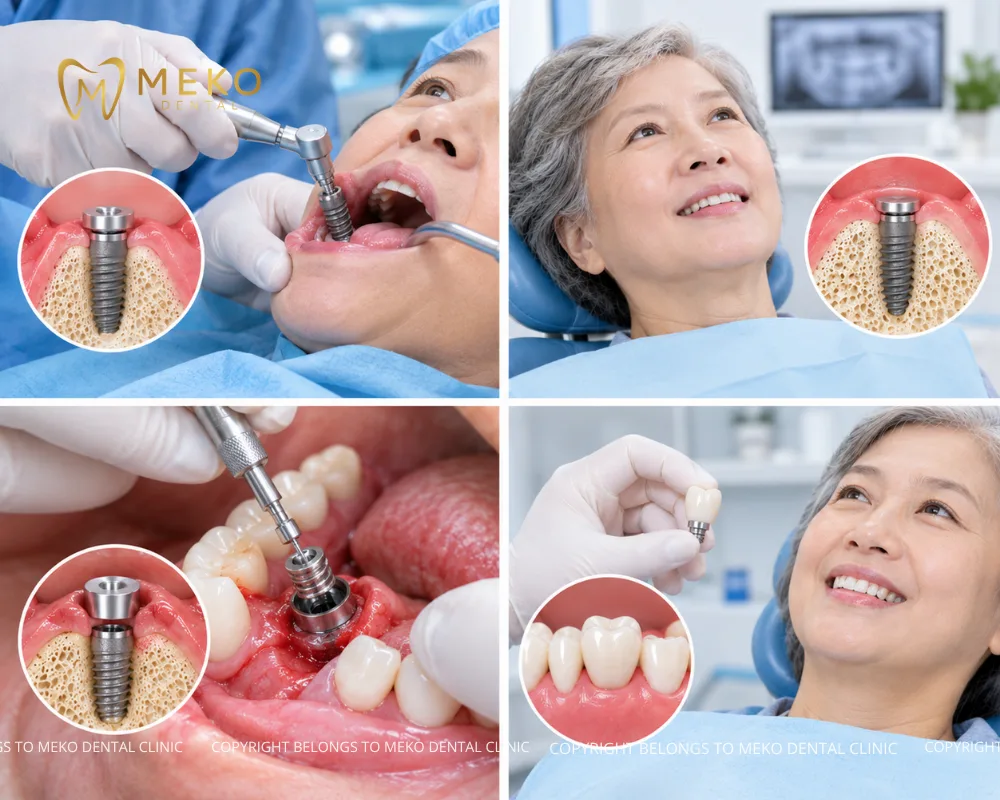
In a cover screw dental implant procedure, the screw is placed at the first surgery and removed once the dentist decides the implant is ready for the next step. The process follows four main steps.
4.1 Placing the implant and cover screw
After preparing a socket in the jawbone, the dentist seats the implant, threads the cover screw into its opening, and sutures the gum over both. From that point the implant rests beneath the soft tissue while new bone begins bonding to its surface.
| Read more: Dental implant placement procedure – Step-by-step guide 2026
4.2 Waiting for bone healing
Bone cells grow against the titanium surface and lock the implant in place, a process called osseointegration. The screw stays untouched the whole time, and the dentist tracks progress at scheduled follow-up visits rather than by a fixed calendar date.
4.3 Uncovering the implant and attaching the healing abutment
Once healing and stability are confirmed, the dentist carefully reopens the gum, using a small incision, a soft-tissue punch, or a dental laser. This is usually quick and done under local anesthesia.
Sometimes a thin layer of bone has grown over the screw and has to be cleared before it can be unthreaded. After the screw is removed, a healing abutment is attached so the gum can settle into a natural shape over the following weeks.
4.4 Placing the final restoration
Once the gum has healed into shape, the dentist removes the healing abutment and takes an impression or digital scan to design the final crown, bridge, or denture implant. The restoration is then fitted and adjusted for comfort and bite. At this point the implant is in full function, and the dentist will schedule regular check-ups to monitor the implant and the surrounding gum over the long term.
Not every patient needs a cover screw, since some implants receive a healing abutment right away when stability is high. Even with bone grafting, a cover screw is not mandatory, so patients should ask the dentist exactly which option their plan uses.
5. How long does a cover screw implant stay in place?
In a cover screw dental implant case, the screw usually stays in for several months, and three to six months is a common reference for conventional cases. Some patients are ready sooner, while others need longer, so this range is a rough guide rather than a schedule.
The timing depends on:
- Jawbone density
- Implant stability
- Whether bone grafting was done
- How quickly the patient heals
Before removal, the dentist checks the implant and the surrounding tissues. An X-ray helps, but it cannot confirm bone integration on its own.
6. Precautions while the cover screw is in place
Once the gum closes over the cover screw implant, the patient’s role is to protect the area and to know which changes need a call to the dentist.
6.1 Oral care while healing
The goal is to keep pressure and bacteria away from the closed gum:
- Brush and rinse as the dentist advises, avoiding the area right next to the surgical wound.
- Avoid pressing or poking the site with the tongue, fingers, or utensils.
- Eat soft foods for the first weeks and chew on the opposite side.
- Skip anything hard or sticky until the dentist says otherwise.
- Take prescribed medication as directed and attend every follow-up visit.

6.2 Warning signs to watch for
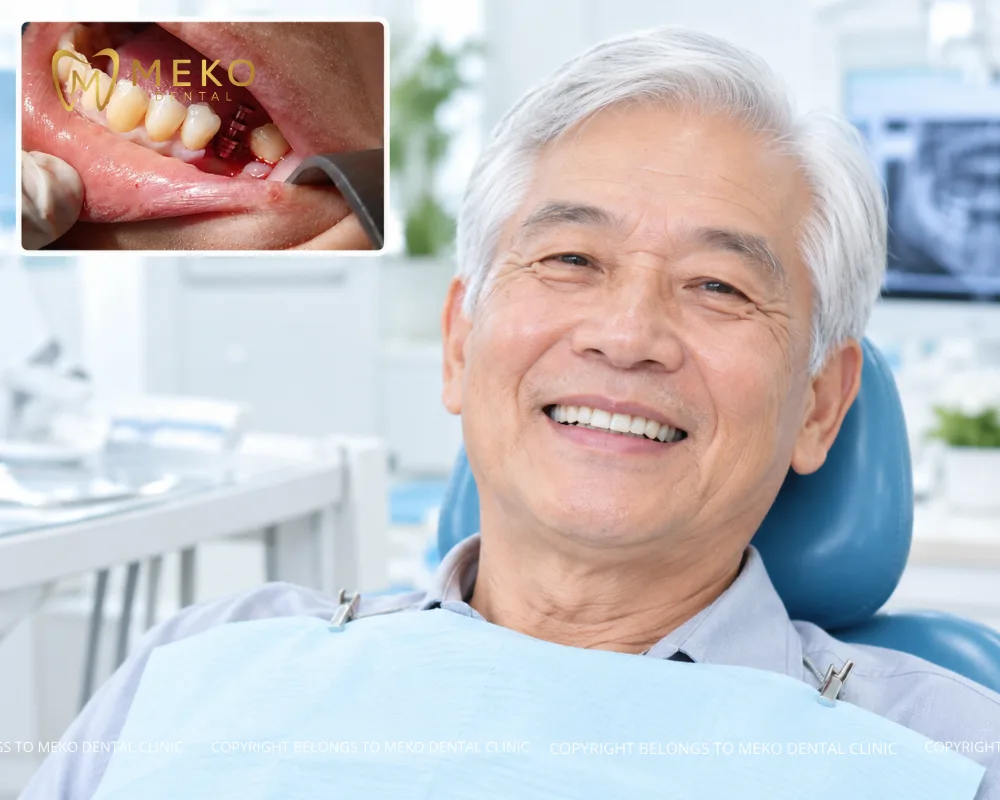
Seeing the cover screw implant through the gum is a reason to book a check, not proof that the implant has failed. Patients should call the dentist promptly in any of these situations:
- The screw feels loose, has come off, or is suddenly visible
- Swelling, pain, or tenderness keeps getting worse instead of settling
- Pus, a bad taste, or an unpleasant smell appears around the surgical area
- Discomfort lasts longer than expected, or the gum looks noticeably different
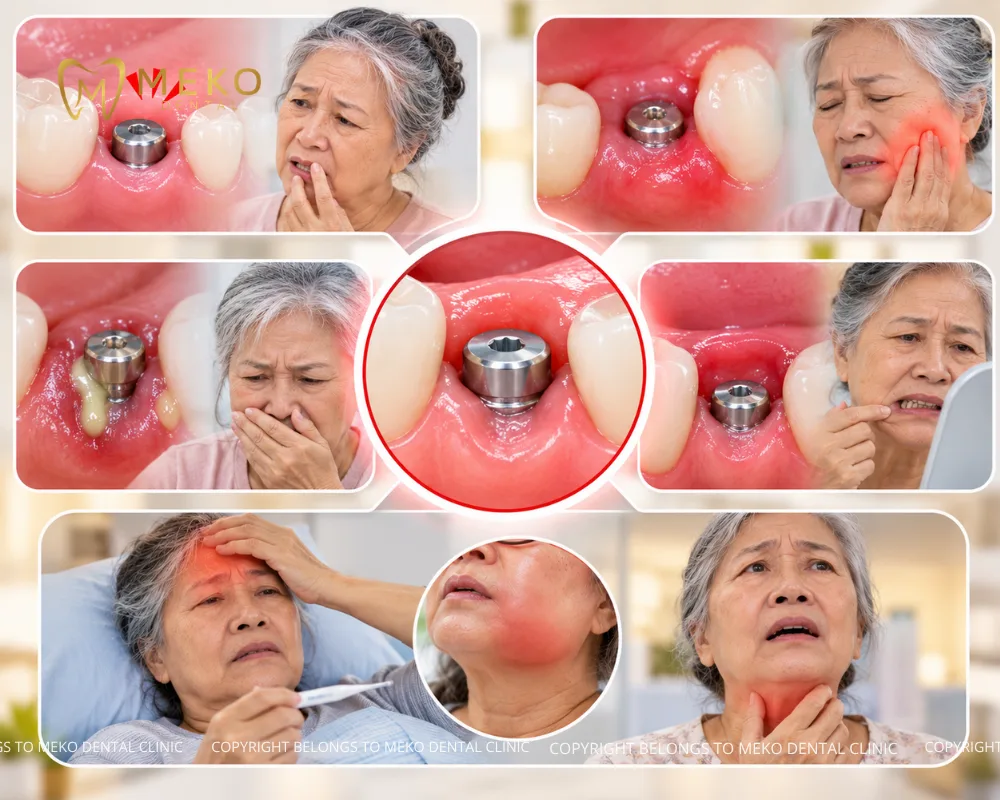
Fever or fast-spreading swelling needs same-day care. Trouble swallowing or breathing calls for emergency help.
7. Frequently asked questions
Is cover screw implant removal painful?
Usually not. Removal is done under local anesthesia, so patients should feel pressure rather than sharp pain. Mild soreness may follow for a short time, and pain that keeps getting worse should be reported to the dentist.
Is it a problem if the cover screw becomes visible through the gum?
Not necessarily. It can happen when the gum thins or opens early, and it does not mean the implant has failed. The dentist should still check the area and advise how to keep it clean.
What if the cover screw implant feels loose, or the gum has grown over it?
A loose screw needs to be checked by the dentist and should not be tightened at home. Gum covering the screw is expected in submerged healing, and the dentist deals with it when uncovering the implant.
Can patients eat normally while the cover screw is in place?
Not at first. Soft foods are usually advised in the early weeks, with chewing on the opposite side, and the dentist will say when normal eating is fine.
Will the cover screw feel uncomfortable under the gum?
Usually not once the initial healing has passed. Persistent or increasing pain, swelling, or a bad taste should be checked.
Do cover screw implants fit every implant brand?
No. Each one must match the implant system, connection type, and size. A wrong fit can leave a gap or damage the connection, so the dentist selects the screw designed for the exact implant.
Is the cover screw included in the cost of a dental implant?
It depends on the clinic. The price of a cover screw dental implant procedure varies by clinic and implant system, so a written quote should show whether it covers the cover screw, the second procedure, and the healing abutment.
8. Conclusion
A cover screw implant protects the implant connection while the bone heals, then gives way to a healing abutment and the final crown. To find out how this applies to a specific treatment plan, book a consultation with Meko Dental Clinic for a personal assessment.


 Messenger FB
 WhatsApp
 Book now