

Contents [ Hide ]
Most patients imagine an implant as one solid post, yet the phrase titanium screw for dental implant covers several separate parts. The smallest screw in the system carries a large share of the daily bite load, and it is also the part most likely to need attention over the years. This article explains what these screws do, what they are made of, how torque keeps them stable, and what happens when one comes loose.
1. What is a titanium screw for dental implant?
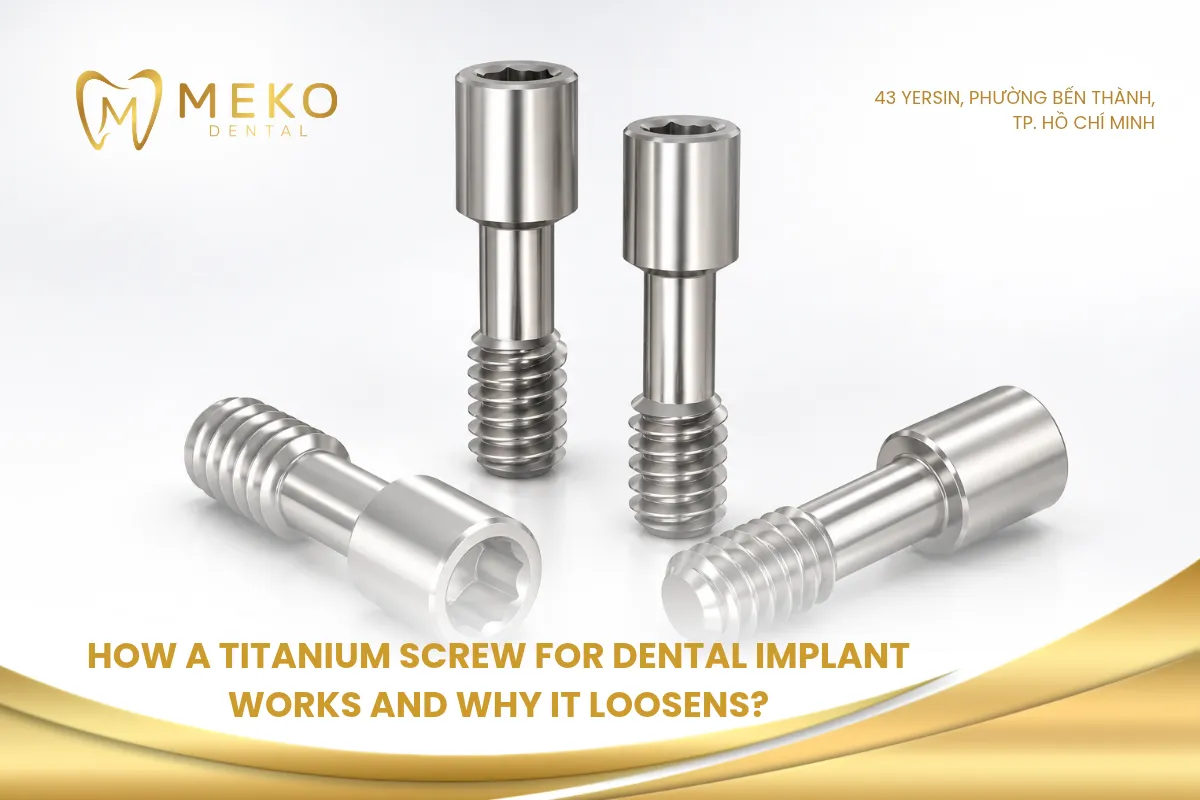
A titanium screw for dental implant is a threaded titanium part used in a two-piece implant system, and the term can describe more than one component. The fixture anchors in the jawbone, while the abutment screw joins the abutment to that fixture. Each part has its own job and its own maintenance needs.
| Part | Where it sits | What it does |
| Implant fixture | In the jawbone | Acts as the artificial root that supports everything above it |
| Cover screw | On top of the fixture | Seals the opening while the gum and bone heal, then is removed |
| Abutment screw | Inside the fixture, through the abutment | Clamps the abutment to the fixture so the crown stays stable |
| Prosthetic screw | Between the abutment and the crown or bridge | Holds a screw-retained crown or bridge in place and can be removed for repair |
Dentists choose these parts as a matched set. A titanium screw implant system is built around one connection shape. A screw from another brand may look identical but still fit poorly. That small mismatch lets the parts shift against each other and is a known reason screws loosen early.
2. Materials used in a titanium screw for dental implant
A titanium screw for dental implant is commonly made from Ti-6Al-4V alloy, also called grade 5. The fixture itself often uses commercially pure titanium dental implants. Materials vary by manufacturer, so the implant identification card lists them.
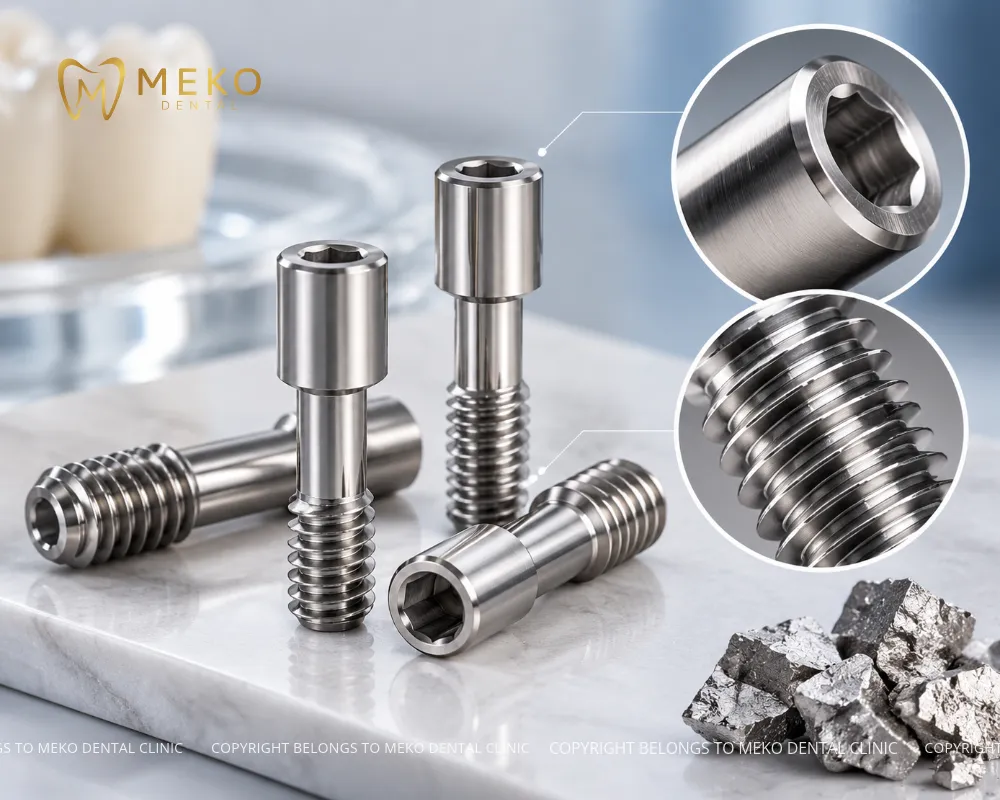
The screw works under tension and does not bond with bone. Strength and fatigue resistance therefore matter most. Grade 5 alloy reaches a tensile strength of about 950 MPa, against roughly 550 MPa for commercially pure grade 4. A thin screw has very little metal to spare, which is why the stronger alloy is preferred.
3. How does torque keep a titanium screw for dental implant stable?
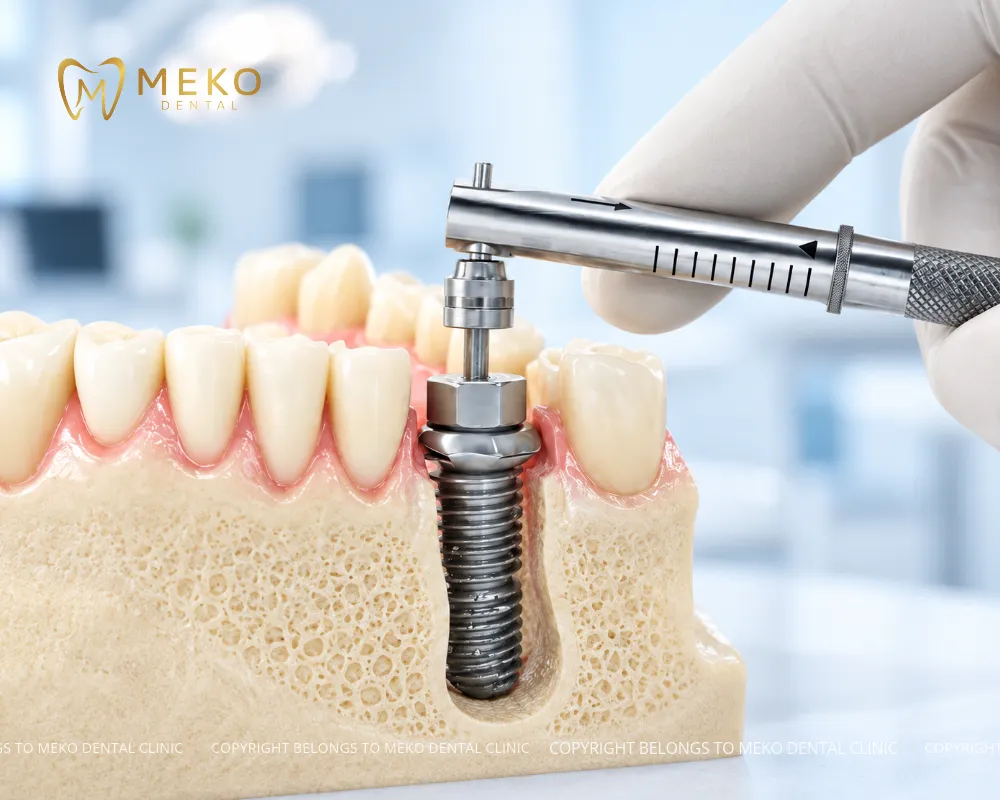
Torque is the turning force a dentist applies, and preload is the clamping force it creates inside the screw. A titanium screw for dental implant stays secure only while that clamping force is greater than the force of chewing. Once bite load exceeds it, the screw can start to loosen.
Tightening stretches the screw slightly, like a spring, and that tension holds the abutment against the fixture. Each manufacturer publishes its own torque value, often between about 20 and 35 Ncm for abutment screws. The figure for the specific system always applies.
- A calibrated torque wrench delivers a consistent, known force, while a hand driver cannot be relied on to deliver the same force every time
- Too little torque lets the joint move, and too much can overstretch the screw
Even a well-tightened titanium screw implant has a limit. A 2024 laboratory model of one screw design found that loads above about 800 N exceeded the alloy’s yield strength. Because grinding adds repeated load to the joint, dentists often advise a night guard.
4. Can a titanium screw for dental implant come loose?
Yes. A titanium screw for dental implant can work loose over time, and it is the most common mechanical problem with single implant crowns. Roughly 7 to 13 out of every 100 crowns are affected within five years. Screw fracture is far less common, occurring in less than 1 in 100 crowns.
4.1 Why does a screw loosen?
Loosening rarely comes from the titanium itself. It usually follows one of a few situations, and often a combination of them.
- The screw was tightened with too little or uneven torque, so the preload was never high enough
- The patient bites very hard or grinds the teeth, which adds repeated force to the joint
- The abutment, screw, and fixture do not fit together precisely, often because parts from different systems were mixed
- The restoration places extra leverage on the screw, as happens with cantilevers or sharply angled abutments
4.2 What does a loose screw feel like?
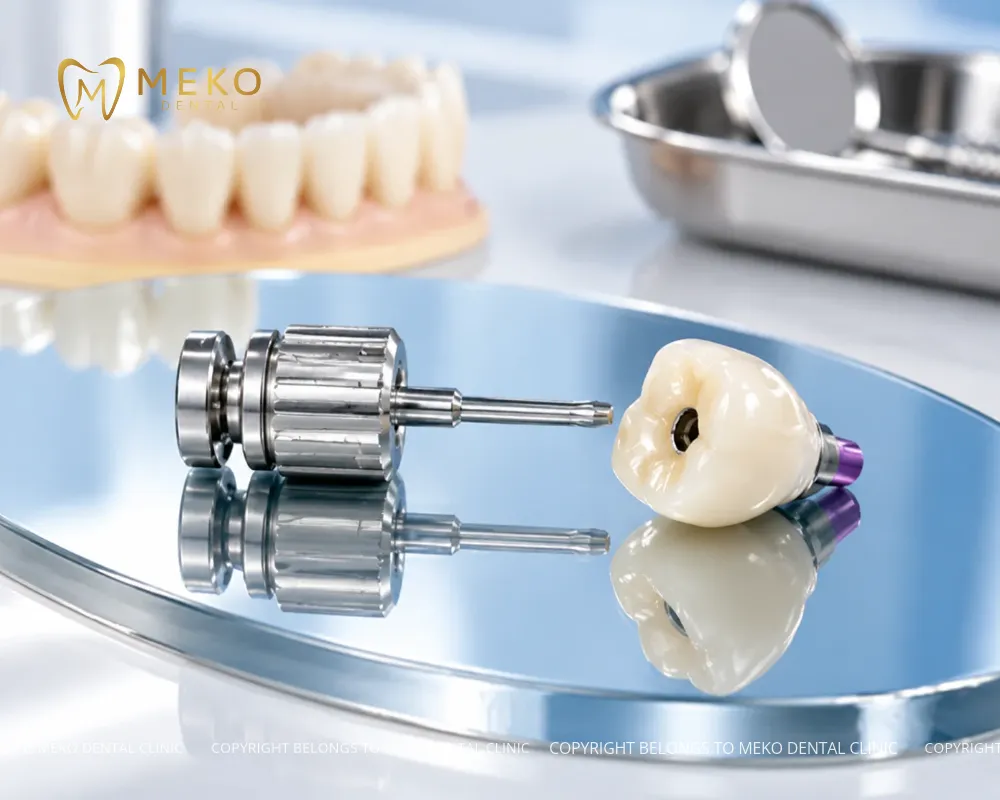
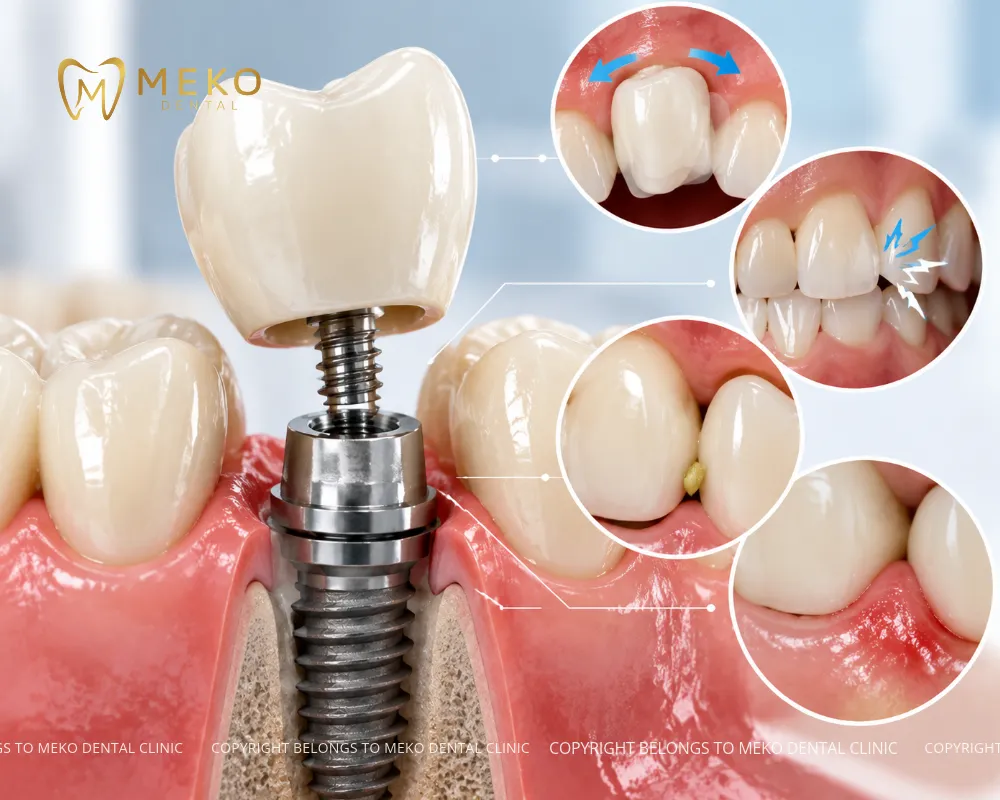
A loose titanium screw for dental implant often announces itself through small changes. The crown may move slightly, click when the patient bites, or simply feel different from before. Food can start packing around the crown, and the gum beside it may look irritated.
4.3 How is a loose screw repaired?
The dentist cleans the threads and tightens the screw to the manufacturer’s torque value. A worn or damaged screw is replaced with a new one. The bite is also checked, and a night guard may be suggested if grinding is the likely cause.
A screw that loosens repeatedly needs its cause found, not just another tightening. A fractured screw is harder to fix and may need special instruments. Patients should not tighten a crown themselves or keep chewing on a loose one.
5. Crown design and the titanium screw for dental implant
In a screw-retained crown, a small access channel lets the dentist reach the screw directly. In a cement-retained crown, the crown is bonded over the abutment, so reaching the screw may require cutting into the crown. Both designs are widely used, and the choice depends on where the implant sits and how the teeth bite together.
In either design, a titanium screw for dental implant holds the abutment to the fixture. The main difference is how easily a dentist can get to it later.
| Feature | Screw-retained | Cement-retained |
| Attachment | A screw passes through the crown | Dental cement bonds the crown to the abutment |
| Repair access | Usually straightforward | May need an access hole or removal of the crown |
| Appearance | A small hole on the chewing surface is sealed with filling | No hole is visible on the chewing surface |
| Main concern | Position of the screw channel | Leftover cement irritating the gum |
Reviews describe the evidence on which design has fewer complications as inconsistent. What matters most to the patient is whether the crown can be removed without damage if the screw ever needs attention.
6. Daily care for the screw joint
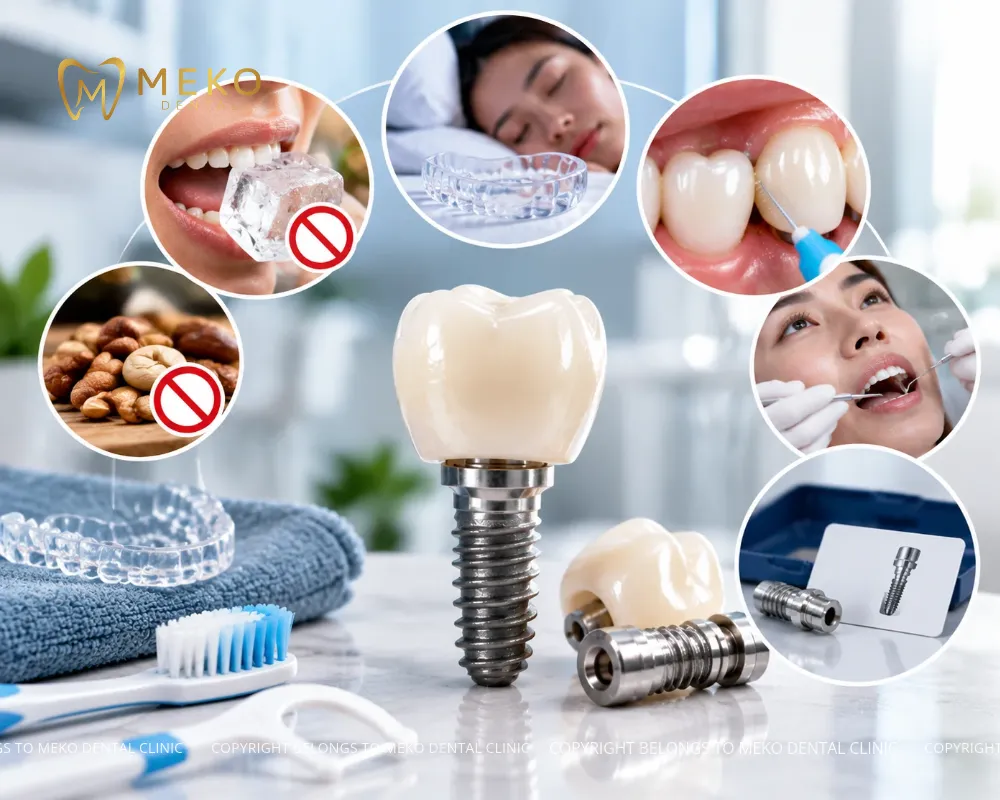
Looking after a titanium screw for dental implant mostly means controlling bite load and keeping regular checkups. A night guard protects the joint from grinding, and yearly examinations let the dentist catch a loose connection before it damages anything. Daily cleaning around the crown also keeps the gum healthy around the abutment.
- Avoid chewing ice, hard candy, or packaging with an implant crown
- Wear a night guard if the dentist recommends one for clenching or grinding
- Clean around the crown and gum line every day
- Report any clicking or movement within the same week instead of waiting for the next routine visit
- Keep the implant identification card, since replacement screws must match the system
7. Frequently asked questions
7.1 Is a titanium screw for dental implant visible in the mouth?
No. The abutment screw sits inside the fixture, beneath the crown, so it cannot be seen once the restoration is in place. In patients with thin gums, a grayish tint from titanium parts can occasionally show through. A dentist can discuss other abutment materials if appearance is a concern.
7.2 Can a titanium screw for dental implant be replaced without removing the implant?
Yes, in most cases. The abutment screw is a separate part, so a dentist can remove and replace it while the fixture stays in the bone. The replacement screw must match the original implant system, which is why the implant identification card is worth keeping.
7.3 Does every implant use a screw to hold the crown?
No. Two-piece implant systems use an abutment screw to join the abutment to the fixture. One-piece implants combine the fixture and abutment into a single body, so they have no separate abutment screw. A cement-retained crown has no screw through the crown, but the abutment screw is still present underneath.
Meko Dental Clinic offers implant consultations that review bone, gum health, and the components planned for each case. Patients who want a clear explanation of the titanium screw for dental implant in their own treatment plan can book an appointment with the dental team.
References
- Jung RE, Zembic A, Pjetursson BE, Zwahlen M, Thoma DS. Systematic review of the survival rate and the incidence of biological, technical, and aesthetic complications of single crowns on implants reported in longitudinal studies with a mean follow-up of 5 years. Clin Oral Implants Res. 2012;23(Suppl 6):2-21. PMID 23062124.
- Jung RE, Pjetursson BE, Glauser R, Zembic A, Zwahlen M, Lang NP. A systematic review of the 5-year survival and complication rates of implant-supported single crowns. Clin Oral Implants Res. 2008;19(2):119-130. PMID 18067597.
- Theoharidou A, Petridis HP, Tzannas K, Garefis PD. Abutment screw loosening in single-implant restorations: a systematic review. Int J Oral Maxillofac Implants. 2008;23(4):681-690. PMID 18807565.


 Messenger FB
 WhatsApp
 Book now