

Contents [ Hide ]
A brighter, even smile is one of the most requested cosmetic dental treatments today, and zoom teeth whitening is among the most searched and most performed options. This guide by Meko Dental Clinic explains what zoom teeth whitening involves, how the treatment works, what results to expect, and who it suits best. It draws on research from the American Dental Association and Philips, the maker of the Zoom system.
1. What is zoom teeth whitening?
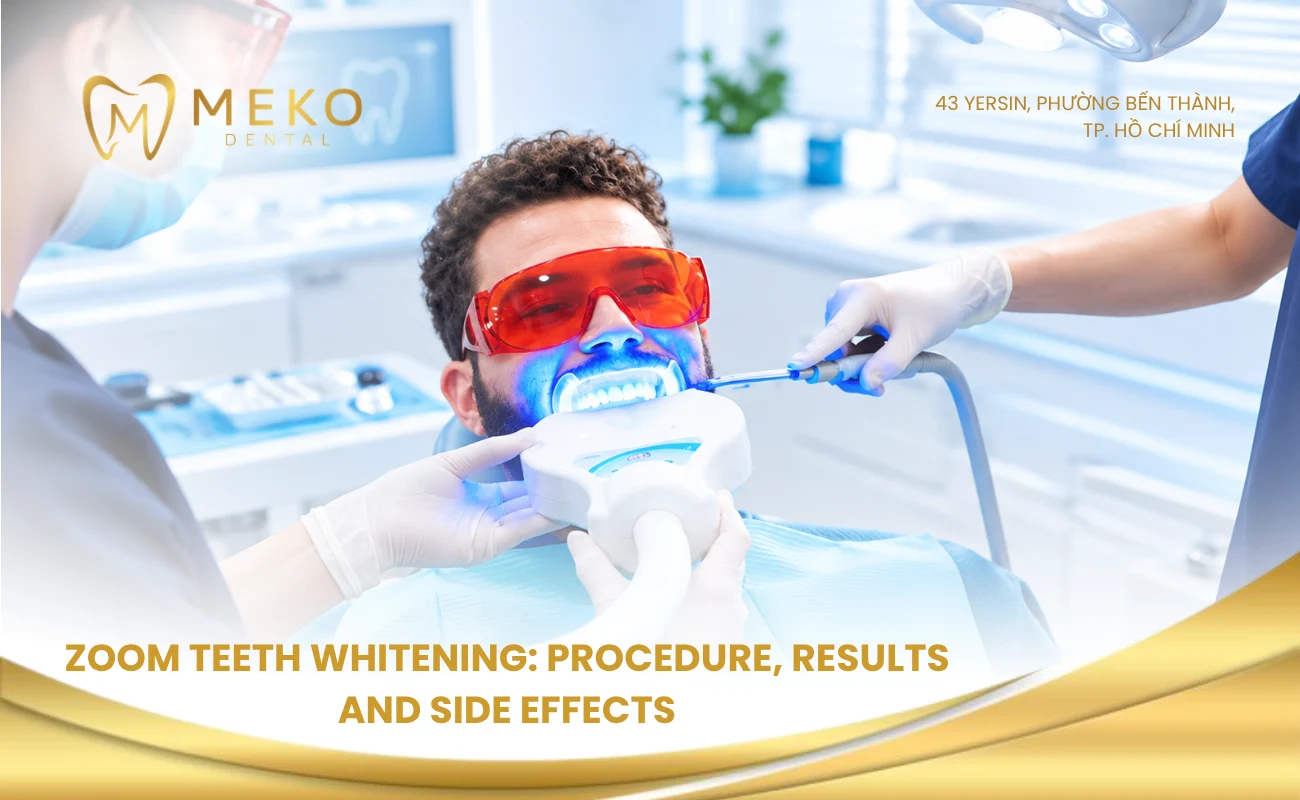
Zoom teeth whitening is a professional, in office bleaching system that uses a 25 percent hydrogen peroxide gel activated by a specialized LED light to lighten tooth enamel. It is manufactured by Philips and applied only by a licensed dentist. Philips reports that a single WhiteSpeed session can lighten teeth by up to eight shades in about 45 minutes.
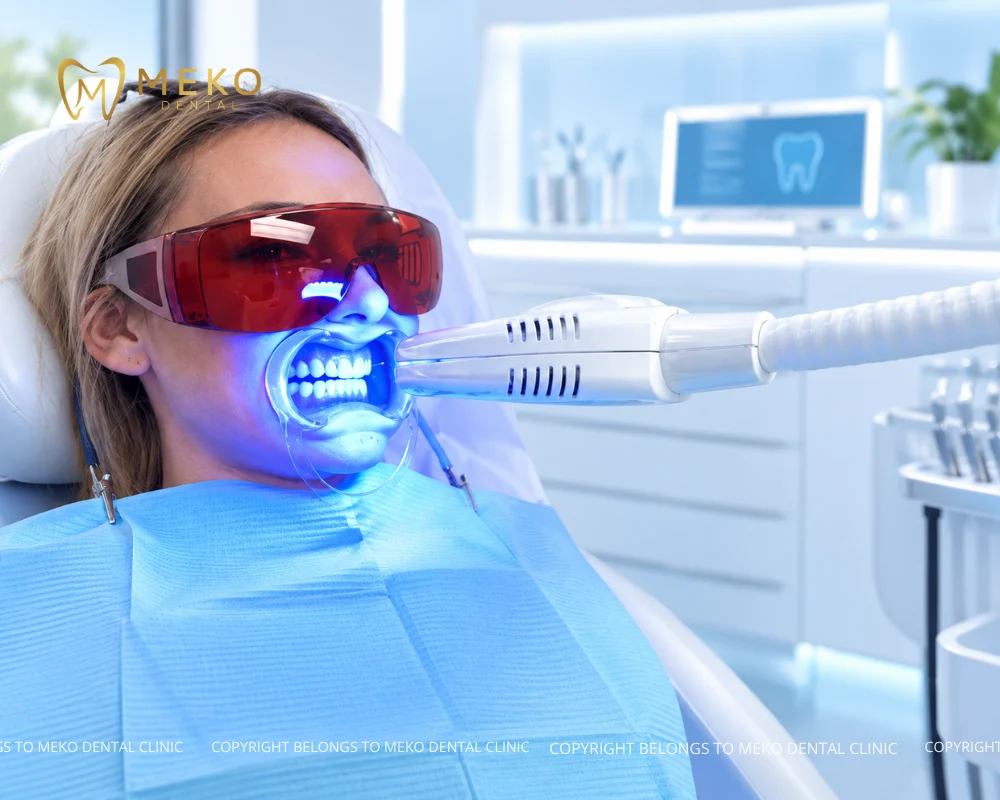
Simply put, what is zoom whitening in practical terms? It is a supervised bleaching session using clinical strength peroxide gel and LED light, rather than the weaker gel found in over the counter strips. Patients often ask “what is zoom teeth whitening” when comparing it to home kits, and the short answer is that it is a clinically supervised, faster acting version of the same basic bleaching chemistry.
Some patients also encounter the term zoom dental whitening or zoom dental bleaching when researching this treatment online. These are simply alternate names for the same Philips branded system used in dental clinics worldwide.
2. How does zoom teeth whitening work?
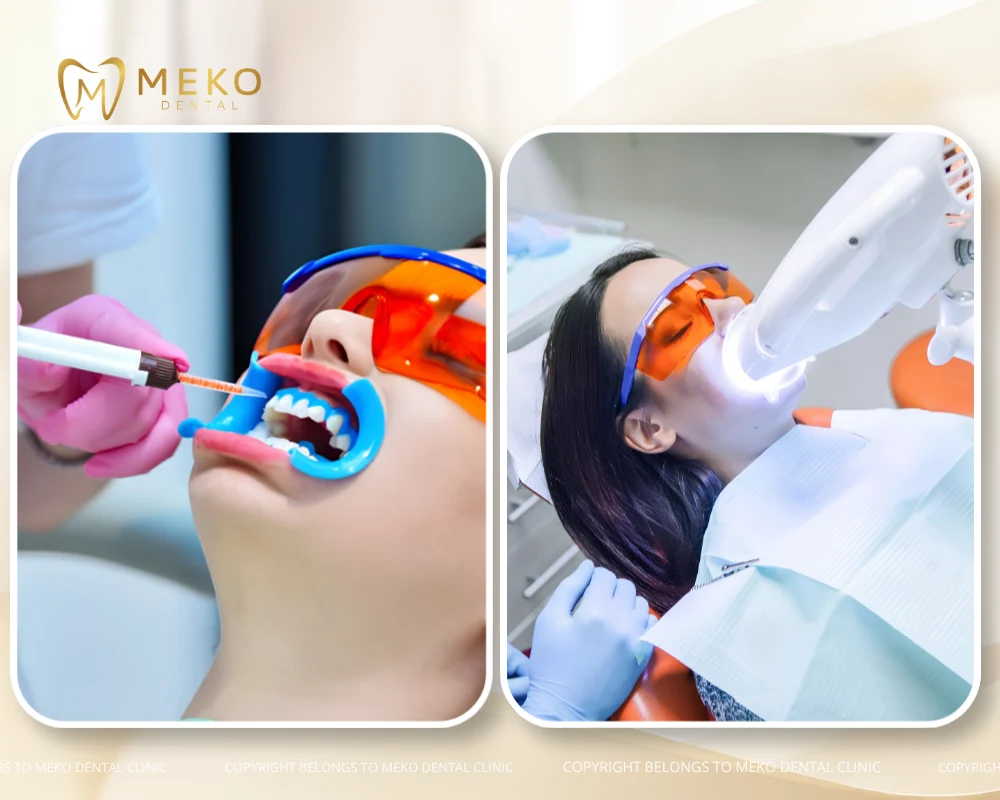
Zoom teeth whitening works by applying a hydrogen peroxide gel to the teeth, then activating it with a blue LED light. The light speeds up the release of oxygen radicals from the gel, which penetrate enamel and break apart the compounds responsible for staining.
The gel does the real chemical work; the light just speeds it up so results show faster than gel alone. Follow up research on light activated bleaching has recorded some color regression over the following one to two years, so ongoing maintenance still matters.
This treatment also goes by names like zoom bleaching, zoom bleaching teeth, teeth bleaching zoom, or teeth whitening zoom, along with misspelled searches such as zoom teeth whiteneing or zoom whiting. All of these refer to the same Philips system.
| System | Location | Approximate time | Best for |
| Zoom WhiteSpeed (in office) | Dental clinic | About 45 minutes | Same-day, noticeable brightening |
| Zoom QuickPro | Dental clinic | About 10 minutes chairside plus 30 minutes wear | Quick touch-ups, lower cost |
| Zoom DayWhite/ NiteWhite (at home) | Dentist supervised | 2 to 4 weeks | Gradual whitening, maintenance |
3. What happens during the zoom teeth whitening procedure?
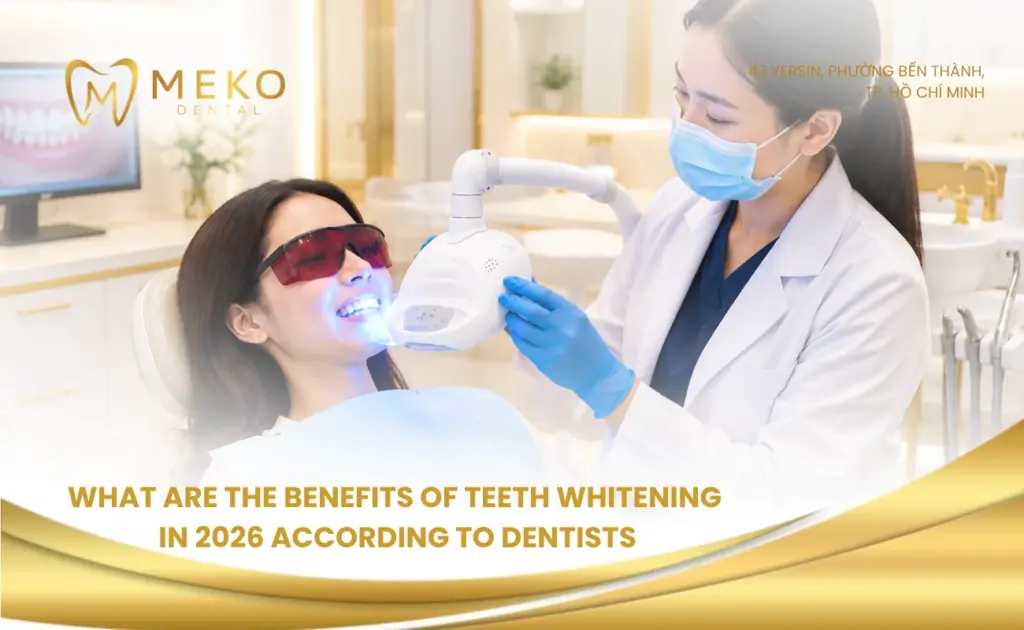
The zoom teeth whitening procedure generally follows five structured steps completed in one appointment. Understanding the zoom teeth whitening process step by step helps patients know what to expect before booking, since sessions run in cycles rather than one continuous exposure.
- A hygiene cleaning is done first, since bleaching gel works best on a clean enamel surface.
- Lips, gums, and soft tissue are covered with a light-cured protective barrier.
- The 25 percent hydrogen peroxide gel is applied to the front teeth.
- The LED light is directed at the teeth for roughly 15 minutes per cycle, usually repeated three to four times, with the gel refreshed between cycles.
- The barrier is removed, teeth are polished, and a fluoride or desensitizing gel may be applied before aftercare instructions are given.
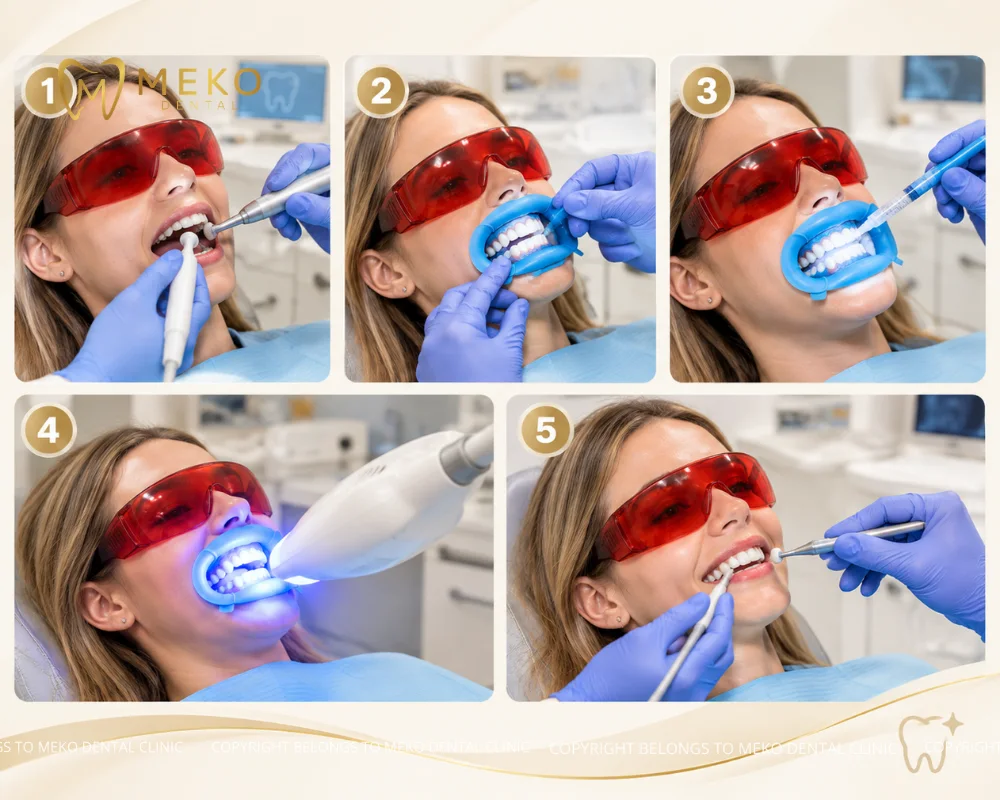
Every zoom bleaching procedure follows this same basic five-step framework, regardless of the clinic. Dentists can pause or shorten a cycle if a patient reports discomfort, which keeps the zoom whitening procedure both effective and controllable.
4. Zoom in office bleaching compared with at home trays
Zoom in office bleaching delivers faster, more dramatic results in a single visit. At home trays offer a slower but generally gentler alternative. Both paths fall under the broader umbrella of zoom teeth whitening, just with different intensity and timeline.
Patients who choose zoom whitening in office usually want visible results the same day, often before an event. At home Zoom DayWhite or NiteWhite trays, worn nightly for two to four weeks, suit those who prefer a slower pace. Many clinics combine both: a zoom in office teeth whitening treatment first, then take home trays for ongoing upkeep.
| Factor | In office (chairside) | At home trays |
| Time to result | 45 to 90 minutes, one visit | 2 to 4 weeks of nightly use |
| Peroxide concentration | Around 25 percent | Roughly 6 to 10 percent |
| Sensitivity risk | Higher, but transient | Lower, more gradual |
| Best for | Fast results before an event | Gradual whitening, ongoing upkeep |
5. What results can patients expect from zoom teeth whitening?
Zoom teeth whitening results vary by starting shade, but most patients see teeth lighten by roughly four to eight shades after one session. Surface stains from coffee, tea, wine, or aging typically respond far better than internal discoloration.
Results look brightest right after treatment. A two year follow up study on light activated 25 percent hydrogen peroxide bleaching found some natural color rebound over that period, though teeth still stayed noticeably improved from baseline.
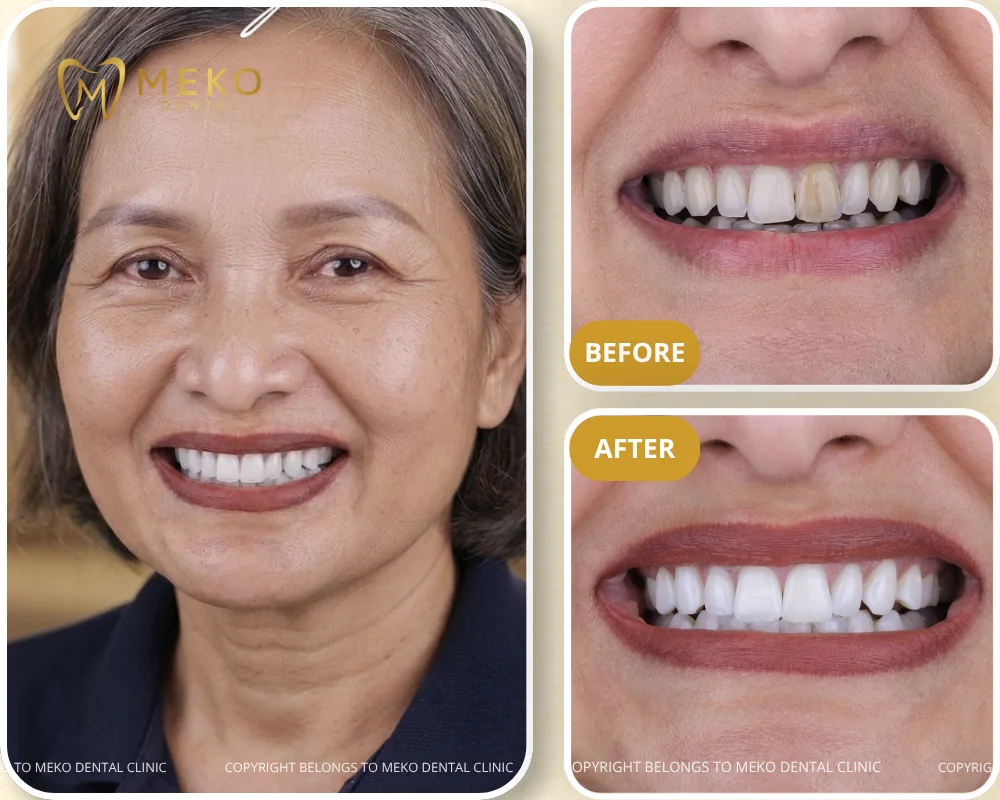
Diet and habits afterward affect how long results last. Strongly pigmented foods and tobacco can shorten the brightness, especially in the first 48 hours when enamel pores remain more open.
6. What are the pros and cons of zoom dental bleaching?
Zoom dental bleaching is considered safe when performed by a licensed dentist, though temporary tooth sensitivity is the most commonly reported side effect. Philips reports that the large majority of surveyed patients experience little to no sensitivity during a WhiteSpeed session. Independent clinical sources note that a smaller group notices mild, cold-triggered sensitivity for about 24 to 48 hours afterward.
Advantages
- Noticeable improvements can appear after just one session.
- Professional supervision, with gum protection a home kit cannot match.
- Even, consistent whitening across the smile zone.
- With consistent upkeep, the effects can hold for a year or more.
Drawbacks
- Transient sensitivity for a day or two is possible.
- The initial investment tends to exceed what you’d pay for an at-home kit.
- Not permanent, since new staining can build up over time without upkeep.
- Does not change the color of crowns, veneers, or composite fillings, so visible restorations may end up a shade darker than the newly whitened natural teeth.
Overall, zoom teeth whitening carries a low risk profile when performed by a trained professional. A dentist can adjust gel concentration or cycle length for patients with sensitive teeth.
7. How long do zoom teeth whitening results last?
Zoom whitening results commonly last from 12 to 24 months, depending on lifestyle habits and follow up care. Some clinical follow up on Zoom WhiteSpeed combined with at home maintenance trays recorded brightness holding for roughly 12 to 15 months. Ongoing take-home top-ups can extend that window to two years or longer.
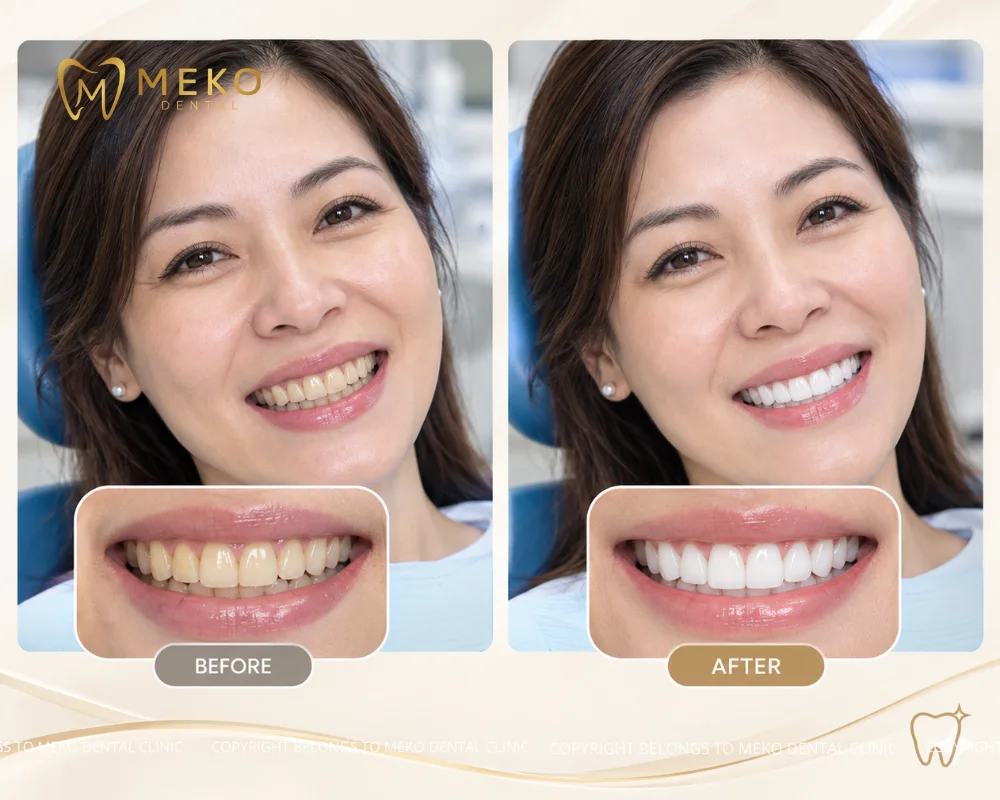
Patients who avoid heavily pigmented foods and drinks, along with tobacco, tend to retain the zoom whitening treatment results longer. A small maintenance top-up with take home trays every six to twelve months can extend the effect without requiring a full in office visit each time.
8. Who is a good candidate for zoom tooth whitening?
Most healthy adults with natural, unrestored teeth and no active dental disease are good candidates for zoom teeth whitening, including the standard in-office zoom tooth whitening protocol. A dental exam beforehand confirms there are no untreated cavities or gum disease, since the gel should only be applied to healthy tooth surfaces.
Zoom for teeth whitening is generally not recommended for the following groups.
- Children and adolescents under 16, in line with American Academy of Pediatric Dentistry guidance against cosmetic bleaching at a younger age.
- Pregnant or breastfeeding patients, as a precaution, since the treatment is elective and easily postponed.
- Patients with severe tetracycline staining, which is internal and typically responds poorly to bleaching, where porcelain veneers are usually a better option.
- Patients whose visible front teeth are already restored with crowns, veneers, or large fillings, since those materials will not change shade along with the natural enamel.
9. Zoom teeth whitening at Meko Dental Clinic
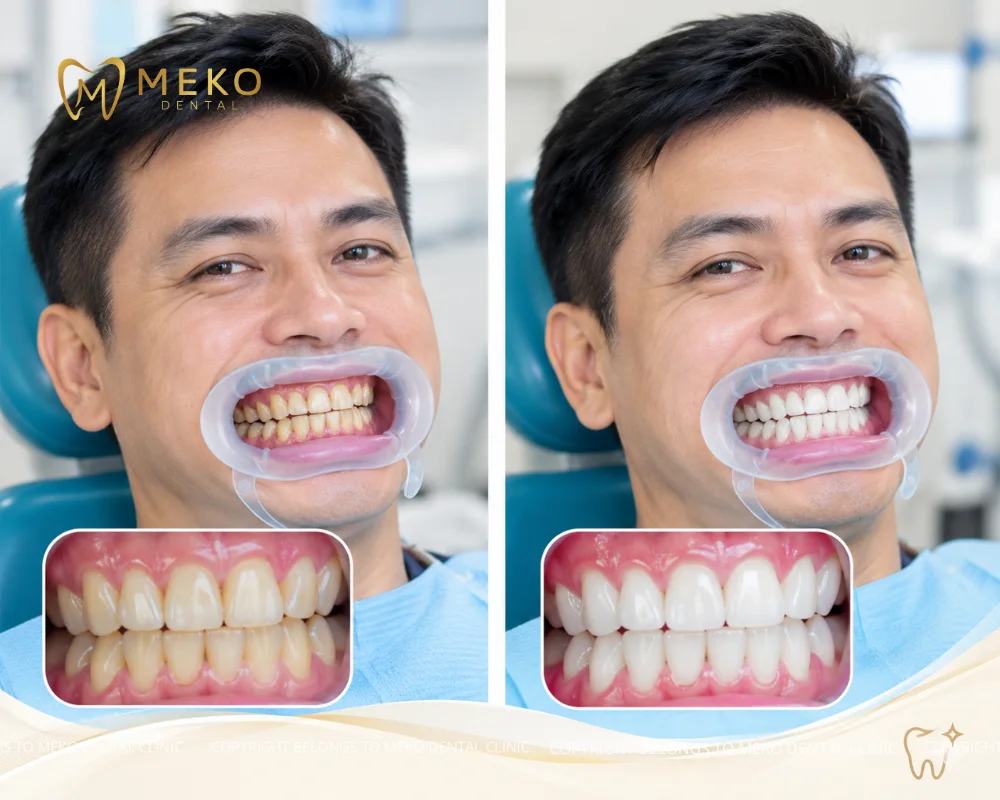
Meko Dental Clinic offers zoom teeth whitening performed by licensed dentists, following the standard clinical protocol. This includes a pre treatment hygiene clean, gum protection, and enamel care after the session.
Patients considering the zoom teeth whitening procedure are evaluated individually. Sensitivity, existing restorations, and the underlying cause of staining all influence the recommended approach and expected outcome.
Anyone exploring zoom teeth whitening should start with a dental consultation rather than a generic online kit. Concentration, cycle time, and aftercare all affect both safety and how long results last. A dentist can also explain realistic expectations based on a patient’s specific tooth shade and staining history before treatment begins.
Refrence
American Dental Association (ADA), “Whitening/Bleaching” – ada.org/resources/ada-library/oral-health-topics/whitening
Philips Zoom, “Zoom In-Office Whitening” – usa.philips.com/c-m-pe/teeth-whitening/zoom-in-office
National Center for Biotechnology Information (NCBI/PMC, peer reviewed), “Color Change after 25% Hydrogen Peroxide Bleaching with Photoactivation” – ncbi.nlm.nih.gov/pmc/articles/PMC9319004
American Academy of Pediatric Dentistry (AAPD), “Policy on the Use of Dental Bleaching for Child and Adolescent Patients” – aapd.org/media/Policies_Guidelines/P_Bleaching.pdf
Healthline, medically reviewed by Jennifer Archibald, DDS, “What to Know About Zoom Teeth Whitening” – healthline.com/health/dental-and-oral-health/zoom-teeth-whitening
The content above is intended for general information and patient education. It is not a substitute for an in-person evaluation, and treatment suitability should always be confirmed by a licensed dental professional.


 Messenger FB
 WhatsApp
 Book now