


Contents [ Hide ]
Porcelain veneers on front teeth are thin ceramic shells bonded to the visible surface of the incisors, and they are used to change colour, shape, length or small spacing. This makes them one of the most requested cosmetic treatments in restorative dentistry. The guide below explains who suits them, what the procedure feels like, how long the results tend to last and what they cost in Ho Chi Minh City and abroad.
1. What are porcelain veneers on front teeth?
Porcelain veneers on front teeth are custom-made ceramic shells that cover the outer surface of the incisors. A dental laboratory fabricates each shell, and the dentist then bonds it to a tooth that has been lightly prepared.
Veneers are a cosmetic treatment, so they improve appearance without necessarily strengthening or repairing the tooth beneath. Porcelain is the more durable of the two common materials and tends to cost more than composite, which is mainly used for milder concerns.
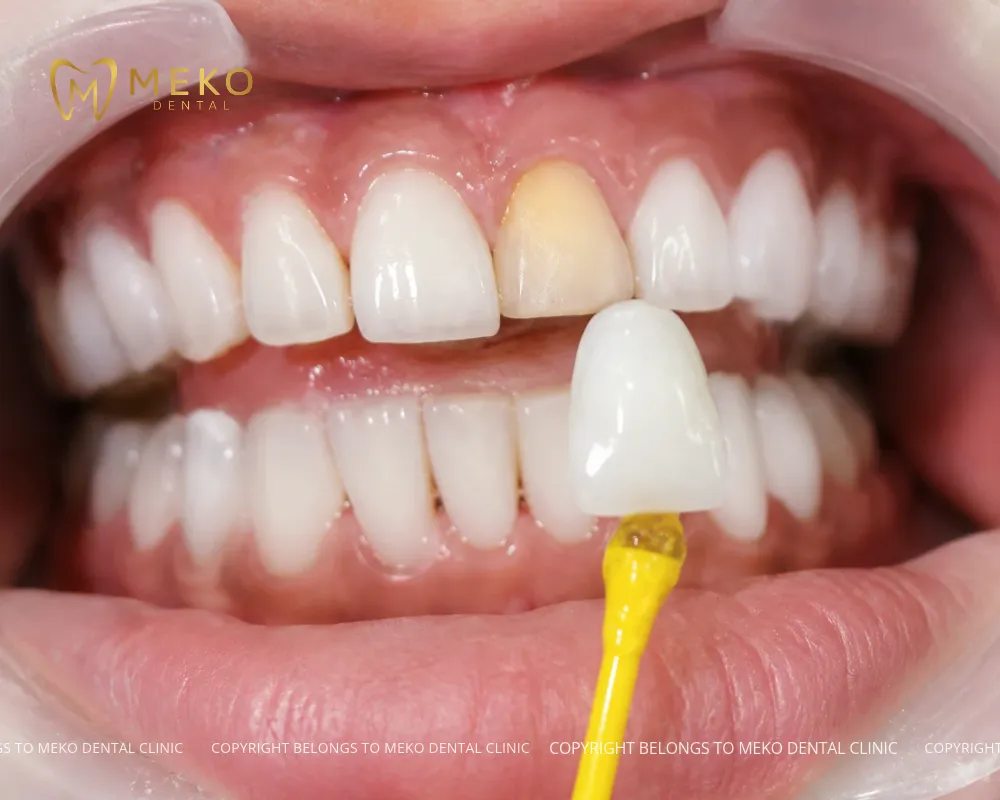
The front teeth are treated most often because small flaws in colour or shape are easy to notice at the centre of the smile. Dentists commonly consider veneers for the following concerns.
- Discolouration that does not respond to bleaching
- Chipped, cracked or worn edges
- Small gaps between teeth
- Front teeth that differ in length, width or outline
- Mild misalignment
2. Who is a good candidate for porcelain veneers on front teeth?
The best candidates for porcelain veneers on front teeth have healthy teeth, enough enamel for bonding and no active gum disease. Existing decay and gum problems need treatment first, because veneers placed over unhealthy teeth can make those problems worse.
| Situation | What it usually means |
| Healthy enamel and stable gums | Generally suitable |
| Active decay | Treat first, then reassess |
| Gum disease | Treat first, then reassess |
| Grinding, clenching or deep overbite | May be less suitable, night guard plan needed |
| Severely broken or heavily filled tooth | A crown may suit better |
Resin bonds more reliably to enamel than to dentin, so a badly worn tooth may not hold a veneer well. Bruxism also likely lowers long-term survival, which is why many dentists advise a night guard for patients who grind.
3. Porcelain veneers for the two front teeth
Patients who search for front 2 teeth porcelain veneers are usually asking about the two upper central incisors. These teeth sit side by side, so they must match each other in shade, length and width. They also need to blend with the neighbouring teeth so that the pair does not stand out.
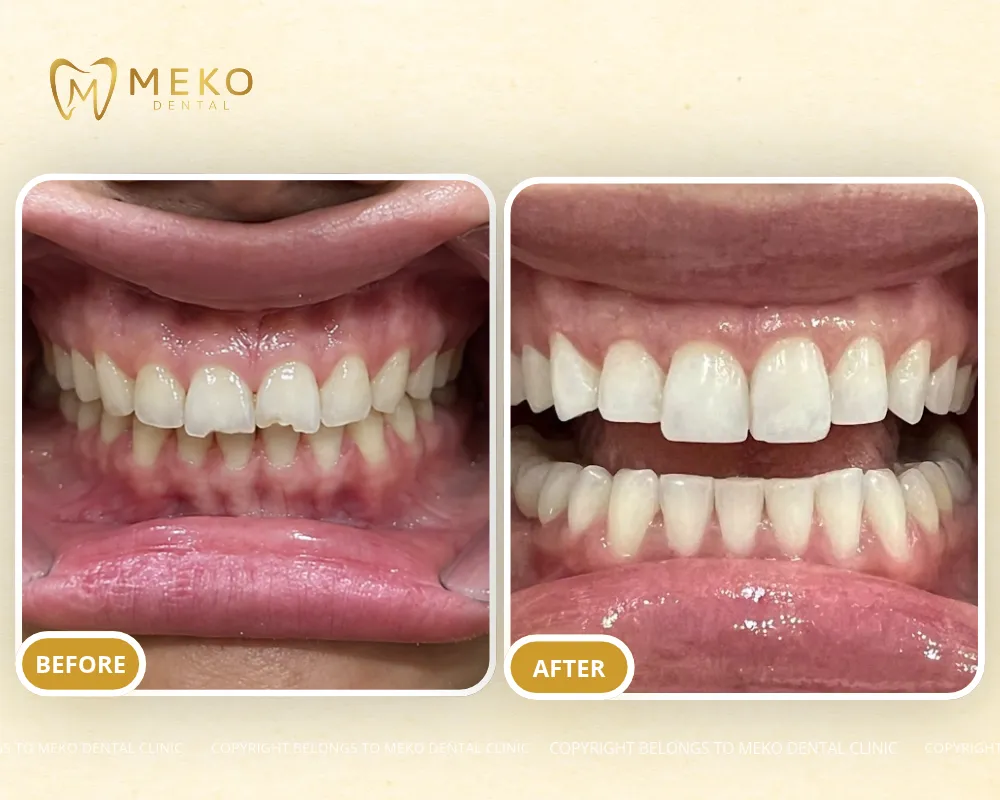
Porcelain veneers on two front teeth are common when one tooth is chipped and its partner is worn or discoloured. Treating both helps the pair stay symmetrical, whereas a single veneer can leave a visible difference in brightness or translucency.
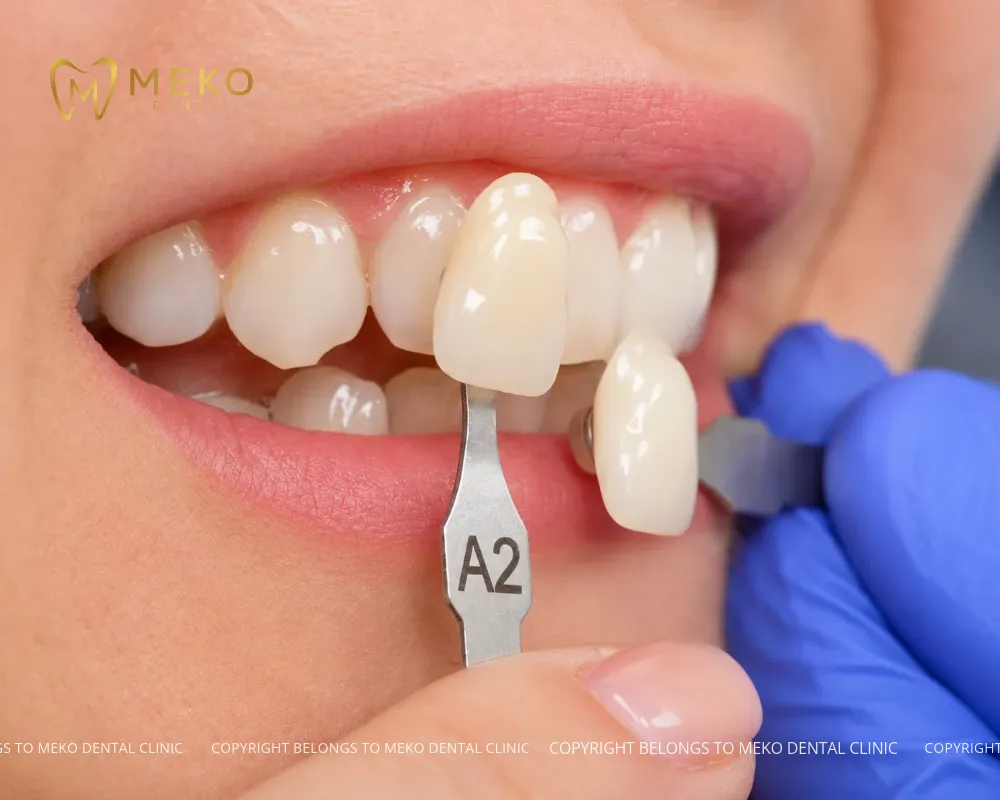
Any whitening is normally completed before the shade is chosen, because ceramic does not respond to bleaching. A try-in appointment then lets the patient review fit, colour and shape before the final bonding.
4. Can porcelain veneers on front teeth close gaps or fix crooked teeth?
Porcelain veneers on front teeth can close small gaps and disguise mild misalignment, but they do not move teeth into a new position. Larger crowding or bite problems usually call for orthodontic treatment first. The dentist decides which route is safer after examining the bite.
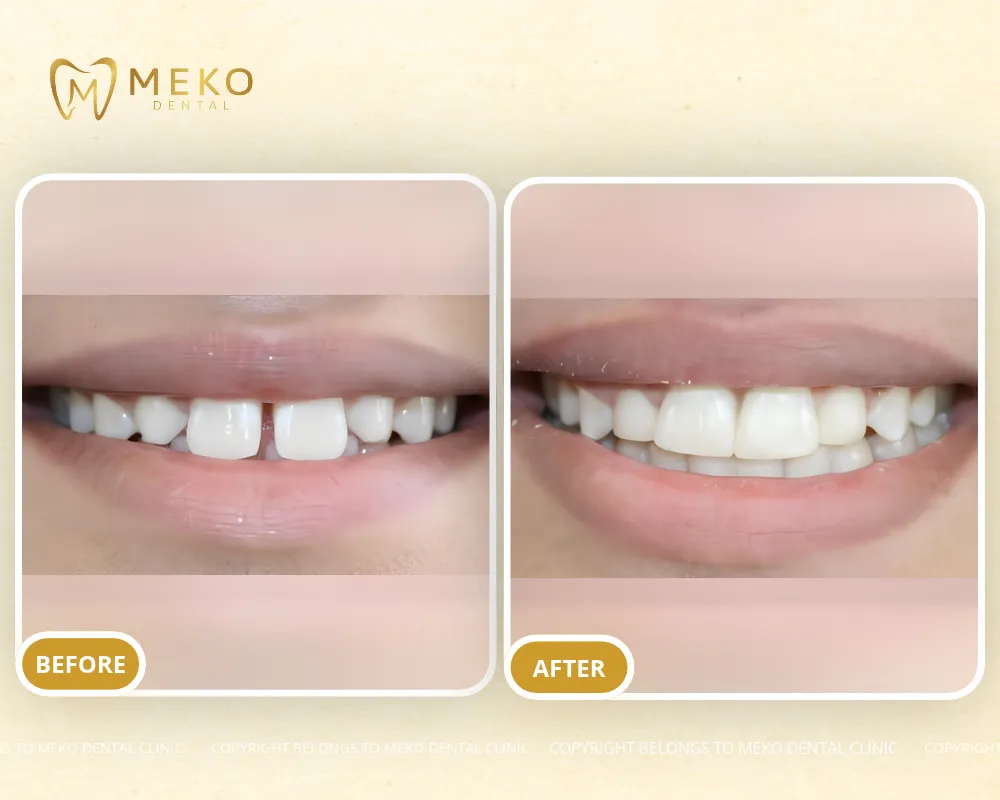
Because veneers reshape the outline of a tooth rather than its position, they work best when the space is small and the gums are healthy. When teeth sit far out of line, building them out with ceramic can mean removing more enamel than is sensible.
Some patients therefore straighten their teeth first with clear aligners such as Invisalign. They then add veneers only where shape or colour still needs work, which keeps tooth reduction lower.
5. Do porcelain veneers on front teeth hurt or damage the teeth?
Preparation can be uncomfortable, so the dentist usually numbs the area with a local anaesthetic, although minimal-prep designs often need none. Once the numbness wears off, most people can eat and chew normally and return to their usual activities the same day.
The most common complaint afterwards is sensitivity to hot and cold, and the new bite may feel slightly unfamiliar for the first few days. Small rough spots from excess cement can also be felt at first and usually wear smooth within several days.
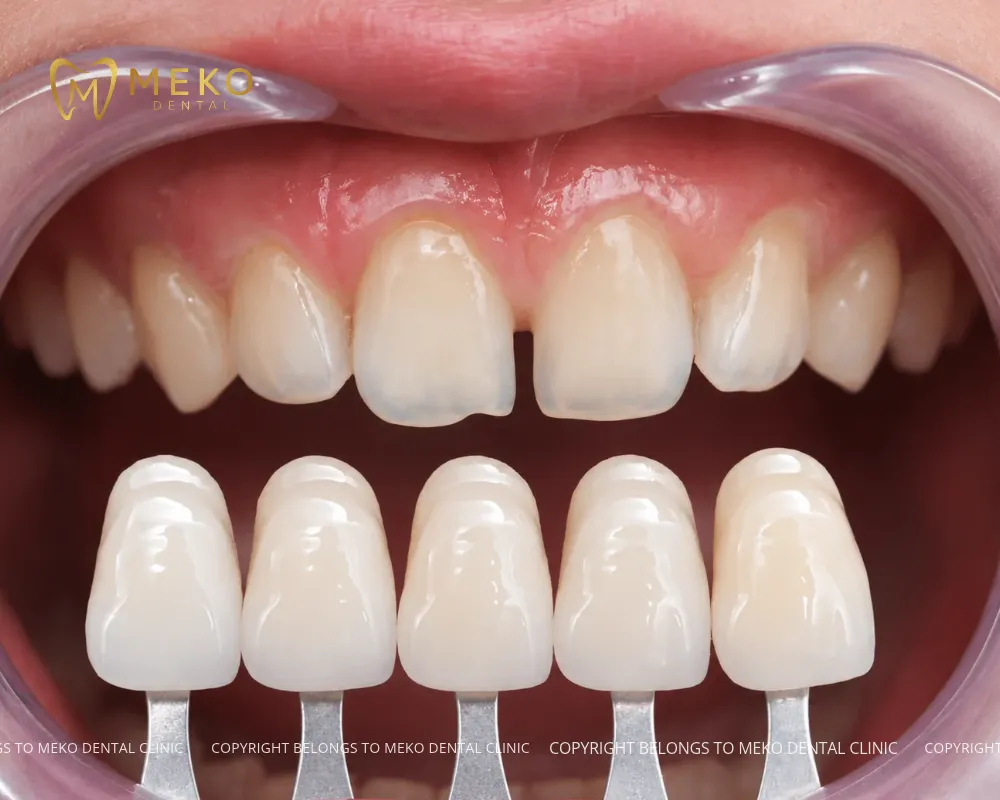
Minimal-prep designs remove less, although they still involve some enamel removal and suit only selected teeth. Other effects worth knowing about include the following.
- Chips or loosening, which occur mostly in the first few years
- A veneer shade that looks slightly off beside natural teeth
- Decay at the edges, because a veneered tooth can still decay
- Rarely, the nerve of a prepared tooth becomes irritated and needs root canal care
6. Porcelain veneers on front teeth step by step
Treatment usually takes at least two visits, with preparation and impressions first and bonding afterwards. The dentist can adjust shape and shade at the try-in stage before the veneers are fixed permanently.
- Step 1: Examination with photographs, x-rays and a bite check
- Step 2: Shade selection and design planning
- Step 3: Light preparation of the enamel, followed by impressions or a digital scan
- Step 4: Laboratory fabrication, with temporary veneers worn in the meantime if needed
- Step 5: Try-in, adjustment and bonding with resin cement
- Step 6: Follow-up review of the gums and bite
Temporary veneers protect the prepared teeth while the laboratory works, which typically takes from one to a few weeks. The placement visit can last up to about two hours.
7. How much do porcelain veneers on front teeth cost in Ho Chi Minh City?
In Ho Chi Minh City, porcelain veneers generally cost between about 6,000,000 and 15,000,000 VND per tooth. In the United States the range is roughly 925 to 2,500 US dollars per tooth. So treating two front teeth in Vietnam usually costs well under the US figure.
| Option | Per tooth | Two front teeth |
| Emax veneer | 8,000,000 VND | 16,000,000 VND |
| Lisi veneer | 10,000,000 VND | 20,000,000 VND |
| Typical HCMC range | 6,000,000 to 15,000,000 VND | 12,000,000 to 30,000,000 VND |
| United States | 925 to 2,500 USD | 1,850 to 5,000 USD |
Prices differ with the ceramic, the laboratory work, the amount of shade matching or bite correction and the warranty offered. A written quotation should state the material, the number of teeth and what follow-up is included.
Veneers are cosmetic, so they are generally paid for out of pocket, and Vietnam’s health insurance law excludes cosmetic services from coverage. Patients with private dental cover should check the policy wording first.
8. How long do porcelain veneers on front teeth last?
Veneers generally last 10 to 15 years with good care, which is a realistic planning figure for porcelain veneers on front teeth. Fracture was the most common complication, mostly within the first few years, while decay at the edges tended to appear later.
Veneers are not permanent, so repair, re-bonding or replacement should be expected at some point. Each replacement may also involve a little more preparation.
9. Aftercare for porcelain veneers on front teeth
Good aftercare protects both the ceramic and the tooth beneath it, and most of it is ordinary oral hygiene plus a few protective habits.
- Brush twice a day with a soft brush and nonabrasive fluoride toothpaste, and clean between the teeth daily
- Avoid biting fingernails, ice or hard foods, chew crunchy foods with the back teeth and never use the teeth as tools
- Wear a mouthguard for contact sports and a night guard if one is prescribed
- Limit coffee, tea, red wine and berries to reduce staining
Porcelain resists staining better than natural enamel. Cavities can still form under or around a veneer, so careful flossing along the gumline remains important.
Bleaching gels do not change the colour of ceramic. Abrasive whitening toothpastes can also wear the polished surface, so it is wise to ask the dentist which products suit them.
10. Preparing for veneer treatment while visiting Vietnam
Porcelain veneers on front teeth need at least two visits with laboratory work in between, so visitors should ask whether the full process fits the planned stay. It also helps to request copies of the x-rays and records, to confirm what the warranty covers back home and to check which payment methods and currencies are accepted.
Veneers should be placed only by a licensed dentist, because unsupervised treatment can lead to infection, nerve damage or veneers placed over unhealthy teeth.

Porcelain veneers can fix colour, shape and small gaps in a few visits and often last 10 to 15 years. The trade-off is that the enamel removed does not grow back, so a full examination should come before any decision.
To find out whether porcelain veneers on front teeth are the right option, book a consultation at Meko Dental Clinic in Ho Chi Minh City. The clinic offers a consultation where the dentist examines the teeth and bite, explains whether veneers suit the case and recommends a ceramic, Emax or Lisi, with a written quotation. Visitors from abroad can also ask how the treatment can fit into the length of their stay.



 Messenger FB
 WhatsApp
 Book now