

Contents [ Hide ]
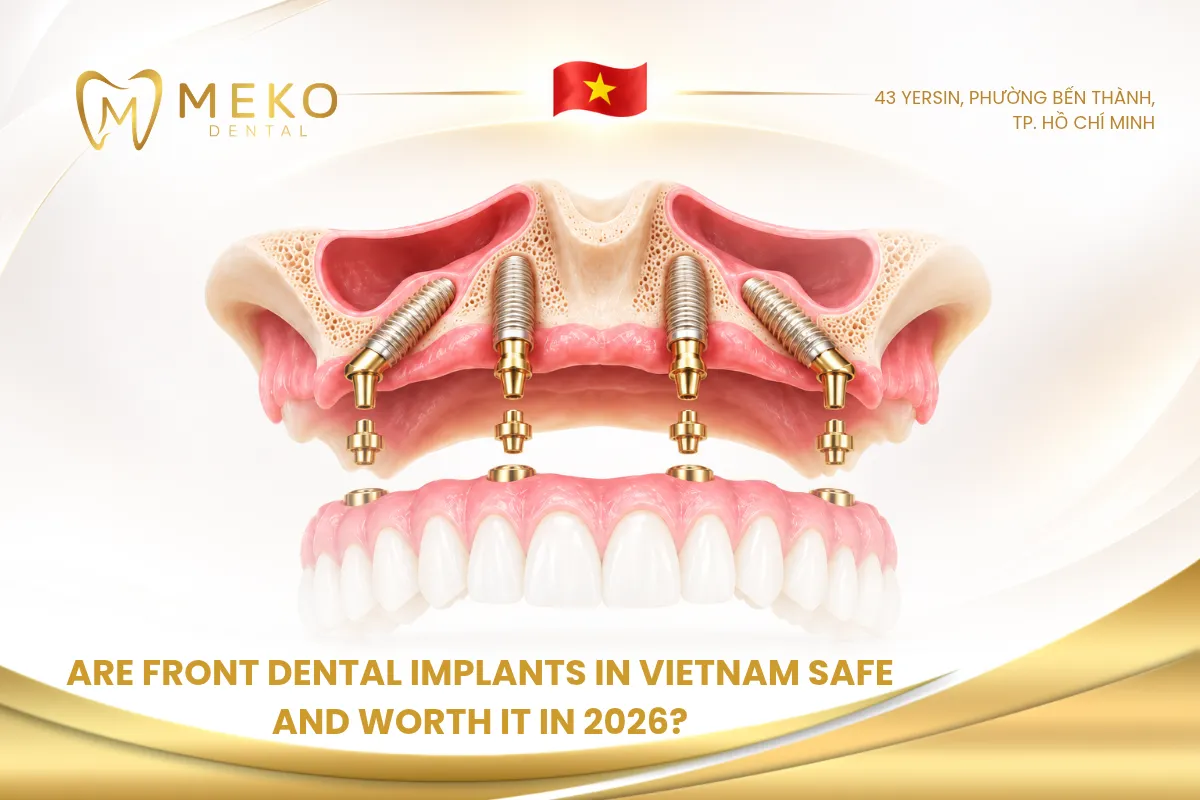
Front dental implants replace a missing front tooth with a post in the jawbone and a custom crown that matches the neighboring teeth. They also help prevent the bone loss that follows tooth loss, and healing takes two to nine months with a temporary tooth in place.
For a dental implant front tooth case in Vietnam, the post alone costs roughly 8 to 41 million VND per tooth, before the crown, abutment and any grafting. Adults with enough healthy bone and gums are usually suitable candidates, the main risks are infection, gum recession and, occasionally, implant failure.
1. What are front dental implants?
Front dental implants are small posts, usually titanium, placed in the jawbone to act as artificial roots for missing front teeth. A custom crown is then attached to restore the visible tooth. Neighboring teeth do not need to be ground down.
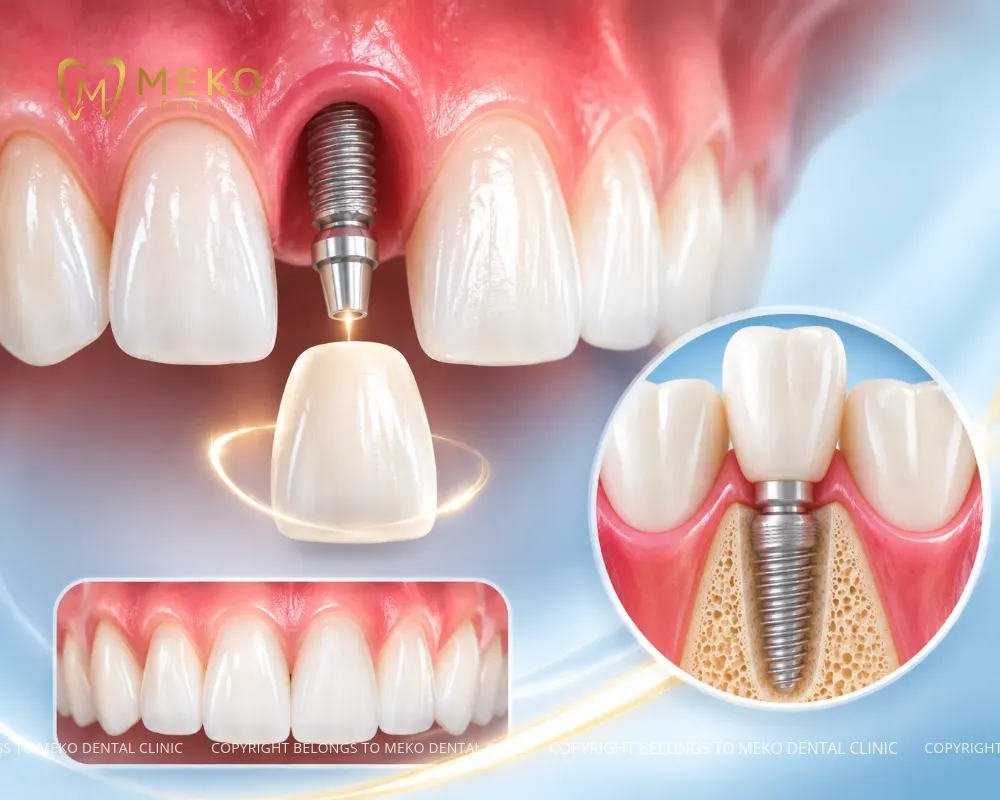
Every implant restoration has three connected parts. Each part has a separate job in the finished tooth.
- Implant post: the threaded root replacement that fuses with the jawbone.
- Abutment: a small connector that screws into the post and sits just above the gum line.
- Crown: the visible tooth, shaped and shaded to match the neighbors.
Most posts are made of titanium, although some are ceramic. Both are used in front tooth dental implants and are considered biocompatible, which means the body tolerates them well.
For front dental implants, the crown is matched to the neighboring teeth in size, shape and color. A temporary tooth may be worn while the permanent crown is made.
2. Can a dental implant replace a front tooth?
Yes, a dental implant for front tooth replacement is possible for adults who have enough healthy bone and healthy gums. The dentist checks bone volume, gum condition and general health before recommending it. Early treatment helps because bone around a missing tooth gradually shrinks.
2.1 Who is a suitable candidate?
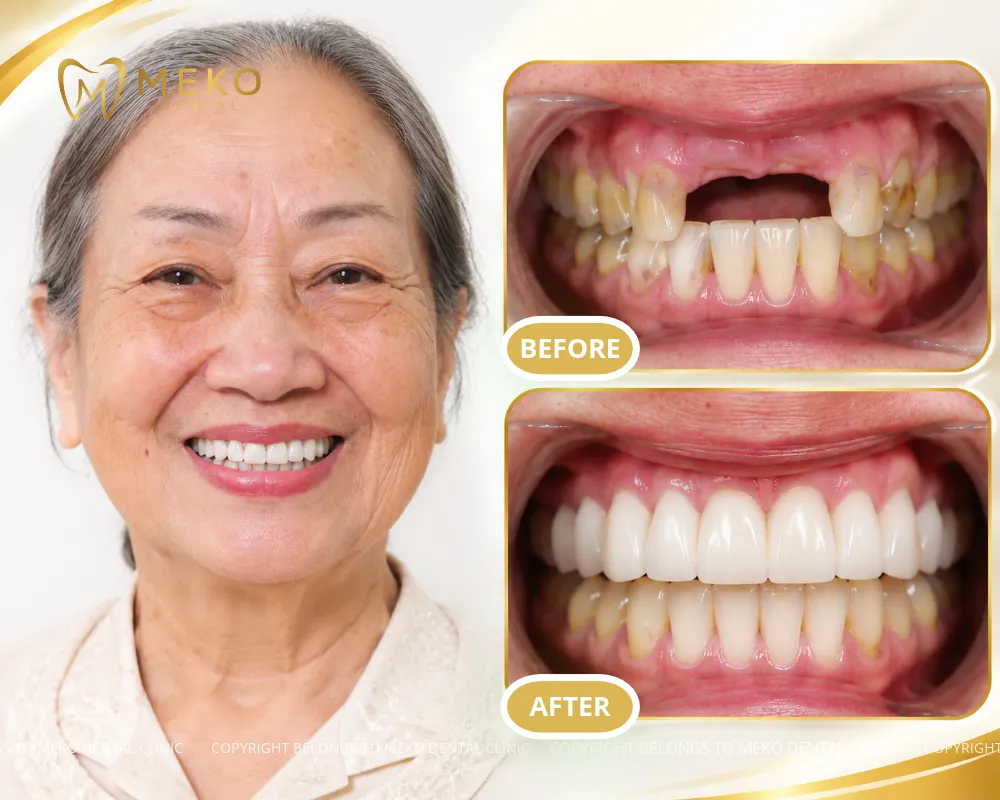
A suitable candidate for front dental implants has a fully grown jaw, which generally means age 18 or older. Enough bone must remain to hold the post, and the gums should be free of infection.
Active gum disease, unmanaged diabetes, severe jawbone loss and smoking or vaping can all interfere with healing. These conditions do not always rule out treatment, but they usually need to be addressed first.
2.2 What about the lower front teeth?
The bottom front teeth are the smallest teeth in the mouth, and their roots sit close together. This leaves little room for the implant post, so its size and angle need careful planning. A 3D scan helps the dentist avoid the roots of neighboring teeth.
3. How are front dental implants placed?
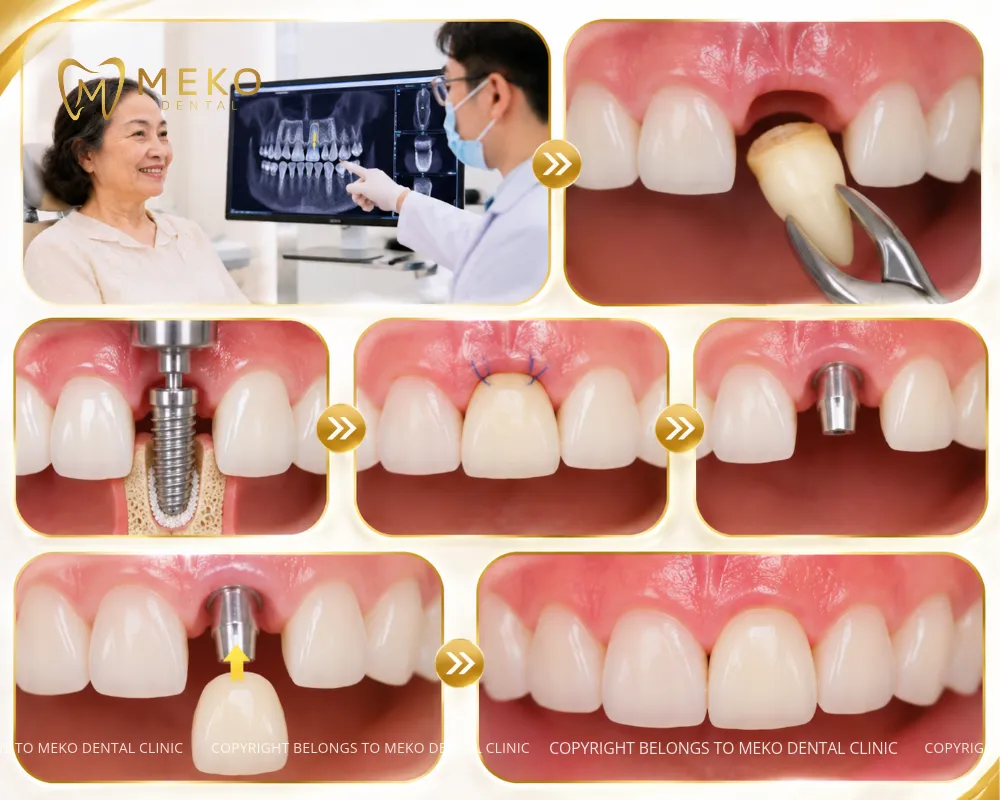
The process has four main stages: examination and imaging, implant placement, healing with a temporary tooth, and fitting of the final crown. Placement is done under anesthesia, and complex cases add steps such as grafting. From first visit to final crown, expect the whole process to span a few months.
Step 1: Examination and a CBCT scan, a 3D X-ray that shows bone width, bone height and nearby structures.
Step 2: Extraction of the failing tooth if one remains, sometimes with the implant placed in the same visit.
Step 3: Implant placement under anesthesia, with graft material added if needed.
Step 4: A temporary tooth that keeps the smile intact and helps shape the gum contour while the bone heals.
Step 5: In some systems, a second minor step to expose the implant and attach the abutment, followed by the final crown.
A CBCT scan gives more reliable planning than a flat panoramic X-ray. In one study, agreement between planned and placed implant length rose from 40 percent with panoramic images alone to about 70 percent once CBCT was added.
4. Pain, recovery and aftercare for front dental implants
Surgery is done under anesthesia, so the procedure itself should not hurt. Numbness usually fades within two to four hours, and mild soreness and swelling follow for a few days. Within roughly a week, most patients are back to their normal routine.
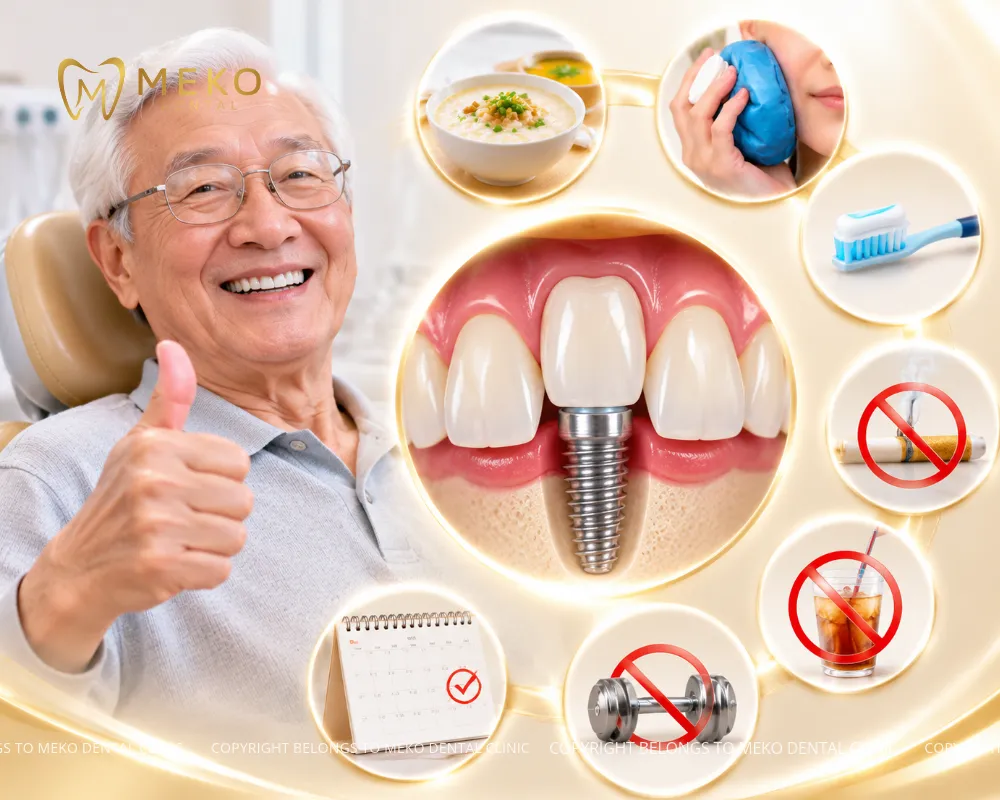
- Food: soft foods for the first few days, a normal diet after about three days, and no hard or crunchy foods for about five days.
- Swelling: ice packs on the cheek during the first 48 hours.
- Cleaning: normal brushing, but the brush stays away from the surgical site for about five days.
- Smoking and straws: no smoking for at least three days, and no spitting, rinsing or straws during the first 24 hours.
- Activity: no strenuous exercise for about two weeks.
Pain or swelling that worsens after day five, a bad taste or smell, fever or a loose implant all call for a prompt visit. Numbness in the lip or chin that lasts longer than three weeks also needs a check.
5. How long do front dental implants take to heal?
Healing around front dental implants usually takes between two and nine months, depending on how quickly the body heals. The bone fuses to the post during this period, while a temporary tooth fills the gap. Bone grafting, when needed, adds extra time to the plan.
| Stage | Typical timeframe | Notes |
| Osseointegration | About 2 to 9 months | Bone fuses to the implant post |
| Second-stage step, if used | Gums heal in about 2 weeks | The post is exposed and the abutment attached |
| Final crown fitting | About 1 hour for the visit | Done once healing is confirmed |
| Bone grafting, if needed | Adds several months | Set case by case |
Total treatment time therefore depends on whether grafting or a second-stage step is needed. Cases that need neither move faster, while staged grafting adds months.
6. Why front tooth implants are harder than back tooth implants
A front tooth implant must match visible neighboring teeth and support the gum line precisely, so the margin for error is small. Back teeth mainly need strength, while front teeth need both function and appearance. This is why planning and tissue management receive extra attention.
- Bone supports the gums: When bone is lost, the gum line can recede, so grafting may be needed before or together with the implant.
- Smile line matters: A high smile line shows more gum, which makes small differences in gum height easy to see.
- Color matching is demanding: A single implant crown must blend with a natural neighbor in shape and shade.
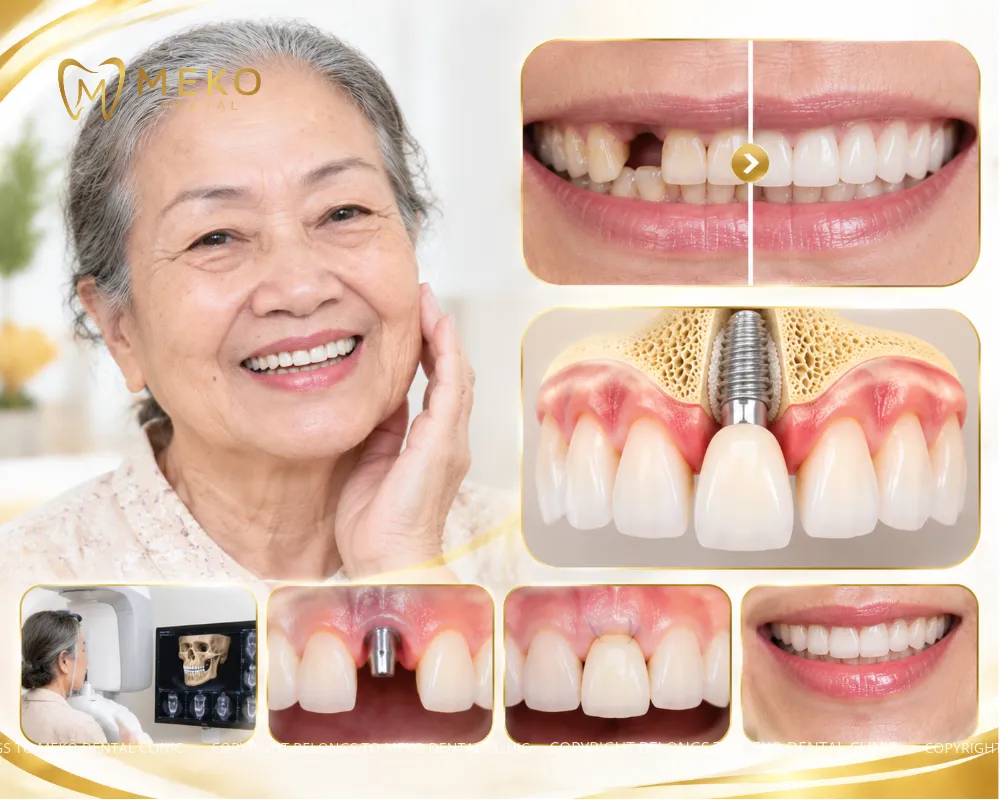
In the esthetic zone, soft tissue management matters as much as precise implant placement. Front dental implants therefore depend on healthy bone and tissue as much as on the post itself.
7. Are front dental implants better than a bridge or denture?
A bridge or a removable partial denture can also replace a front tooth. A traditional bridge relies on crowns over the neighboring teeth, a Maryland bridge bonds metal wings to them, and a denture rests on the gums. Front dental implants cost more at the start but generally last much longer.
| Feature | Implant | Bridge | Removable partial denture |
| Neighboring teeth | Not involved | Capped or bonded as anchors | Clasps grip nearby teeth |
| Jawbone | Post stimulates bone and helps prevent loss | Bone below the gap thins | Bone shrinks over time |
| Stability | Fixed, works like a natural tooth | Fixed | Can shift or slip when talking or chewing |
| Typical lifespan | Post often lasts decades, crown around 15 years | About 5 to 15 years | About 7 to 10 years |
| Upfront cost | Highest | Lower | Usually lowest |
| Daily care | Good home care and checkups | Cleaning under the bridge | Taken out to clean, often overnight |
A single front dental implant restores one tooth without involving the teeth beside it. A bridge or denture avoids surgery and costs less, which suits some patients with limited bone or budget.
8. Frequently asked questions
8.1 How soon can I eat normally after a front tooth dental implant?
Most people return to a normal diet after about three days. Hard or crunchy foods stay off the menu for roughly five days, and the dentist advises when it is safe to bite with the new tooth.
8.2 Will there be a gap in my smile while the implant heals?
A temporary tooth is usually made for front implants so the smile is not left empty. It protects the site and keeps the appearance natural until the final crown is ready.
8.3 How long does a dental implant front tooth last?
The post can often last for decades with good hygiene and regular dental visits. The crown may need replacement after roughly 15 years, depending on wear.
9. Conclusion
Front dental implants restore both the look and the function of a missing front tooth, and they help protect the bone under the gap. A good result depends on enough healthy bone, careful planning of the gum line and crown shade, and consistent hygiene after treatment.
Meko Dental Clinic in Ho Chi Minh City assesses each case individually, with an oral examination and imaging before a plan is proposed. The clinic’s in-house lab dental services support the design, shaping and shade matching of implant crowns. Patients considering front dental implants can book a consultation at mekodental.vn to check whether an implant suits them.
References
- Cleveland Clinic. Dental Implants (medically reviewed, last updated 06/11/2026). https://my.clevelandclinic.org/health/treatments/10903-dental-implants
- Cleveland Clinic. Dental Bridges. https://my.clevelandclinic.org/health/treatments/10921-dental-bridges
- Cleveland Clinic. Dentures. https://my.clevelandclinic.org/health/treatments/10900-dentures
- European Federation of Periodontology, Journal of Clinical Periodontology Digest. Five-year follow-up of immediate single implants in the esthetic zone. https://www.efp.org/fileadmin/uploads/efp/Documents/JCP_Digest/Migration/JCPD8series16_5-year_702-709.pdf



 Messenger FB
 WhatsApp
 Book now