

Contents [ Hide ]
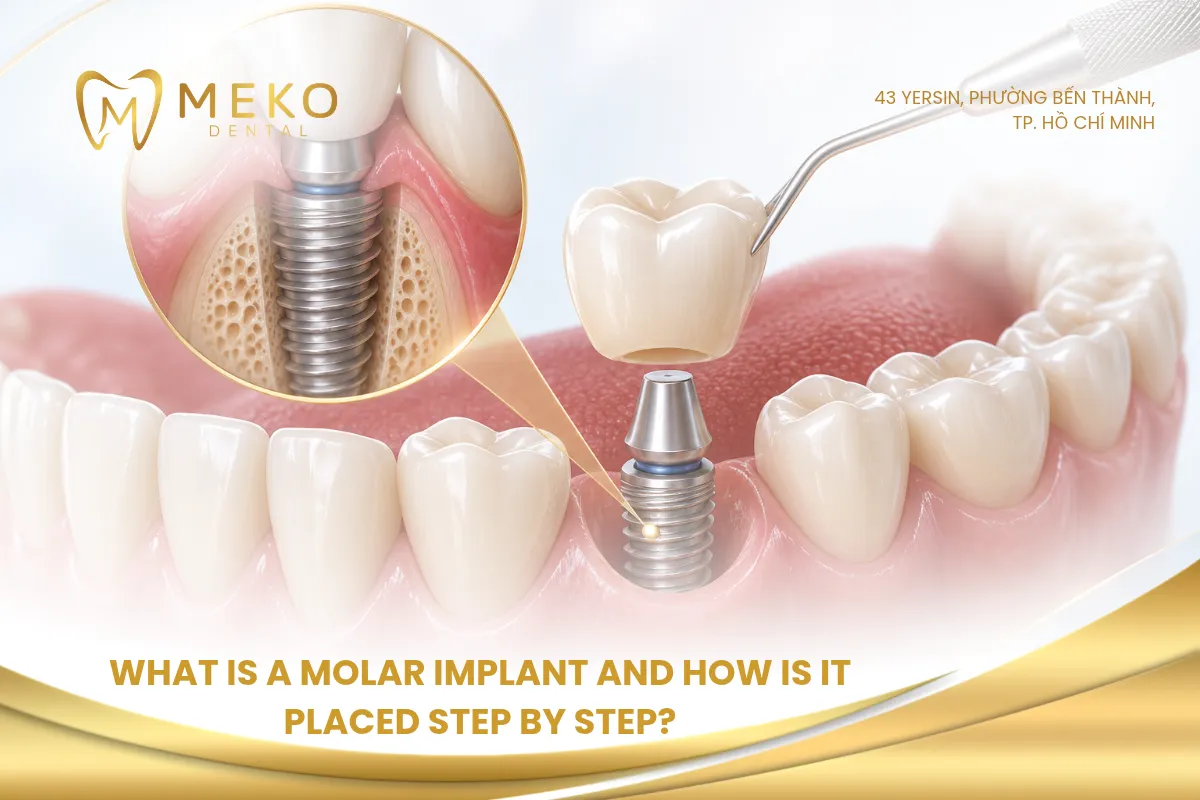
A molar implant replaces a missing back tooth with a titanium or ceramic root in the jawbone, topped by a crown. It restores chewing power, keeps neighbouring teeth from drifting and slows bone loss in the gap.
Treatment usually takes 3 to 9 months and suits adults with healthy gums and enough jawbone. This guide explains how the procedure works, how upper and lower molars differ, and what success rates, risks and cost factors to expect.
1. What is a molar implant?
A molar implant is a titanium or ceramic post placed in the jawbone to replace the root of a missing molar. After the bone heals around it, the post supports a crown that takes over the chewing work of the lost tooth.
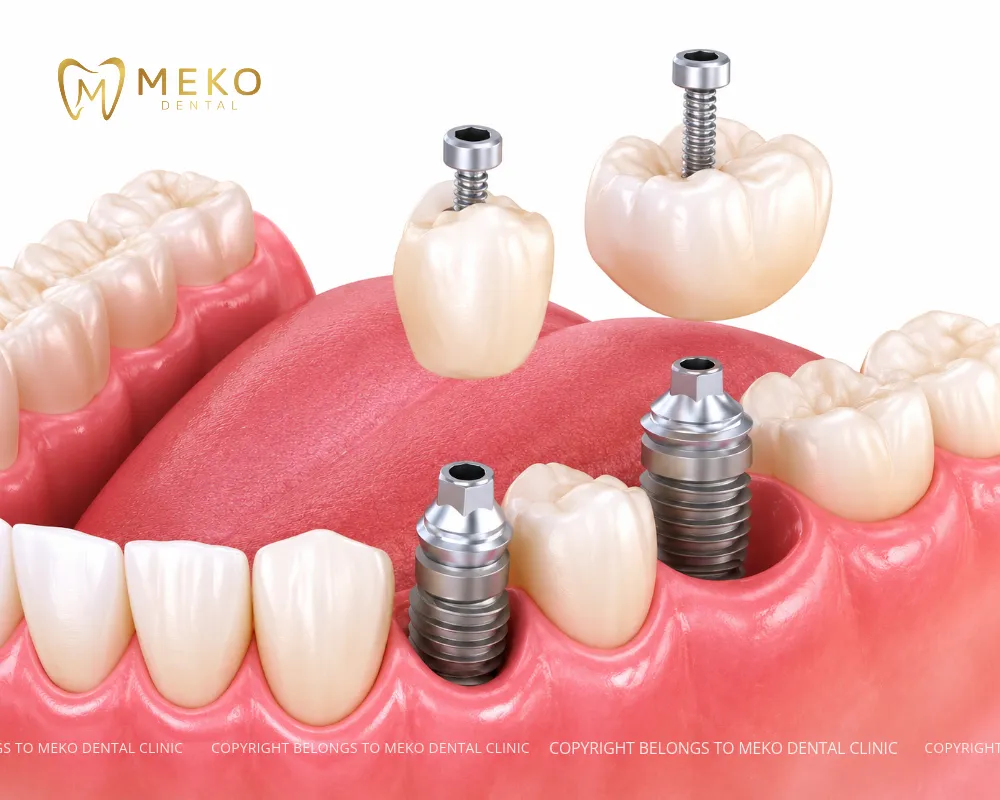
Adults can have up to twelve molars, counting wisdom teeth. Because molars grind food, dental implants for missing molars are planned for heavier bite force than implants in the front of the mouth.
2. Why does a missing molar need replacement?
A gap at the back of the jaw can reduce chewing efficiency and allow neighbouring teeth to drift. The bone in that area may also shrink over time, because the missing root no longer stimulates it. These changes build slowly, so the gap can look harmless at first.
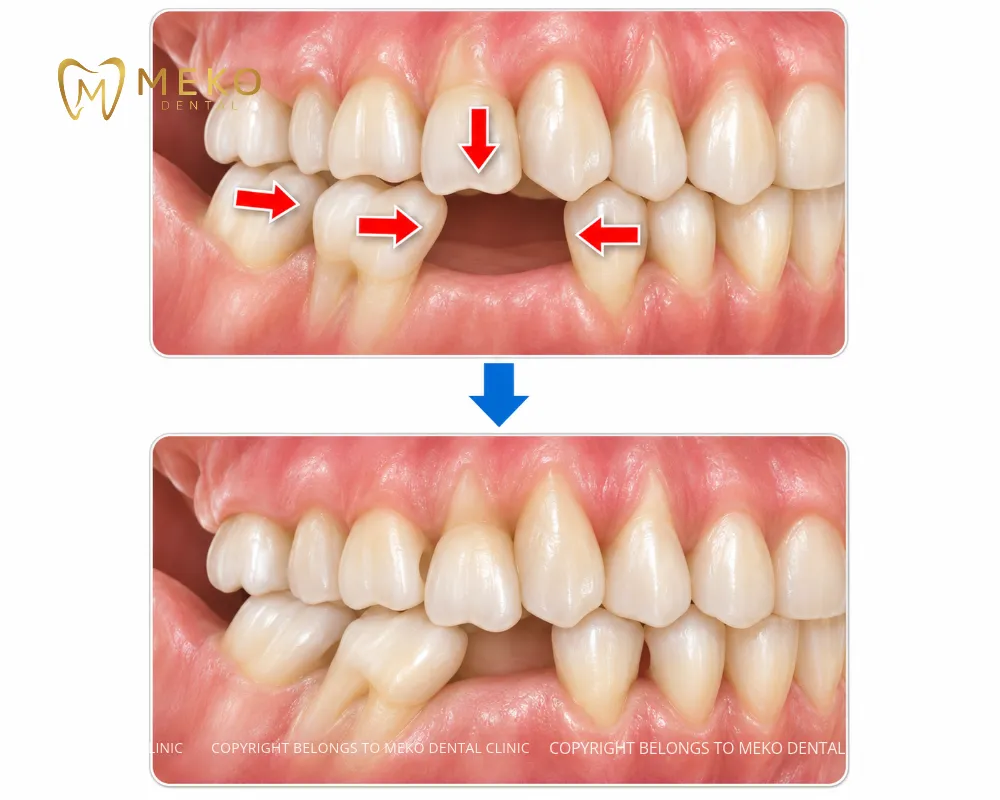
First molars are linked to about 90% of chewing, so losing a first molar usually affects function more than losing a second molar. The dentist weighs this against the bite and the remaining teeth before recommending treatment.
3. Who is a suitable candidate for dental implants for missing molars?
Suitable candidates are usually adults with healthy gums, enough jawbone and no condition that disrupts healing. Non-smokers have an advantage, and patients must accept a treatment spanning several months. A dentist confirms suitability through an exam and imaging before any surgery is scheduled.
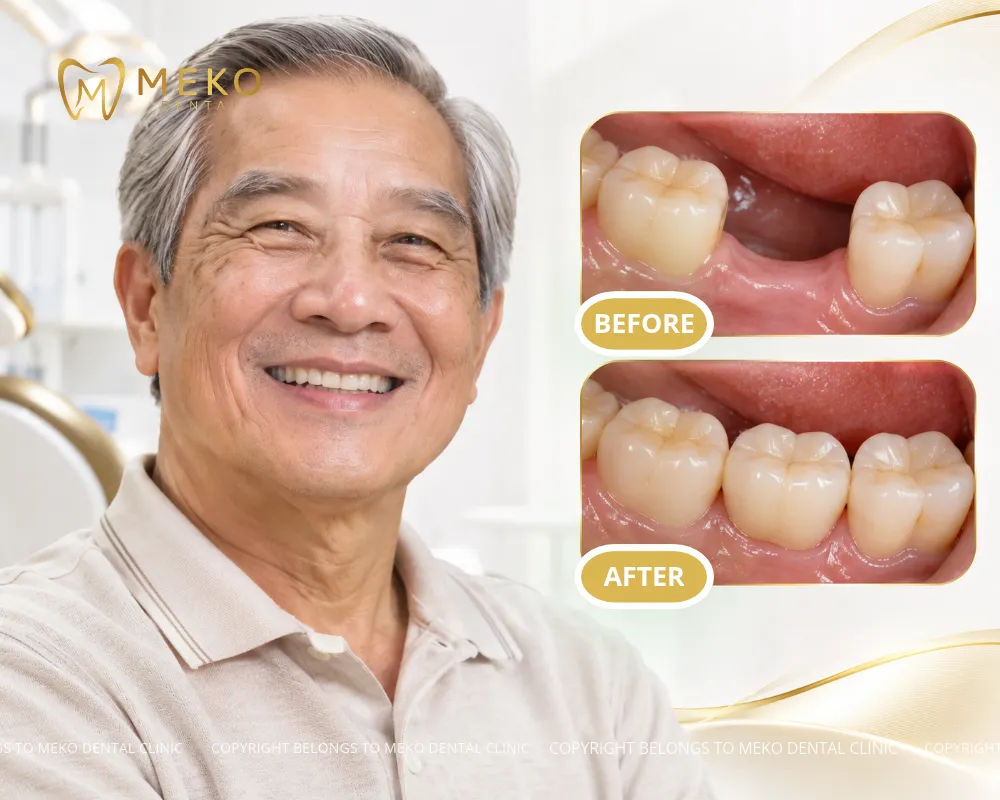
The best candidates tend to be patients who:
- Are healthy enough for bone to heal normally
- Cannot wear dentures, or would rather not
- Can commit to a process that takes several months
- Do not smoke tobacco
Chronic illnesses such as diabetes or leukemia can slow healing, so each condition is assessed individually. Some medications, including long-term bisphosphonates, also need review before surgery.
If the jawbone is too thin or soft, a bone graft may be needed first, which can add up to three months. Before approving a dental molar implant, the dentist also checks gum health, since active gum disease raises later risk.
4. How is a molar implant placed, step by step?
Treatment follows five stages: evaluation, implant surgery, bone healing, abutment placement and crown fitting. The typical range is 3 to 9 months from first consultation to final crown. Grafting, extractions or a sinus lift extend that range further.
| Stage | What happens | Typical timing |
| Evaluation | Exam, medical history, 3D imaging such as CBCT | First visit |
| Bone grafting (if needed) | Jawbone is rebuilt before placement | Adds up to 3 months |
| Implant placement | The surgeon anchors the post in the jawbone while the area is numbed | One surgical visit |
| Osseointegration | The jawbone bonds firmly to the implant surface | About 2 to 6 months |
| Abutment | Gum tissue heals around the newly fitted connector | Around 2 weeks |
| Crown | Final tooth is fixed to the abutment | After gum healing |
After molar implant surgery, swelling of the gums and face, bruising, pain at the site and minor bleeding are all typical. Daily activities usually resume within a week or two. Symptoms that worsen over the following days should be reported promptly.
5. Molar implant differences between the lower and upper jaw
Lower molars sit near the inferior alveolar nerve, while upper molars sit beneath the maxillary sinus. Imaging maps these structures before surgery, and the results determine implant size, angle and whether extra bone work is required.
| Area | Nearby structure | Main planning concern |
| Implant lower molar | Inferior alveolar nerve | Safe distance from the nerve, correct implant length |
| Upper molar | Maxillary sinus | Remaining bone height, possible sinus lift |
| Upper premolar implant | Sinus floor, position varies | Narrower bone, lower bite load than a molar |
For the upper jaw, at least 4 to 5 mm of remaining bone height is advised to place an implant during the same surgery as a sinus lift. Over 24 months, 95.2% of such implants succeeded, with 100% at 4 mm or more and 87.5% below it, though the groups were very small.
Surgeons often choose wider or longer implants, or adjust the angle, to spread chewing load, which makes a molar implant different from a front-tooth implant. An upper premolar implant is often more straightforward because the sinus usually sits further back, but this varies, so imaging still decides.
6. Single molar implant versus bridge
A single molar implant replaces one tooth without cutting down the teeth beside it. A fixed bridge is a common alternative to dental implants and is faster and cheaper at first, but it relies on reshaping the neighbouring teeth to carry crowns. The right choice depends on bone, adjacent teeth and budget.
| Factor | Single molar | Fixed bridge | Removable partial denture |
| Support | Jawbone | Adjacent teeth | Gums and adjacent teeth |
| Neighbouring teeth | Left untouched | Reshaped for crowns | Clasps rest on teeth |
| Missing root replaced | Yes | No | No |
| Upfront cost | Higher | Lower | Lower |
| Treatment time | Months | Shorter | Shorter |
Bridges and partial dentures cost less upfront, yet repairs and replacements can add up over time. An unreplaced tooth also leaves the jawbone more likely to weaken.
7. Risks and complications to know about
The main risks of a dental molar implant include infection, injury to nearby structures, nerve damage, sinus problems and failure of the bone to bond with the implant. These problems are rare and usually minor and treatable. Technical issues with the crown are more common than surgical ones.
Over five years, screw loosening affected 8.8% of implant crowns. Loss of retention followed at 4.1% and fracture of the veneering material at 3.5%. Peri-implantitis also deserves attention, since it affects about 21% of patients, with periodontitis, smoking, diabetes and alcohol consumption as the main risk indicators.
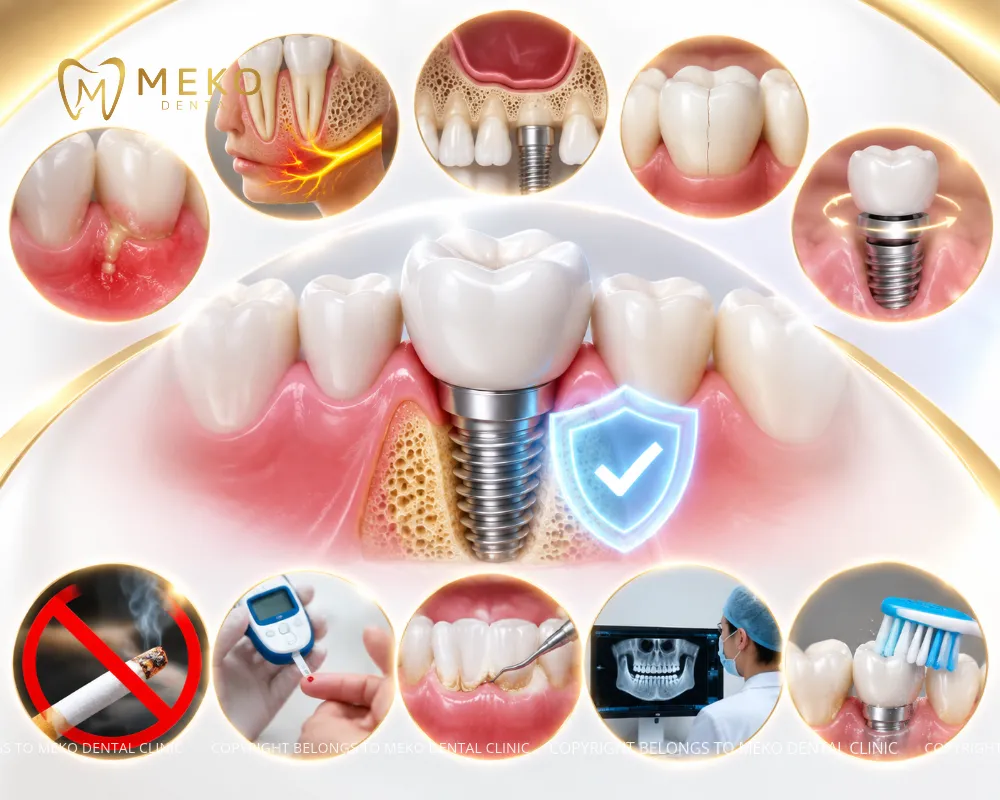
Several habits lower these risks, and each is within the patient’s control:
- Avoid smoking in the lead-up to surgery and during recovery
- Keep diabetes controlled and treat gum disease before placement
- Choose a clinic that uses detailed imaging and has experience with back-tooth implants
- Clean around the implant daily and attend every follow-up.
8. Frequently asked questions
8.1 Does a molar implant hurt?
The site is numbed during surgery, and sedation options exist for anxious patients. Afterwards, discomfort, swelling and bruising are normal for a few days, and prescribed medication usually keeps this manageable.
8.2 Can a molar implant be placed on the day of extraction?
Sometimes. It depends on bone quality, infection at the site and how stable the implant feels at placement. Some patients receive a same-day temporary tooth, while others need a staged plan.
8.3 How long does a molar implant last?
Follow-up mostly covers 10 to 15 years, with about 95% of implants still in function at both points. Many clinicians expect longer with good care, but the crown often needs repair or replacement sooner. Hygiene, smoking status and regular check-ups strongly influence the result.
A molar implant can bring back chewing power and protect the bone and the teeth around the gap. Suitability depends on the jawbone, the gums and general health, and an exam with 3D imaging is the only way to confirm it. The same visit shows whether a bone graft or sinus lift is needed, and gives a realistic timeline and cost. Patients missing a back tooth can book a consultation at Meko Dental Clinic to find out where they stand.
References
- Jung RE, Zembic A, Pjetursson BE, Zwahlen M, Thoma DS. Systematic review of the survival rate and the incidence of biological, technical, and aesthetic complications of single crowns on implants reported in longitudinal studies with a mean follow-up of 5 years. Clinical Oral Implants Research. 2012;23 Suppl 6:2-21. doi:10.1111/j.1600-0501.2012.02547.x
- Bortoluzzi MC, Manfro R, Fabris V, Cecconello R, Derech EDG. Comparative study of immediately inserted dental implants in sinus lift: 24 months of follow-up. Annals of Maxillofacial Surgery. 2014. doi:10.4103/2231-0746.133071. https://pmc.ncbi.nlm.nih.gov/articles/PMC4073458
- Yoon WJ, Jeong KI, You JS, Oh JS, Kim SG. Survival rate of Astra Tech implants with maxillary sinus lift. Journal of the Korean Association of Oral and Maxillofacial Surgeons. 2014;40(1). doi:10.5125/jkaoms.2014.40.1.17
- Song S, Lee JK, Um HS, Chang BS. Factors affecting the survival of implants: a long-term retrospective study. Journal of Dental Rehabilitation and Applied Science. 2015;31(1):10-19. doi:10.14368/jdras.2015.31.1.10. https://synapse.koreamed.org/articles/1159884
- Galarraga-Vinueza ME, Pagni S, Finkelman M, Schoenbaum T, Chambrone L. Prevalence, incidence, systemic, behavioral, and patient-related risk factors and indicators for peri-implant diseases: an AO/AAP systematic review and meta-analysis. Journal of Periodontology. 2025;96(6):587-633. doi:10.1002/JPER.24-0154. https://pubmed.ncbi.nlm.nih.gov/40489307/



 Messenger FB
 WhatsApp
 Book now