
Contents [ Hide ]
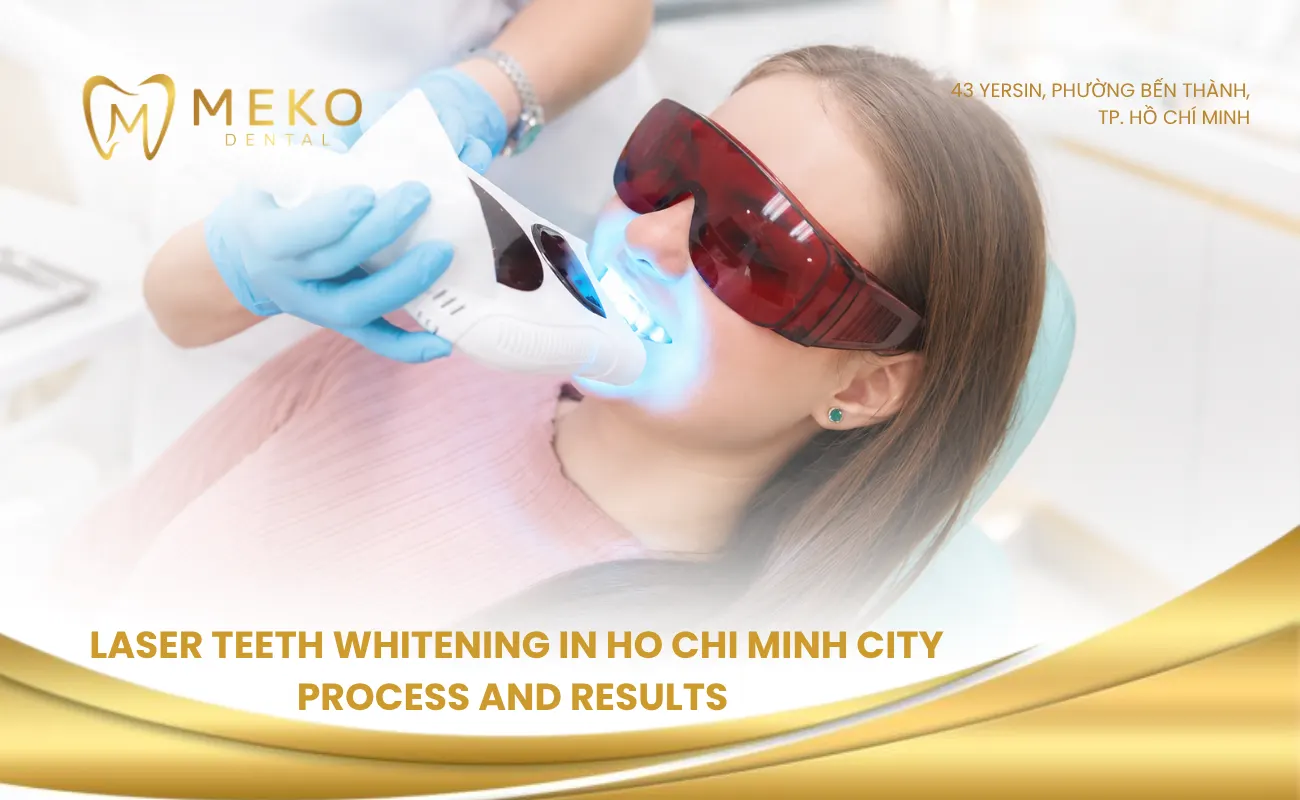
Laser teeth whitening is one of the fastest ways to lighten stained teeth in a single dental visit. This treatment pairs a peroxide based bleaching gel with a light source to speed up the whitening reaction, which is why many people turn to it once home kits and whitening toothpaste stop showing results.
1. What is laser teeth whitening?
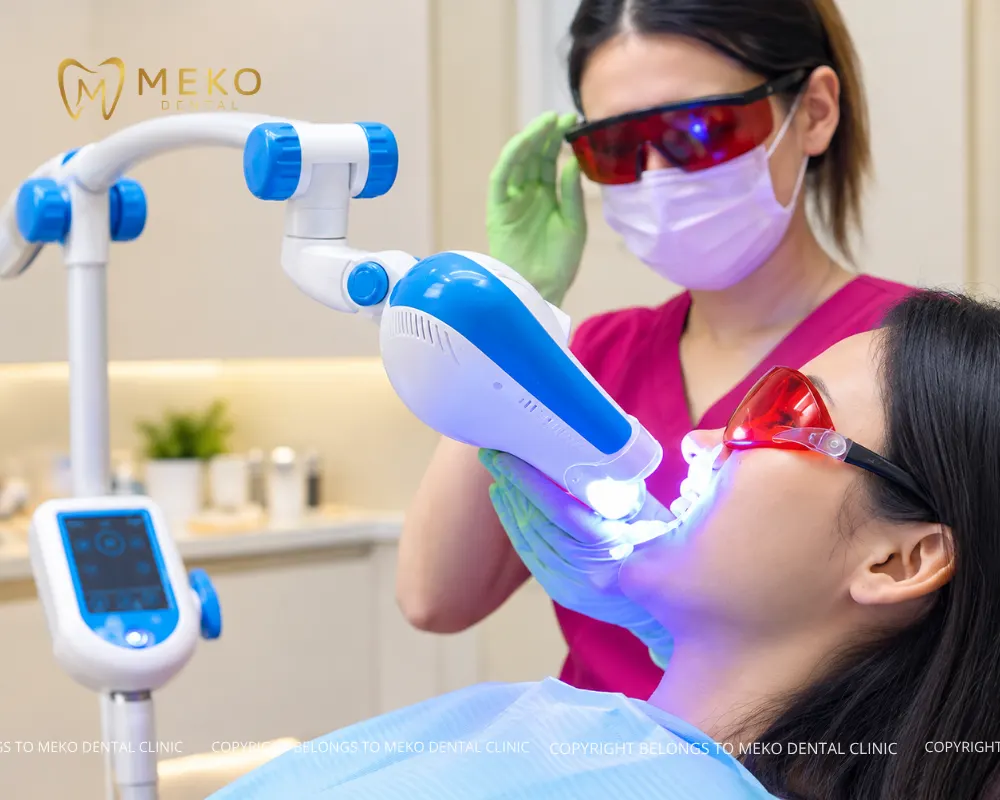
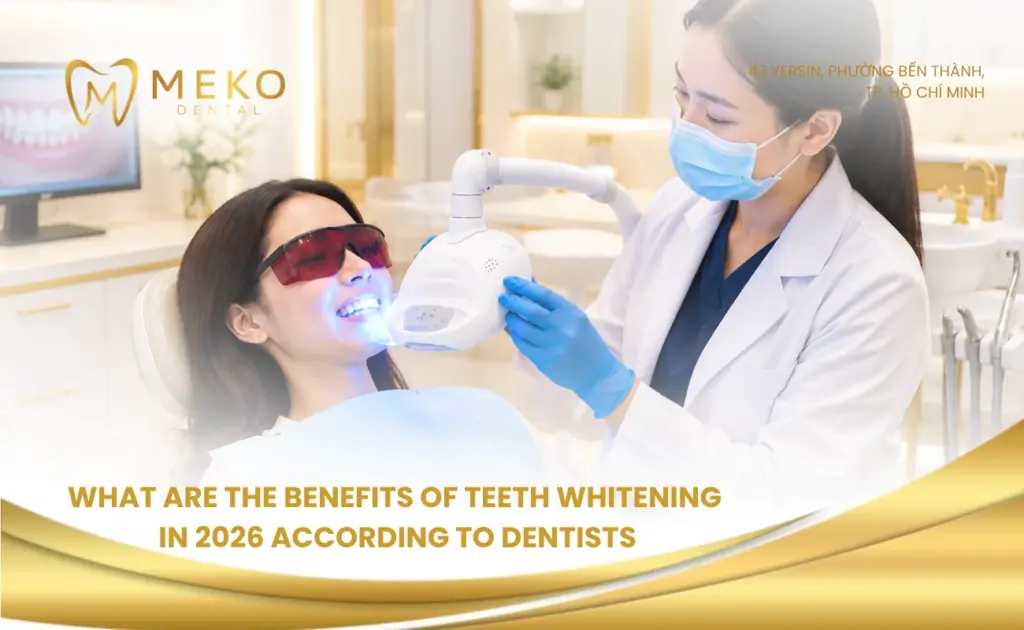
Laser teeth whitening, sometimes called laser teeth bleaching, is an in office bleaching procedure that uses a laser or high intensity light to activate a hydrogen peroxide gel on the tooth surface. The light does not bleach the tooth by itself, it heats and speeds up a gel that is already doing the work. Most dentists finish a session within 90 minutes, using a laser for teeth whitening mainly to shorten how long the gel needs to sit on the enamel.
The word laser attached to this treatment is a bit generous, and the reason matters for anyone comparing options. A 2018 systematic review published in the Journal of Dentistry compared in office bleaching with and without light activation and found broadly similar whitening outcomes between the two. Because of that evidence, the US Food and Drug Administration treats laser use in tooth whitening as an off label application.
That classification says more about the light’s role than about laser teeth whitening effectiveness overall. In practice, the light is mostly buying speed and a shorter chair time, while the peroxide gel does the actual chemical work of breaking down stain molecules.
2. How does laser teeth whitening work?
The process follows a fixed clinical sequence, carried out inside a dental clinic rather than at home. A typical appointment moves through the following steps:
- The dentist examines gums, enamel, and existing restorations to confirm suitability
- A gum barrier, often a light cured resin, protects the soft tissue from the gel
- A concentrated hydrogen peroxide gel is applied to the front teeth
- The teeth whitening laser activates the gel in short cycles, repeated until the target shade is reached
Most sessions lighten teeth by six to eight shades, with the whole appointment taking between 30 and 90 minutes. Heavier staining, such as long term coffee or tobacco marks, usually needs the longer end of that range or an additional visit.
3. Is laser teeth whitening safe?
It is considered safe for most healthy adults when performed by a trained dentist, but it carries some real risk if handled carelessly. The main concern comes from the gel strength rather than the light itself. Professional laser teeth whitening gel holds a much higher concentration of hydrogen peroxide than anything sold over the counter.
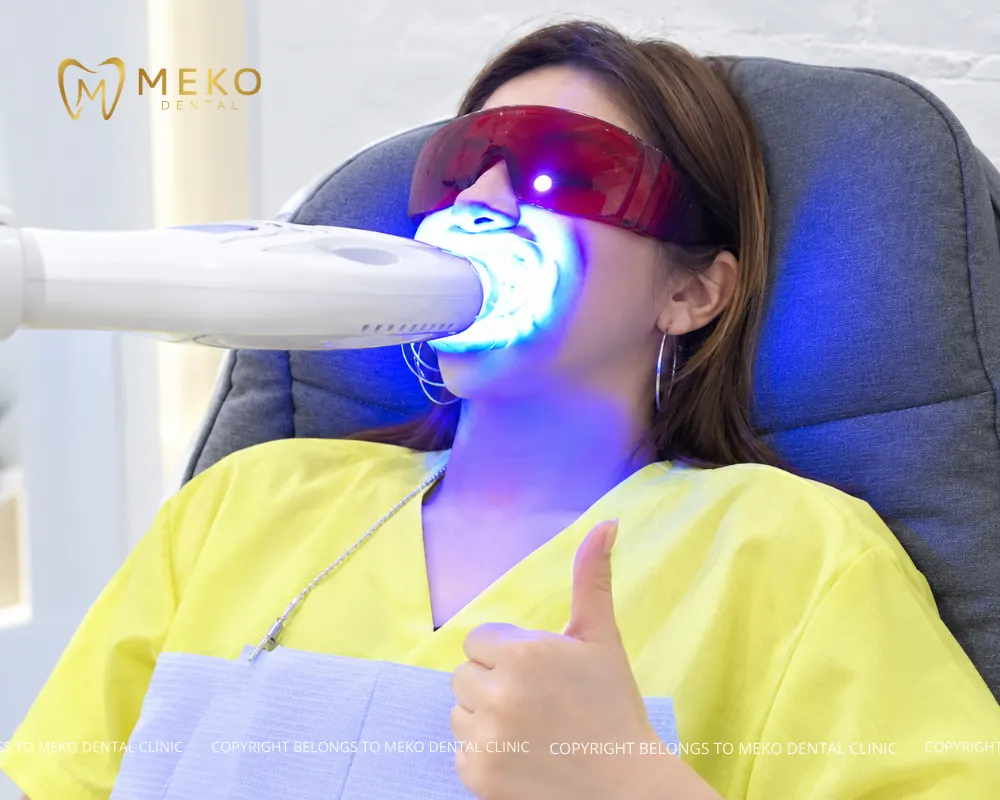
Protecting the gums during treatment is not just routine caution, it addresses a documented risk. One clinical review notes that a high strength bleach used over a short time frame can cause a chemical burn if it comes into contact with the gums or lips. Temporary tooth sensitivity is the most common side effect reported, alongside mild gum irritation in some patients.
4. Who should avoid laser teeth whitening?
Not every patient is a good candidate, even though the treatment is broadly low risk for healthy adults. The table below summarises the situations where dentists typically pause treatment or recommend an alternative.
| Situation | Why it matters |
| Active decay or gum disease | Any underlying oral problem needs treatment before bleaching starts |
| Pregnancy or breastfeeding | Most clinics postpone bleaching as a precaution |
| Under 18 | Generally advised against laser whitening for teeth |
| Deep staining from tetracycline or excess fluoride | Responds poorly to bleaching, since the discoloration sits inside the tooth |
| Crowns, veneers, or fillings on front teeth | Whitening only changes natural enamel, restorations keep their original shade |
Patients with visible dental work are often surprised to learn that laser whitening teeth lightens natural teeth while leaving crowns or old fillings completely untouched. In a full smile makeover, the usual sequence is to whiten the natural teeth first, then replace any visible restorations afterward so they match the new shade.
5. Laser teeth whitening versus other whitening methods
Choosing between in office laser teeth whitening, take home trays, and whitening strips mostly comes down to speed, sensitivity, and budget. The comparison below outlines the main trade offs between each option.
| Method | Time to results | Where it happens | Best for |
| Laser teeth whitening | 1 session, 30 to 90 minutes | Dental clinic | Fast, dramatic results |
| Take home trays | 1 to 3 weeks | At home, dentist supervised | A slower pace with milder sensitivity |
| Whitening strips or toothpaste | Several weeks | At home | Mild surface stains only |
Teeth laser whitening generally outperforms strips or toothpaste because the gel used in a clinic is far more concentrated than anything approved for home use. A 2018 Cochrane review of home based chemical whitening still found the at home approach effective for many patients, just slower to produce visible change.
Zoom whitening often comes up in the same conversation, since both are in office procedures built around a peroxide gel. The two mainly differ in what activates the gel: laser whitening teeth uses focused light energy, while Zoom relies on a specialised LED lamp. The gel chemistry, the gum protection, and the overall appointment structure stay largely the same either way.
6. What results can you expect?
Most patients see a visible shade change right after a session. The exact number of shades depends on the starting colour and the cause of the staining. Surface stains from coffee, tea, wine, or tobacco tend to respond well, since the bleaching gel can reach and break them down directly.
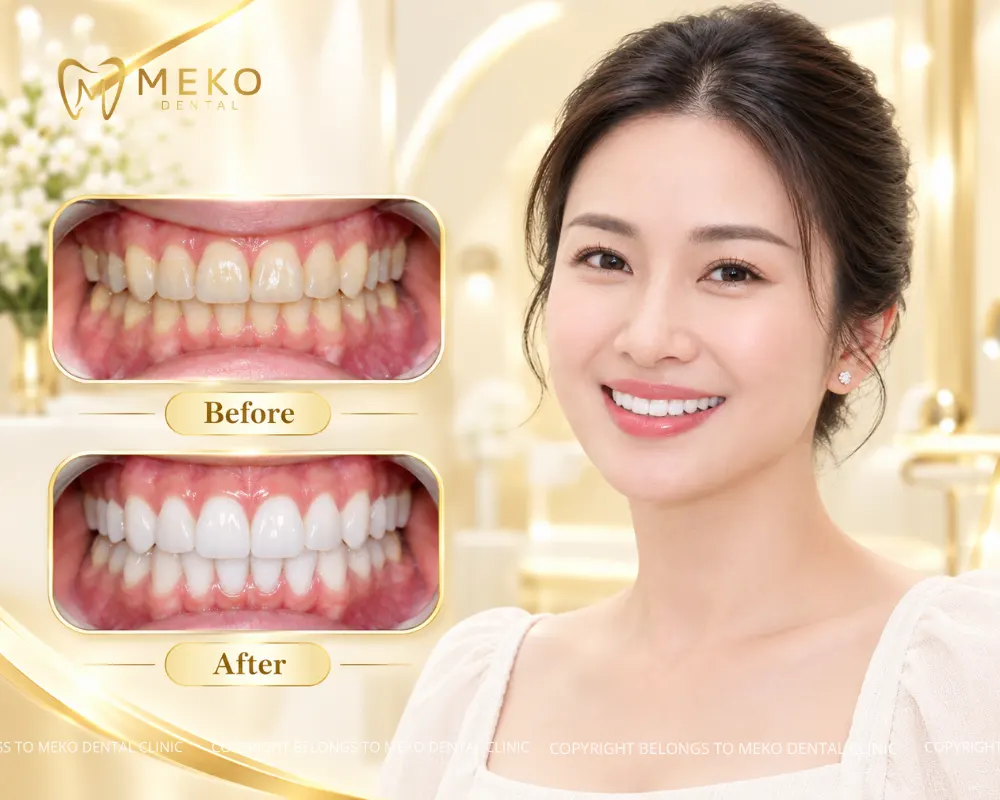
Deeper, intrinsic discoloration behaves differently. Staining caused by fluorosis, tetracycline use, or an old dental injury sits inside the tooth structure rather than on the surface. As a result, it usually lightens only partially with bleaching alone. A dentist examining this kind of staining will typically explain what shade change is realistic before starting, rather than promising a result the gel cannot deliver.
7. How should you care for your teeth after treatment?
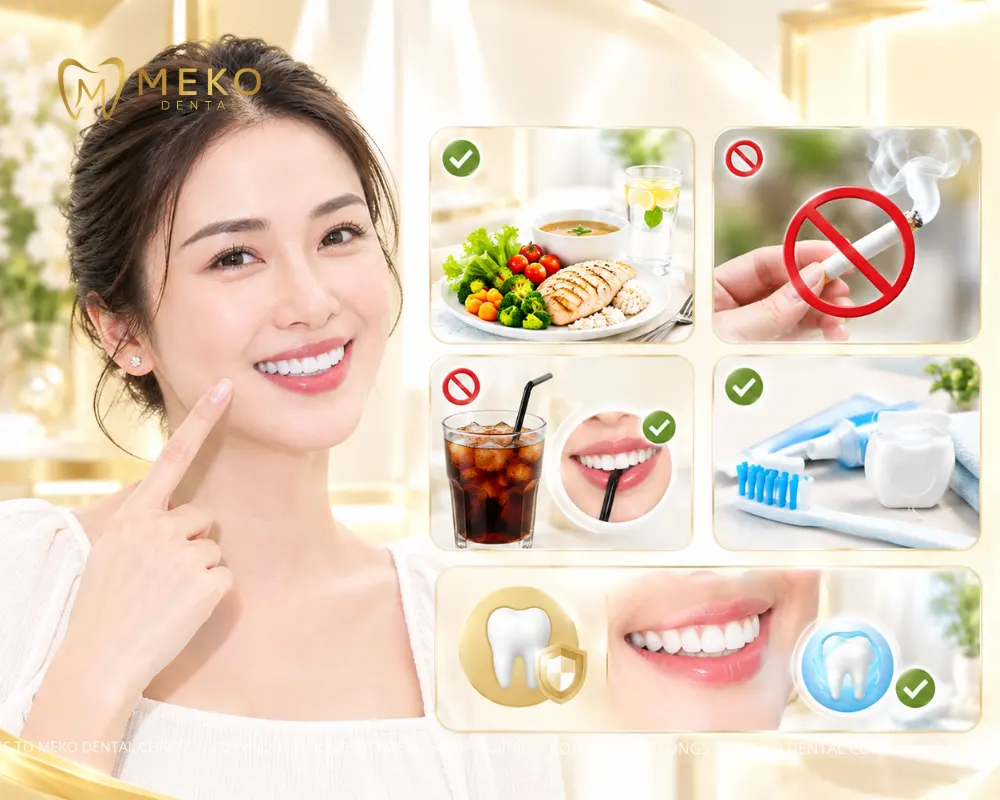
What a patient does in the days after treatment affects how long the brighter shade actually holds. Enamel stays more porous for roughly 48 hours after bleaching, so it picks up new stains more easily than usual during that window. A few habits help protect the result during this period:
- Stick to a light coloured diet for the first two days, avoiding coffee, tea, red wine, and dark sauces
- Skip tobacco products, since smoking is one of the fastest ways to undo a fresh whitening result
- Use a straw for dark beverages once normal eating resumes, to limit contact with the front teeth
- Keep up regular brushing and flossing, and use a desensitising toothpaste if sensitivity lingers
Most sensitivity settles within a day or two without any special treatment. If discomfort continues well past that point, it is worth returning to the dentist rather than simply waiting it out.
8. How much does laser teeth whitening cost?
Pricing depends on the clinic, the equipment used, and how many sessions a patient needs to reach their target shade. A single session commonly runs from around 100 to 450 US dollars, and a full course of three to four sessions can total 400 to 1,800 dollars or more depending on the market. Because it is a cosmetic laser teeth whitening procedure, it is typically not covered by dental insurance.
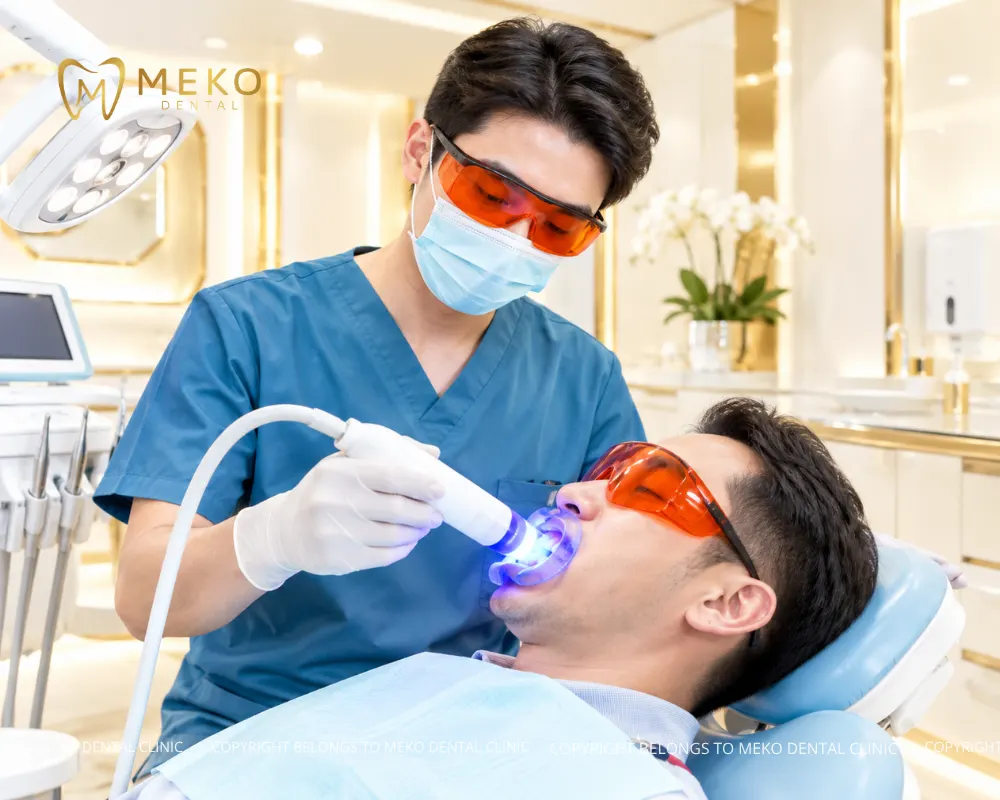
At Meko Dental Clinic, pricing is confirmed only after an oral exam, since enamel condition and staining depth directly affect how many sessions are actually needed. Clinics using advanced laser teeth whitening technology may charge a premium, though the equipment itself matters less than the dentist’s assessment beforehand.
9. Frequently asked questions
Does laser teeth whitening hurt?
Most patients feel warmth or mild sensitivity rather than pain during the session, and any discomfort usually fades within a day or two afterward.
How long does laser teeth whitening take?
A single session typically takes 30 to 90 minutes, though a full course to reach the target shade may need three to four visits.
Can it damage enamel?
Used correctly and supervised by a dentist, it is considered safe. Repeated or excessive whitening can strip minerals from enamel over time, which is exactly why dentists space out sessions rather than allowing frequent touch ups.
Is it better than take home kits?
It gives faster, more dramatic results since the gel is stronger and the process is supervised. Take home kits still suit patients who prefer a gradual change with less sensitivity along the way.
This treatment remains one of the quickest ways to brighten a smile under professional supervision, provided the patient is properly screened beforehand and understands what the gel can and cannot fix. Meko Dental Clinic assesses enamel condition, existing restorations, and staining type before recommending a plan, since a treatment matched to the actual mouth tends to hold up better than a one size fits all session.


 Messenger FB
 WhatsApp
 Book now