
Contents [ Hide ]
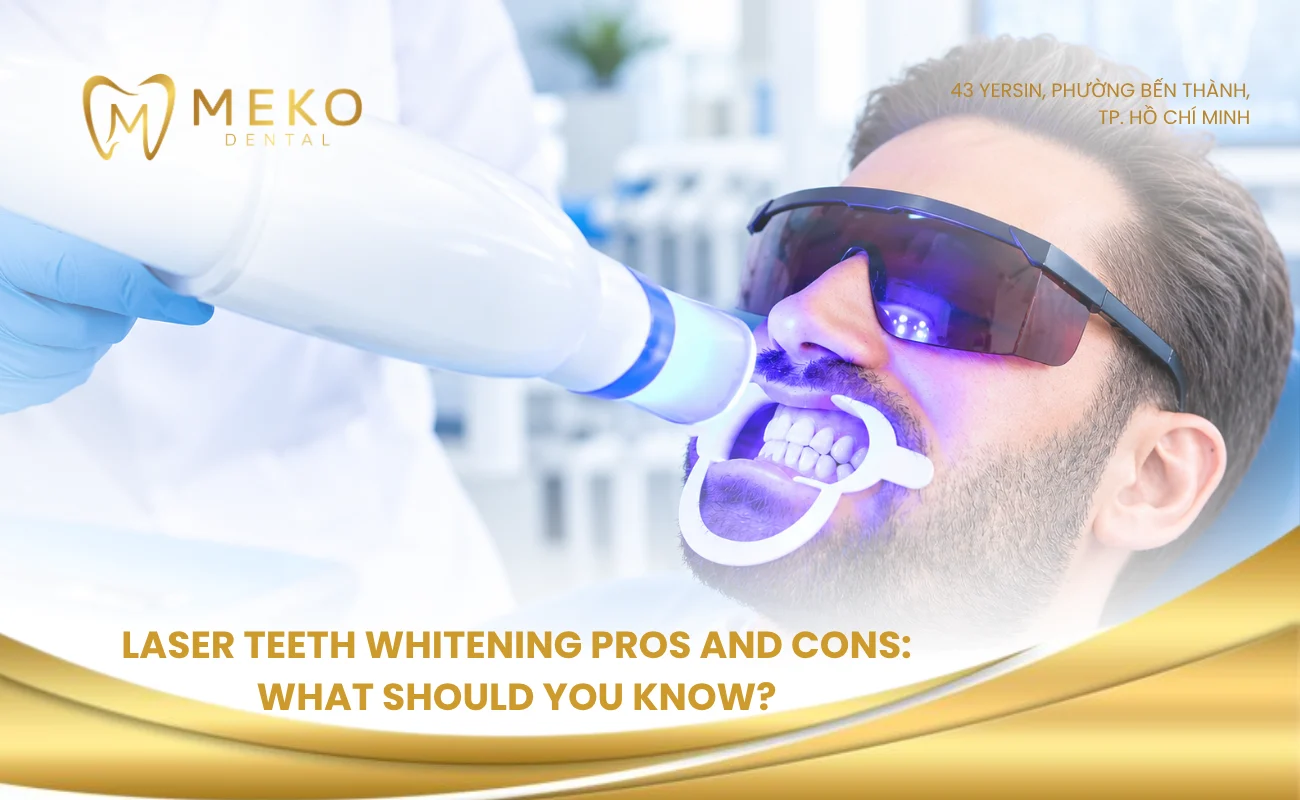
Laser teeth whitening pros and cons come down to a trade off between speed and sensitivity. Teeth can lighten by several shades in one supervised visit, but some patients notice short term sensitivity in the days afterward. Anyone weighing the pros and cons of laser teeth whitening should review both sides before booking a session with a dentist.
1. Laser teeth whitening pros and cons overview
Laser whitening delivers fast, dentist supervised results with a lower risk of blotchy staining. Its main downside is temporary sensitivity, which affects some patients more than others depending on enamel thickness and existing dental history. The table below breaks down the laser teeth whitening pros and cons that come up most often in consultations.
| Aspect | Pros | Cons |
| Speed | Results visible the same day, often within an hour | Requires a scheduled clinic appointment |
| Whitening power | A noticeably lighter smile by the end of the visit | Deep set stains may only partly fade |
| Comfort | A barrier keeps soft tissue covered during application | Mild discomfort may follow soon after |
| Supervision | A trained provider oversees each stage | Not something patients can safely do alone |
| Longevity | Results can last several months to around two years with care | Touch up sessions are usually needed over time |
Each row in this table is worth unpacking on its own. The details behind each point often matter more than the headline claim.
2. The pros of laser teeth whitening
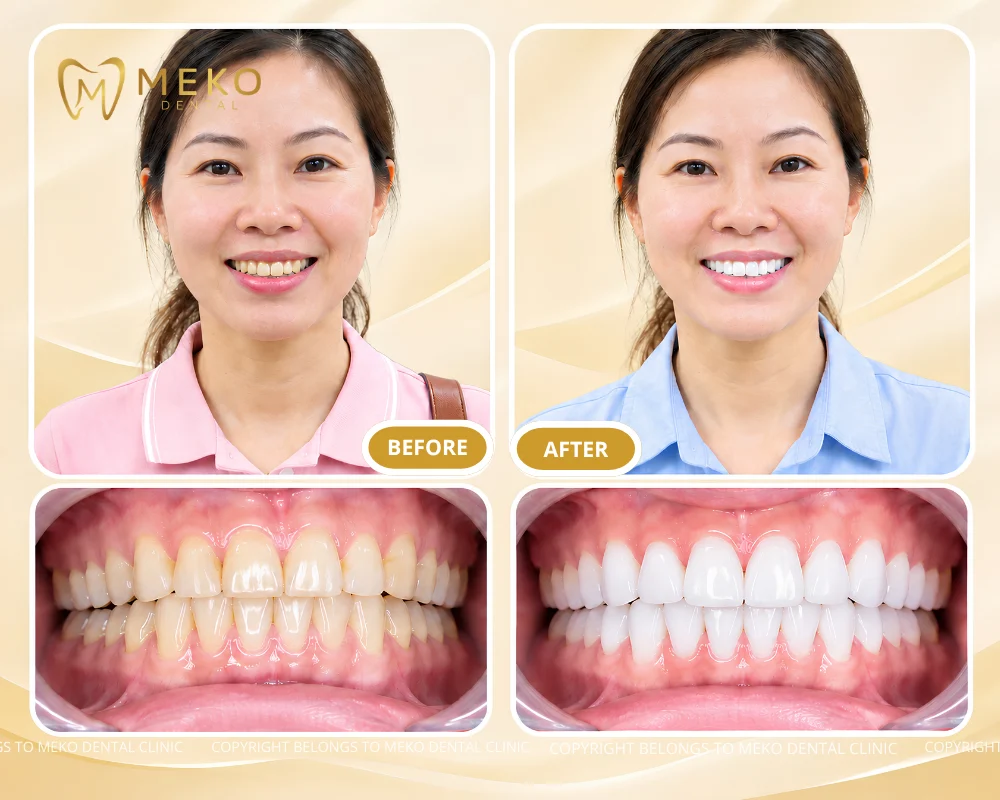
Patients usually leave the clinic with visibly brighter teeth after a single appointment, something at-home teeth whitening kits rarely achieve on the same day. Three factors drive most of the enthusiasm dentists and patients express when they compare laser teeth whitening pros and cons. Those factors are speed, precision, and supervision.
2.1 Fast, visible results
In-office teeth whitening can brighten teeth by three to eight shades after roughly 30 to 60 minutes of active treatment. Strips and trays, by comparison, usually take days or weeks of repeated use to approach a similar shade change, so the appeal of a single visit is easy to understand.
2.2 Even, targeted whitening
A dentist can direct the gel and light toward the teeth with the heaviest staining while keeping exposure to gum tissue to a minimum. Take home trays, on the other hand, do not always fit every tooth with the same precision. That mismatch is a common cause of the blotchy or uneven results some patients report with self administered kits.
2.3 Dentist supervision from start to finish
A trained professional checks the health of the teeth and gums before starting, then adjusts the treatment if any discomfort comes up during the session. That kind of real time oversight is something at-home teeth whitening products simply cannot replicate, no matter how carefully the instructions are followed.
2.4 Results that last
Brightness from laser whitening can hold for several months and, with consistent oral hygiene, sometimes close to two years. How long it lasts depends heavily on diet and habits such as smoking or drinking coffee, tea, or red wine. All of these reintroduce the same staining compounds the treatment just removed.
3. The disadvantages of laser teeth whitening
Three drawbacks tend to surface once patients move past the initial appeal of fast results. Looking closely at laser teeth whitening pros and cons means giving these drawbacks equal weight. None of them are dealbreakers on their own, but together they explain why laser whitening is not automatically the right choice for every patient.
3.1 Temporary sensitivity
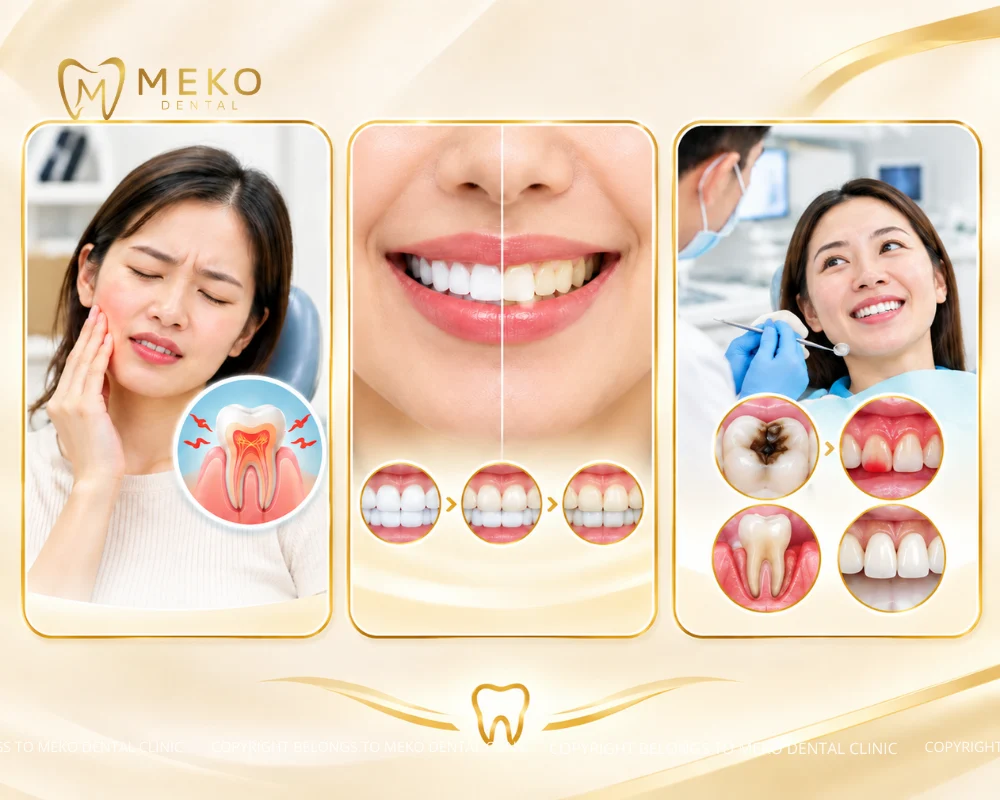
Peroxide based whitening is generally considered safe and effective, yet it temporarily raises tooth sensitivity in an estimated 43% to 80% of patients. This usually settles on its own within a short window after treatment.
3.2 Not permanent
A brighter shade fades gradually as new staining builds up. Touch up visits are common for anyone who wants to hold onto the result.
3.3 Limited candidacy
Untreated cavities, active gum disease, exposed roots, or crowns and veneers on front teeth can rule the treatment out, at least until those issues are addressed first. Restorations simply do not respond to bleaching gel the way natural enamel does.
A dentist can flag most of these issues during a routine exam, well before a whitening session is ever scheduled. This is one reason a proper consultation matters more than skipping straight to treatment.
4. Laser teeth whitening compared with other whitening methods
Placed next to take home trays and over the counter products, the pros and cons of laser whitening teeth look a little different. Each method trades speed for a different kind of convenience. The comparison below lines up the three most common approaches side by side.
| Method | Typical time frame | Supervision | Best suited for |
| Laser (in office) | Results the same day | Dentist supervised | One sitting, a clearly lighter result |
| Custom take home trays | 1 to 2 weeks | Prescribed by a dentist | Steady whitening under dentist guidance |
| Whitening strips or gels | 2 to 4 weeks or longer | Self applied, no supervision | Mild staining, minimal chair time |
Dentists can also provide custom fitted trays with gel containing 10% to 16% carbamide peroxide for patients who prefer a gradual approach at home. Over the counter strips, gels, toothpastes, and rinses sit at the other end of the spectrum. Their effectiveness varies more widely since there is no professional adjusting the fit or monitoring the process.
5. Weighing laser teeth whitening pros and cons before you decide
Someone with an event coming up in a few days will naturally lean toward laser whitening simply because nothing else works as fast. A patient with only mild staining and no particular deadline might get just as much value from a slower method. The end result over several weeks can look fairly similar.
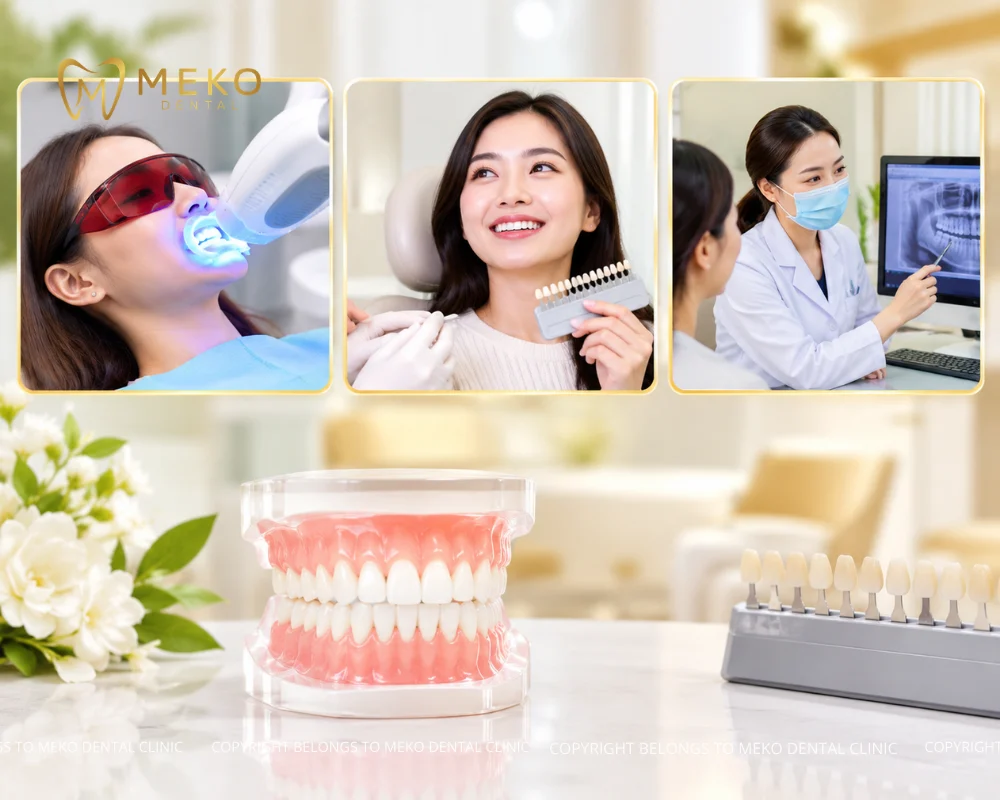
What tends to settle the decision is not the treatment itself but how a person’s teeth respond to it. A quick consultation, where a dentist checks enamel condition and asks about past sensitivity, usually gives a clearer answer than reading comparisons online.
6. Who should think twice about laser whitening
Not every patient is a good fit, and knowing the laser teeth whitening pros and cons ahead of time helps avoid a wasted appointment. A dental exam remains the most reliable way to confirm candidacy, since it accounts for both current oral health and personal sensitivity history.
- Unresolved decay or ongoing gum inflammation
- Individuals with significant tooth sensitivity or exposed tooth roots
- Expecting or nursing, out of caution
- Patients with crowns, veneers, or fillings on front teeth, since these restorations will not lighten along with natural enamel
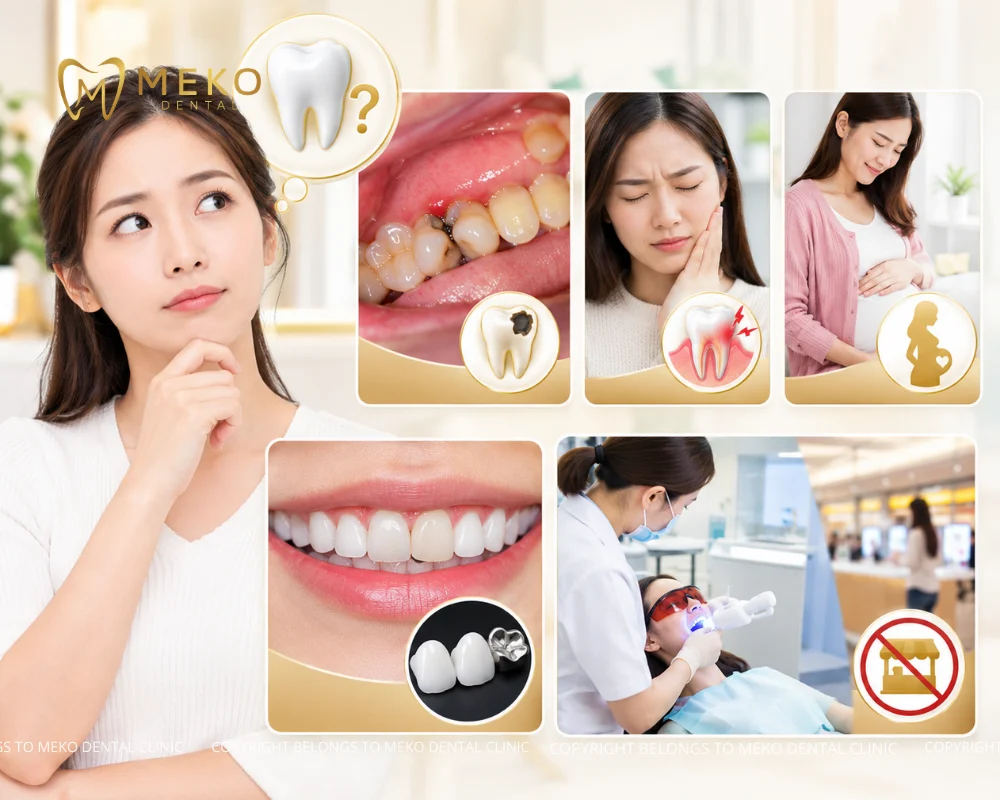
It is also worth noting where the treatment is performed. Laser whitening offered outside a licensed dental clinic, such as at mall kiosks, skips the same assessment of teeth and gums that a dentist provides. That gap in oversight is exactly the kind of risk a proper clinic setting is designed to avoid.
7. Frequently asked questions
Does laser whitening damage tooth enamel?
Whitening with peroxide based gels is generally considered safe when supervised by a dentist. Some studies note temporary microscopic changes to the enamel surface, though these typically resolve without lasting harm.
Can laser whitening lighten crowns or veneers?
No. Dental restorations do not respond to bleaching gel the same way natural enamel does. Existing crowns or veneers on front teeth may end up a different shade than the rest of a patient’s smile after treatment.
How soon does tooth sensitivity go away after laser whitening?
Sensitivity from peroxide based whitening is usually short lived and fades within a few days for most patients. Anyone with a history of sensitive teeth should mention it to their dentist beforehand.
The decision ultimately rests on how much a patient values speed and dentist supervised precision. That has to be weighed against the possibility of short term sensitivity and the need for occasional touch ups. Patients who want a quick, visible change in one visit tend to be the best fit, while those with sensitive teeth or no particular urgency may prefer a gradual take home option instead.
A consultation with a qualified dentist remains the most reliable way to confirm whether laser whitening fits a patient’s oral health and expectations. Reviewing the laser teeth whitening pros and cons together with the clinical team at Meko Dental Clinic can help each patient decide before any treatment is scheduled.


 Messenger FB
 WhatsApp
 Book now