
Contents [ Hide ]
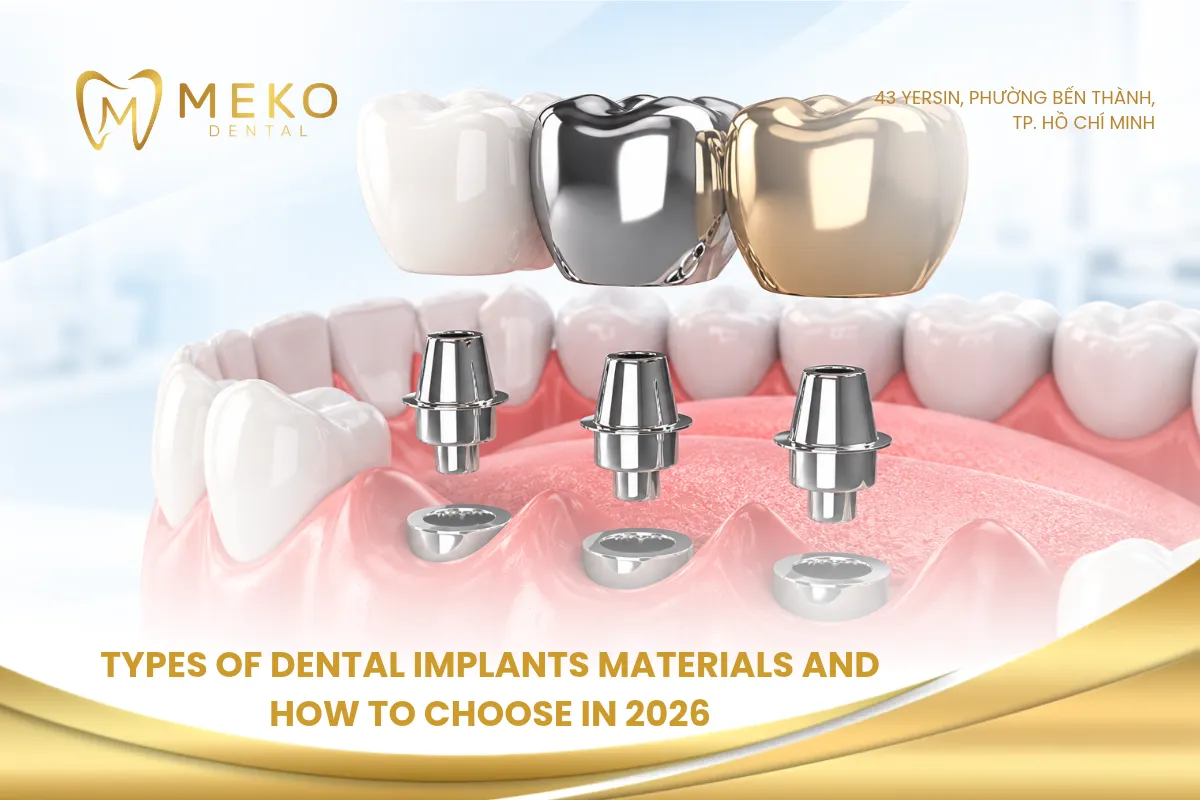
Types of dental implants materials include titanium, zirconia and titanium-zirconium alloy, and each one suits a different situation. Titanium has decades of evidence behind it, zirconia blends in with natural teeth, and titanium-zirconium is built for narrow spaces. This guide explains how they compare, based on systematic reviews and consensus reports.
1. What are the main types of dental implants materials?
The main types of dental implants materials are titanium, zirconia ceramic and titanium-zirconium alloy. Titanium has the longest track record, zirconia is tooth-colored, and titanium-zirconium is mostly used for narrow implants.
Reviews of the types of materials used for dental implants group them into metals, ceramics and polymers. Polymers are still experimental, so these three are the dental implant material types dentists use today.
1.1 Titanium and titanium alloys
Most titanium implants are made from commercially pure titanium, graded 1 to 4, with Grade 4 being the strongest. Some systems use an alloy containing aluminum and vanadium instead.
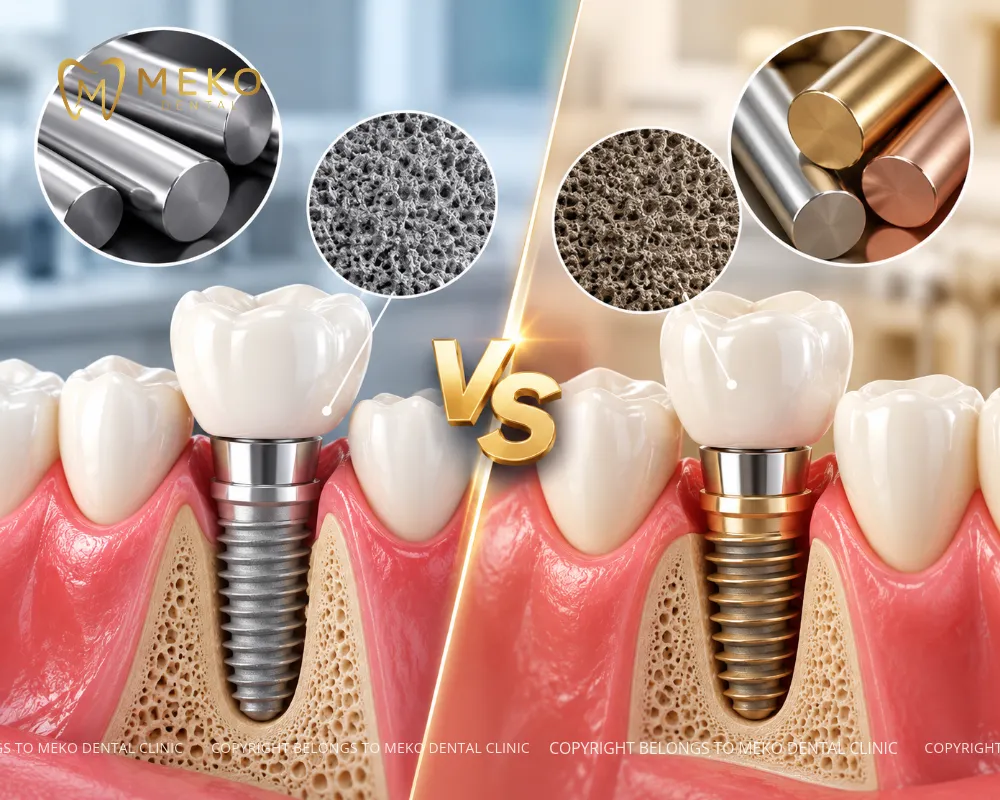
Among the types of dental implants materials, titanium has the longest clinical record. A 2026 meta-analysis of ten prospective studies found 93.0% survival after at least 20 years, and the authors rated the certainty of the evidence as moderate.
Titanium is gray, so it can show through thin gum tissue. True titanium hypersensitivity is rare, although a 2026 review noted that reliable diagnostic methods are still missing.
1.2 Zirconia ceramic implants
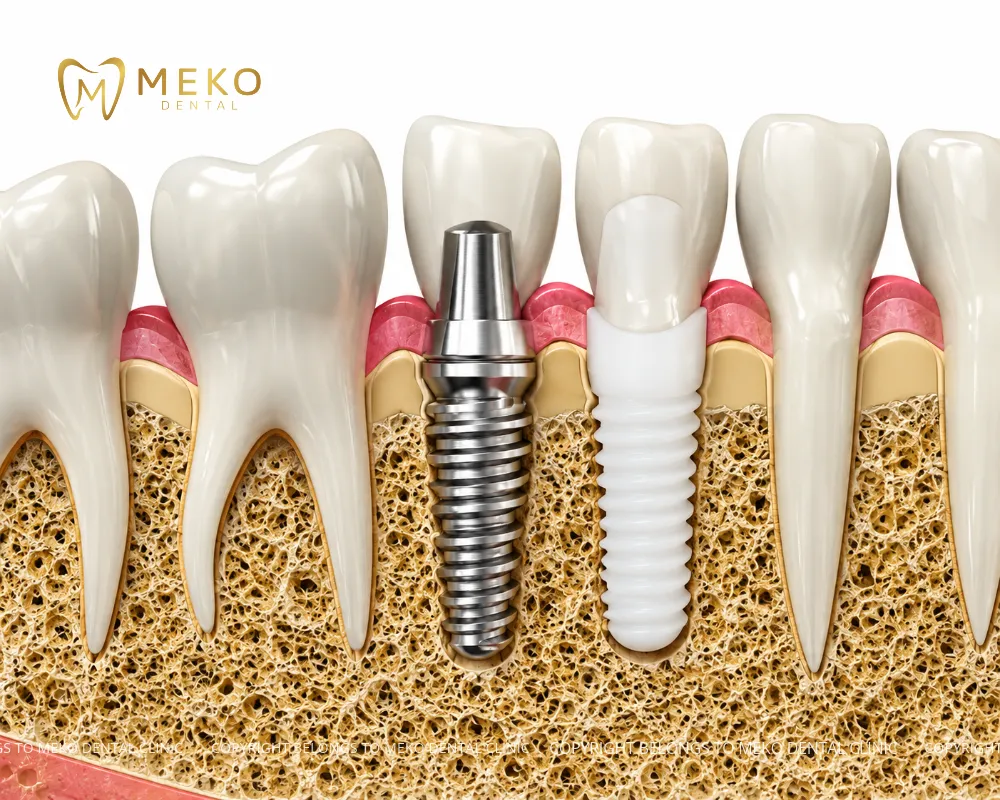
Zirconia is an oxide ceramic with a tooth-like color, available for dental implants since 2004. An international consensus found zirconia to be the only commercially available alternative to titanium. It is the one metal-free choice among the types of dental implant materials.
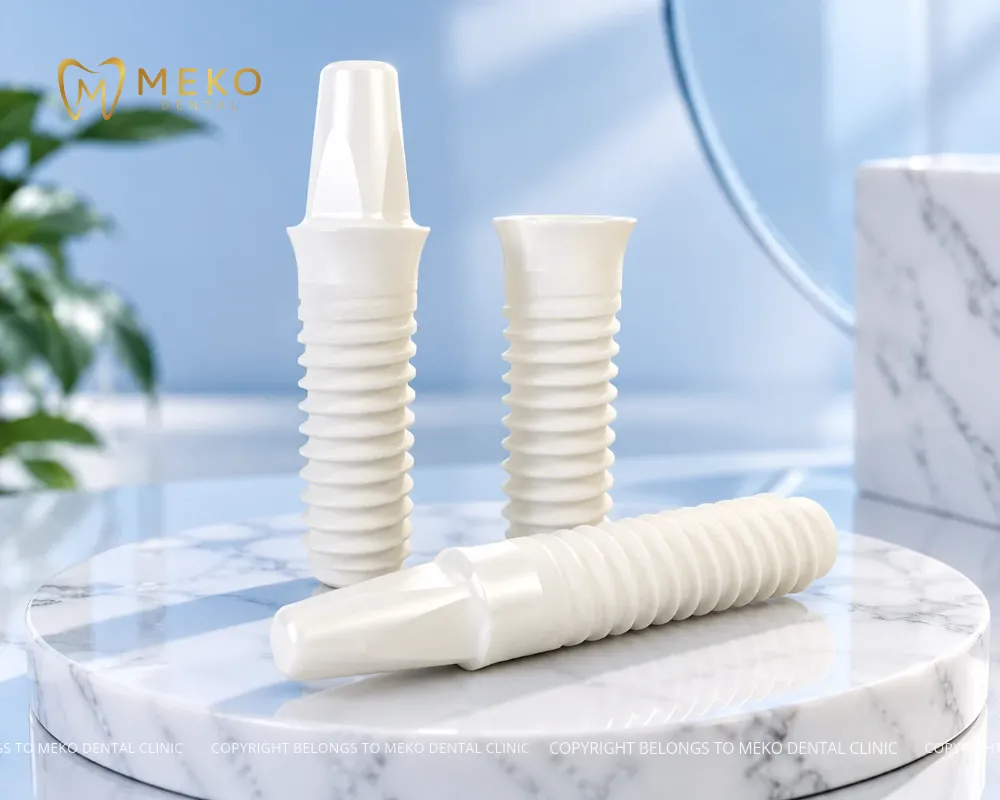
A 2023 meta-analysis of six observational studies, covering 277 implants in 221 patients, estimated 97.2% survival after five years. The authors noted the small sample and the lack of randomized trials. The consensus also pointed out that most five-year data come from one-piece implants.
1.3 Titanium-zirconium alloys
Titanium-zirconium (TiZr) is a metal alloy with about 83 to 87% titanium and 13 to 17% zirconium. It is not the same as white zirconia ceramic. The best-known version, Roxolid, contains 15% zirconium, and its manufacturer reports higher tensile strength than Grade 4 titanium.
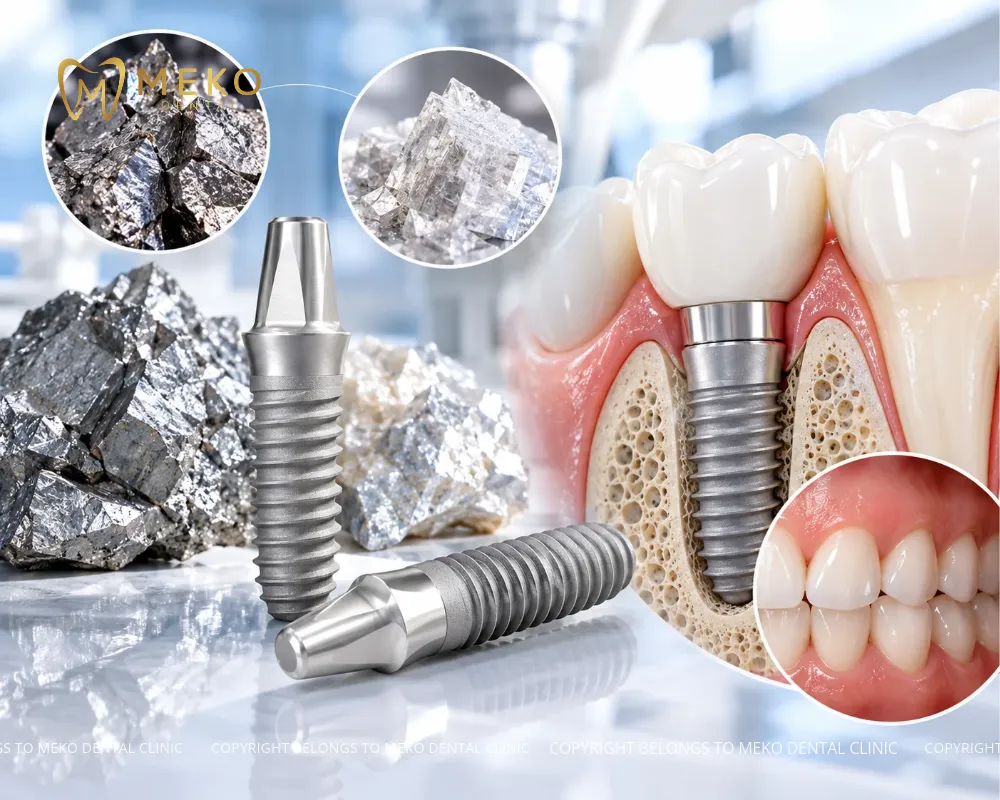
A 2025 review of 15 prospective studies on narrow implants found 99% survival for both titanium and TiZr. Mean bone loss was 0.37 mm for TiZr and 0.43 mm for titanium.
Eight of the 15 studies followed patients for only 12 months. For narrow spaces, diameter and product-specific evidence matter more than the alloy name. This holds for all types of tooth implant materials.
2. How do the main types of dental implants materials differ?
Different types of dental implant materials differ mainly in color, brittleness and depth of evidence. Titanium is gray with the longest record, zirconia is white with data mostly up to five years, and TiZr is a gray, high-strength alloy used mostly in narrow implants.
| Material | Appearance | Evidence base | Typical use |
| Titanium | Gray | 20-year prospective data | Most sites, including back teeth |
| Zirconia | White | Five-year meta-analysis, mostly one-piece | Thin gums or metal-free preference |
| TiZr alloy | Gray | Narrow-implant reviews, mostly 12-month follow-up | Narrow bone or limited space |
The table shows that the choice between types of implant materials depends more on the clinical site than on any single property. Gum thickness affects front-tooth appearance, bone width limits fixture diameter, and bite forces shape the crown design.
3. Safety and longevity across types of dental implants materials
A fixture can stay firmly in the bone while the gum and bone around it become inflamed, so survival and tissue health are different things. An international consensus found no clinical evidence that zirconia prevents peri-implantitis better than titanium.
A 2025 AO/AAP systematic review estimated that peri-implantitis affects about 21% of implant patients, with a ten-year incidence near 14%. These figures cover implant patients in general and do not point to a risk tied to specific types of dental implants materials.
Mechanical problems, such as chipped crowns, loose screws or fractured fixtures, are separate from peri-implantitis. Even when the material is suitable, the dental implant placement procedure should account for bone support and bite forces, while hygiene and grinding habits also affect long-term outcomes.
4. How to choose among types of dental implants materials
The right choice depends on gum thickness, bone width, bite forces and the planned crown. Titanium is the usual starting point, while zirconia or TiZr suits aesthetic or narrow-bone cases. These situations show how the decision changes between types of dental implants materials:
- Front teeth and thin gums: Zirconia avoids gray show-through. A five-year randomized trial found no significant aesthetic difference from titanium.
- Back teeth and heavy chewing: Titanium has the longer record under load.
- Narrow bone or tight space: Narrow titanium and TiZr implants both reached 99% survival in prospective studies.
- Suspected metal sensitivity: True titanium hypersensitivity is uncommon, so other causes should be checked before switching to a ceramic fixture.
- Budget: Compare the full quotation for each of the implant material types, not only the fixture price.
5. Do implant posts, abutments and crowns use the same materials?
No, each part can use a different material. Fixtures are usually titanium or zirconia, abutments can be metal or ceramic, and crowns often use dental ceramics, so a titanium fixture can carry a zirconia crown.
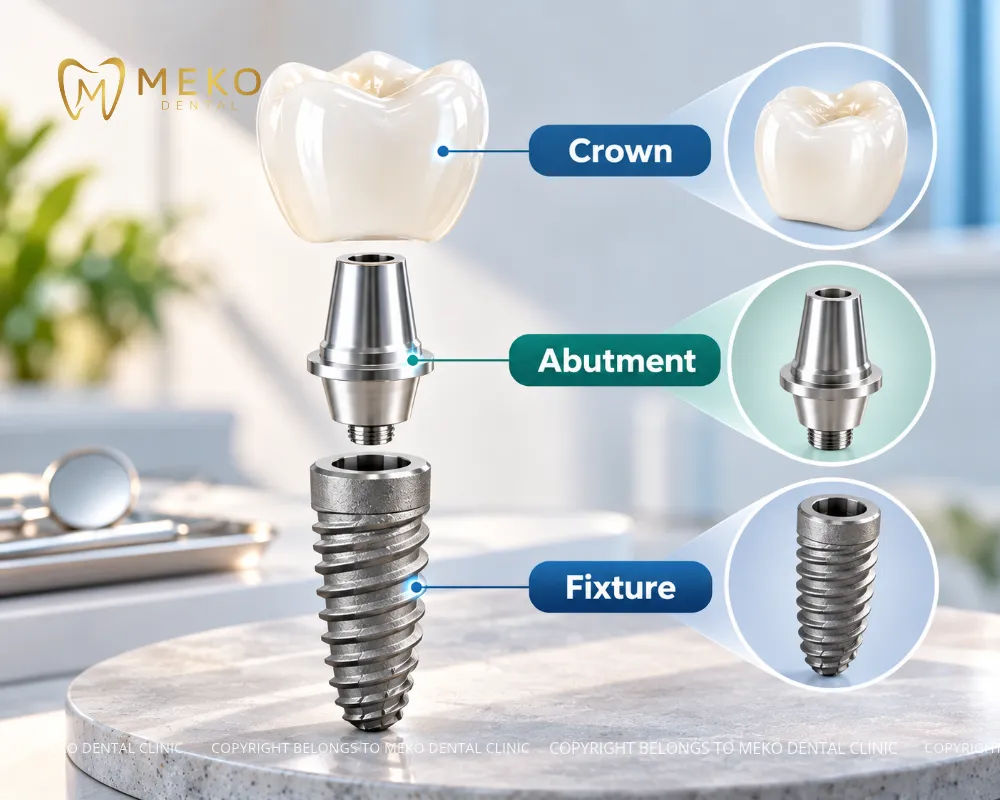
A single implant tooth has three parts: the fixture, the abutment and the crown. People who search for dental implants types of material may mean any of them, so a quotation should name the material of each part. When comparing types of dental implants materials, a white crown says nothing about what the buried post is made of.
6. Frequently asked questions
6.1 Can different dental implant materials affect MRI scans?
Yes, the material can change how clearly an MRI shows the area around the mouth. In laboratory studies of types of dental implants materials, titanium and TiZr fixtures created larger artifacts than zirconia. Patients should tell the radiology team about their implants before scanning.
6.2 Does implant surface texture affect bone integration?
Yes, surface texture influences how bone contacts a fixture. In the 2026 review of 20-year data, exploratory analysis suggested that bone loss differed by implant surface, although the evidence was limited.
6.3 Can different types of teeth implants materials be used in the same mouth?
Yes, each site is planned according to its own bone and restoration needs, so different teeth can receive different types of dental implants materials. Each fixture needs components approved for its own system, so parts cannot be swapped between brands.
6.4 Can an implant material be changed after placement?
No, once a fixture has integrated with the jawbone, its material cannot be exchanged like a crown. Switching between types of dental implants materials means removing the implant and checking the bone before a new fixture is placed.
6.5 Do titanium and zirconia implants need different cleaning routines?
No, titanium and zirconia implants need the same daily care. Brushing, interdental cleaning and regular checkups apply to both, because no clinical evidence shows that zirconia prevents peri-implantitis better than titanium.
Among the main types of dental implants materials, titanium remains the default choice, zirconia offers a tooth-colored option, and TiZr suits selected narrow-diameter cases, so the best fit depends on bone, bite forces, gum thickness and the planned crown. Meko Dental Clinic offers implant consultations through the hotline 0772 277 919 or the clinic website. This article gives general information and does not replace a dental examination.
References
- Int J Oral Maxillofac Surg, 2026. Meta-analysis of prospective studies on implant survival and bone loss after at least 20 years. https://pubmed.ncbi.nlm.nih.gov/42173763/
- ITI Consensus Report, Lisbon, 2023. Zirconia implants.
- Clin Oral Investig, 2023. Systematic review of zirconia implant survival at ten years.
- Peña-Cardelles JF et al., Med Oral Patol Oral Cir Bucal, 2025;30(4):e499-e511. https://pmc.ncbi.nlm.nih.gov/articles/PMC12221152/
- Osman RB, Swain MV, Materials, 2015;8(3):932-958. https://pmc.ncbi.nlm.nih.gov/articles/PMC5455450/
- Galarraga-Vinueza ME et al., J Periodontol, 2025;96:587-633 (AO/AAP peri-implantitis review).
- Ruiz Henao PA et al., Clin Oral Implants Res, 2024;35:1310-1323.
- Phantom study on MRI, CT and CBCT artifacts of titanium, zirconium and TiZr implants, 2019. https://pubmed.ncbi.nlm.nih.gov/30879914/


 Messenger FB
 WhatsApp
 Book now