


Contents [ Hide ]
Tooth loss becomes more common after 60, and losing several teeth changes both chewing ability and facial structure. Dental implants for seniors have become one of the most researched solutions for this problem, mainly because they replace both the tooth and its root.
1. What are dental implants for seniors?
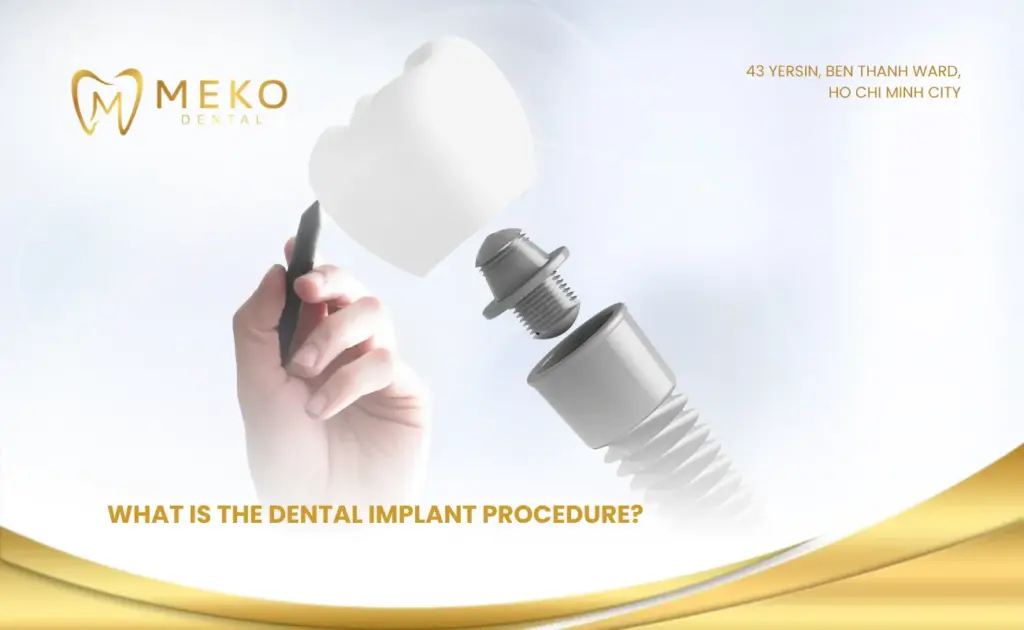
Dental implants for seniors are titanium posts placed into the jawbone to replace a missing tooth root, then topped with a crown, bridge, or denture. The titanium fuses with the surrounding bone through a process called osseointegration, which gives the restoration its long-term stability. This is the same core technology used for younger patients, but treatment planning for dental implants for elderly patients pays closer attention to bone volume and overall medical history.
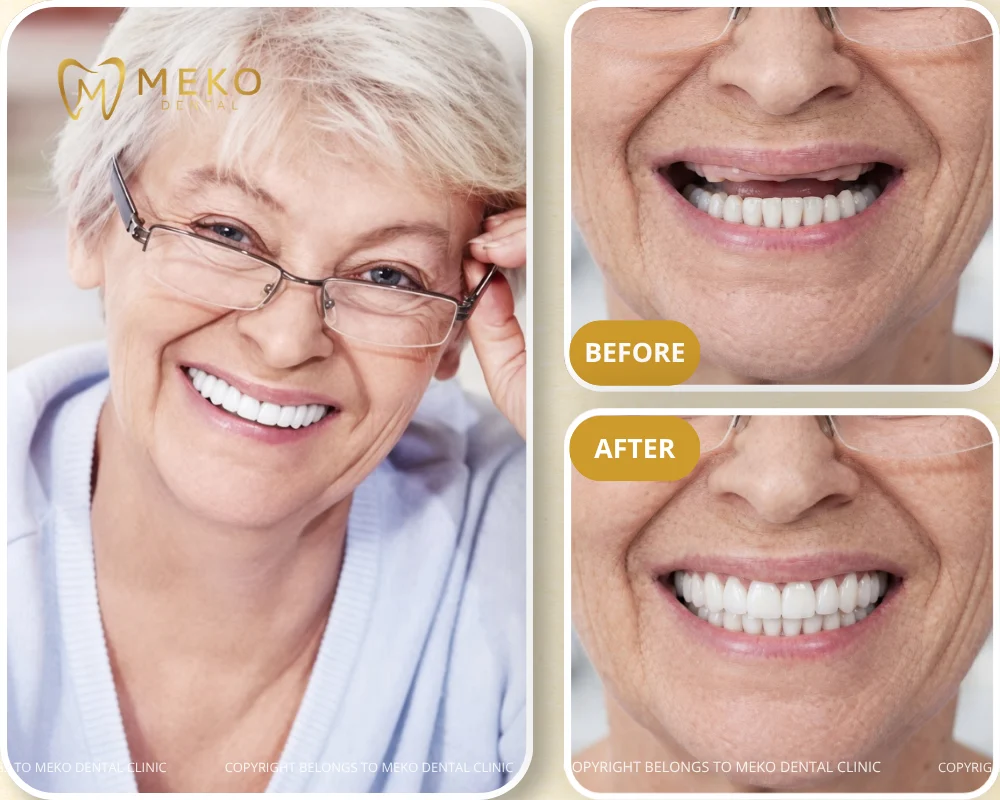
Choosing among dental implants for seniors starts with understanding the available formats. Most dental implant options for seniors fall into three categories. Dentists select among them based on how many teeth are missing and how much bone remains.
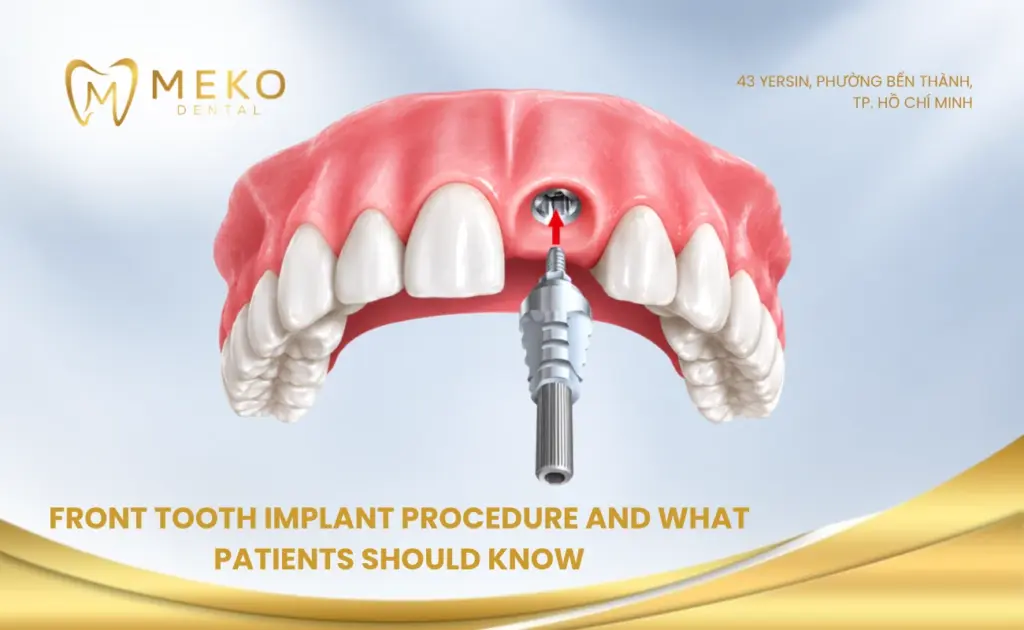
- Single dental implant for seniors, which replaces one missing tooth
- Implant-supported bridge, which replaces several teeth in a row using two or more implants as anchors
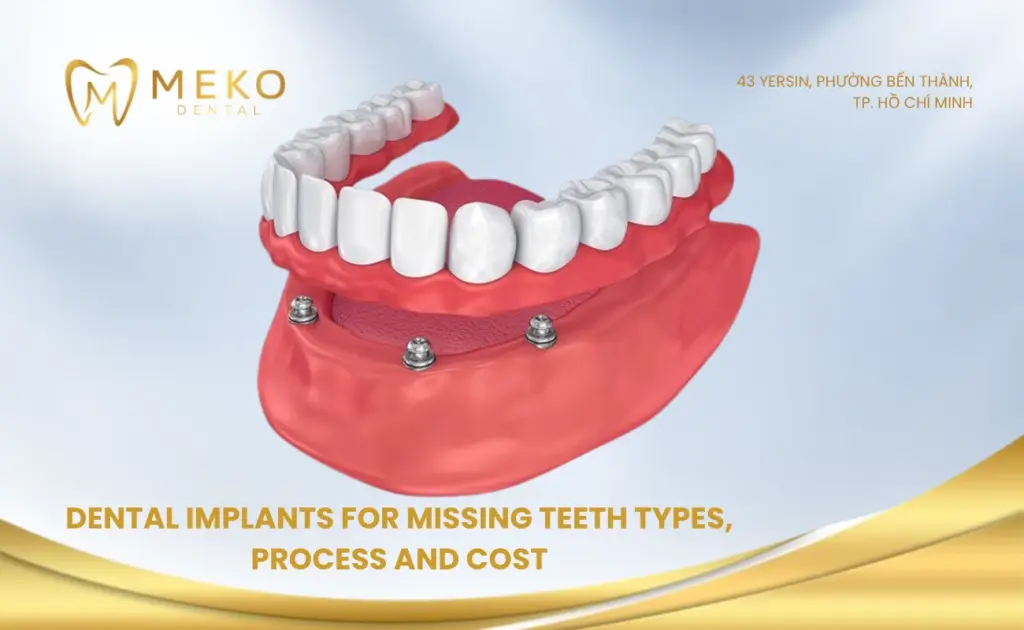
- Implant-retained overdenture, which snaps onto a small number of implants while remaining removable for cleaning
2. Are dental implants safe for seniors?
Yes, dental implants are safe for seniors when the patient is in reasonably stable health and has enough bone to support the implant. The same holds true for dental implants for older people in general, not only a narrow subgroup, since age by itself is not the deciding factor.
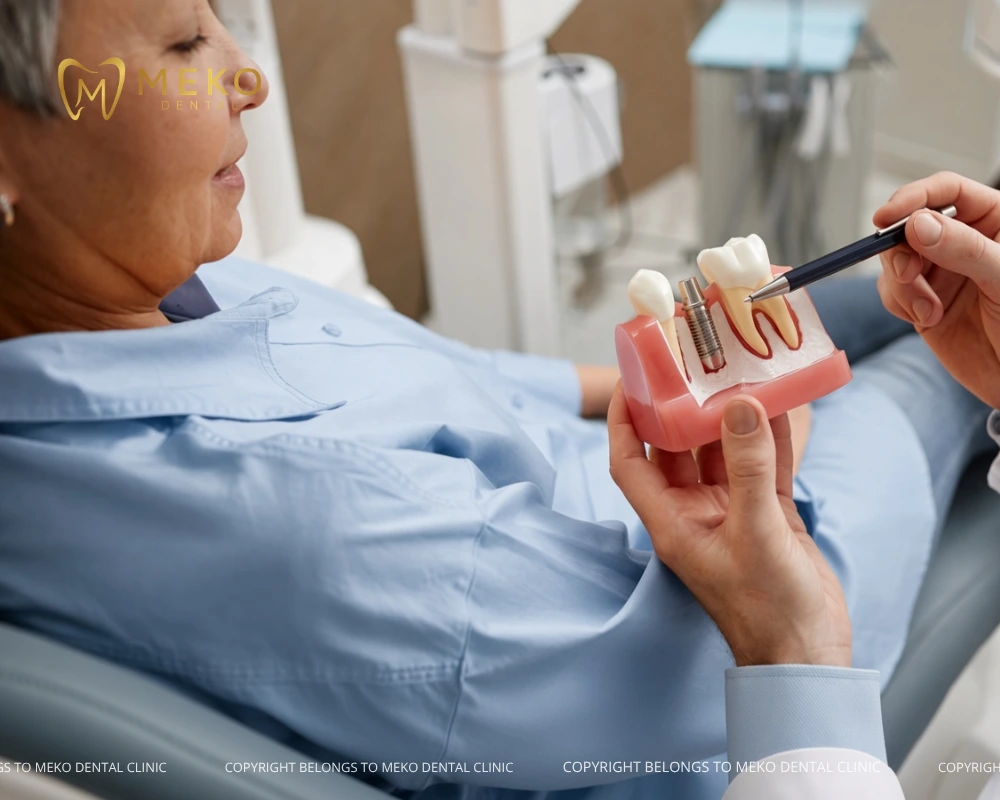
Large studies tracking dental implants for seniors over 65 report survival rates broadly in line with younger patients:
- Patients aged 66 to 80 show slightly higher early failure, mainly linked to lower bone density and slower healing.
- Patients over 65 show no statistically significant difference in overall survival compared with older cohorts.
Overall physical condition and the density of the jawbone carry far more weight in determining outcomes than a patient’s actual age. Complication rates for dental implants in the elderly also stay low when treatment is properly planned.
3. Dental implants for seniors with common health conditions
Dental implants for seniors are generally safe even alongside common health conditions, though each one calls for extra planning. Osteoporosis, diabetes, and blood thinner use are the three factors dentists review most carefully before treatment.
| Condition | What it means for implant treatment |
| Osteoporosis | Many patients still qualify, though bisphosphonate medication history needs review since it affects bone remodeling |
| Type 2 diabetes | Implants can succeed when blood sugar is well controlled; poor control slows healing and raises infection risk |
| Blood thinners | Surgery is usually still possible, coordinated with the prescribing physician rather than stopping medication alone |
| Low bone density | A bone graft or a shorter, wider implant design can often compensate for reduced jaw volume |
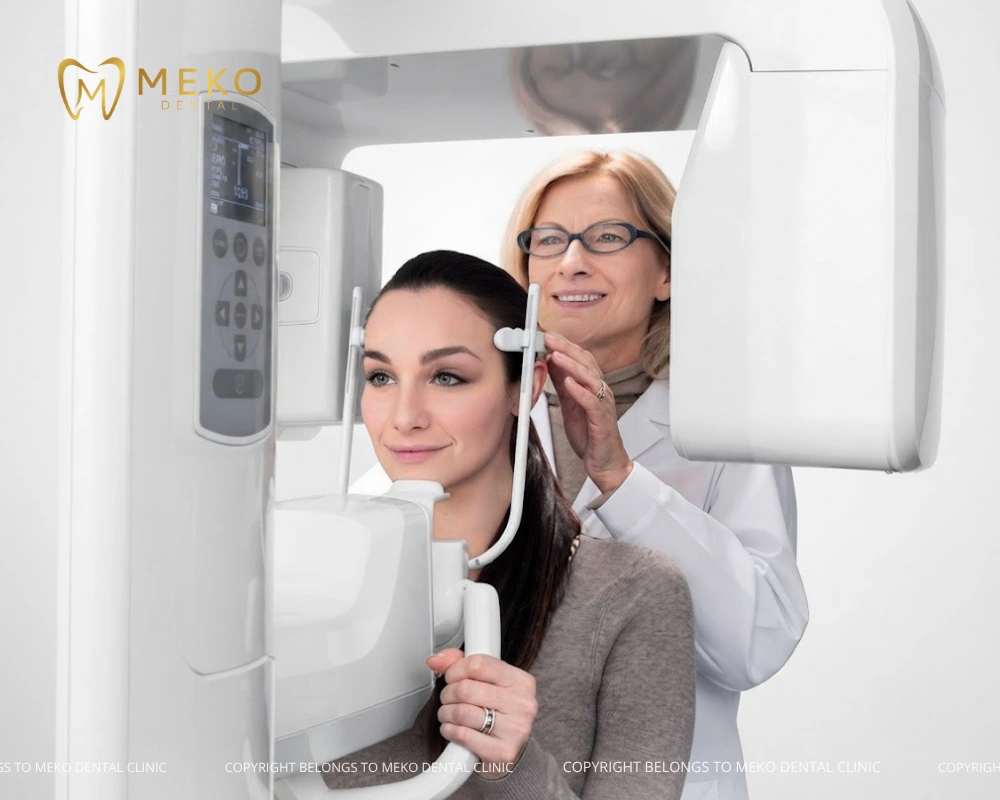
A CBCT scan is the most reliable way to confirm whether a senior patient has enough bone before implant placement, since it measures bone height and width precisely. This step is one reason planning for dental implants for seniors often takes a bit longer than for younger patients with denser bone.
Elderly dental implants placed alongside these conditions still succeed at high rates once the surgical plan is adjusted accordingly. This makes dental implants for elderly people with chronic conditions predictable rather than risky.
4. Dentures or implants for seniors, which option lasts longer?
Implants generally outlast dentures because they preserve the jawbone, while dentures do not. Traditional dentures rest on the gum and can slip while eating or speaking, and they typically need relining every few years as the jaw continues to shrink.
The table below compares the practical differences that matter most when weighing dentures or implants for seniors, since cost is only one part of the decision.
| Factor | Dental implants for seniors | Traditional dentures |
| Bone preservation | Stimulates the jaw, slows further bone loss | Bone loss keeps progressing regardless |
| Chewing strength | Close to natural teeth | Weaker bite, especially on hard foods |
| Daily care | Brushing and flossing like natural teeth | Cared for just like real teeth |
| Stability | Fixed in place, no slipping | Can shift or loosen over time |
| Upfront cost | Higher initial investment | Lower initial cost |
| Long-term cost | Fewer replacements needed over decades | Lasts longer with fewer replacements |
Denture implants for seniors, meaning an overdenture anchored on a small number of implants, offer a middle ground between the two options. They cost less than a full set of individual implants while still holding the denture firmly in place, which many patients find far more comfortable.
5. Best dental implants for seniors with significant bone loss
Seniors with significant bone loss are usually good candidates for the all-on-4 technique or a bone graft combined with standard implants. Both routes are proven options, but they fit different situations.
5.1 All-on-4 for seniors with significant bone loss
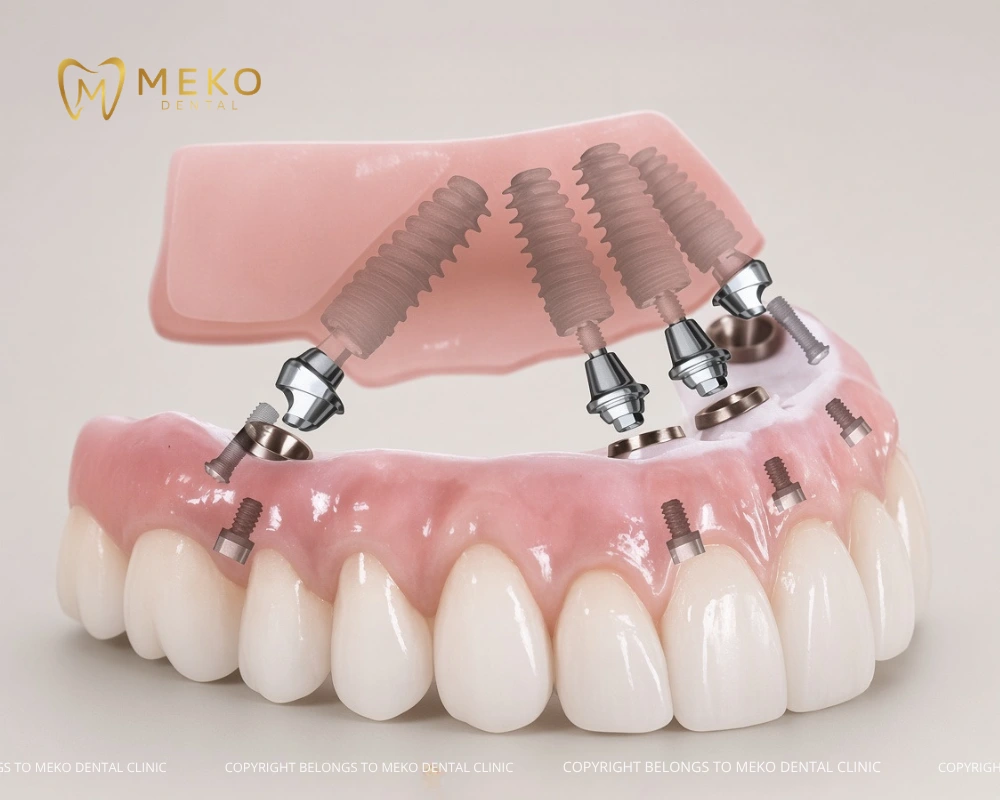
All-on-4 uses four strategically angled implants to support a full arch of teeth, and it often avoids the need for bone grafting, which shortens overall treatment time. It is frequently cited among the best dental implants for seniors who have worn dentures for years and lost substantial bone volume as a result. For many clinicians, this also makes it one of the best implants for seniors facing advanced bone loss specifically.
5.2 Bone grafting as an alternative
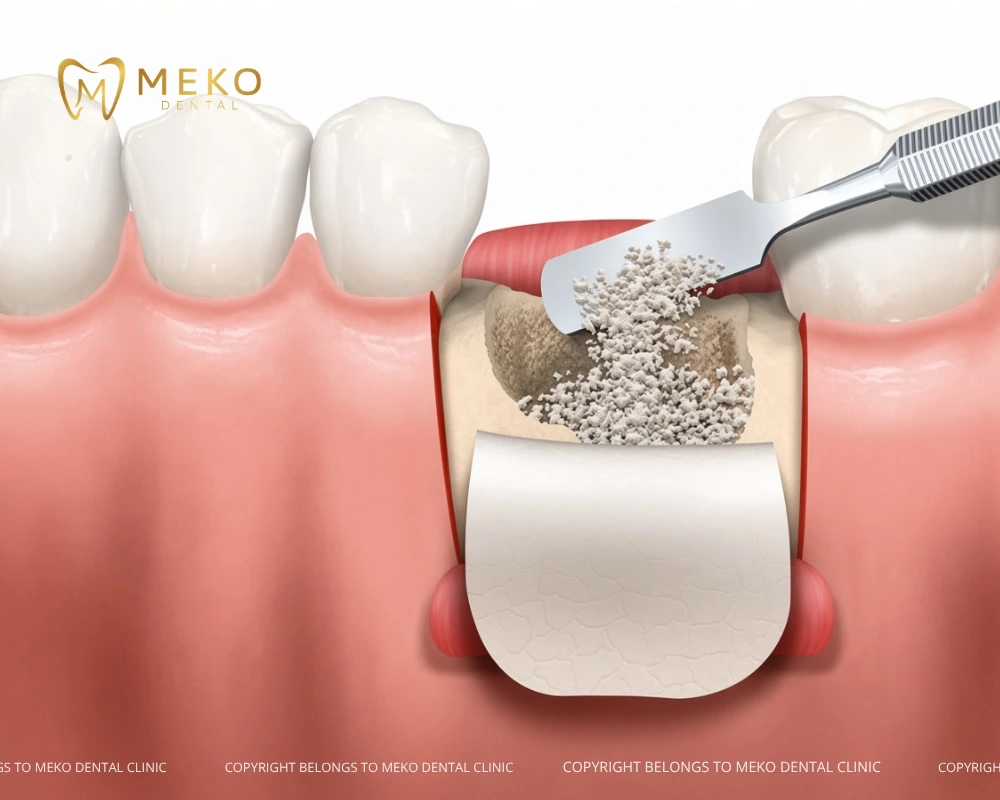
Bone grafting remains a solid alternative when a patient prefers standard implants rather than a full-arch solution. The graft material integrates with the existing bone over roughly three to six months, after which the implant can be placed with adequate support.
6. The dental implant procedure for older adults
Treatment involving dental implants in elderly patients typically unfolds over several visits rather than a single appointment. This process is broadly the same for dental implants for older adults regardless of clinic location. The stages listed below give a general picture of the journey most patients go through.
6.1 The treatment timeline
- Initial consultation and CBCT scan to assess bone volume and plan implant position
- Checking medical history, medications, and chronic conditions
- Placing the implant, typically under local anesthesia
- Healing period of roughly three to six months while osseointegration takes place
- Attachment of the abutment and the final crown, bridge, or denture
6.2 Recovery for older patients
Recovery after implant surgery in older patients is usually manageable with over-the-counter pain relief and a short period of soft foods. Most seniors return to normal daily activities within a few days, though full bone integration still takes months to complete.
7. How to choose the right dentist for implants for elderly patients
Choosing a dentist for dental implants for seniors means checking training, imaging technology, and how the practice handles medically complex cases. Below is a rundown of the key points worth verifying.
- Confirm the dentist has specific training and real case volume in implant dentistry, not just general dentistry
- Ask whether the clinic uses CBCT imaging for treatment planning
- Ask for a documented treatment proposal that breaks down every cost before agreeing to proceed
- Check whether the clinic coordinates with a patient’s physician for complex medical histories
- Ask about the warranty or guarantee offered on completed implant work
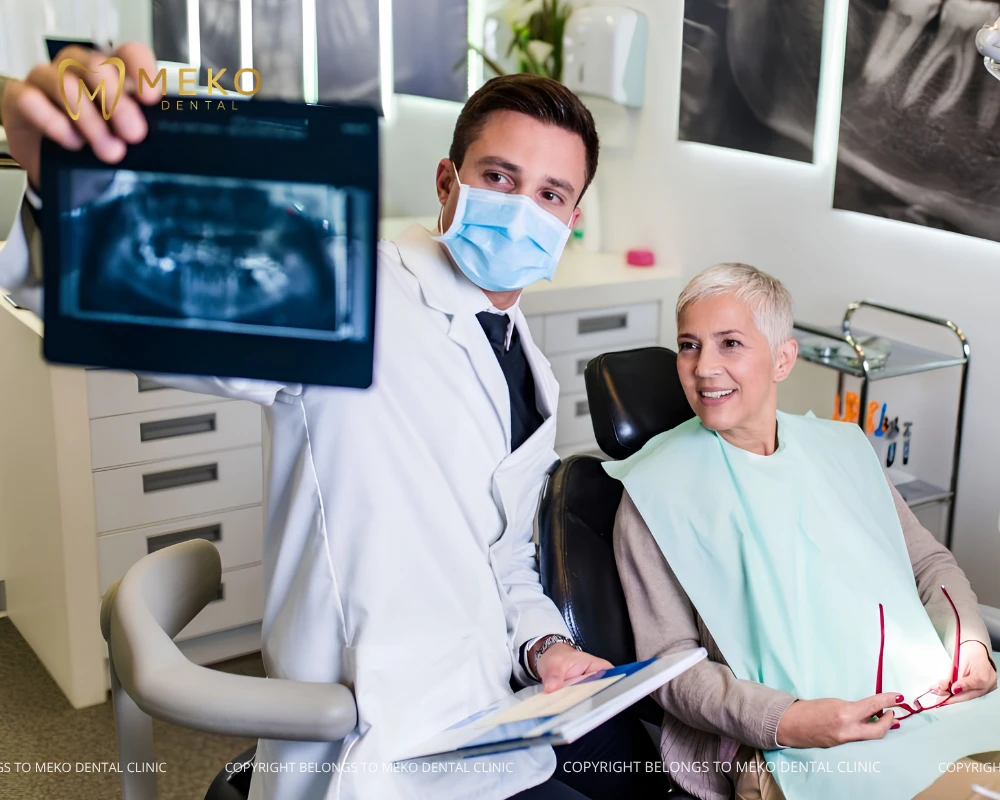
Meko Dental places strong emphasis on diagnostic imaging and a documented treatment plan for every patient considering dental implants for seniors. This lets families review the proposed steps and costs together before surgery begins.
8. Frequently asked questions
Can seniors get dental implants after age 70 or 80?
Yes, there is no upper age limit for dental implants. Candidacy depends on bone quality and general health rather than age, and successful placements are well documented into a patient’s eighties.
Are dental implants safe for the elderly with osteoporosis?
Dental implants can be safe for the elderly with osteoporosis, provided the dentist reviews any bisphosphonate medication history first. Adequate bone density is then confirmed through CBCT imaging before treatment is planned.
Is it too late to get teeth implants for seniors who have worn dentures for years?
It is rarely too late to consider teeth implants for seniors, even after years of denture wear. Long-term denture use often means more bone loss, which may simply call for a bone graft or the all-on-4 approach first.
Do dental implants for seniors require special aftercare?
Dental implants for seniors need the same daily brushing, flossing, and routine dental visits as natural teeth. Extra attention to grinding habits or medication-related dry mouth is also worthwhile, since both can affect long-term stability.
9. Conclusion
Few patients are turned away from treatment simply because of their age. What matters most is bone quality, overall health, and working with a dental team experienced in treating older patients. Because they are designed as a permanent solution, permanent dental implants for seniors typically remain functional for decades with proper care.
For seniors weighing dentures or implants, a proper evaluation, including imaging and a full medical review, remains the clearest way to find the option that fits both budget and long-term oral health. Overall, dental implants for the elderly remain one of the most predictable long-term solutions available today, provided candidacy is confirmed first. Meko Dental offers consultations that walk older patients through every step, from the first scan to the final restoration.
Reference
- Impact of Age-Related Bone Density Variations on Dental Implant Stability and Success Rates: A Retrospective Analysis, PubMed https://pubmed.ncbi.nlm.nih.gov/41110400/
- Implant Survival in Patient Populations With a Mean Age of 65 to 75 Years Compared to Older Cohorts: A Systematic Review and Meta-Analysis, PMC https://www.ncbi.nlm.nih.gov/pmc/articles/PMC12423580/
- Influence of Bone Density on Implant Stability Parameters and Implant Success: A Retrospective Clinical Study, PMC https://www.ncbi.nlm.nih.gov/pmc/articles/PMC2614413/
Disclaimer: This content is for general informational purposes only and does not replace professional dental advice, diagnosis, or treatment from Meko Dental Clinic. Every patient’s bone condition, medical history, and treatment needs are different. Anyone considering dental implants for seniors should consult a licensed dentist at Meko Dental for an individual evaluation, including diagnostic imaging, before making treatment decisions.


 Messenger FB
 WhatsApp
 Book now