

Contents [ Hide ]
Does Zoom teeth whitening hurt? For most people it causes brief sensitivity rather than lasting pain. This guide answers the question “does Zoom teeth whitening hurt?” It explains what patients actually feel during treatment and why teeth hurt after Zoom whitening. It also covers who is more likely to feel it and what helps.
Key takeaways
- Does Zoom teeth whitening hurt? Usually only a little: mild to moderate sensitivity that fades within 24 to 48 hours.
- The peroxide gel, not the lamp, is the main reason Zoom whitening can hurt.
- Sensitive teeth can still be treated with an adjusted plan.
- Pain lasting more than three days is not normal and should be checked.
1. [The short answer] Does Zoom teeth whitening hurt?
Usually it causes short-lived sensitivity, not lasting pain. For most patients it is mild to moderate and fades within 24 to 48 hours. Some people feel nothing at all, while others get sharp twinges in a few teeth. The experience depends on enamel, gum health and how the session is run.
Tooth sensitivity is the most common side effect of in-office bleaching, so it is better to expect it than to be caught off guard. The table shows how the experience typically unfolds.
| When | What it feels like | How long |
| During the lamp cycles | Tingling, warmth, a quick twinge | Seconds at a time |
| First 24 hours | Cold air and drinks sting, with the odd “zinger” | Peaks within the first day |
| Day two | Sensitivity fades | 24 to 48 hours in total |
2. Does Zoom teeth whitening hurt during the session or only afterwards?
Both, in different ways. During the session patients may feel a quick twinge, warmth or tingling that comes and goes with each lamp cycle. Afterwards the feeling shifts to sensitivity to cold air and drinks, usually strongest over the first day.
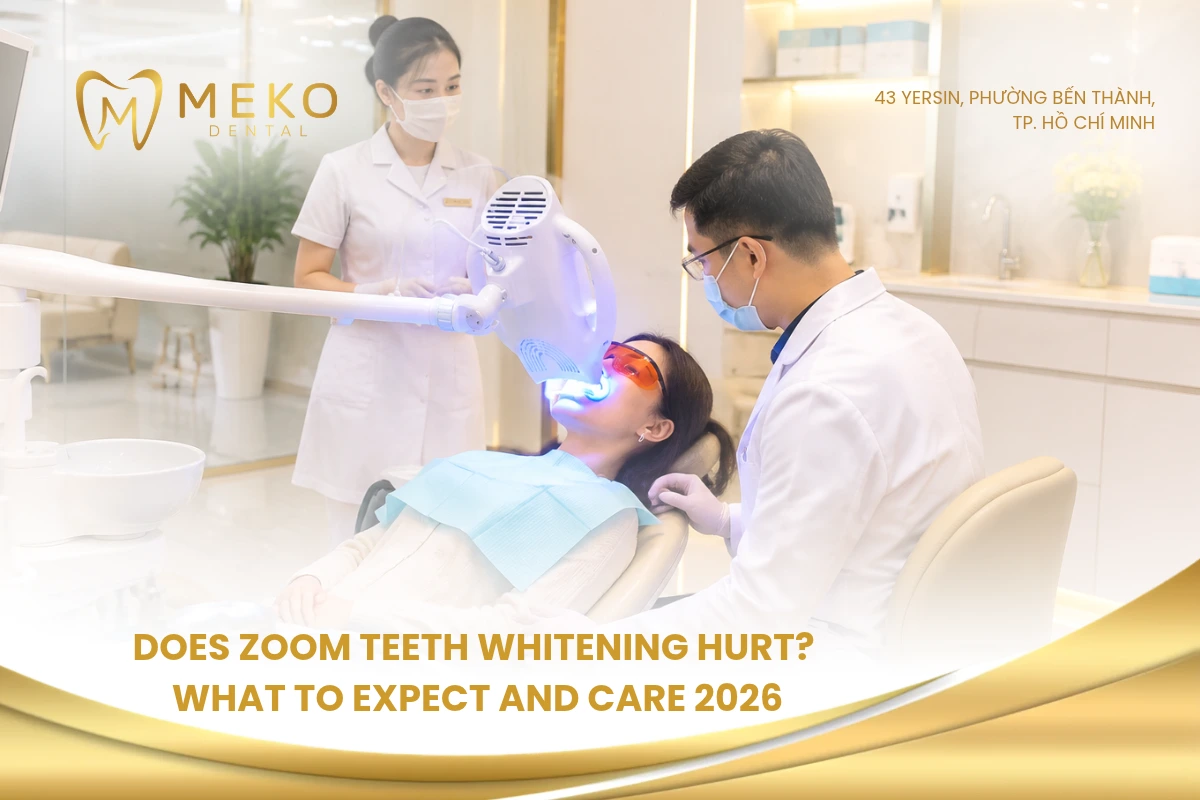
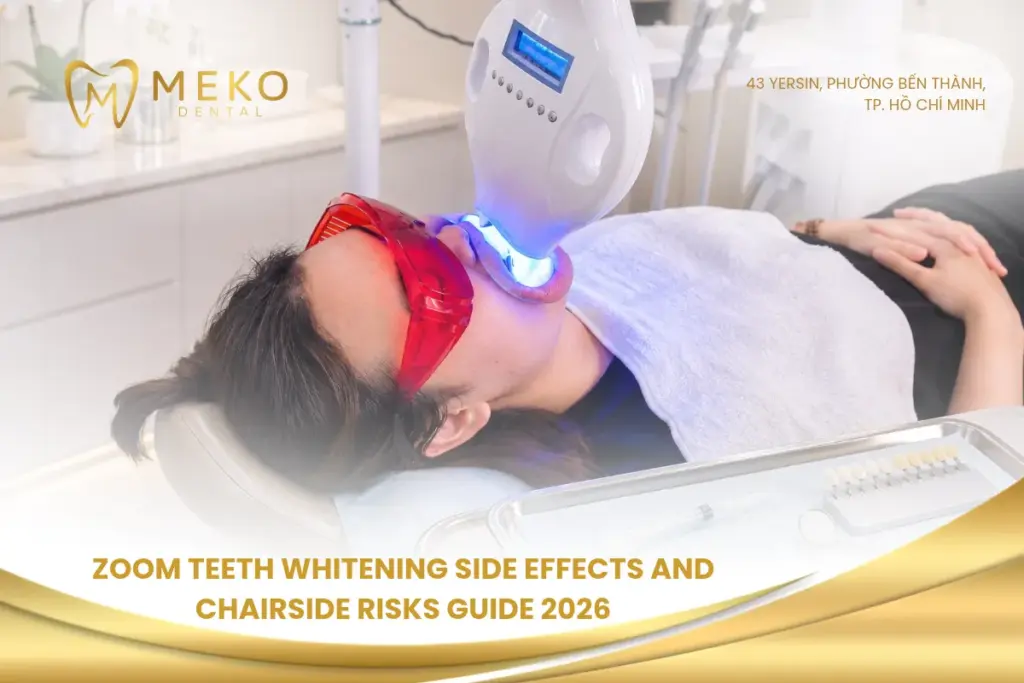
A typical session involves about 45 minutes of treatment, split into three 15-minute lamp cycles. Lips and gums are covered first, and the dentist checks how the teeth feel between cycles. Exact timings can vary with the product version and the dentist’s protocol.
Most patients describe a brief, electric twinge in one tooth, while others feel a dull ache across several teeth that fades within hours. Gums can tingle where gel touches them, and the jaw may feel tired from keeping the mouth open.
3. Why does Zoom teeth whitening hurt?
Zoom whitening hurts mainly because of its hydrogen peroxide gel (25% in Zoom WhiteSpeed). Its small molecules pass through enamel and dentin and can irritate the nerve tissue inside the tooth, which causes the sharp twinges patients describe. Freshly bleached teeth also stay more reactive to temperature and air for about a day.
Gel strength matters most: higher peroxide concentrations tend to cause more sensitivity. The lamp appears to play a smaller role, though its intensity can still be turned down for sensitive patients.
4. Does Zoom teeth whitening hurt more than at-home trays?
Yes, it tends to feel stronger in the chair. The gel is more concentrated and the whole treatment happens in one visit, so twinges are usually sharper and more sudden.
Home trays are slower and gentler, and a day can be skipped if the teeth feel sore. Neither route is painful for everyone, and many people feel very little with either.
| Factor | Zoom in-office | At-home trays |
| Gel | 25% hydrogen peroxide | Carbamide peroxide, often 10% to 16% |
| Time | About 45 minutes of treatment in one visit | A few days of shorter, repeated wear |
| How it tends to feel | Sharper and more sudden | Milder and more gradual |
| Control once started | A cycle can be paused or shortened | Days can be skipped |
| Speed of result | Noticeable change in one visit | Whitening builds up slowly with repeated use |
Patients whose teeth are already sensitive often start with trays, since the pace is gentler. The dentist can advise which route suits each patient.
5. Does Zoom teeth whitening hurt more if teeth are already sensitive?
It can. People with naturally sensitive teeth, thin enamel or exposed roots are more likely to feel discomfort. Many can still be treated once the plan is adjusted, with lower gel strength, gentler lamp settings or a slower home-tray route.
The groups most likely to notice sensitivity are those with:
- Receding gums with exposed root surfaces
- Thin or worn enamel, often from hard brushing or grinding
- Cavities, cracks or leaking old fillings
- Whitening repeated too often
A history of sensitivity should be mentioned when booking. That is also why every visit opens with an exam and a cleaning: cavities and gum problems are treated first, because whitening gel belongs only on healthy tooth surface.
6. How do dentists keep Zoom whitening discomfort low?
Comfort is managed through preparation and adjustment. The dentist controls most of the settings, and patients can prepare in the weeks before the visit.
- A barrier over lips and gums keeps gel off soft tissue.
- The lamp has adjustable intensity, so sensitive patients can be treated on a lower setting.
- A cycle can be paused or shortened if the patient reports discomfort.
- A fluoride or desensitizing gel may be applied before the patient leaves. Evidence suggests desensitizing agents can help reduce sensitivity in some cases [1].
- Many dentists recommend starting a sensitivity toothpaste a week or two beforehand.
Speaking up at the first twinge works better than waiting it out. There is no reason to sit through pain, since a cycle can be paused and the lamp turned down. An early signal gives the dentist room to adjust before the discomfort builds.
7. Teeth hurt after Zoom whitening: how long it lasts and how to ease it?
When teeth hurt after Zoom whitening, temporary sensitivity to cold, heat or air is the likely cause. It fades within 24 to 48 hours for most people, though it can run a little longer if the enamel is thin or the teeth were already sensitive.
- Same day: cold air and drinks sting. Lukewarm drinks help.
- First 24 hours: sensitivity peaks, with the odd zinger. A soft brush and sensitivity toothpaste help.
- By 48 hours: gone or nearly gone for most people.
- After 3 days: anything still lingering is the point to book a review.
For the first 48 hours, coffee, tea, red wine, tobacco and dark colas are better avoided, since freshly whitened teeth pick up stains more easily. Ibuprofen or acetaminophen is sometimes suggested for the first day, but a dentist or pharmacist should be consulted first, especially with stomach ulcers, kidney problems, asthma or blood thinners. Mild gum tenderness usually settles within a day or two, and anything longer should be checked.
8. When does Zoom teeth whitening hurt too much?
Ordinary whitening sensitivity is brief, sharp and spread across several teeth. If Zoom teeth whitening hurts beyond that, the pain may last more than three days, throb constantly or stay in one tooth. This may point to another problem, such as a cavity, a crack or an old filling.
A review is advisable if any of these appear:
- Soreness that has not eased after 72 hours
- Constant or throbbing pain, especially at night
- One tooth reacting far more than the others
- Pain when biting
- Swelling around a tooth or gum
In these cases the gel may be exposing an existing problem rather than creating a new one. Treating the underlying cause settles the pain better than waiting.
9. Does Zoom whitening hurt teeth in the long term?
No. The sensitivity is temporary, and professional whitening is considered safe for enamel when a dentist selects the right gel strength and uses it as directed. The main risk is overuse, since repeating treatments too often can increase sensitivity and irritate gums. The dentist sets the schedule based on how the teeth responded, and sessions are generally spaced months apart rather than weeks.
Whitening also has limits:
- The gel has no effect on anything other than natural teeth. Crowns, veneers and fillings do not change colour, so shades may not match afterwards.
- Some stains, such as certain medication-related discolouration, respond less well.
- Results fade over time, mostly depending on habits such as coffee, tea, red wine and smoking.
10. Frequently asked questions
Does Zoom teeth whitening hurt?
For most people it causes mild to moderate sensitivity that fades within 24 to 48 hours. Some feel nothing, and some get brief sharp twinges.
Does Zoom teeth whitening hurt more than other whitening methods?
It can feel sharper than at-home trays because the gel is stronger and the treatment happens in one visit, but many patients feel very little with either.
Does Zoom whitening hurt your teeth permanently?
No. The sensitivity is temporary, and Zoom is considered safe for enamel when a dentist uses it as directed. Overuse is what raises the risk of lasting irritation.
Why do teeth hurt after Zoom whitening?
Peroxide passes through enamel and dentin and irritates the nerve tissue for a short time, so teeth react to cold, heat and air until they settle.
11. Conclusion
Meko Dental Clinic offers Zoom teeth whitening performed by licensed dentists, with a hygiene cleaning, gum protection and enamel care built into the visit. Concerns about discomfort can be raised at the consultation, where gel strength, lamp setting and cycle length are matched to the patient’s teeth.
So, does Zoom teeth whitening hurt? For most people, only a little and only for a day or two, and good preparation lowers that further. Anyone still wondering whether Zoom teeth whitening will hurt their own teeth can start with an exam and decide afterwards.


 Messenger FB
 WhatsApp
 Book now