
Contents [ Hide ]
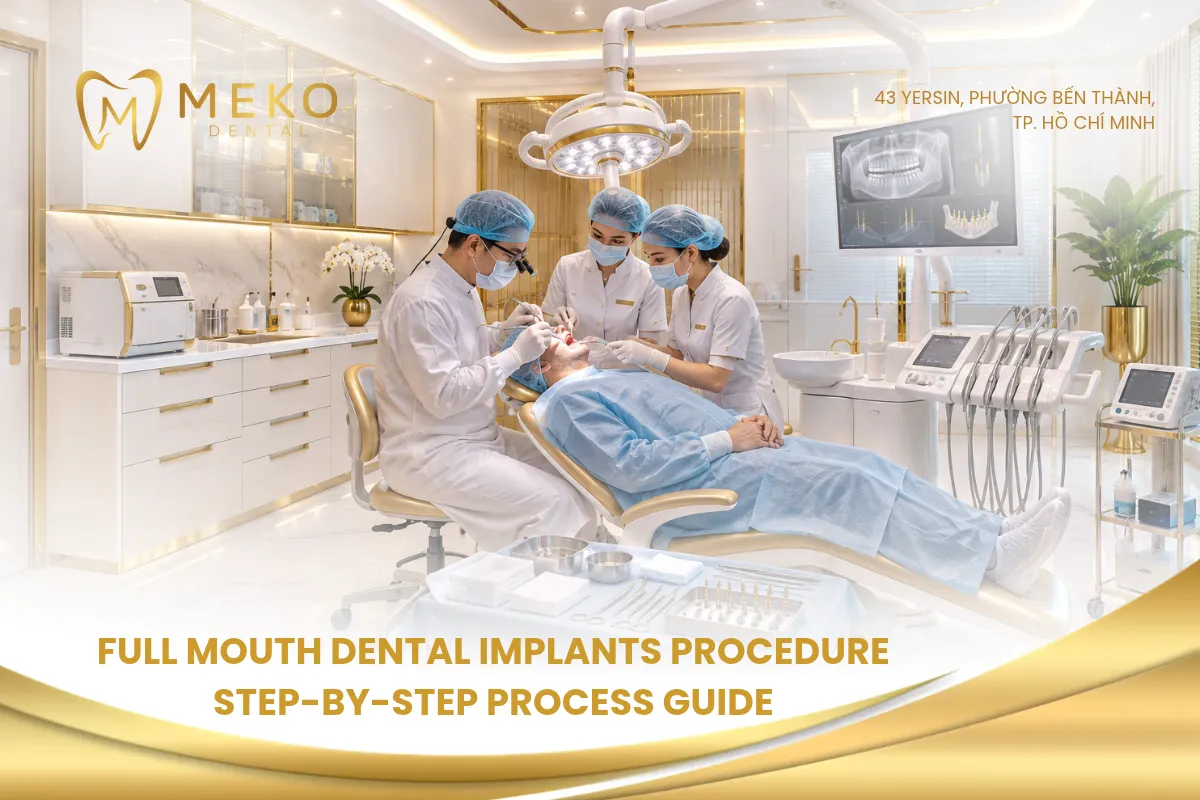
The full mouth dental implants procedure at Meko Dental Clinic takes about four to nine months from the first scan to the final teeth. It runs in five phases: scans and planning, surgery, healing, the final fitting and long-term reviews. Surgery and the final fitting need you in the clinic, so overseas patients usually make two trips.
1. What are the steps in the full mouth dental implants procedure?
There are five steps: scans and planning, surgery, an early review, healing and the final fitting. Surgery and the final fitting need you in the chair, and most of the healing time does not. Temporary teeth are often fitted at or soon after surgery.
| Phase | What happens | Typical timing | In person |
| Scans and planning | Exam, 3D scan, digital design | One or two visits | Yes, for the scan |
| Surgery | Extractions, implant placement, temporary teeth where possible | One day | Yes |
| Early review | Stitches and bite on temporary teeth checked | About one to two weeks later | Yes |
| Healing | Bone bonds to the implants | About three to six months | Usually not |
| Final teeth | Scans, try-in, fitting, bite check | One to two visits | Yes |
These full mouth dental implant procedure steps stay the same for most patients. Timing shifts with bone quality, grafting and how quickly the gums heal.
2. Which implant plan is used: all-on-4, all-on-6 or zygomatic?
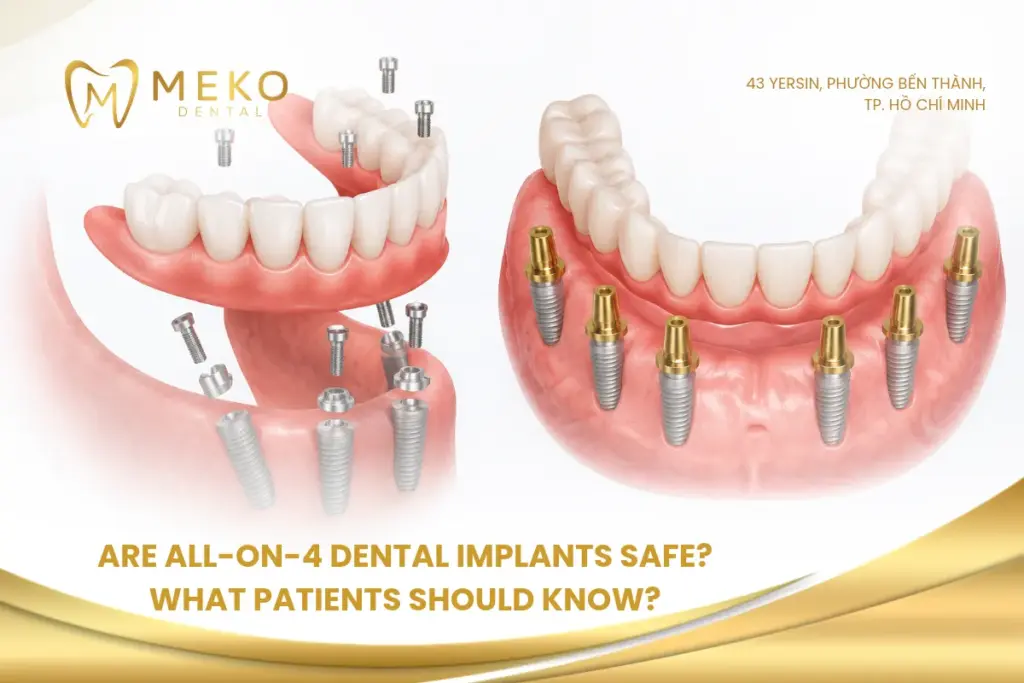
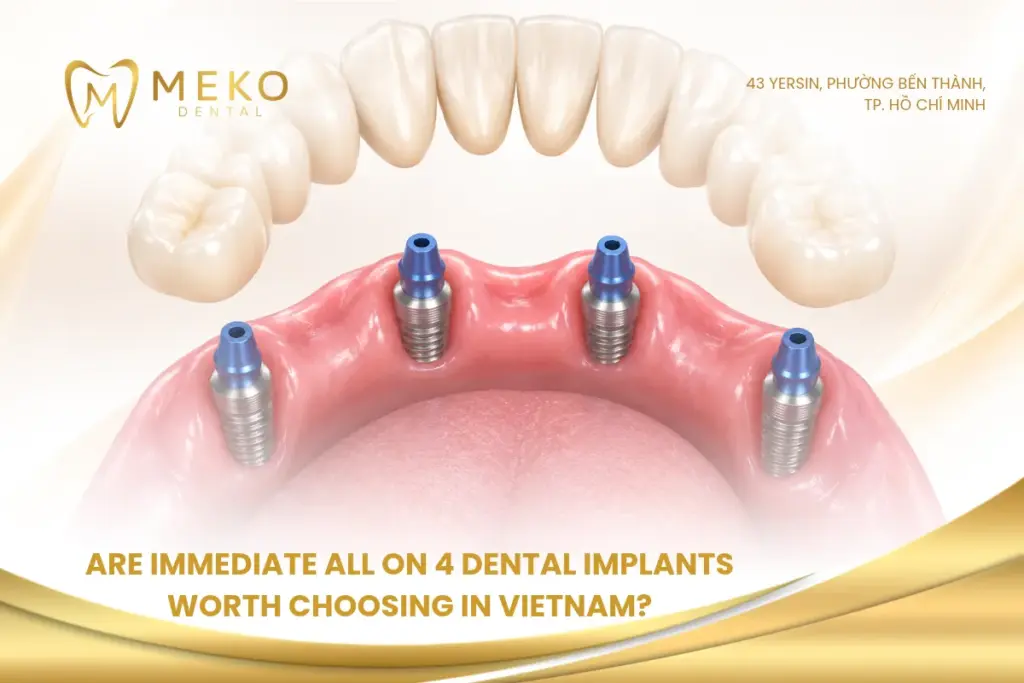
The surgeon chooses based on how much healthy bone the scan shows. All-on-4 places four implants per arch and all-on-6 places six, while zygomatic implants anchor in the cheekbone. Zygomatic implants are reserved for upper jaws that have lost too much bone for standard implants.
More implants spread the biting load across more points. That suits softer bone or a strong bite. Fewer implants mean less surgery, but each one has to be placed well. In some designs the rear implants are tilted to use the bone that is available and to stay clear of nerves and sinuses.
Zygomatic placement is harder surgery, so the surgeon’s experience with it counts. Patients offered this option should ask how many zygomatic cases the surgeon has completed.
3. What happens at the consultation and scan?
The dentist checks health history, gums, bite and any teeth worth saving, then takes a 3D scan. The scan shows how much bone is there and where the nerves and sinuses sit. Every later stage of the full mouth implant procedure is planned from it.
Before the first visit, note down every tablet, injection and supplement you use regularly. Mention diabetes, heart conditions and smoking too, because they change anesthesia choices and healing.
Any ongoing gum infection has to be cleared before implants go in. After that comes the digital design, often with a surgical guide that steers the drills on the day. A written plan and quote should be in your hands before surgery is booked.
4. The day of full mouth dental implants surgery
Surgery runs in a set order: anesthesia, extractions, bone preparation, implant placement, closure. It is a day case, and complex cases can take several hours. Temporary teeth go in the same day when the implants hold firmly.
- Anesthesia is given. This may be local, sedation or general.
- Teeth that cannot be saved are removed and infected tissue is cleaned out.
- The bone is shaped, and grafted if needed.
- Implants are placed following the plan or guide.
- Connectors are attached if temporary teeth are planned.
- The gums are stitched closed.
Fasting rules depend on the anesthesia, and the clinic gives them in writing. Follow them to the letter. Grafting is not needed in every case, but when it is, it adds months to the full mouth dental implants process.
5. Can temporary teeth be fitted on the same day?
Often yes, but only if the implants are stable enough to carry them. When stability is low, the dentist waits and fits an adjusted denture instead. Either way, temporary teeth are for appearance and gentle chewing, not hard food.
“Teeth in a day” refers to this temporary set. Temporary teeth are one phase of the full mouth dental implants procedure, not its end. The permanent teeth are made once the bone has healed.
Fixed temporary teeth cannot be taken out by the patient. A soft diet protects them while the implants settle.
6. Healing time after the full mouth dental implants procedure
Three to six months is typical, and some jaws need up to nine. Grafts, smoking and softer upper-jaw bone all push the figure up. Expect swelling and tenderness early, then steady improvement after the first two weeks. Review scans, not the calendar, decide when final teeth can be made.
| Period | What is normal | What to do |
| First few days | Puffiness, skin discoloration, slight oozing | Rest, soft foods, medicines as prescribed |
| First two weeks | Gums close and settle | Gentle cleaning, early review visit |
| Weeks two to twelve | Bone starts bonding | Avoid hard foods, attend reviews |
| Months three to six | Bonding completes in most cases | Prepare for final teeth |
Call the clinic if pain grows after the first few days. The same goes for fever, pus, bleeding that will not stop, numbness or a loose prosthesis. At any point after the full mouth dental implants procedure, early contact keeps small problems small.
7. Which final teeth are used, and how do they differ?
Final teeth are either a fixed bridge screwed onto the implants or a removable overdenture that clips on. Fixed bridges are made from zirconia, or from acrylic on a metal frame. Zirconia is harder and resists stains. Acrylic weighs less and is simpler to fix when damaged.
| Option | Strengths | Trade-offs |
| Zirconia fixed bridge | Hard, stain resistant, natural look | Can chip under a heavy bite, repairs are lab work |
| Acrylic on metal frame | Light, flexible, simple to fix | Wears faster, may need refurbishing sooner |
| Removable overdenture | Fewer implants, cleaned outside the mouth | Not fixed, attachments wear |
Conventional dentures rest on the gums and need relining as bone shrinks. Implant-supported teeth are anchored in the bone, so they do not slip in the same way.
8. How safe is the full mouth dental implants procedure?
Published results are good. One five-year cohort of full-arch cases reported about 99% implant survival and 98% prosthesis survival. Problems still occur, mostly gum inflammation around implants and wear or loosening of the prosthesis.
Surgical risks of the full mouth dental implants procedure are small but real. They include infection, nerve irritation and, in the upper jaw, sinus involvement. Smoking, poorly controlled diabetes, untreated gum disease and weak home cleaning all raise the odds of trouble.
9. Planning the full mouth dental implants procedure from abroad
Most overseas patients need two trips for a full mouth implant procedure: one for scans, surgery and early review, and a second for the final teeth after healing. The months in between can usually be spent at home. Stay lengths depend on the case and are confirmed at the planning stage.
| Trip | Purpose | Typical stay | Why in person |
| First | Exam, scan, surgery, early review | About 5 to 14 days | Surgery, stitches, bite checks |
| Between trips | Healing, soft diet, photo or video check-ins | Three to six months | Only if problems arise |
| Second | Scans, try-in, final teeth | A few days to a week | Fitting and bite adjustment |
Send recent X-rays and your medical list before booking. They help the dentist judge whether the full mouth dental implants procedure is realistic for you. Ask for the implant brand, the warranty terms and the plan for follow-up care at home in writing.
10. Conclusion
The full mouth dental implants procedure is long, but each phase has a clear purpose. Scans and planning set the direction, surgery places the implants, healing gives the bone time to bond, and the final fitting completes the result. Knowing this order makes the treatment easier to plan, especially for patients travelling from abroad.
This article is for general information and does not replace an examination by a licensed dentist.
References
- Mayo Clinic. Dental implant surgery. https://www.mayoclinic.org/tests-procedures/dental-implants/about/pac-20384622
- Cleveland Clinic. Dental implants. https://my.clevelandclinic.org/health/treatments/10903-dental-implants
- American Dental Association (MouthHealthy). Implants. https://www.mouthhealthy.org/en/az-topics/i/implants
- American College of Prosthodontists. Position statement: maintenance of full-arch implant restorations. https://www.prosthodontics.org/about-acp/position-statement-maintenance-of-full-arch-implant-restorations/
- Papaspyridakos P, Bordin TB, Natto ZS, et al. (2019). Complications and survival rates of 55 metal-ceramic implant-supported fixed complete-arch prostheses: a cohort study with mean 5-year follow-up. Journal of Prosthetic Dentistry, 122(5), 441-449. https://pubmed.ncbi.nlm.nih.gov/30982622/


 Messenger FB
 WhatsApp
 Book now