

Contents [ Hide ]
Do veneers hurt? For most patients, no. The teeth are numbed before any enamel is reshaped, and the sensitivity that sometimes follows usually settles within about two weeks.
It is the first question many people ask before booking a consultation, and it often appears in searches as “does veneers hurt”. This guide answers “do veneers hurt” at each stage, explains how long discomfort tends to last and says when it is worth calling a dentist.
1. Do veneers hurt during treatment?
Preparation is done under local anesthetic, so once the area is numb, patients mostly notice pressure and vibration rather than pain. The injection can sting briefly, and that is usually the sharpest moment of the visit.
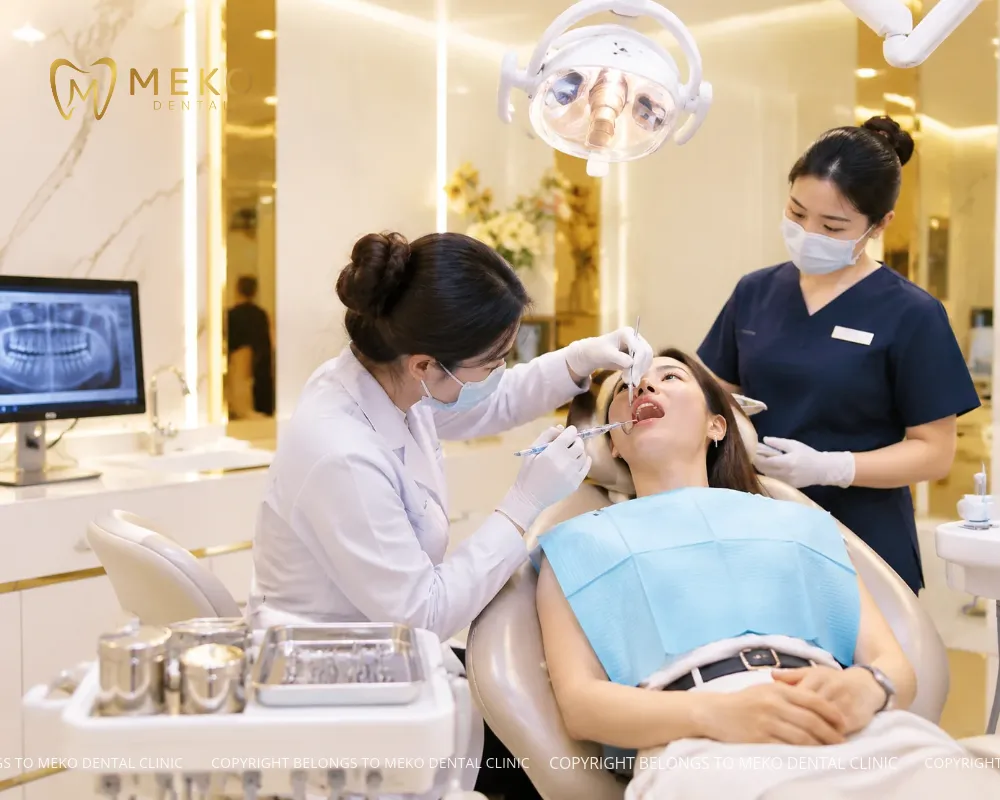
Comfort also depends on how much enamel is reshaped. Traditional porcelain veneers need roughly half a millimeter removed from the front of each tooth, which is why anesthesia is standard. Patients who feel anxious can ask about nitrous oxide or oral sedation, which help them relax but do not replace numbing.
2. What the veneer process feels like, step by step
Treatment usually takes two or more visits, and the sensations differ at each one.
| Stage | What patients usually feel |
| Consultation and scans | Nothing uncomfortable |
| Tooth preparation | Pressure and buzzing, no sharp pain |
| Temporary veneers | Mild temperature sensitivity in some cases |
| Final bonding | Little or no sensation |
Do veneers hurt during preparation? Not once the tooth is numb. At that visit, the dentist reshapes the enamel, then takes impressions or digital scans. The laboratory generally needs one to two weeks to make the veneers. While the lab works, temporary restorations cover the reshaped teeth.
Does it hurt to get veneers bonded at the final visit? Usually not. No more enamel is removed at that stage, and many dentists place veneers with little or no anesthetic unless the tooth is sensitive. A curing light hardens the adhesive, and the dentist then checks fit, color and bite.
3. How long does sensitivity last after veneers?
The question “do veneers hurt” often really means “will it hurt afterwards?”, and the answer is mostly about sensitivity. Most people notice some reaction to hot and cold once the numbness wears off, along with slightly tender gums. It typically eases over the first one to two weeks as the tooth adjusts to the bonded veneer.
The reason is structural: preparation brings the tooth surface closer to dentin, which contains tiny channels leading toward the nerve. Until the veneer seals that surface, temperature changes can reach the nerve more easily.
A rough picture of recovery looks like this:
- First hours: a numb lip or cheek, but no real pain
- First days: temperature sensitivity and mild gum soreness
- Up to two weeks: gradual settling as the mouth adapts to the new shape
- After two weeks: the teeth should feel normal
Do veneers hurt while the temporaries are in place? Some patients feel mild sensitivity, and it usually eases within about two weeks as well. Sensitivity that continues beyond that window is worth reporting to the dentist.
4. Do dental veneers hurt when eating?
The lip and cheek typically feel normal again after two to four hours. Until then, it is easy to bite the cheek or tongue without noticing, so it is wise to wait before eating.
Once the anesthetic has worn off, patients can generally eat and chew normally with permanent veneers. In the first days, chewing can feel unfamiliar, and hot or cold food may cause a brief twinge.
5. Do veneers hurt the gums?
Gum tenderness is common for a few days, because the tissue around the treated teeth can be slightly irritated by the procedure. Some people also produce more saliva for a short time.
Speech can sound slightly different at first, because the tongue has to learn the new tooth shape. These effects usually fade as the mouth adapts, and they do not mean anything has gone wrong.
6. Does getting veneers hurt more with certain veneer types?
Slightly, because the types differ in how much tooth is altered.
| Veneer type | Tooth preparation | Local anesthetic |
| Porcelain | Around 0.5 mm of enamel | Usually used |
| Composite resin | Less tooth removed | Less likely to be needed |
| No-prep or minimal-prep | Minimal, limited to enamel | Often unnecessary |
Do veneers hurt more with porcelain than with composite? Slightly, because porcelain needs more enamel removed, but local anesthetic keeps the preparation comfortable.
No-prep designs are not entirely prep-free, since some enamel adjustment is still needed. They also suit only selected cases, so a dentist has to confirm eligibility.
Whether anesthesia is needed also depends on how sensitive the tooth is, and the dentist decides that case by case. Less preparation does not automatically mean a better result, so the choice should follow tooth position, color goals and bite.
7. Who is more prone to sensitivity?
Do veneers hurt more for some patients? They can, because a few factors make sensitivity more likely. A dentist who knows about them in advance can adjust the plan.
- A history of sensitive teeth before starting treatment
- Naturally thin enamel
- Gum recession that exposes root surfaces
- Teeth grinding, which can strain the prepared teeth and the veneers
- Strong dental anxiety, which can heighten how pain is perceived

For patients who grind, a night guard or a different restoration may be suggested. This conversation belongs in the consultation, before any enamel is touched.
8. How to reduce discomfort after veneers
The first two weeks go more smoothly with a bit of preparation, and some of these steps are worth starting before the appointment.
- Tell the dentist about dental anxiety, past sensitivity and any medical conditions at the start.
- Ask whether a minimal-prep design is realistic for your teeth.
- Stick to room-temperature drinks while the teeth are sensitive, and avoid ice water or very hot coffee.
- Skip very hard, sticky, spicy or sugary foods for the first few days.
- A lukewarm saltwater rinse a few times a day can settle sore gums.
- Use desensitizing toothpaste or mild pain relief if the dentist recommends it.

A follow-up visit is worth keeping, because it lets the dentist smooth rough edges and fine-tune the bite before a small problem turns into a lasting one. If something feels off sooner, such as a high spot when biting, call the clinic rather than waiting.
9. When to call the dentist after veneers
Do veneers hurt when something is wrong? Mild sensitivity is expected, but pain that stays or gets worse is a different matter.
One common culprit is a veneer that sits slightly high. It concentrates force on a single tooth with every bite, which tends to feel like a dull, lingering ache. A short adjustment at the clinic usually solves it.
Book a check if any of these appear:
- A throbbing ache that intensifies instead of fading
- Pain on biting that continues after the first week
- Hot-and-cold sensitivity that has not improved after 14 days
- Puffy gums, or gums that bleed near the veneer
- A chip, rough edge or a veneer that feels loose
10. Common questions
10.1 Do veneers hurt without anesthesia?
Preparation without numbing can be uncomfortable, because enamel reduction may reach sensitive layers. That is why dentists normally use local anesthetic for traditional veneers. Some composite and no-prep cases may not need it.
10.2 Do veneers hurt in the long run?
Rarely. Sensitivity is a recognized risk but not an inevitable one. When pain lingers, the cause is often a bite issue that can be corrected.
10.3 Do temporary veneers hurt?
Some patients feel mild sensitivity while temporaries are in place, because the prepared tooth has just lost a layer of enamel. The discomfort normally fades over the following two weeks.
10.4 Can veneers damage the nerve?
It is uncommon. Veneer preparation is limited to the outer part of the tooth, and nerve-related problems are among the rarer complications. If a tooth stays painful, the dentist will examine it. In rare cases where the nerve is truly irritated, further treatment such as root canal therapy may be suggested.
11. Conclusion
Do veneers hurt in your own case? It depends on enamel thickness, veneer type, bite and personal sensitivity, so an examination gives the clearest answer. At Meko Dental Clinic, you can raise comfort concerns at the consultation before any treatment begins, and the dentist can assess your enamel, gums and bite directly.
References
- Cleveland Clinic. Dental veneers. https://my.clevelandclinic.org/health/treatments/23522-dental-veneers
- Healthline. Dental veneers: procedure, types, cost and aftercare (medically reviewed). https://www.healthline.com/health/dental-veneers
- Morimoto S, Albanesi RB, Sesma N, Agra CM, Braga MM. Main clinical outcomes of feldspathic porcelain and glass-ceramic laminate veneers: a systematic review and meta-analysis of survival and complication rates. International Journal of Prosthodontics. 2016;29(1):38-49. https://pubmed.ncbi.nlm.nih.gov/26757327/



 Messenger FB
 WhatsApp
 Book now