

Contents [ Hide ]
Dental implant surgery replaces a missing tooth root with a small post placed in the jawbone. The operation is usually completed in one visit, but the surrounding bone needs time to heal before a permanent crown can be fitted. This guide from Meko Dental Clinic explains what happens during placement, how recovery progresses, and which changes deserve a dentist’s attention.
1. What is dental implant surgery?
A dental implant is a small, threaded post, usually made from titanium, that sits in the jawbone beneath a missing tooth. It acts as an artificial root rather than a complete tooth. Once the post is stable, a connector called an abutment holds a crown shaped to match the neighboring teeth and fit the bite.
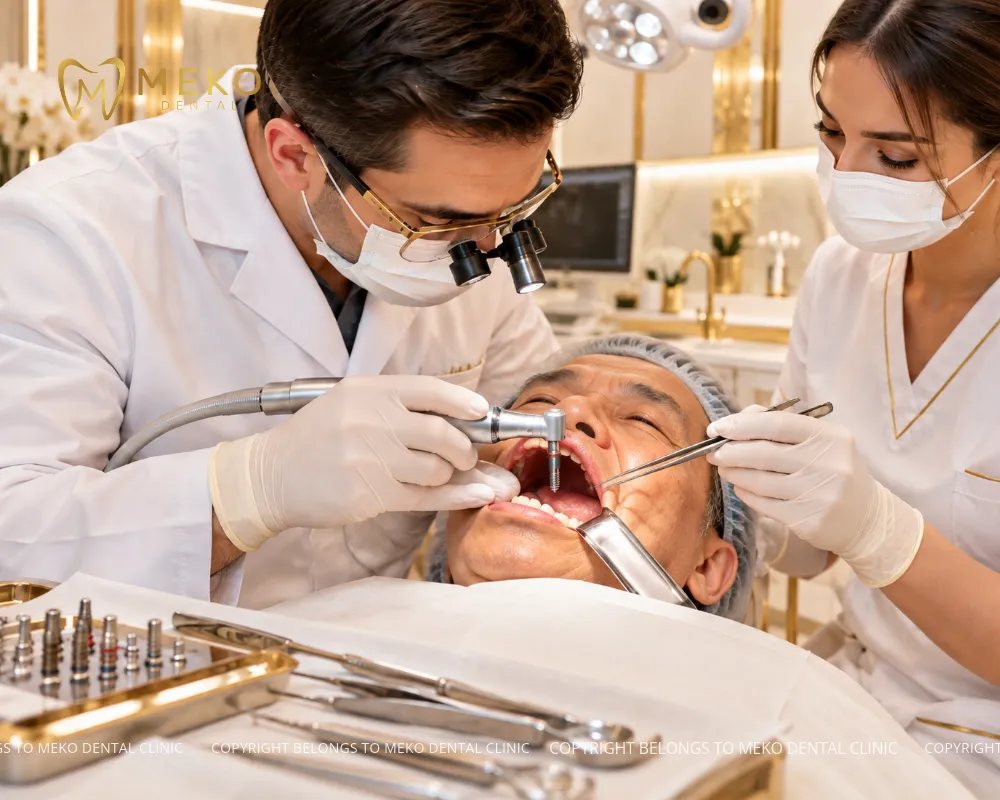
The phrase dental implants surgery is sometimes used for the entire process, although the surgical visit mainly involves placing the post. A common question is, “How does dental implant surgery work?” The dentist first creates a firm foundation in the jaw, then fits the visible tooth when that foundation is ready. Appointments may be combined depending on bone and gum health.
2. Suitable candidates for dental implant surgery
Before recommending implant surgery, the dentist checks whether the mouth can support a post and whether healing is likely to proceed normally. The main considerations are:
- Healthy gums: Active gum disease needs care first because inflamed tissue and infection can undermine the implant’s support.
- Enough jawbone: The ridge must have adequate height and width. Grafting may be possible if bone has shrunk after tooth loss.
- Medical conditions: Poorly controlled diabetes, certain medicines, and illnesses affecting bone healing may require additional assessment.
- Smoking: Tobacco can slow healing and increase the risk of implant problems.
- Daily cleaning: Plaque must be removed around both natural teeth and the future implant crown.

3. How to prepare for dental implant surgery
Preparation for surgery for dental implants focuses on identifying possible obstacles before the procedure, rather than leaving important decisions until the appointment. The dental team usually asks patients to complete these steps:
- Have the site examined: X-rays show the missing-tooth area, while a 3D CBCT scan may be used to assess bone and locate nearby nerves or sinus spaces.
- List medicines and health conditions: Include allergies, supplements, diabetes, and blood-thinning medicines. Never stop a prescribed medicine without the responsible clinician’s advice.
- Confirm the anesthesia plan: Local anesthesia is common. Sedation may require fasting and an adult to accompany the patient home.
- Follow appointment instructions: Ask about eating, drinking, brushing, and arrival time because directions vary with the planned anesthesia.
- Prepare for recovery: Arrange soft foods and leave the rest of the day free, particularly after a longer operation.

4. Dental implant surgery steps: from planning to final crown
The implant surgery steps involve planning, placing the post, allowing healing, and fitting the crown. Tooth removal and grafting are only added when necessary. The stages below show what happens at each appointment without assuming every patient follows an identical schedule.
4.1 Step 1 – Initial examination and treatment planning
The dentist examines the gap, the gums, neighboring teeth, and how the upper and lower teeth meet. Scans help assess bone width and identify structures the surgeon must avoid. These findings determine the steps of dental implant surgery for that specific site, including post size, placement angle, and whether the jaw needs preparation beforehand.
4.2 Step 2 – Tooth extraction and bone grafting (if needed)
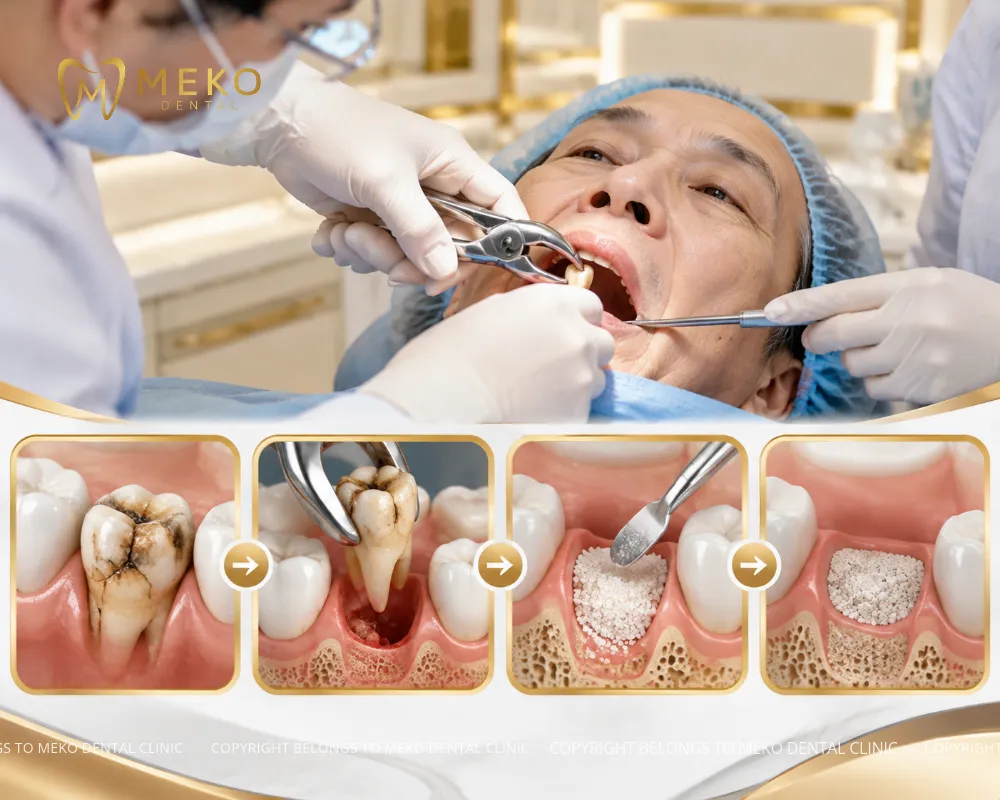
A badly damaged tooth may need removal if it cannot be saved. If the remaining ridge is too narrow or shallow, graft material may be added to build support for the implant. A small graft can sometimes be placed during the same visit, while a larger graft may need several months to heal before the post is inserted.
4.3 Step 3 – Anesthesia and implant placement
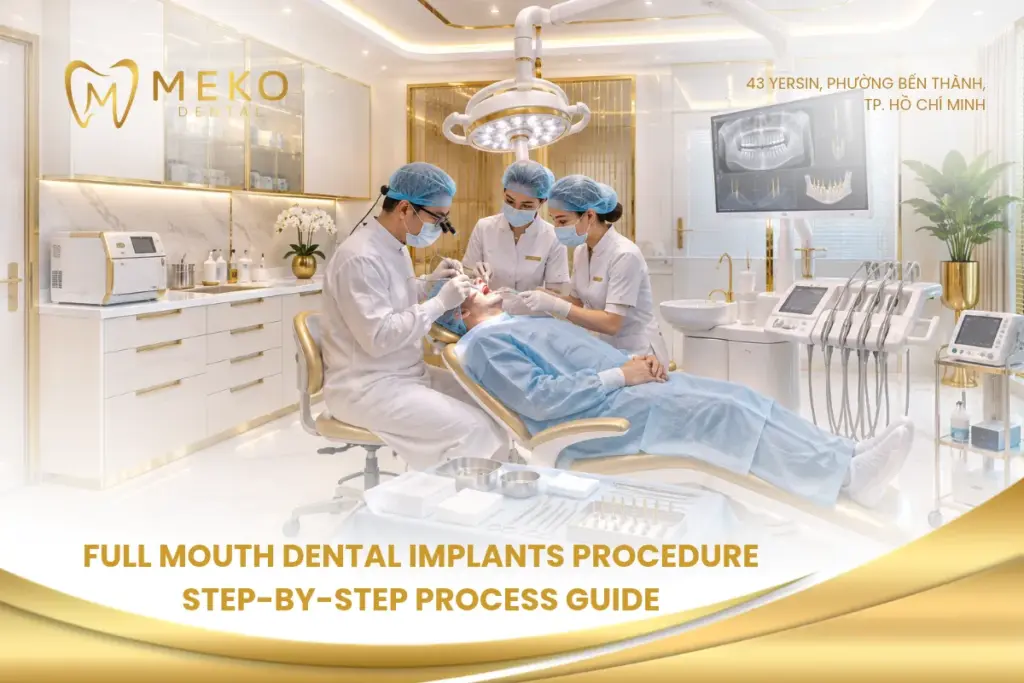
Among the steps in dental implant surgery, placing the post is the main surgical stage. After local anesthesia takes effect, the surgeon opens or moves the gum to reach the jawbone, then prepares a narrow channel using dental instruments. The implant is positioned in that channel and checked for initial stability.
The gum is then closed with stitches or arranged around a small healing cap, depending on the technique. Pressure and vibration may be noticeable during placement, but sharp pain should be reported immediately so the clinician can check the anesthesia.
4.4 Step 4 – Healing and osseointegration
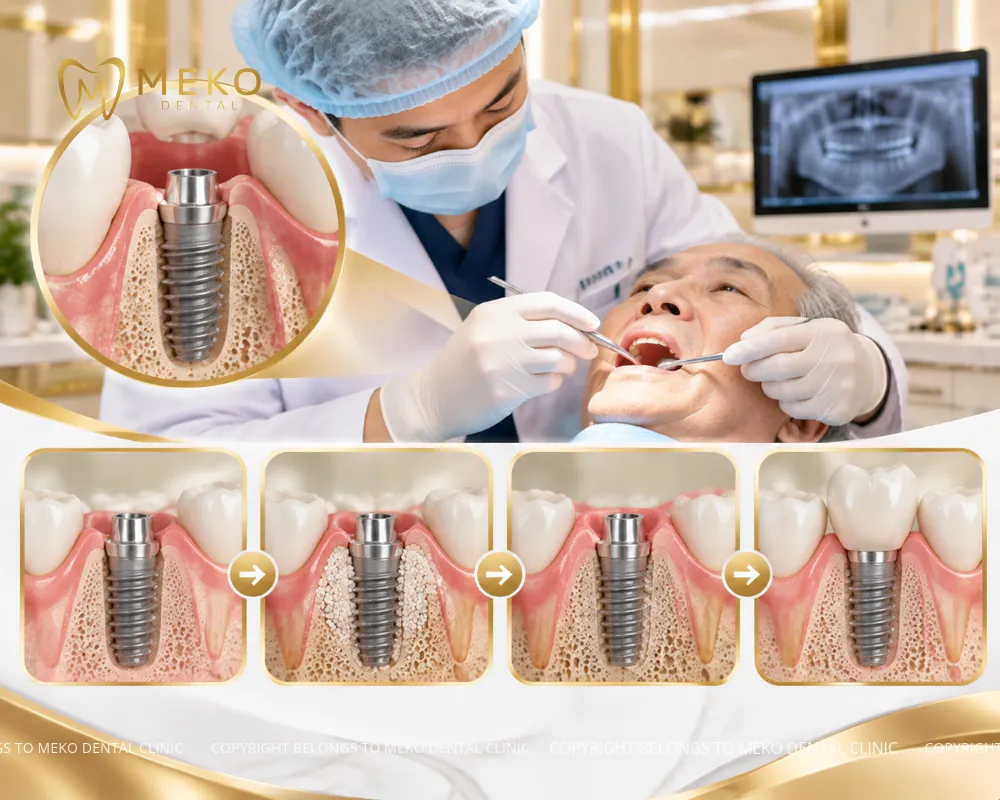
After placement, new bone gradually forms a close connection with the implant surface, making the post more secure. Dentists call this osseointegration, or bone integration. The gums may look settled within weeks, but the bone needs considerably longer. Follow-up checks help establish whether the post is stable enough to support the crown without excessive pressure.
4.5 Step 5 – Abutment and final crown placement
The abutment connects the implant to the visible crown. Depending on the case, it may be fitted during the first operation or at a later visit. The dentist then takes a scan or impression to make the crown, which is checked for appearance, comfortable contact with adjacent teeth, and a balanced bite before final fitting.
5. How long does dental implant surgery take?
According to Cambridge University Hospitals, placing a single dental implant takes about 30 minutes, although the full appointment may take longer for preparation and checks. Multiple implants, complex placement, or bone grafting can add time. The duration of implant tooth surgery depends on the planned procedure and any extra steps required in each individual case.
The overall process takes months because the jawbone needs time to bond with the implant before the permanent crown is fitted. Cleveland Clinic reports that osseointegration may take 3–9 months, depending on bone health and whether grafting is needed. A temporary crown may be fitted sooner, but this does not mean bone healing is complete.
6. Does dental implant surgery hurt?
Local anesthesia should prevent sharp pain during placement, although pressure and vibration can still be felt as the surgeon prepares the bone. If the area becomes painful, the clinician can check whether more anesthetic is needed. Sedation may help with anxiety, but it does not replace numbing the surgical site.
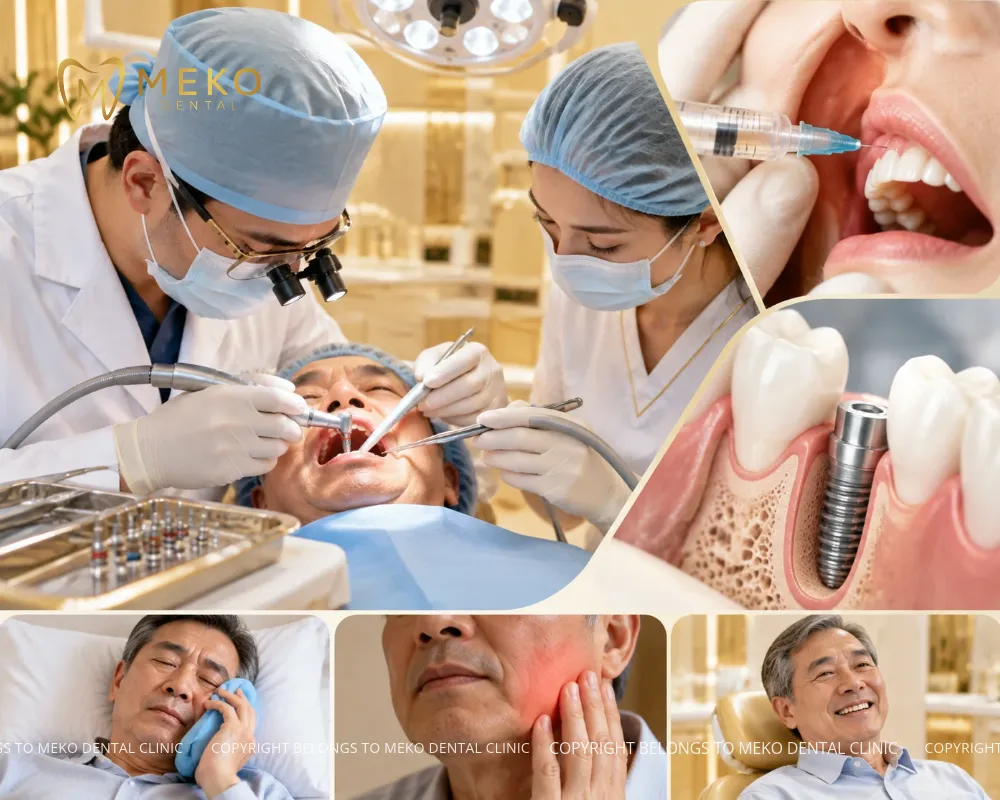
Once anesthesia wears off, some tenderness, swelling, and minor bleeding are expected. Discomfort usually eases over the following days with rest and pain relief recommended by the dental team. Persistent or increasingly severe pain is different from ordinary postoperative soreness and should be assessed rather than managed with extra medicine without advice.
7. Recovery and aftercare following implant placement
The first few days are mainly about protecting the incision, while the following months allow the jawbone to secure the post. These two stages should not be confused, since healthy-looking gums do not necessarily mean the implant is ready for normal chewing pressure.
7.1 Dental implant recovery timeline
The table separates common healing changes from the main precaution needed at each stage. Individual recovery may be slower after several implants or a bone graft.
| Recovery period | What to expect | Recommended care |
| First 24-72 hours | Tenderness, slight bleeding, and swelling, which may peak after 24-48 hours | Rest, eat soft food, and avoid chewing on the surgical side |
| Days 4-14 | Swelling normally decreases as the gum closes and stitches are reviewed | Clean gently and attend the wound check |
| Following months | The gum may look healed while the bone continues attaching to the post | Follow chewing limits until stability is confirmed |
7.2 How to care for your mouth after implant placement
After dental implant surgery, small daily choices help prevent irritation around the incision. Follow the written instructions from the clinic, particularly when grafting or a temporary crown is involved.
- Keep meals soft: Try eggs, yogurt, mashed vegetables, or lukewarm soup. Avoid crunchy foods and chewing directly on the new implant during early healing.
- Brush carefully: Clean unaffected teeth as usual, but avoid rubbing stitches. Start salt-water rinses or prescribed mouthwash when the dentist advises.
- Take medicines correctly: Use pain relief as directed and finish antibiotics only if they have been prescribed. Do not use leftover antibiotics.
- Protect the wound: Avoid smoking, vaping, touching the incision, or checking the post repeatedly with the tongue.
- Adjust activity: Rest after the procedure and postpone strenuous exercise for the period recommended by the surgeon.
- Attend reviews: A follow-up visit can identify irritation, check stitches, and confirm that healing is progressing as expected.

8. Is dental implant surgery safe? Risks and complications
Research offers useful context, but even strong averages cannot predict an individual result. A 2026 systematic review covering 34 studies and 20,445 implants found that approximately 95% remained in place after 10-25 years. This figure measures implant survival, not freedom from gum inflammation or other complications. Careful placement, gum health, and regular cleaning still matter.
Possible risks of implant placement:
- Infection: Redness, discharge, and increasing tenderness can develop around the wound if bacteria enter the area.
- Bleeding: Slight oozing is expected early on, but bleeding that does not settle needs attention.
- Nerve injury: A post placed too close to a nerve may cause numbness or tingling in the lower lip or chin.
- Sinus problems: Upper back implants can affect the sinus when the bone separating them is thin.
- Poor bone attachment: The implant may remain loose if it does not bond firmly with the jawbone.
- Nearby tooth damage: Positioning errors can affect adjacent roots or other structures.
Warning signs that require dental attention:
- Pain or swelling becomes worse after initially improving.
- Bleeding continues despite applying pressure as instructed.
- Fever, pus, or an unpleasant discharge develops near the incision.
- Numbness persists after the anesthetic should have worn off.
- The implant feels loose, or a temporary crown causes painful pressure.
9. Conclusion
Dental implant surgery involves placing a post in the jaw, allowing the bone to heal, and fitting a crown once the implant is stable. Understanding these stages helps patients prepare for the procedure and recovery. For a personalized assessment and guidance, contact Meko Dental Clinic at hotline 077 227 7919 to schedule a consultation.



 Messenger FB
 WhatsApp
 Book now