

Contents [ Hide ]
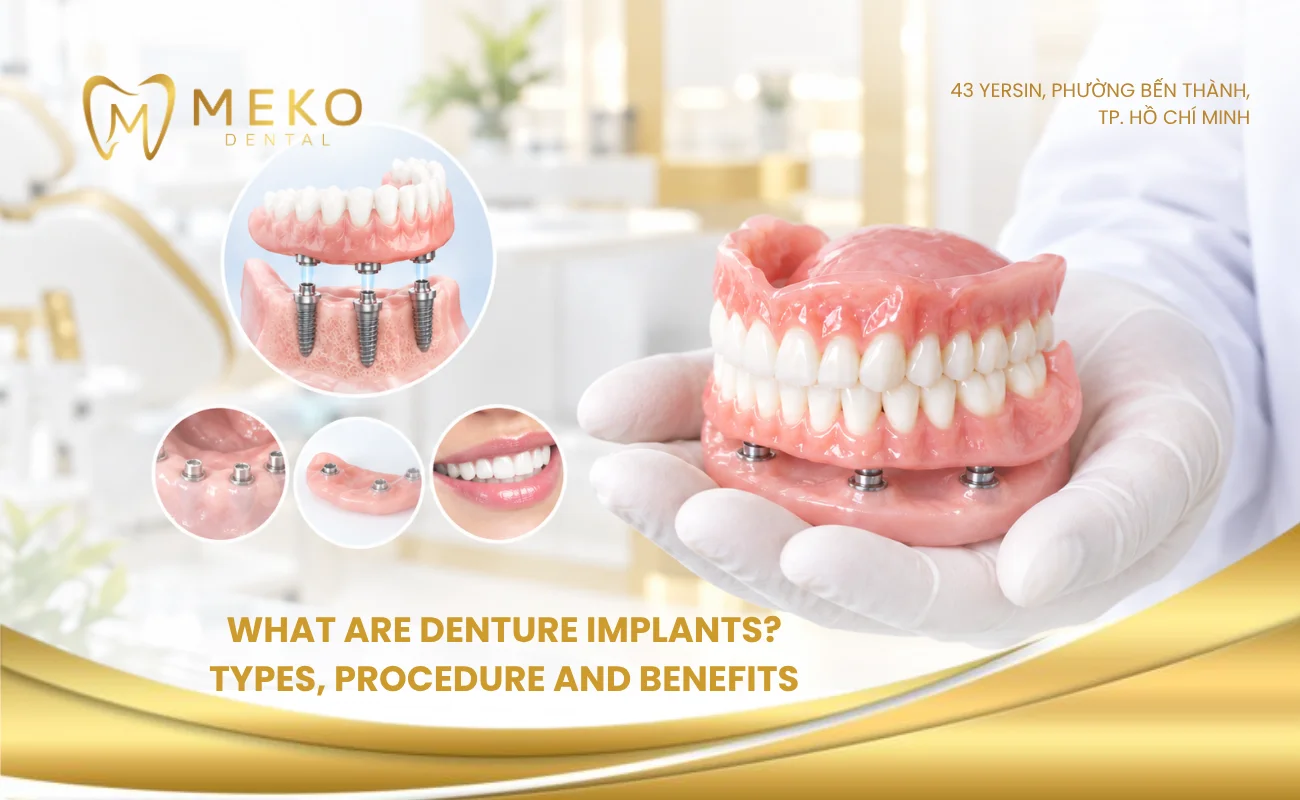
Missing several teeth in a row, or an entire arch, changes how a person eats, speaks and smiles. Denture implants offer a way to replace those teeth that holds far more securely than a plate resting on the gums alone. Instead of relying on suction or adhesive, the denture anchors to a small number of titanium posts placed in the jawbone.
This guide from Meko Dental Clinic covers what denture implants are, how the procedure works and the main types available. It also outlines what patients in Ho Chi Minh City should know before booking a consultation.
1. What are denture implants?
Denture implants are dentures anchored to titanium posts placed in the jawbone, rather than resting loosely on the gums. A dentist places several implants, allows them to fuse with the bone, then attaches a custom denture on top for a much firmer fit.
Unlike a standard denture, which depends on suction or adhesive paste, implant supported dentures clip or screw onto the implants themselves. In simple terms, this is a denture supported by implants rather than by the gum tissue alone.
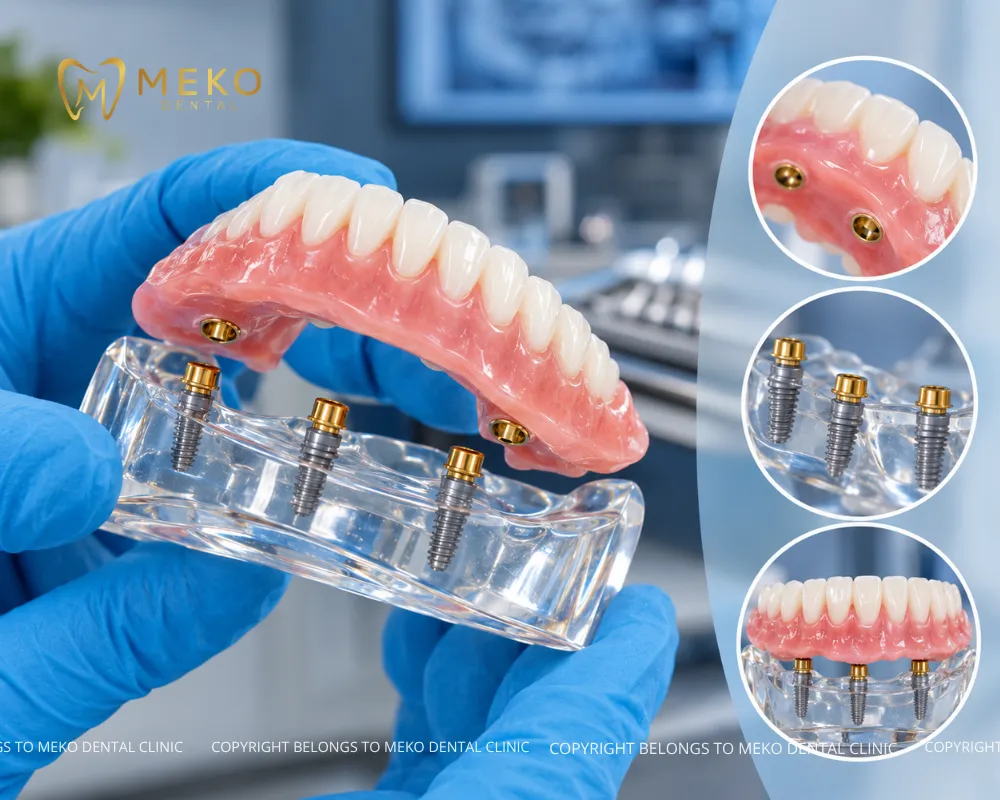
Patients often search for what are implant supported dentures once a regular plate begins slipping or causing sore spots. The implants also double as artificial tooth roots, which helps slow the bone loss that naturally follows tooth extraction.
2. How do denture implants work?
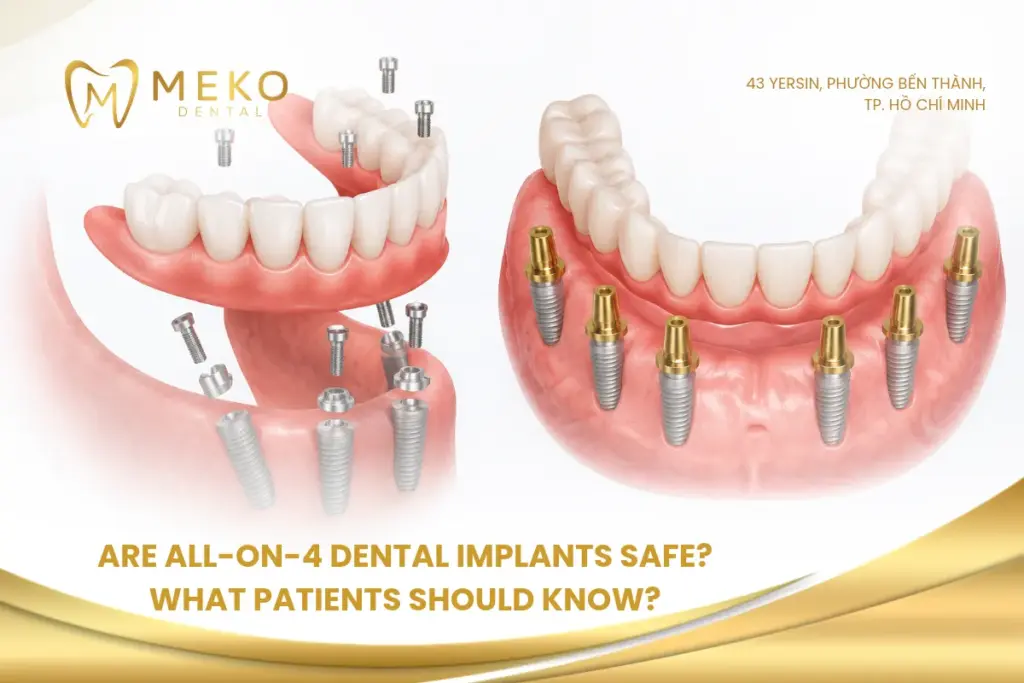
Titanium posts fused to the jawbone are what make denture implants work. A custom denture locks onto those posts through a ball, bar or screw connection. Once fused, the posts hold dentures on implants firmly enough to withstand normal chewing forces. The bone bonds to the implant surface over several months, in a process called osseointegration.
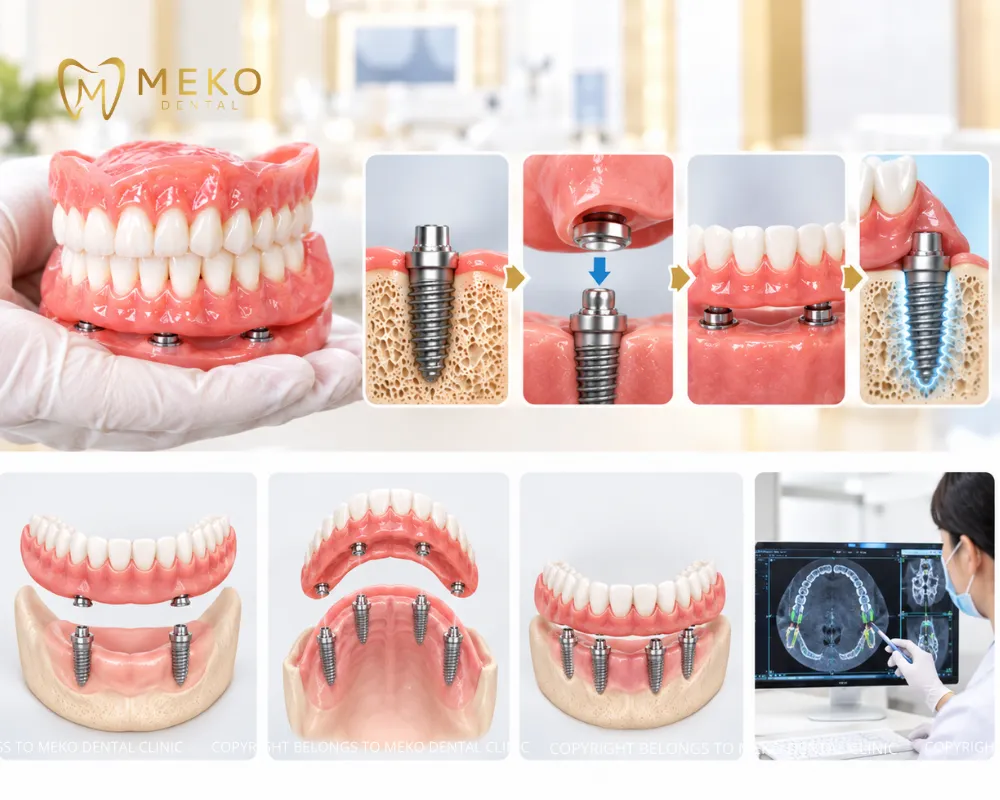
The number of implants needed depends on the arch and the design chosen. Clinical consensus generally calls for at least two implants to support a lower overdenture. An upper overdenture typically needs at least four implants, since the upper jawbone is usually softer and less dense than the lower jaw.
A fixed, non removable option typically needs four to six implants per arch. Bone density, arch length and the patient’s bite all factor into this decision. This is why a CT scan and clinical exam usually precede any treatment plan.
3. Types of denture implants
Denture implants are not a single product. They fall into three broad categories, each suited to a different level of bone support, budget and desired stability.
3.1 Stud or locator retained dentures
Stud retained dentures use two to four implants fitted with small ball or locator attachments. The denture snaps onto these attachments and can still be removed at home for cleaning every night. This option generally costs less than a fixed alternative, and it suits patients who want improved stability without yet committing to a permanent appliance.
3.2 Bar retained dentures
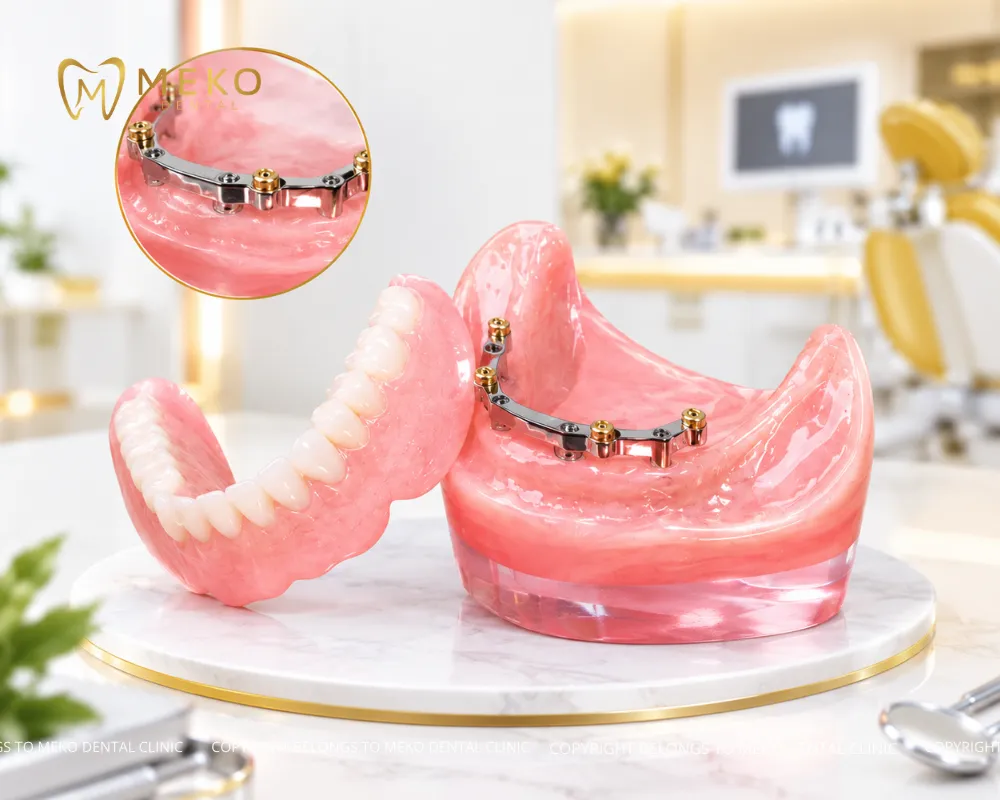
Bar retained dentures connect several implants with a thin metal bar, and the denture clips onto that bar instead of onto individual posts. The bar spreads chewing force evenly across every implant, which often suits patients with a resorbed or irregular jaw ridge. This design stays removable, though cleaning takes a little more care than a simple stud attachment.
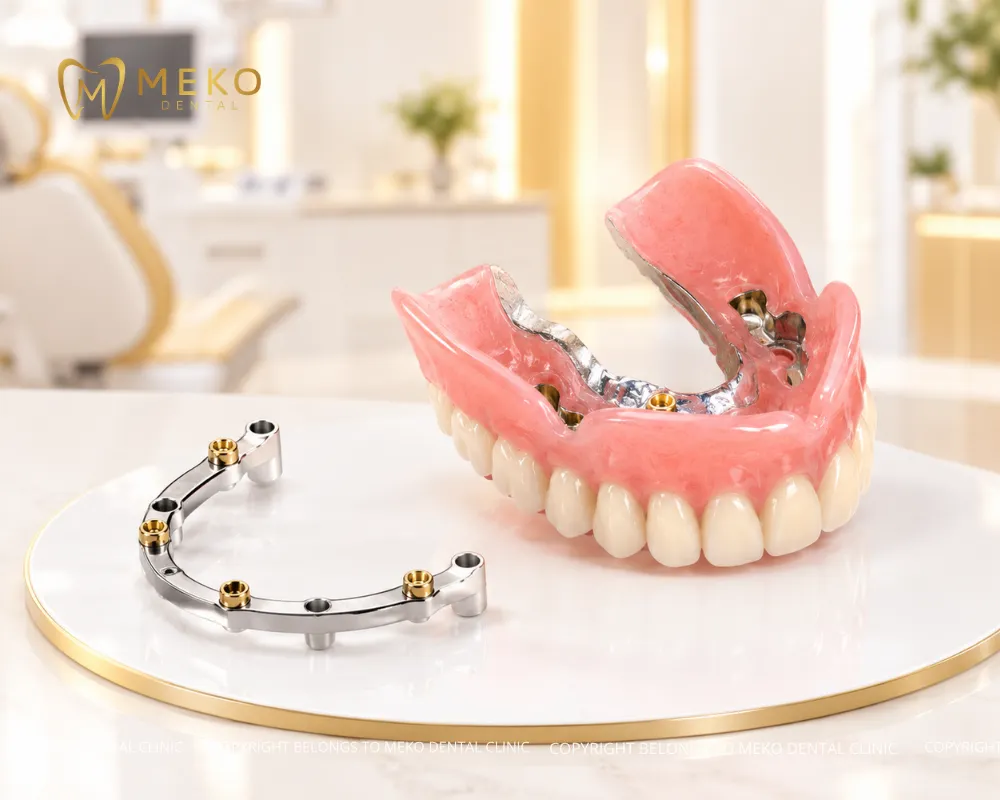
3.3 Fixed, implant supported dentures
Fixed implant supported dentures, sometimes called hybrid dentures or full arch implant bridges, attach permanently to four to six implants per arch. For patients who want a dental implant denture that never comes out, this is usually the recommended design.
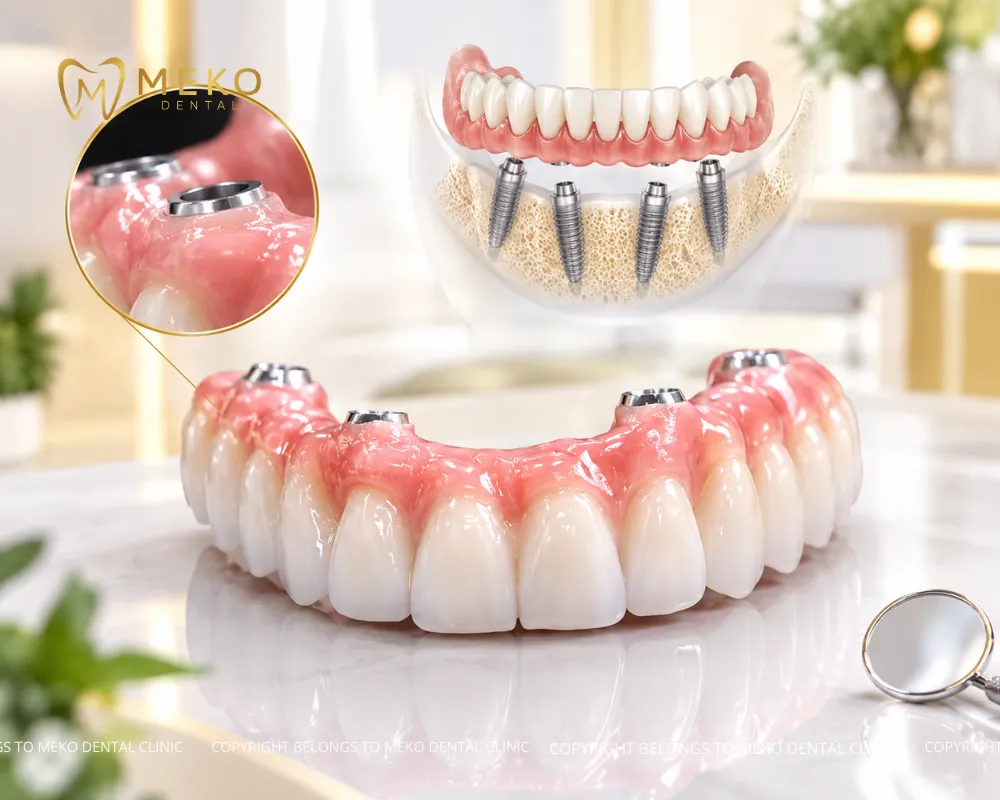
Only a dentist can remove this type of appliance for maintenance. Patients brush and floss it much like natural teeth, and among all denture implant options, this design offers the sensation closest to a full set of permanent teeth.
| Read more: Fixed dental implants -Types, benefits, risks and care guide 2026
4. Who needs denture implants?
Adults who have lost most or all of their teeth in an arch, and still have enough jawbone to hold implants securely, are the main candidates for denture implants. People who struggle with a loose, clicking denture, or who avoid certain foods because a plate shifts while chewing, are typically good candidates too.
Key factors a dentist reviews before recommending denture implants:
- Suitability confirmed through a clinical exam, x-rays or a CT scan
- Success rates of 95 percent or higher for implants placed in the front of the lower jaw, the most common anchor site, based on long-term clinical data
- Sufficient bone volume, the main requirement for safe implant placement
- Bone grafting available to rebuild the ridge when the jaw has thinned after years of missing teeth
- Health factors such as uncontrolled diabetes, heavy smoking or certain medications, reviewed during consultation rather than treated as an automatic disqualifier
5. Implant supported dentures versus traditional dentures
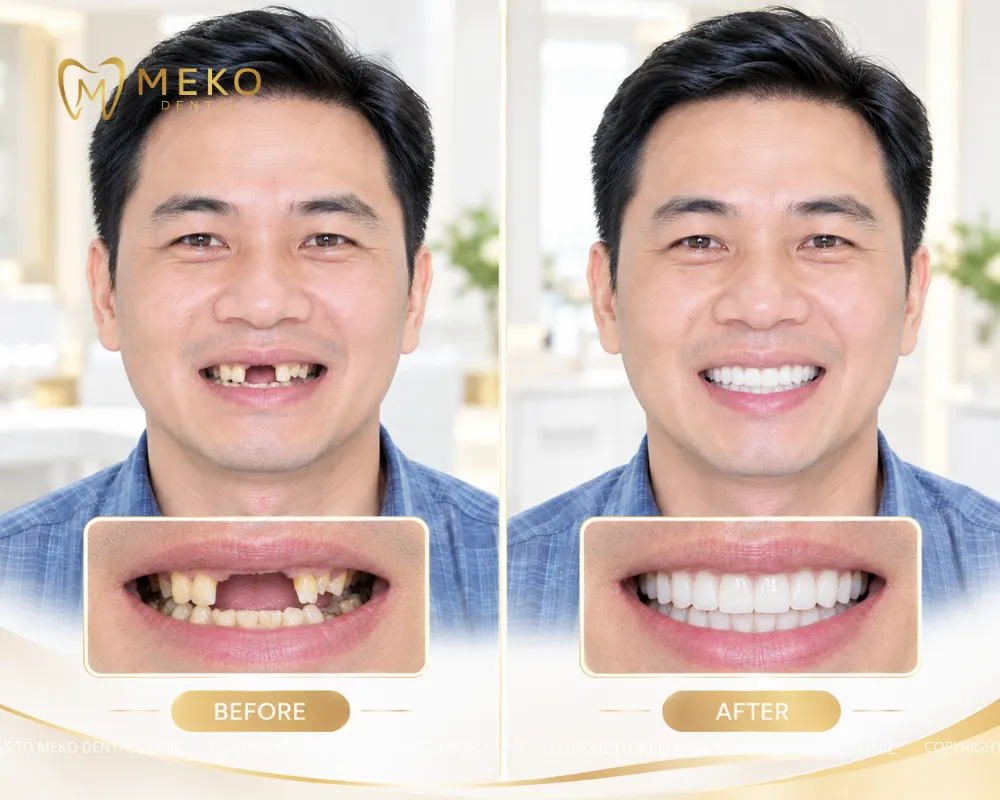
The table below compares implant supported dentures with the conventional, gum supported denture that most people already know. The differences show up most clearly in daily comfort and long-term bone health.
| Factor | Traditional dentures | Denture implants |
| Stability | Rests on the gums, may shift while eating or speaking | Anchored to implants, stays firmly in place |
| Bone health | Does not slow jawbone loss | Implants stimulate the bone and slow resorption |
| Daily comfort | May need adhesive paste | No paste needed for most designs |
| Chewing force | Limited, softer foods often recommended | Closer to natural bite force |
| Lifespan | Needs relining every few years | Implants can last many years, denture replaced periodically |
Patients moving from a conventional plate to dentures supported by implants usually notice the difference within the first few meals after the new appliance is fitted. Many patients researching implants for dentures start by comparing the two side by side before deciding.
The improvement in chewing confidence is one of the most common reasons people look into implant supported dentures. This usually happens once their existing denture begins to fail.
6. What is the denture implants procedure like?
The denture implants procedure usually happens in stages rather than in a single visit. It starts with any needed extractions or bone grafting and ends with the final denture fitting. Most patients wear a temporary healing denture throughout the process, so their smile and ability to eat are not interrupted.
- Consultation and imaging, including a CT scan to map bone volume and plan implant positions
- Preparatory work such as extractions or bone grafting, if the jaw needs extra healing time first
- Surgical placement of the implants, carried out with local anaesthesia or sedation as needed
- Osseointegration period of roughly three to six months, while the posts fuse with the bone
- Impressions and lab fabrication of the custom denture
- Final fitting and adjustment of the finished denture implants
Recovery after implant placement is generally mild, and most patients return to normal routines within a few days. Most people fitted with dentures with dental implants describe this waiting period as the hardest part of the whole process. The implants themselves still need several months to integrate fully before the permanent denture is attached.
7. Benefits of denture implants
Compared with a conventional plate, denture implants offer several concrete advantages. These are the main reasons many long-term denture wearers eventually switch.
- Firmer bite force, making it easier to eat a wider variety of foods
- Reduced bone loss, since the implants stimulate the jaw the way natural roots once did
- Stays firmly in place during conversation or laughter, without shifting or clicking
- Less reliance on adhesive paste
- A more natural look and feel compared to a plate resting on the gums alone
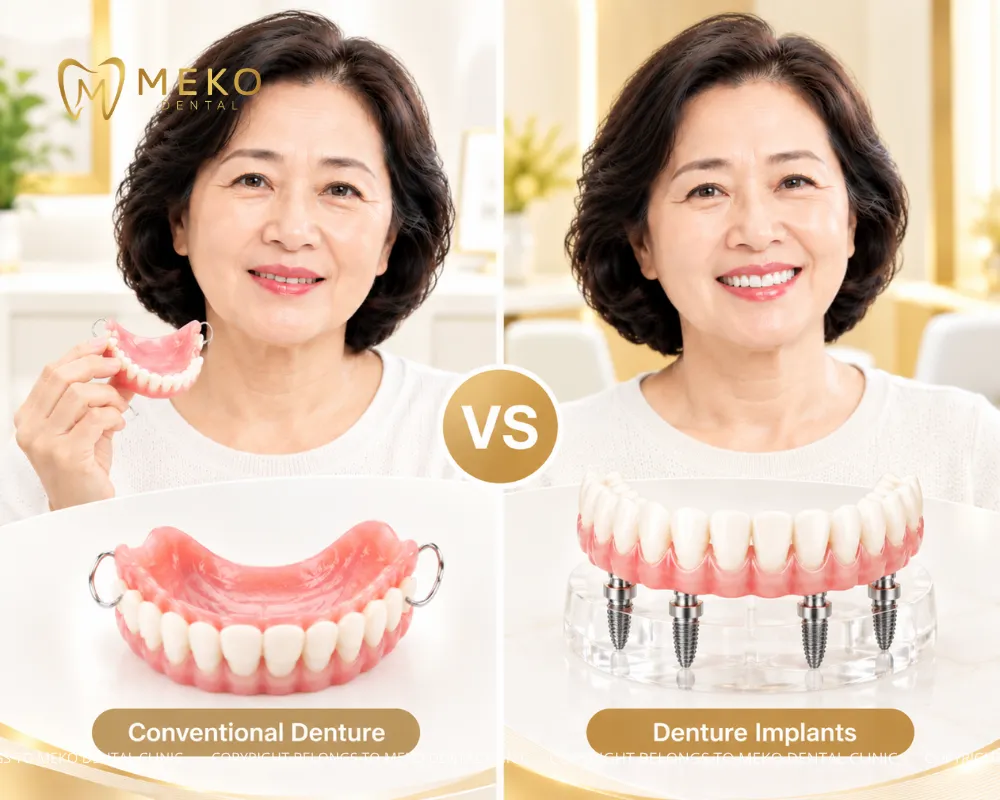
These benefits explain why implant dentures rank among the most requested tooth replacement options today. Choosing implants with dentures over a conventional plate is now one of the most common upgrades patients ask about. Many patients arrive at the clinic already frustrated after years with a standard removable plate.
8. Are there risks with denture implants?
Denture implants carry the same general surgical risks as any dental implant. Serious complications remain uncommon, though, when the procedure is planned carefully.
Short-term surgical risks:
- Infection at the implant site
- Minor nerve irritation
- Irritation of the sinus lining, in upper jaw cases
Long-term maintenance risks:
- Attachments on a removable overdenture wear down over time and need periodic replacement
- Food debris can collect around the implants under a fixed, implant supported denture if hygiene is neglected
- Undetected issues can affect the implants themselves if routine dental visits are skipped
Routine check ups catch most of these issues early, well before they put the implants at risk. A dentist can also adjust the fit or replace worn components before minor wear turns into a bigger problem.
Meko Dental Clinic in Ho Chi Minh City plans denture implants using digital scanning and CT imaging. This way, each patient receives an implant count and denture design suited to their own jawbone. The clinic’s in house lab fabricates the final denture on site, which shortens the number of visits needed between the healing period and the final fitting.
Patients considering denture implants are welcome to book a consultation. The visit covers bone structure, removable versus fixed options, and an itemised treatment plan before any procedure begins.
Reference
- Doundoulakis, J. H., Eckert, S. E., Lindquist, C. C., & Jeffcoat, M. K. (2003). The implant-supported overdenture as an alternative to the complete mandibular denture. Journal of the American Dental Association, 134(11), 1455–1458. https://pubmed.ncbi.nlm.nih.gov/14664262/
- Stilwell, C., Jung, R. E., Beuer, F., Brunello, G., Cha, J. K., et al. (2026). Consensus report of group 4 of the 1st Global Consensus for Clinical Guidelines for the Rehabilitation of the Edentulous Maxilla: Conventional dentures, implant overdentures and implant-supported fixed dental prostheses. Clinical Oral Implants Research. https://pmc.ncbi.nlm.nih.gov/articles/PMC12930131/
- Cleveland Clinic. (2022). Implant-supported dentures: Process, benefits & care. Cleveland Clinic. https://my.clevelandclinic.org/health/treatments/24303-implant-supported-dentures



 Messenger FB
 WhatsApp
 Book now