

Contents [ Hide ]
A dental implant procedure replaces a missing tooth at the root, not just on the surface. A titanium post takes over the job of the natural root, fuses with the jawbone, then supports a matching crown on top. Left untreated, a missing tooth causes chewing to shift, nearby teeth to drift, and jawbone density to drop within months.
So what is the process for dental implants exactly? The whole dental implant procedure usually takes three to nine months from first visit to final tooth.
1. What is a dental implant procedure?
In simple terms, it is the surgical and restorative sequence used to rebuild a missing tooth from the root up. A titanium screw replaces the natural root, fuses with the jawbone, then supports a crown shaped and shaded to match the surrounding teeth.
What sets this procedure for dental implants apart from a bridge is independence. Neighboring teeth are never touched or used as anchors. The implant bonds directly to bone through a process called osseointegration, the real foundation of the dental implant process.
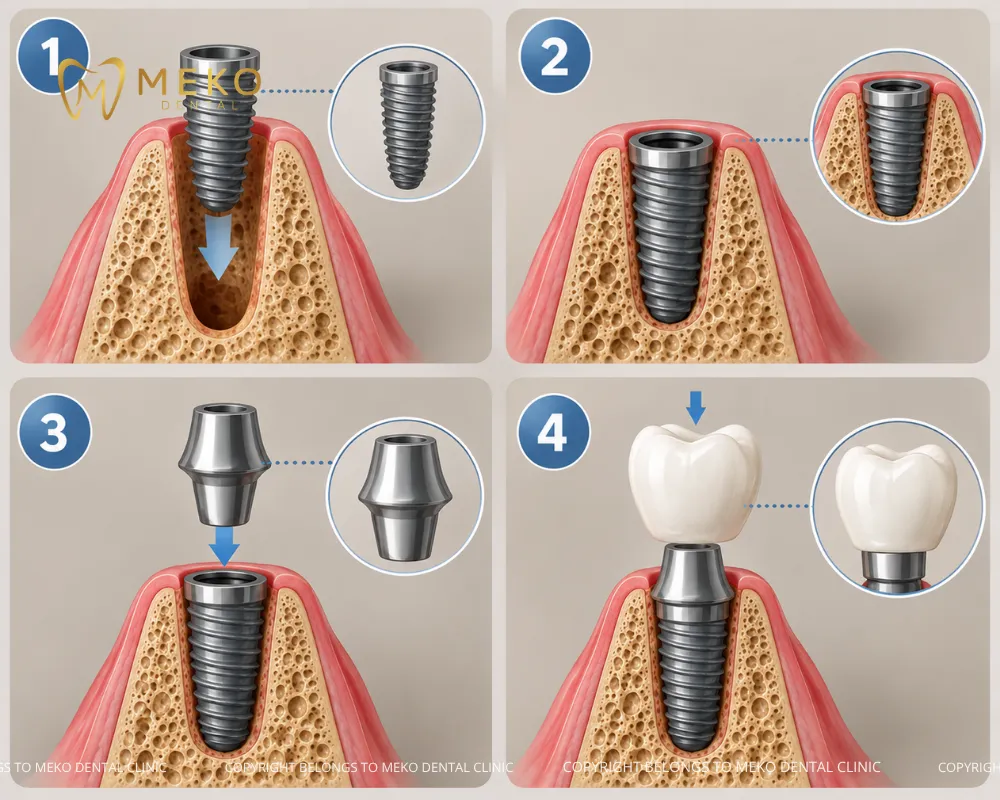
Once the bone accepts the implant, a connector called the abutment links it to the final crown. From there, most patients say the tooth simply disappears into the rest of their bite. A dental implant procedure explained this way sounds technical, but the day-to-day experience for the patient is fairly simple: a few visits spread out over several months.
2. Who is a good candidate for dental implants?
Healthy gums and enough bone volume are the two things dentists look for first. Beyond that, age rarely disqualifies anyone. Plenty of patients in their seventies go through a dental implants procedure without complication, provided their overall health supports healing.
Before recommending the process of getting dental implants, a dentist typically checks:
| Factor | Why it matters |
| Bone density | The jaw needs enough volume to hold the implant steady long-term |
| Gum condition | Gum disease needs treatment before anything else can move forward |
| Chronic illness | Poorly controlled diabetes or osteoporosis can slow or disrupt healing |
| Smoking | Reduces blood flow to the site, which delays integration |
| Daily oral care | Poor hygiene habits raise the risk of infection around the implant |
Thin or soft bone is not automatically a dead end. A bone graft can rebuild the site first, adding time but keeping the tooth implant process on track.
3. Who should avoid or delay a dental implant procedure?
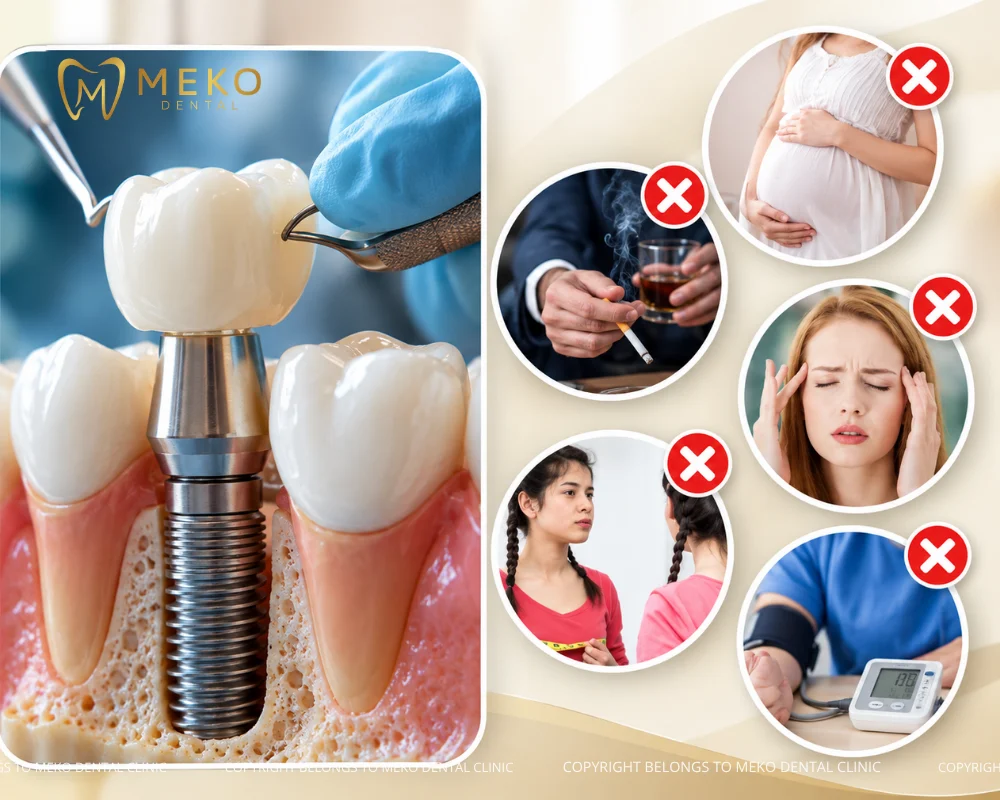
Some patients need to wait, and a few groups should not proceed with a dental implant procedure at all until circumstances change.
- Pregnant women, since elective surgery and many medications are best postponed until after delivery.
- Teenagers whose jaw is still growing, generally under 17 or 18, since the bone hasn’t finished developing.
- Heavy smokers and people with alcohol dependency, both of which interfere with healing and raise failure rates noticeably.
- Anyone with active, untreated gum disease or very low bone density, until that issue is brought under control.
- Patients currently managing a severe mental health crisis or extreme chronic stress, since post-surgical care requires consistency they may not be able to give right now.
None of these conditions rule out treatment forever. Quitting smoking, treating gum disease, or completing a bone graft first often reopens the door to a modified dental implant process later on.
4. Dental implant procedure steps explained
Six stages make up a typical step by step dental implant procedure, running from the first consultation through to the finished crown. None of them can be skipped or rushed, mainly because bone healing simply takes the time it takes.
4.1 Step 1: Initial consultation and treatment planning
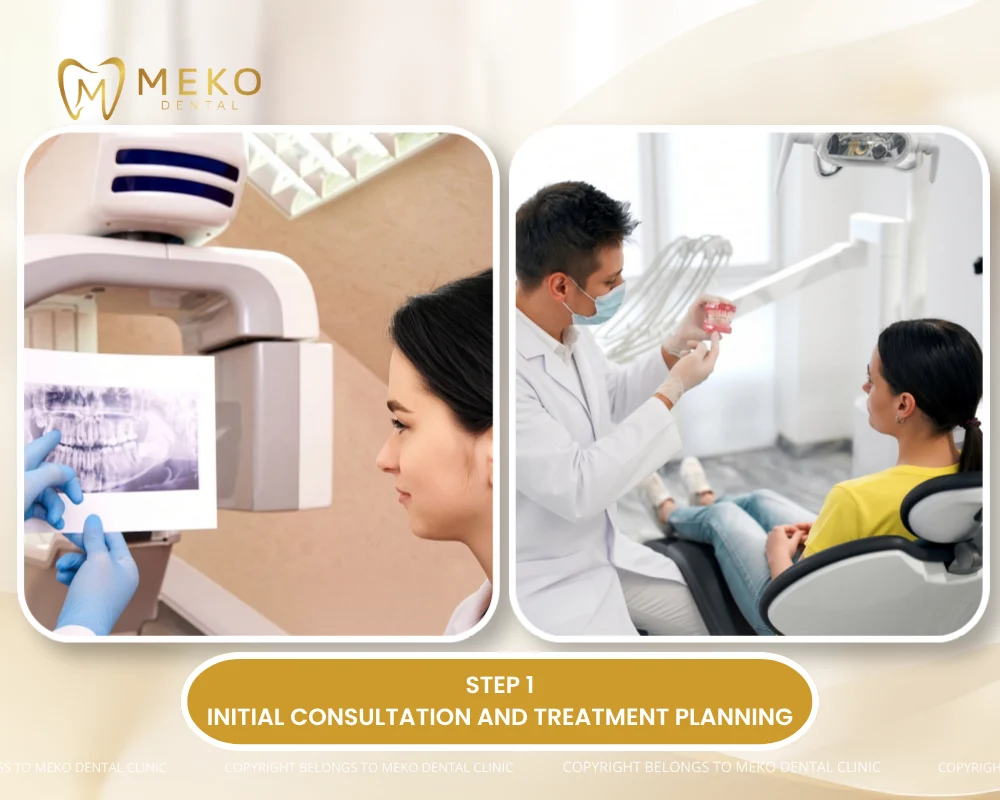
The first visit centers on a full examination. The dentist looks at medical history, takes X-rays or a 3D CT scan, and inspects the jawbone along with whatever teeth remain nearby.
From there, a treatment plan takes shape, built around that patient’s specific anatomy rather than a generic template. This is also where the dentist flags anything that needs handling before implant placement, such as a bone graft or a round of gum treatment.
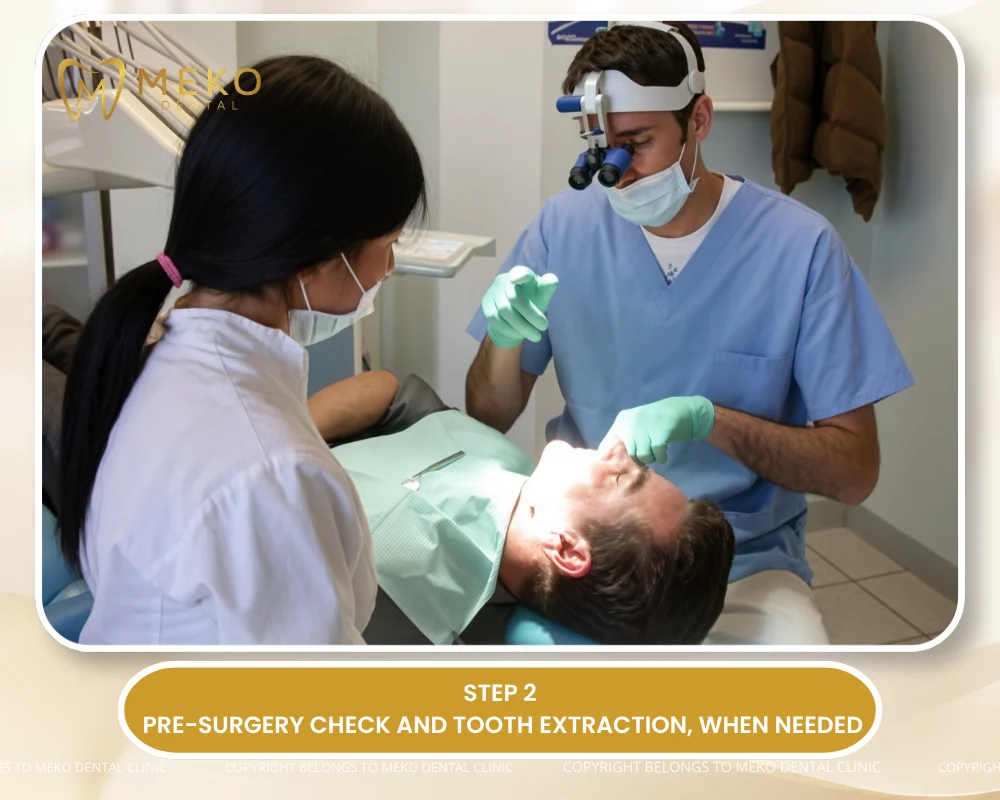
4.2 Step 2: Pre-surgery check and tooth extraction, when needed
A final health check and a thorough cleaning usually happen right before surgery, mainly to keep infection risk low. If a failing tooth is still in the mouth, it comes out first.
In some cases, the implant is placed right after the tooth comes out. Other times the socket needs weeks to settle before anything else happens. And if the jawbone is too thin to hold an implant securely, a bone graft rebuilds it, which can stretch this part of the procedure for dental implants by three to six months.
4.3 Step 3: Implant placement surgery
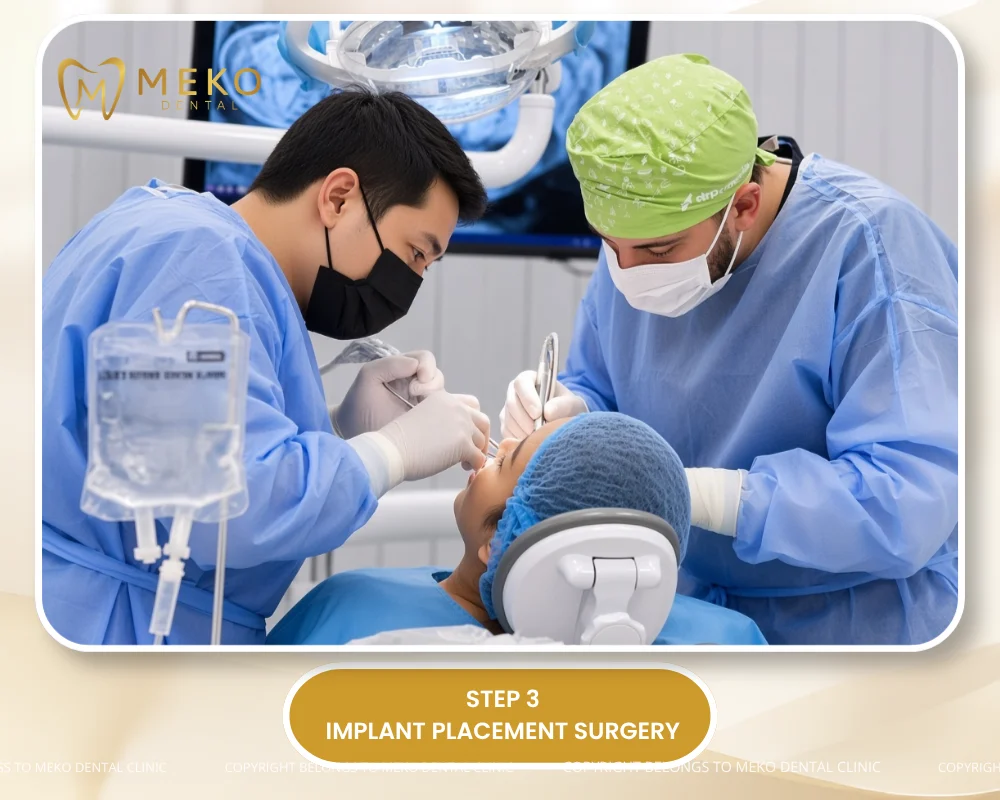
Local anesthesia numbs the site fully, so what patients usually feel during this stage is pressure, not pain. The dentist then places the titanium post into the jawbone at the planned position.
The actual insertion is quick, roughly 7 to 10 minutes per implant once the site is ready, though total time in the chair runs longer once anesthesia and preparation are counted. A protective cap or a temporary tooth often goes over the site right afterward.
4.4 Step 4: Osseointegration, the healing process
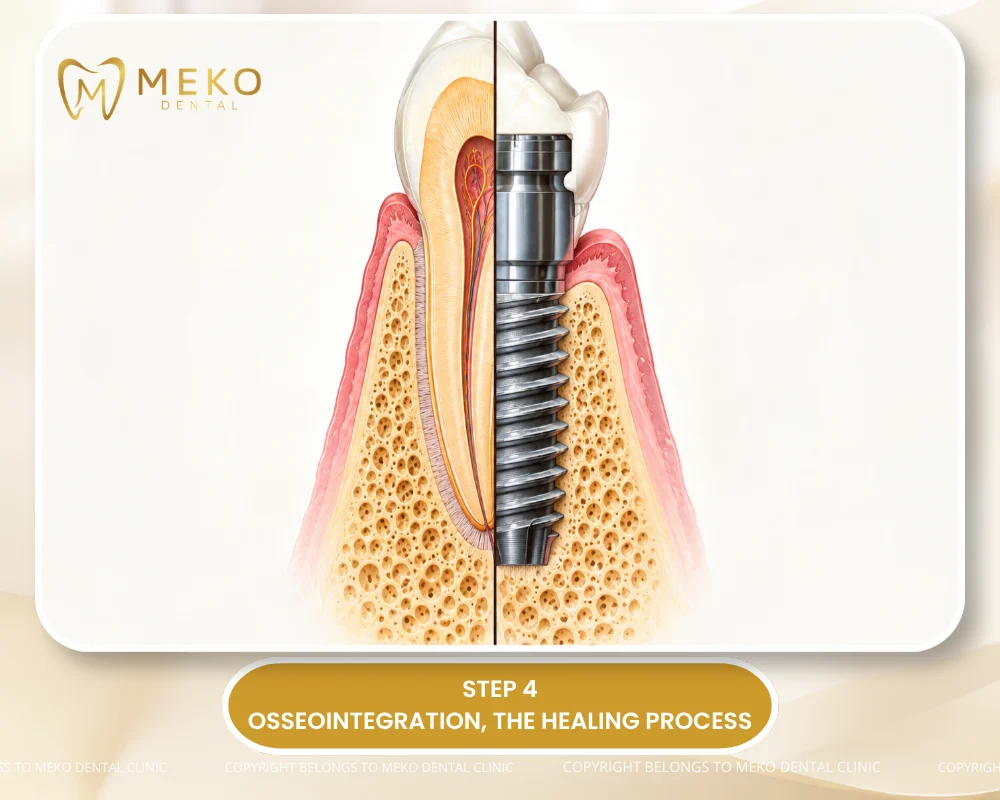
This is the part that cannot be sped up no matter how good the clinic is. Osseointegration, the bone fusing to the implant surface, takes three to six months on average, sometimes longer in the upper jaw where bone tends to be softer.
Soft foods and gentle hygiene around the surgical area are standard during this stretch. Follow-up visits let the dentist confirm the bone is bonding the way it should before moving to the next stage of the dental implant procedure.
4.5 Step 5: Abutment placement
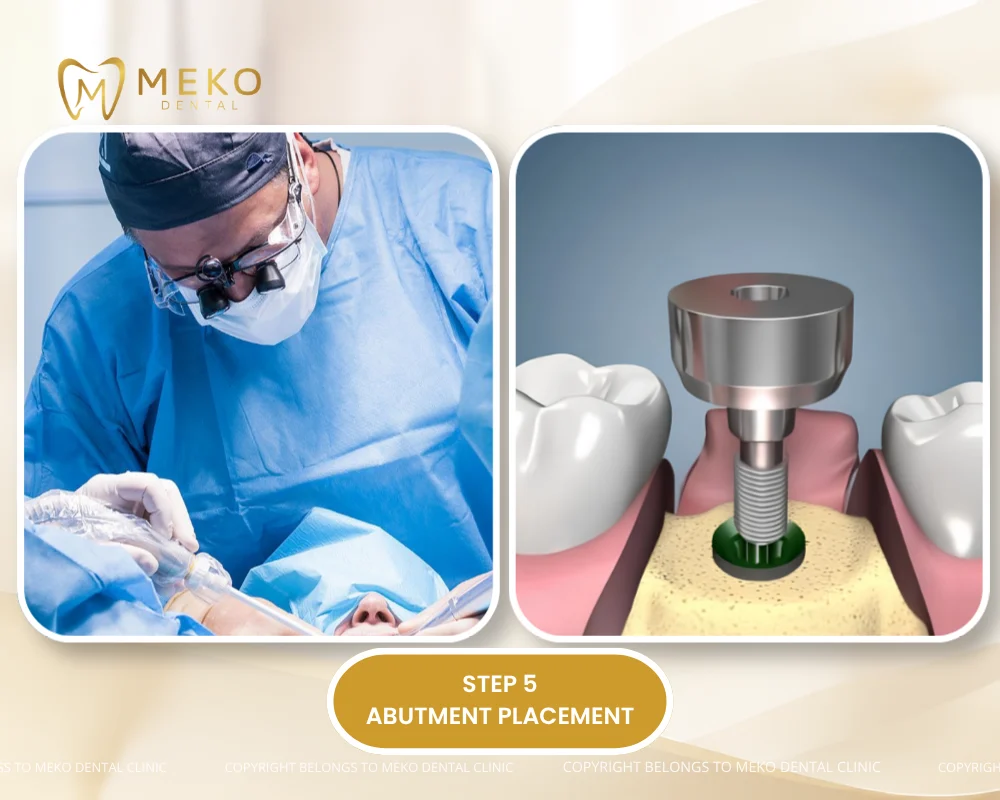
Once the implant has integrated, a small connector called an abutment gets attached to its top. A minor incision sometimes exposes the implant head first, and the gum tissue needs one to two weeks afterward to heal into shape around it.
It’s a brief step compared to the surgery itself, but skipping it isn’t an option. Without the abutment, there is nothing for the crown to attach to.
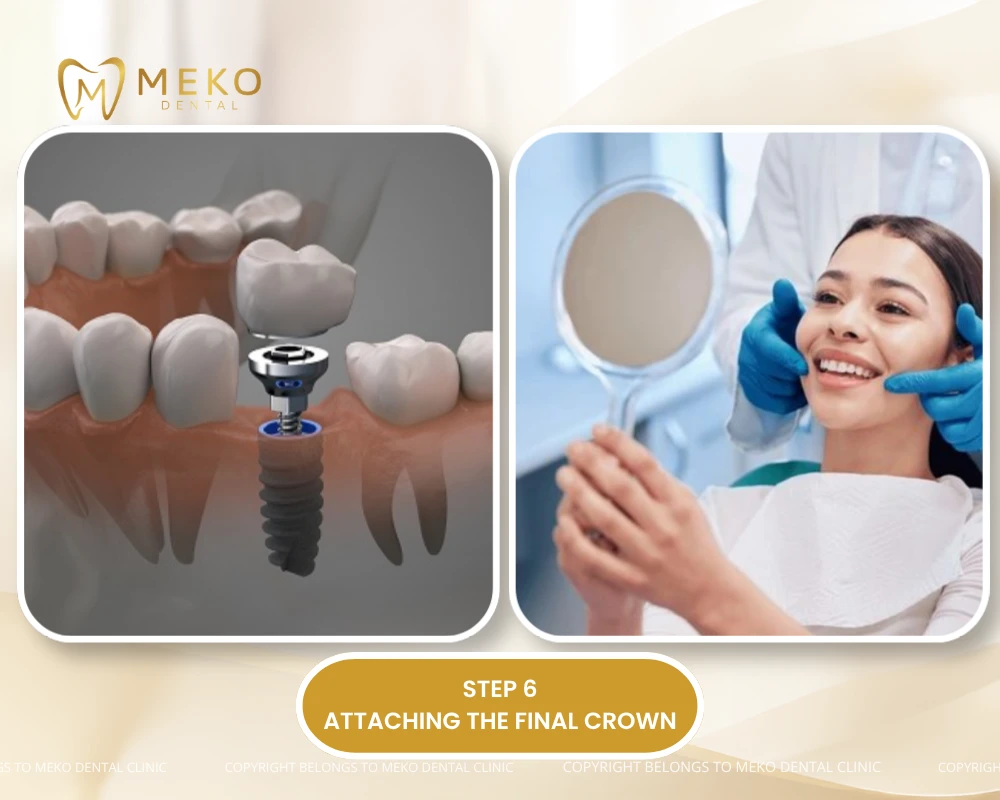
4.6 Step 6: Attaching the final crown
Impressions of the abutment and neighboring teeth go off to a lab, where a crown is built to match color, shape, and size. This is the last of the implant procedure steps, and the one patients tend to look forward to most.
The dentist secures the crown onto the abutment, either with cement or a screw. At that point the tooth implantation process is finished, and the new tooth handles biting and chewing like any other.
5. Dental implant procedure timeline
Three to nine months, start to finish, is the realistic range for most patients. Cases without bone grafting and with strong existing bone tend to land on the shorter end of the dental implant procedure timeline.
| Stage | Typical duration |
| Consultation and planning | 1 to 2 weeks |
| Bone grafting, if needed | 3 to 6 months of healing |
| Implant placement surgery | 1 day, plus 1 to 2 weeks of recovery |
| Osseointegration | 3 to 6 months |
| Abutment placement | 1 day, plus 1 to 2 weeks of gum healing |
| Final crown fabrication and fitting | 2 to 4 weeks |
Patients with healthy bone and no gum issues have an advantage. Their treatment often moves through the whole process of dental implants in three to four months.
6. What happens after the dental implant procedure?
Some swelling, mild bruising, or gum tenderness for a few days is normal after nearly every stage. Standard pain relief and a few days of soft food usually cover it. A few habits help recovery go smoothly:
- Keep pressure off the surgical site until the dentist gives the go-ahead to chew normally there.
- Rinse gently with saltwater instead of brushing directly over the wound for about a week.
- Show up for every follow-up appointment, even if things feel fine.
- Call the clinic right away if bleeding, pain, or swelling seems out of the ordinary.
Once healing is complete, caring for the implant is no different from caring for a natural tooth. That means brushing twice daily, cleaning between teeth, and keeping regular check-ups on the calendar.
7. Is the dental implant procedure painful?
The discomfort is much milder than most people expect. Local anesthesia keeps the surgery itself pain-free, and whatever soreness follows afterward is usually mild enough to manage with over-the-counter medication.

Patients often compare it to a tooth extraction, maybe a bit more swelling but nothing dramatically worse. Fear of pain shouldn’t be the reason someone puts off a dental implants procedure.
8. Risks of the dental implant procedure
Complications are uncommon, but they do happen, and patients deserve to know what to watch for. Most issues show up either right after surgery or during the healing window, rarely once the crown is fully in place.
Patients most commonly report the following complications:
- Infection at the implant site, usually linked to poor hygiene during healing
- Nerve irritation or numbness, especially with implants placed in the lower jaw
- Sinus complications, which can occur with upper jaw implants placed too close to the sinus cavity
- Minor damage to nearby teeth or gum tissue during placement
- Implant failure, where the post does not fully fuse with the bone
Choosing an experienced dentist and following aftercare instructions closely are the two biggest factors in keeping these risks low. When a dental implant procedure is planned with proper imaging and a realistic treatment timeline, most patients go through the entire process without any of these complications.
9. Frequently asked questions
How long do dental implants actually last?
Decades, in most cases, when hygiene and check-ups stay consistent. The crown on top may need replacing after 10 to 15 years simply from normal wear, but the implant post itself often outlasts it.
Can someone who smokes still get through the dental implant procedure?
Yes, though healing slows down and failure risk climbs. Most dentists push for at least a temporary break from smoking around surgery, if not longer.
Will the implant change color over time?
Not really. Titanium and porcelain resist staining far better than natural enamel, so the tooth tends to hold its shade through routine cleaning.
Is one dental implant procedure enough when several teeth are missing?
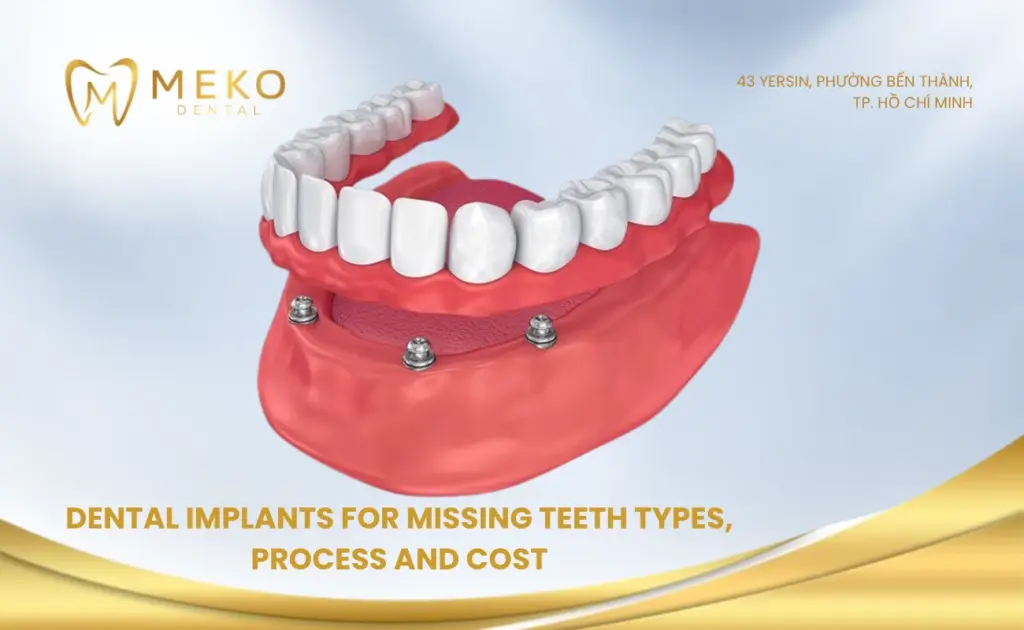
Depends on the case. Multiple single implants, an implant-supported bridge, or a full-arch solution might all be on the table, and the right choice comes down to how many teeth are gone and where.
A dental implant procedure asks for patience more than speed, since the surgery itself is short but the bone underneath needs months to fuse properly. At Meko Dental, accurate planning at the start and consistent aftercare through healing make the real difference in outcomes. Book a consultation through Meko Dental to get a proper bone assessment and a realistic treatment plan for your specific case.



 Messenger FB
 WhatsApp
 Book now