

Wisdom Tooth Extraction
Wisdom tooth extraction is a routine dental procedure commonly performed at Meko Dental in Ho Chi Minh City. Many adults eventually require removal because the third molars may not have enough room to develop properly, particularly when they begin emerging during the late teens or twenties.
What is a wisdom tooth extraction?
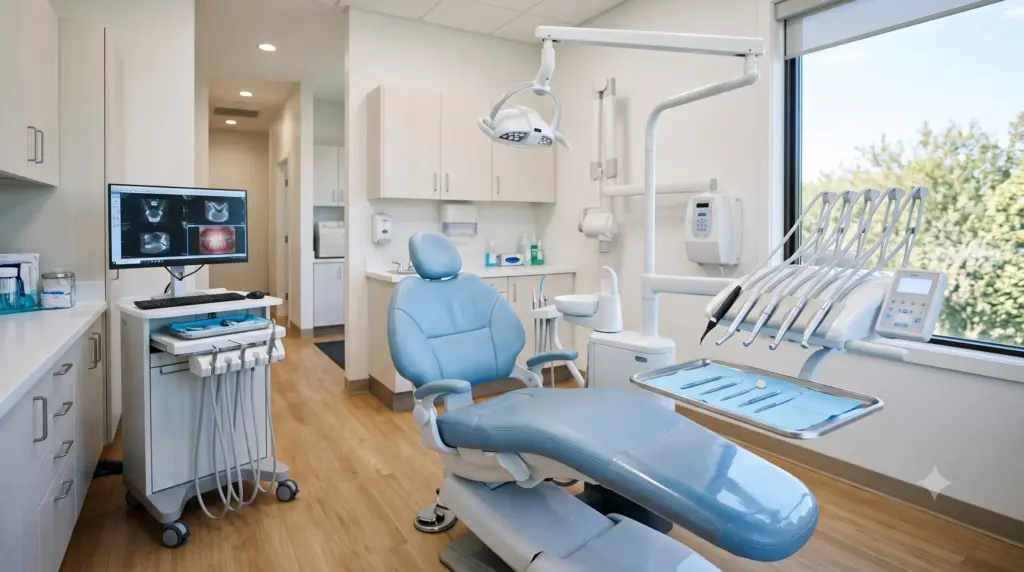
A wisdom tooth extraction involves removing one or more third molars from the jaw, either through a simple or surgical procedure. Dentists may recommend extraction when a wisdom tooth is impacted, decayed, infected, or causing pressure on neighboring teeth. At Meko Dental, an X-ray is used to evaluate the tooth before deciding whether extraction is necessary.
Whether a wisdom tooth should be removed depends on its condition and position. Some grow in completely, function normally, and cause no pain or alignment problems. Others remain partly trapped beneath the gum, increasing the chance of infection and making wisdom tooth removal a safer long-term option.
What is a wisdom tooth extraction called in dentistry?
In dentistry, wisdom tooth removal is commonly known as third molar extraction or third molar surgery. Patients may also refer to it as tooth extraction wisdom tooth removal because wisdom teeth are the final molars to develop.
The terminology can vary depending on the tooth’s position. A fully erupted wisdom tooth removed under local anesthesia is generally considered a simple extraction, while a tooth embedded in bone or soft tissue is classified as a surgical extraction.
Why having a wisdom tooth extraction becomes necessary
Wisdom tooth extraction is mainly necessary when a tooth becomes impacted, infected, or begins affecting surrounding structures. In many cases, the jaw does not have enough space to accommodate four additional molars, which can lead to problems as the teeth develop.
| Common reason | What can happen without treatment |
| Impaction | The tooth remains trapped beneath the gum or bone, increasing infection risk |
| Crowding | Nearby teeth may shift and affect previous orthodontic results |
| Decay or gum disease | Bacteria can build up around partially erupted teeth |
| Cyst formation | A fluid-filled sac may gradually affect the jawbone and tooth roots |
| Recurrent pain or swelling | Pericoronitis may repeatedly develop around the gum flap |
When these problems show up during an exam or on an X-ray, dentists may suggest removing the wisdom tooth before it causes more serious problems. This may also help prevent another painful flare-up.
Steps of wisdom tooth extraction
The steps of wisdom tooth extraction generally follow a similar sequence for both erupted and impacted teeth. The process below describes what may happen during a single wisdom tooth extraction or when several teeth are removed.
Before the procedure
- A clinical examination and dental X-ray are performed to evaluate the tooth’s position and root shape.
- Local anesthesia is administered, while sedation may be considered for more complex cases.
During and after the procedure
- A small incision may be made in the gum if the tooth has not fully erupted.
- The tooth may be divided into smaller sections when necessary to make removal easier.
- The tooth is carefully lifted from the socket using controlled pressure.
- The socket is cleaned, and stitches may be placed when an incision was required.
- Gauze is applied to help control bleeding and encourage the initial blood clot to form.
The procedure is designed to limit unnecessary trauma to the surrounding gum and bone. A gentler wisdom tooth removal can help reduce swelling and support a smoother recovery.
How does wisdom tooth extraction work at Meko Dental?
Wisdom tooth removal works by first numbing the treatment area, loosening the tooth from its socket, and then removing it either as a whole or in sections. At Meko Dental, treatment begins with digital imaging so the dentist can determine the safest approach before the extraction starts.
For a straightforward tooth extraction wisdom teeth case, the dentist may loosen the tooth with a dental elevator before removing it with forceps. When a tooth is impacted, a small amount of bone may need to be removed, or the tooth may be divided into sections. The aim is to remove the tooth efficiently while protecting the surrounding nerve, sinus, and neighboring teeth.
Length of wisdom tooth extraction and recovery time
The length of wisdom tooth extraction itself is usually short, though total recovery takes longer. A single, fully erupted tooth can often be removed in under twenty minutes, while an impacted tooth may take thirty to sixty minutes.
How fast is a wisdom tooth extraction depends on the tooth’s position, root curvature, and whether it is impacted. Patients often ask about wisdom tooth extraction time because they want to plan their schedule around the appointment and the days immediately after it.
Wisdom tooth recovery typically progresses through several stages:
- Days 1 to 3: swelling and mild discomfort are most noticeable
- Days 3 to 7: swelling subsides and normal eating gradually resumes
- Weeks 1 to 2: the gum tissue closes over and stitches (if used) dissolve or are removed
- Weeks 3 to 4: full bone healing continues beneath the surface
Wisdom tooth extraction pros and cons
Considering the wisdom tooth extraction pros and cons can help patients make a more informed decision instead of postponing treatment because they are uncertain about the procedure.
| Pros | Cons |
| Helps prevent future infection and pain | Involves a brief recovery period |
| Can reduce crowding around nearby teeth | Some swelling or bruising is possible |
| May lower the chance of cysts developing | Temporary changes to diet may be needed |
| Simplifies long-term oral hygiene | Dry socket is a possible, though uncommon, complication |
For many patients, the long-term benefits of wisdom tooth removal outweigh the short recovery period. This is especially true when the tooth is already causing symptoms.
Single wisdom tooth extraction versus multiple extractions
A single wisdom tooth extraction generally causes less swelling and allows for a quicker recovery compared with removing multiple teeth at once. However, dentists may recommend treating several problematic wisdom teeth during the same appointment when appropriate, allowing the patient to go through one recovery period instead of several.
Some patients may not need all four wisdom teeth extracted. Some may only need extraction of wisdom tooth on one side, especially when the opposite tooth is healthy, properly positioned, and not creating problems.
Benefits of wisdom tooth extraction
The benefits of wisdom tooth extraction go beyond simply eliminating a problematic tooth. Many patients notice these advantages more clearly once the extraction site has healed.
- Reduces the risk of infection spreading to nearby teeth or gum tissue
- Helps limit crowding and protect previous orthodontic results
- Decreases the possibility of cyst or tumor development around an impacted tooth
- Makes brushing and flossing the back teeth easier
These benefits are why dentists often recommend checking wisdom teeth before they start causing pain. It is better to identify potential problems early than wait for symptoms to appear.
Caring for the mouth after wisdom tooth extraction
Good aftercare plays an important role in how well wisdom tooth removal heals. The first 24 hours are especially important because the initial blood clot forms and becomes established during this period.
The first 24 hours
Patients are generally advised to rest with their head elevated, use a cold compress for short periods, and avoid vigorous rinsing. Soft foods such as porridge, mashed vegetables, and yogurt are usually easier to eat than hard or crunchy foods at this stage.
The following days
Smoking, drinking through a straw, and vigorous rinsing should generally be avoided for at least 48 hours because suction may disturb the blood clot and increase the risk of a painful dry socket. Gentle salt water rinses can usually begin the day after surgery to help keep the area clean without irritating the healing tissue.
Why choose Meko Dental for wisdom tooth extraction in Ho Chi Minh City
When selecting a dental clinic for wisdom tooth removal, patients often prioritize clear communication, careful treatment planning, and reliable aftercare. Meko Dental organizes its approach around these priorities from the initial consultation through the recovery period.
- Digital X-ray imaging is performed before planning each wisdom tooth extraction
- Dentists explain the recommended treatment, expected wisdom tooth extraction time, and aftercare beforehand
- Local anesthesia and sedation when needed are available to help maintain patient comfort
- Clear post-operative instructions are provided to help lower the risk of dry socket and infection
- Follow-up support is available when swelling, pain, or bleeding continues longer than expected
This approach makes the wisdom tooth removal process easier to understand and manage. It starts with the initial X-ray and continues through follow-up care.
Wisdom tooth extraction is a routine dental procedure when supported by appropriate evaluation, careful treatment planning, and proper aftercare. Patients experiencing pain, swelling, or crowding around their back molars should consider getting an assessment rather than waiting for symptoms to become worse. A consultation with Meko Dental in Ho Chi Minh City can provide an X-ray-based evaluation and help determine whether wisdom tooth removal is the appropriate next step.
 Messenger FB
 WhatsApp
 Book now