

Teeth Whitening
Teeth whitening is a common cosmetic dental treatment for people looking to brighten a dull or stained smile. It works by breaking down stain molecules in the enamel and dentin. When done professionally under a dentist’s supervision, it remains one of the safer, non invasive ways to improve tooth color. At Meko Dental, the treatment covers how the procedure works, who it suits, and what to expect from an in office visit.
What is teeth whitening?
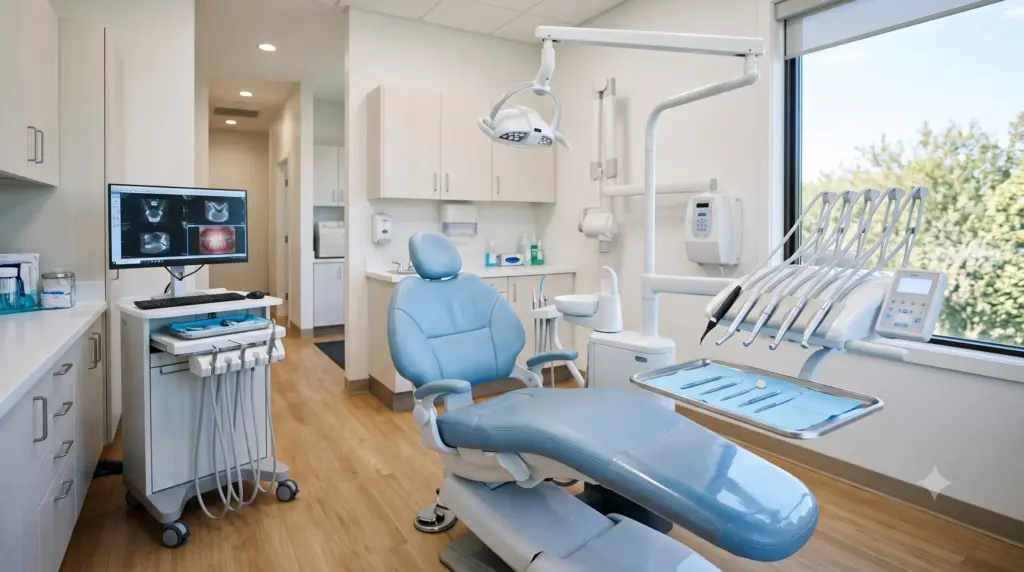
Teeth whitening is a cosmetic dental procedure that lightens tooth color by breaking down stain molecules trapped in enamel and dentin. Clinics worldwide perform millions of teeth whitenings each year, making it one of the most requested procedures in cosmetic dentistry. It improves appearance without removing any natural tooth structure, and that conservative approach is part of why so many patients choose it over more invasive options.
How the process works
At the chemical level, the reaction is a form of oxidation. A peroxide based gel penetrates the tooth surface and reacts with pigmented compounds, breaking them into smaller particles that reflect less color. Stains from coffee, tea, red wine, tobacco, and natural aging respond well to this reaction.
Crowns, veneers, and fillings do not, since these materials are not organic tooth structure and simply do not bleach. For most patients, successful teeth whitening means white teeth that still look natural, rather than an artificially bright shade that stands out.
Types of whitening treatments
Patients essentially choose between two paths when brightening their teeth. Professional teeth whitening is performed by a dentist, either fully in the clinic or through dentist supervised take home trays for patients whitening teeth gradually at home. The other route is over the counter whitening: strips, gels, and whitening toothpaste, sold at much lower peroxide concentrations than what a clinic uses.
Who is a good candidate for professional teeth whitening?
Cosmetic teeth whitening suits healthy adults with enamel or surface staining who want a brighter smile. A dental check beforehand confirms there are no untreated cavities or gum problems. Not everyone is an equally good candidate, so a short consultation is the first step of the process rather than something patients can safely skip
Good candidates for teeth whitening
Good candidates typically share one thing in common: healthy tooth structure with no active decay or gum disease. That is what allows the whitening gel to work predictably. Within that group, the best responses tend to come from:
- People with yellowish teeth from coffee, tea, tobacco, or food pigments
- Patients whose enamel has simply dulled with age, a gradual process that affects almost everyone over time
Who should avoid the treatment
The treatment is generally not recommended for the following cases:
- Children under 16, whose tooth pulp is still developing
- Women who are pregnant or currently breastfeeding, as a safety precaution
- Patients with untreated cavities, gum disease, or worn enamel, since the whitening gel can irritate already compromised tissue
- Teeth with visible crowns, veneers, or bonding in the smile zone, since these restorations will not whiten along with natural teeth
For the crown, veneer, or bonding case, the dentist may recommend replacing the restoration afterward to match the new shade. Planning any restorative work before whitening begins is usually the simpler route.
Professional teeth whitening vs. at-home whitening options
Professional teeth whitening uses higher peroxide concentrations under clinical supervision, producing faster and more even results than store bought products. The breakdown below puts each method side by side.
| Method | Active ingredient | Typical concentration | Session time | Visible results |
| In office professional teeth whitening | Hydrogen peroxide | 25 to 40% | 60 to 90 minutes | Same day |
| Custom dentist-made whitening trays | Carbamide peroxide | 10 to 22% | 30 to 60 min/day, 1 to 2 weeks | Gradual, 1 to 2 weeks |
| Over the counter strips/gels | Hydrogen peroxide | 3 to 14% | 5 to 30 min/day, 2 to 4 weeks | Gradual, 2 to 4 weeks |
At home kits cost less and fit around a daily routine. But the lower concentration means results build slowly and can look uneven across different teeth. Professional in office teeth whitening is the fastest route to a noticeably brighter smile. Take home trays remain a reasonable alternative for patients who would rather spread the process out on their own schedule.
How in-office teeth whitening works
Teeth whitening in office involves applying a high concentration peroxide gel directly to the teeth under professional supervision, usually completed within a single visit. Knowing each step ahead of time makes the appointment feel far less unfamiliar. Step-by-step procedure:
Step 1: Exam and shade check
The dentist reviews oral health, checks for cavities or gum issues, and records the current tooth shade using a shade guide for comparison after treatment.
Step 2: Professional cleaning
Plaque and tartar are removed from the tooth surface so the whitening gel can make even contact with the enamel rather than being blocked by buildup.
Step 3: Gum and lip protection
A barrier gel or rubber shield is applied along the gum line, and cotton rolls or a lip retractor keep the lips, cheeks, and tongue away from the whitening agent.
Step 4: Gel application
A peroxide gel, generally in the 25 to 40% hydrogen peroxide range, is applied evenly across the front surfaces of the visible teeth.
Step 5: Activation cycles
The gel stays on for roughly 10 to 15 minutes per cycle and is reapplied two to three times, sometimes with a curing light to help speed the reaction.
Step 6: Rinse and shade comparison
The gel is fully removed, the mouth is rinsed, and the dentist compares the new shade against the original to show the visible change.
Step 7: Aftercare instructions
The dentist explains what to avoid over the next 24 to 48 hours and, if needed, provides a take home tray for maintenance.
Several short cycles work better than one long application. Clinical research on in office bleaching protocols has found that shorter, repeated cycles reduce how much peroxide reaches the inner pulp chamber. These cycles still deliver strong whitening results. This is part of why dentists rarely leave the gel on for a single extended stretch.
How long do teeth whitening results typically last?
Results from professional teeth whitening commonly last one to two years, sometimes longer with careful maintenance. At home strips and trays fade sooner, since the lower concentration only reaches the surface of the stain rather than working through it fully. Diet and daily habits do more to determine the outcome than the whitening method itself.
Coffee, tea, red wine, and tobacco cause most of the new staining that shows up after treatment. Cutting back on these, rinsing with water afterward, or drinking dark beverages through a straw can noticeably extend how long teeth stay bright.
Brushing twice daily, flossing, and keeping up with routine dental cleanings also slow the surface buildup that gradually dulls a whitened smile. Patients who stay consistent with these habits are usually the ones who go the longest before needing a touch up session.
Teeth whitening services at Meko Dental
Meko Dental offers a range of whitening options so each patient can choose an approach that fits their schedule, budget, and goals.
- In office professional teeth whitening, with dentist supervised gel application and activation cycles completed in a single visit
- Dentist supervised take home whitening trays for patients who prefer a gradual, at home process
- Combination packages that pair an in office session with take home maintenance gel
- A pre whitening dental exam and cleaning, used to prepare teeth and confirm candidacy before treatment starts
- Post whitening aftercare guidance, covering diet and hygiene habits that help extend the result
Every treatment plan at Meko Dental begins with a one-on-one consultation. The dentist checks tooth condition first, then talks through what results are realistic before recommending one of the options above based on the patient’s goals and budget.
How much does teeth whitening cost at Meko Dental?
The cost of professional teeth whitening depends on the whitening system used, the number of sessions needed, and whether take home maintenance trays are included. The table below outlines the service types, with pricing to be confirmed during consultation.
| Service | Details | Price (VND) |
| In office professional teeth whitening | Whitening done during a single visit | |
| Take home whitening kit | A fitted tray set sent home with whitening gel | |
| In-clinic whitening plus home treatment | Combined package for longer lasting results | |
| Whitening top up gel | Refill tube for maintenance |
Pricing depends on individual tooth condition and the combination of services chosen. Because of that, Meko Dental provides a personalized quote at the consultation rather than a single flat rate. That same visit is also a good time to ask which package fits a given budget and desired outcome.
Frequently asked questions
The two terms are largely interchangeable in dentistry. Bleaching is the more precise word for treatments that lighten teeth beyond their original natural shade using peroxide, while whitening is often used more loosely.
It depends on the clinic, the method, and how much change a patient’s teeth need. A consultation is needed to provide an accurate price.
Around 60 to 90 minutes for a typical in office professional teeth whitening appointment, which includes several short gel application cycles rather than one continuous treatment.
Teeth whitening remains one of the most effective, non invasive ways to brighten a person’s overall appearance. Professional in office treatment offers faster, more even results than at home alternatives. A proper dental evaluation beforehand helps the outcome look natural and last as long as possible. Patients interested in exploring their options can book a teeth whitening consultation at Meko Dental to find the most suitable approach for their teeth.
 Messenger FB
 WhatsApp
 Book now