

All On 6 Dental Implants
Full-arch tooth loss changes how a person eats, speaks, and looks within a few years, mainly because the jawbone starts shrinking once teeth are gone. Meko Dental offers all on 6 dental implants as a fixed answer to this problem, replacing an entire arch with six implant posts instead of a removable plate.
What are all on 6 dental implants?
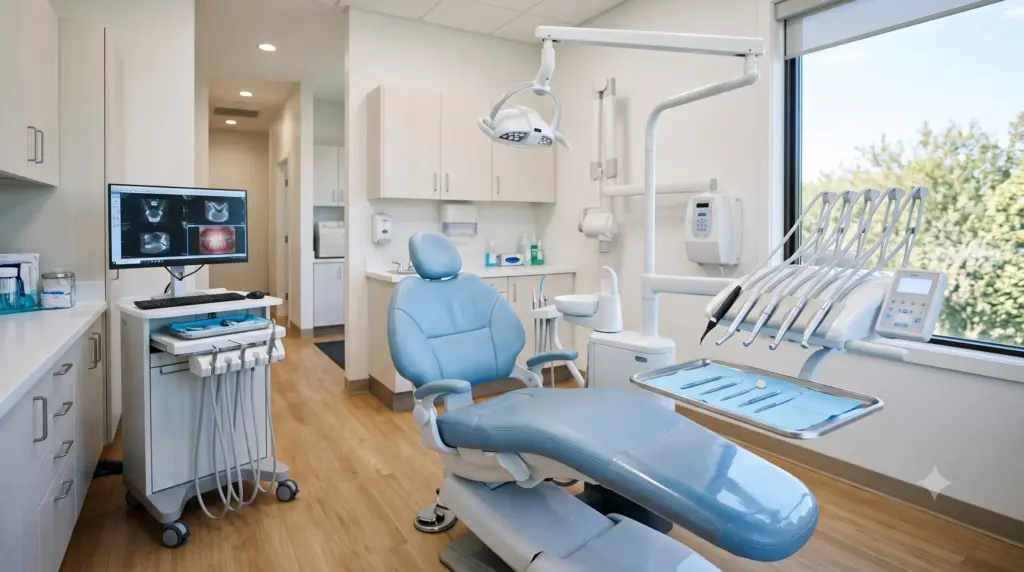
All on 6 dental implants replace every tooth in one jaw using six titanium posts that anchor a single fixed bridge. The bridge does not come out for cleaning like a denture does, since it is screwed or cemented directly onto the implants.
The six-implant design gives dentists more flexibility when planning around areas of weaker bone. Rather than relying on just four anchor points, the extra two implants let the surgeon spread the bridge’s weight over a wider section of the arch.
Implants in an all on 6 dental implants case are rarely placed in a straight row. Two to four posts usually sit in the front where bone is denser, while the remaining posts angle toward the back, sometimes up to 30 to 45 degrees, to avoid the sinus cavity or nerve canal. This is a standard technique in full-arch implant dentistry, not something unique to any single clinic.
Patients search for this treatment under several names, all describing the same technique:
- Dental implants all on 6, all on six dental implants, all on 6 dental
- 6 dental implants, 6 in 1 dental implants, 6 on one dental implants
- 6 on 1 dental implants, 6 on 6 dental implants
How do all on 6 dental implants work?
All on 6 dental implants work through two clinical phases: implant surgery followed by a healing period, then delivery of the final bridge. The full sequence usually runs three to nine months depending on bone condition.
The surgical phase
Surgery starts with a CBCT scan, a 3D imaging method that shows bone volume, sinus position, and nerve location far more precisely than a flat X-ray. The surgeon uses this scan to map exact implant positions before touching the patient.
On the day of surgery, six implants go into the arch, often alongside any needed extractions. A provisional bridge is fitted the same day in most cases, so the patient does not leave without teeth.
The healing and final bridge phase
Titanium fuses with living bone through a biological process called osseointegration. Clinical data on full-arch implants generally reports success rates above 95 percent when bone quality is adequate and post-surgical care is followed.
This fusion period runs three to six months, during which patients stick to a soft diet.Once integration is confirmed through follow-up imaging, the temporary bridge is removed. It is then replaced with a permanent one, either milled from zirconia or built on a titanium bar with an acrylic surface.
Who qualifies for all on 6 dental implants?
Candidates for all on 6 dental implants need enough jawbone volume across the arch to hold six posts. They also need general health that allows for oral surgery and a multi-month healing window. Most patients missing several or all teeth in one jaw fall into this group. Common candidacy factors include:
- Bone volume – a CBCT scan confirms whether the existing ridge can hold six implants or whether grafting is needed first
- Moderate bone loss – often manageable with a sinus lift or localized graft, adding a few months to the timeline rather than ruling out treatment
- Chronic conditions – uncontrolled diabetes or active gum disease should be stabilized before surgery to protect healing
- Smoking habits – pausing smoking during the healing phase improves implant success rates
- Age – not a barrier by itself, since tissue health matters more than age for all on six dental implants candidacy
All on 6 zirconia and other prosthetic materials
All on 6 zirconia bridges are milled from solid zirconium dioxide, a ceramic material known for chip resistance and a natural, semi-translucent look. It is one of two materials most commonly used to finish an all on 6 dental implants case, the other being acrylic resin on a metal frame.
| Material | Typical lifespan | Wear resistance | Relative cost |
| Zirconia | 15 to 20 years or longer | High | Higher |
| Acrylic on titanium bar | 5 to 10 years before remake | Moderate | Lower |
Acrylic teeth wear down faster under normal chewing and can chip if a patient grinds at night. All on six zirconia holds its shape and color far longer, which is why many patients eventually upgrade from an acrylic bridge to a zirconia one after the first remake cycle.
Patients with a strong bite or grinding habit generally do better starting with zirconia, since it resists fracture under repeated load. Those on a tighter budget can start on acrylic and switch later, since the underlying implants stay the same either way.
All on 6 before and after results
All on 6 before and after comparisons usually show a fuller lower face, a level bite, and a complete set of teeth replacing a collapsed or gapped smile. The change unfolds over the full healing period, not immediately after surgery.
Typical all on 6 dental implants before and after changes include:
- A fuller jawline and cheek area, since implants stop the bone loss that follows missing teeth
- A fixed bite line replacing the sunken look common with long-term denture wear
- Noticeably clearer speech once the bulky denture plate is gone
- A visible jump in confidence tied to a complete, stable smile
Most patients see the biggest shift between the temporary bridge stage and the final zirconia delivery. The temporary bridge already restores basic function, but it rarely matches the fit, shade, and contour of the final restoration.
What are the benefits of all on 6 dental implants?
The core benefit of all on 6 dental implants is a bridge that stays fixed in the mouth around the clock, functioning close to natural teeth for chewing and speech. Because load is shared across six posts instead of four, patients often report less pressure sensitivity while eating.
Key advantages include:
- Bone preservation – the implants stimulate the jawbone the way natural roots do, slowing bone loss that follows tooth extraction
- Built-in redundancy – if one implant runs into trouble, the remaining five can still support the bridge while it is addressed
- No slipping or clicking – the bridge stays fixed while eating or speaking, unlike a removable denture
- Digital planning – Meko Dental maps each all on 6 dental implants case with CBCT imaging before scheduling surgery, confirming implant angles and bridge design on screen first
- Structured follow-up – warranties and scheduled check-ins run through the full healing period, not just at delivery of the final bridge
All on 6 dental implants procedure timeline
The all on 6 dental implants procedure runs through five stages from first scan to final bridge, typically spanning three to nine months total. Bone condition and whether grafting is needed are the two biggest factors affecting how long any single case takes.
Step 1: Consultation and CBCT scan to assess bone volume and plan implant positions
Step 2: Surgical placement of six implants per arch, sometimes combined with extractions
Step 3: Fitting of a temporary bridge on the same day as surgery
Step 4: A three to six month healing period while osseointegration completes
Step 5: Delivery of the final zirconia or acrylic bridge once healing is confirmed
Patients traveling for treatment often split this into two trips, one for surgery and one for the final bridge, spaced a few months apart to allow proper healing between visits.
All on 6 dental implants cost at Meko Dental in 2026
The cost of all on 6 dental implants depends on implant brand, bridge material, and whether bone grafting is needed. The table below breaks down current pricing by package at Meko Dental.
| Package | Implant brand | Bridge material | Price per arch |
Implant brand is typically the biggest cost driver, followed by bridge material, all on 6 zirconia runs higher than an acrylic bridge on a titanium bar. Cases needing a bone graft or sinus lift add a separate line item on top of the base implant fee.
Frequently asked questions
A denture rests on the gums and comes out for cleaning, while all on 6 dental implants stay fixed to the jawbone permanently. Implants also stimulate the bone, which a denture cannot do.
Patients with a strong bite, a grinding habit, or a wider arch often need the added support that six implants provide compared with fewer posts. It comes down to bone volume and how much force the bridge will handle daily.
Osseointegration typically takes three to six months, with the full treatment from consultation to final bridge running three to nine months overall.
Full-arch implant clinics such as Meko Dental handle the entire process, from CBCT scanning and surgery through to fitting the permanent bridge.
An on 6 dentures dentist reviews the CBCT scan, checks bite alignment, and maps each implant’s angle and depth before surgery, since these details determine whether the finished bridge sits evenly across all six posts.
All on 6 dental implants give patients missing most or all of their teeth a fixed alternative to dentures, with enough load-bearing capacity for a strong bite once healing is complete. The trade-off is a longer treatment window and higher bone requirements than lighter implant systems. This is why imaging and a real consultation matter more than a quick price estimate.
Meko Dental handles CBCT planning, surgical placement, and both zirconia and acrylic bridge options under one roof. Patients considering all on 6 dental implants can reach out to Meko Dental directly to book a scan and find out whether their bone supports the six-implant plan.
 Messenger FB
 WhatsApp
 Book now